Kirjojen hintavertailu. Mukana 11 244 527 kirjaa ja 12 kauppaa.

Kirjahaku

Etsi kirjoja tekijän nimen, kirjan nimen tai ISBN:n perusteella.

1000 tulosta hakusanalla Werner Maas

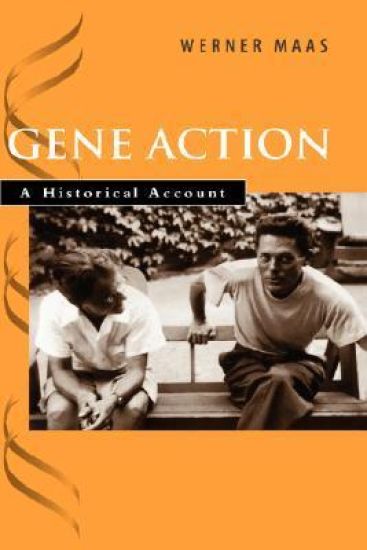
Gene Action

Gene Action

Werner Maas

Oxford University Press Inc
2001
sidottu
As a college student, Werner Maas took a course in genetics in 1941 and wondered why so little was said about the biochemical action of genes in controlling the specific function of an organism. Just at that time, biochemists and geneticists began to investigate jointly the basis of gene action, especially in microorganisms. Thus, Maas was able to witness firsthand the spectacular developments that led in the next twenty-five years to a clear picture of the action of genes. The history of these remarkable discoveries is the core of this book. After 1965, building on insights gained from the work with microorganisms, studies of gene action turned to animals and plants and concentrated on processes not present in microorganisms, such as embryonic development, the role of genes in diseases, and the function of the nervous system. Because of the rapidity of technical advances made in handling genes, it has been possible to learn much about these complex processes. The last part of the book deals with these developments, which are ongoing parts of the history of gene action.

Biology of Antibiotics

Biology of Antibiotics

Hans Zahner; Werner K. Maas

Springer-Verlag New York Inc.
1972
nidottu
This book is based on Hans Zahner's Biologie der Antibiotica, published in 1965. There is a vast literature on antibiotics, covering chemical, phar­ macological, and clinical aspects. We have made no attempt to cover this literature comprehensively. Our effort is directed toward discuss­ ing antibiotics as biological agents. They are substances produced by living cells, yet they are able to inhibit the growth of living cells - in many cases even the cells that produce them. We have taken this apparent biological paradox as our point of departure and have tried to look in this light at the production of antibiotics and at their mode of action. In a sense antibiotics are comparable to mutations. They are useful as tools in the study of metabolism by blocking specific reactions. At the same time their mode of origin and their effects on the organisms that produce them are interesting problems in their own right. We have tried to incorporate both aspects into our consider­ ations. This little book, designed for biology students and medical stu­ dents, provides them with a framework into which to fit more specialized and detailed information on antibiotics.
Werner

Werner

Jan Kronies

Books on Demand
2022
pokkari
Wie schnell die Zeit vergeht - wer fragt sich das nicht mindestens einmal in seinem Leben? Auch Ellie sieht sich damit konfrontiert, als sie ihren im Sterben liegenden Gro vater Werner besucht. Zusammen begeben sie sich auf eine Reise in die gro en Themen des Lebens und des Todes, um zu verstehen, was war, nun enden wird und wie Zeit begriffen werden kann: damit wir nie wieder daran verzweifeln, wie schnell sie vergangen ist.
Werner Herzog

Werner Herzog

Joshua Lund

University of Illinois Press
2020
sidottu
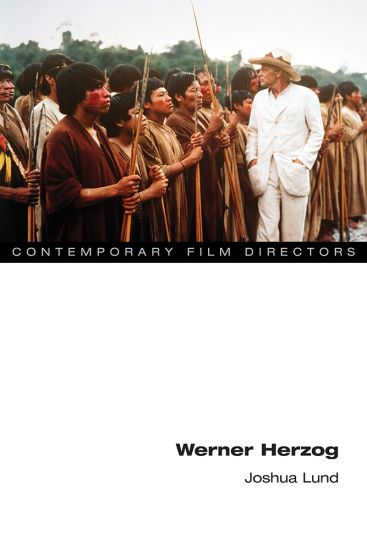
Werner Herzog's protean imagination has produced a filmography that is nothing less than a sustained meditation on the modern human condition. Though Herzog takes his topics from around the world, the Americas have provided the setting and subject matter for iconic works ranging from Aquirre, The Wrath of God and Fitzcarraldo to Grizzly Man. Joshua Lund offers the first systematic interpretation of Werner Herzog's Americas-themed works, illuminating the director's career as a political filmmaker-a label Herzog himself rejects. Lund draws on materialist and post-colonial approaches to argue that Herzog's American work confronts us with the circulation, distribution, accumulation, application, and negotiation of power that resides, quietly, at the center of his films. By operating beyond conventional ideological categories, Herzog renders political ideas in radically unfamiliar ways while fearlessly confronting his viewers with questions of world-historical significance. His maddeningly opaque viewpoint challenges us to rethink discovery and conquest, migration and exploitation, resource extraction, slavery, and other foundational traumas of the contemporary human condition.
Werner Herzog

Werner Herzog

Joshua Lund

University of Illinois Press
2020
nidottu
Werner Herzog's protean imagination has produced a filmography that is nothing less than a sustained meditation on the modern human condition. Though Herzog takes his topics from around the world, the Americas have provided the setting and subject matter for iconic works ranging from Aquirre, The Wrath of God and Fitzcarraldo to Grizzly Man. Joshua Lund offers the first systematic interpretation of Werner Herzog's Americas-themed works, illuminating the director's career as a political filmmaker-a label Herzog himself rejects. Lund draws on materialist and post-colonial approaches to argue that Herzog's American work confronts us with the circulation, distribution, accumulation, application, and negotiation of power that resides, quietly, at the center of his films. By operating beyond conventional ideological categories, Herzog renders political ideas in radically unfamiliar ways while fearlessly confronting his viewers with questions of world-historical significance. His maddeningly opaque viewpoint challenges us to rethink discovery and conquest, migration and exploitation, resource extraction, slavery, and other foundational traumas of the contemporary human condition.
Werner's Nomenclature of Colours

Werner's Nomenclature of Colours

Patrick Syme

The Natural History Museum
2018
sidottu
First published in 1814, Werner's Nomenclature of Colours is a taxonomic guide to colour which been cherished by naturalists and anthropologists for over two centuries. In the late 1790's Abraham Gottlob Werner devised his own standardised colour scheme, which allowed the writer to describe even the subtlest of chromatic differences with consistent terminology. His scheme was then adapted by an Edinburgh flower painter, Patrick Syme, who traced the actual minerals described by Werner, and used them to create the colour charts found in the book. In the pre-photographic age, almost all visual details had to be captured using the written word, and scientific observers could not afford any ambiguity in their descriptions. These included Charles Darwin, for whom Werner's Nomenclature was an indispensable tool during his seminal voyage on the Beagle. Werner's Nomenclature of Colours is a charming artefact from the age of explorers, which continues to be treasured by artists and scientists alike.
Werner's Nomenclature of Colours: The Postcards
First published in 1814, Werner’s Nomenclature of Colours is a taxonomic guide to colour which been cherished by naturalists and anthropologists for over two centuries – not least by Charles Darwin who found it an indispensable tool during his voyage on the HMS Beagle. Now these charming, handmade colour swatches have been recreated as a box of 50 postcards. Each card reproduces a colour swatch alongside its original poetic description and is matched with an animal, plant, and mineral example according to Werner's unique scheme. These curious keepsakes will be treasured by artists and scientists alike.
Werner Herzog – A Guide for the Perplexed
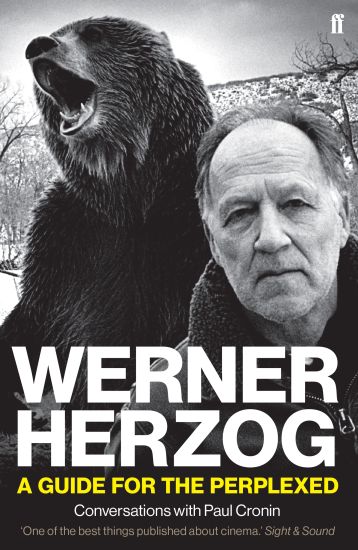
'One of the best things published about cinema.' Sight & SoundHerzog was once hailed by Francois Truffaut as the most important director alive. Famous for his frequent collaborations with mercurial actor Klaus Kinski - including the epics Aguirre, the Wrath of God and Fitzcarraldo, and the terrifying Nosferatu - and more recently with documentaries such as Grizzly Man, Cave of Forgotten Dreams and Into the Abyss, Herzog has built a body of work that is one of the most vital in post-war German cinema. Here, he reflects on his legendary and inspiring career.
Werner Scholem

Werner Scholem

Mirjam Zadoff

University of Pennsylvania Press
2018
sidottu
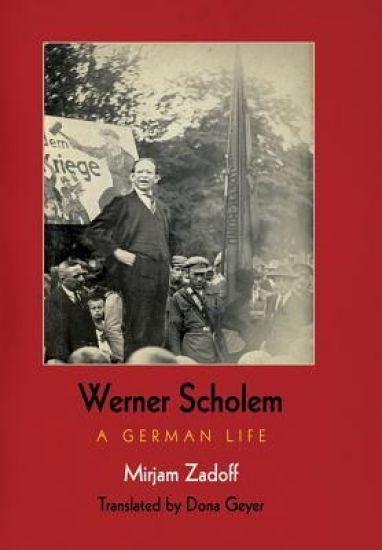
Werner Scholem never took the easy path. Born in 1895 into the Berlin Jewish middle class, he married a young non-Jewish woman of proletarian background. He was the youngest member of the Prussian Parliament in the 1920s, one of the leaders of the German Communist Party, and the editor of the influential journal The Red Flag. As an outspoken critic of Stalin, he was soon expelled from the party, only to take up a position at the head of a revolutionary Trotskyite faction in the years before 1933. Reviled by the National Socialists as a Communist and a Jew, he was among the first to be arrested when Hitler rose to power and, after a long incarceration, was murdered in Buchenwald. In Werner Scholem: A German Life Mirjam Zadoff has written a book that is at once a biography of an individual, a family chronicle, and the story of an entire era. It is an account of the ruptures within a society and of the growing insecurity in which German Jews lived between the two world wars—and especially of two brothers who chose opposing paths out of the shared conviction that there was no future for Jews in Germany after the First World War. While Werner pinned his hopes on a universal revolution he would never see, the younger Gerhard emigrated to Palestine where, as Gershom, he would choose revolutionary Zionism and the reanimation of ancient strains of Jewish mysticism.