Kirjojen hintavertailu. Mukana 11 244 527 kirjaa ja 12 kauppaa.

Kirjahaku

Etsi kirjoja tekijän nimen, kirjan nimen tai ISBN:n perusteella.

892 tulosta hakusanalla Wes D. Gehring

W. C. Fields

W. C. Fields

Wes D. Gehring

Greenwood Press
1984
sidottu
"All students of the Great Man's'career will have to rely on this work. . . . Perhaps Gehring's greatest contributio here is his discussion of 23 sketches that Fields copyrighted that are now in the Library of Congress." Choice
The Marx Brothers

The Marx Brothers

Wes D. Gehring

Greenwood Press
1987
sidottu
This bio-bibliography was designed to present a combined biographical, critical, and bibliographical portrait of the Marx Brothers. It examines their significance in film comedy in particular, and as popular culture figures in general. The book is divided into five sections, beginning with a biography which explores the public and private sides of the Marx Brothers. The second section is concerned with the influences of the Marx Brothers as icons of anti-establishment comedy, as contributors to developments in American comedy, as early examples of saturation comedy, and as a crucial link between silent films and the talkies. Three original articles, two by Groucho and one by Gummo, comprise part three. A bibliographical essay, which assesses key reference materials and research collections, is followed by two bibliographical checklists. Appendices containing a chronological biography with a timeline, a filmography, and a selected discography complete the work.
Laurel and Hardy

Laurel and Hardy

Wes D. Gehring

Greenwood Press
1990
sidottu
This book presents a combined biographical, critical, and bibliographical estimate of Laurel & Hardy's significance in film comedy, the arts in general, and as popular culture icons. Of the two, Laurel decidedly evolves as the central player in this duo biography. The reasons for this are several, but mainly stem from Laurel's role as team spokesman; his late life accessibility; media coverage given to his private life; and the fact that he outlived Hardy by eight years--from 1957 to 1965--a period in which the ever burgeoning public fascination with the team reached new proportions. Hardy's artistic input, however, is currently being given a revisionist upgrading, which Gehring addresses. The book is divided into five chapters. Chapter 1 is a biography of Laurel & Hardy, exploring the public and private sides of their lives. Chapter 2 is a critique of four broad influences of Laurel & Hardy--as special icons of comic frustrations; as developers of a change in film comedy pacing (which also eased their transition from silent to sound film); as movie pioneers in the innovative early use of comic sound; and, most importantly, as key participants in the evolution of the comic antihero into American mainstream humor. Chapter 3 is composed of two very early reprinted Laurel & Hardy articles and a special Encore collection. Chapter 4 is a very ambitious Laurel & Hardy bibliographical essay, assessing key reference materials and locating research collections open to the student and/or scholar. This involves many obscure, often early and/or untranslated articles drawn from research in Ulverston England--Laurel's birthplace--London and Paris. Chapter 5 is a bibliographical checklist of all sources recommended in Chapter 4. This volume should be of special interest to all Laurel & Hardy aficionados, and students/scholars of comedy.
Mr. B or Comforting Thoughts About the Bison

Mr. B or Comforting Thoughts About the Bison

Wes D. Gehring

Praeger Publishers Inc
1992
sidottu
With the cooperation of Benchley family members, and using diaries and correspondence and much archival material, Gehring has written a fresh and lively biography of humorist Robert Benchley. Known for his development of the comic anti-hero in essays, columns, film scripts, as a screen actor, and on stage and radio, Benchley emerges as a fascinating individual whose significance as a pivotal American humorist is fully documented.Benchley's times and places--including New York's Algonquin Round-Table set of the 1920s and Hollywood in the 1930s and 1940s--are colorfully depicted, and there are interesting glimpses of friends and colleagues such as Dorothy Parker, S. J. Perelman, Donald Ogdon Stewart, and Groucho Marx. The flavor of Benchley comes through not only in observations and anecdotes but in a section reprinting ten of his letters, six of his Life Drama columns, and a collage of his published comments on favorite comedians. Author Gehring also provides an annotated bibliography of Benchley's books and selected shorter works and a bibliography of books and articles about him, a chronology of events highlighting his life and career, an annotated filmography, and a selected discography. Illustrations include photographs spanning Benchley's career and reproductions of his own sketches and cartoons. Mindful of Benchley's warning not to get too serious over laughter, Gehring has produced a thorough critical and bibliographical examination of a comic persona, which is also a fond celebration of a great humorist.
Populism and the Capra Legacy

Populism and the Capra Legacy

Wes D. Gehring

Praeger Publishers Inc
1995
sidottu
Traditionally identified with screwball comedies, Frank Capra has seldom been considered a conduit for populist concerns and issues. In this book, Gehring examines the influence of both Will Rogers and Frank Capra on modern populist movies, providing important background on Capra's links to the crackerbarrel personality of Rogers. He follows this theme forward, examining the populist roots in such films as The Electric Horseman, Field of Dreams, Dave, Grand Canyon, and others. A final chapter is a close-up of the contemporary, Capra-like director, Ron Howard. The inclusion of a bibliography and selected filmography makes this book an important contribution to film studies, popular culture, and American humor.
American Dark Comedy

American Dark Comedy

Wes D. Gehring

Praeger Publishers Inc
1996
sidottu
From Charlie Chaplin's The Gold Rush to Quentin Tarantino's Pulp Fiction, Gehring presents a compelling theory of the black comedy film genre. Placing the movies he discusses in a historical and literary context, Gehring explores the genre's obession with death and the characters' failure to be shocked by it. Movies discussed include: Slaughterhouse Five, Catch-2, Clockwork Orange, Harold and Maude, Heathers, and Natural Born Killers.
Personality Comedians as Genre

Personality Comedians as Genre

Wes D. Gehring

Praeger Publishers Inc
1997
sidottu
The success of clown comedy is dependent on the comic or comics who take center stage. These comics are usually identified with a specific comedic shtick, physical or visual humor, and their underdog status. This study by film scholar Wes Gehring presents a brief, historical overview of major figures in the genre, including W. C. Fields, Charlie Chaplin, Bob Hope, and Woody Allen. The comedians discussed are drawn from four genre periods: the silent era, the depression era, the post-World War II period, and the modern era.
Parody as Film Genre

Parody as Film Genre

Wes D. Gehring

Praeger Publishers Inc
1999
sidottu
Parody is the least appreciated of all film comedy genres and receives little serious attention, even among film fans. This study elevates parody to mainstream significance. A historical overview places the genre in context, and a number of basic parody components, which better define the genre and celebrate its value, are examined. Parody is differentiated from satire, and the two parody types, traditional and reaffirmation, are explained. Chapters study the most spoofed genre in American parody history, the Western; pantheon members of American Film Comedy such as The Marx Brothers, W. C. Fields, Mae West, and Laurel and Hardy; pivotal parody artists, Bob Hope and Woody Allen; Mel Brooks, whose name is often synonymous with parody; and finally, parody in the 1990s. Films discussed include Destry Rides Again (1939), The Road to Utopia (1945), My Favorite Brunette (1947), The Paleface (1948), Butch Cassidy and the Sundance Kid (1969), Blazing Saddles (1974), Young Frankenstein (1974), Hot Shots! Part Deux (1993) and Scream (1996).This examination of parody will appeal to scholars and students of American film and film comedy, as well as those interested in the specific comedians discussed and the Western genre. Gehring's work will also find a place in American pop culture studies and sociological studies of the period from the 1920s to the 1990s. The book is carefully documented and includes a selected bibliography and filmography.
Mr. Deeds Goes to Yankee Stadium

Mr. Deeds Goes to Yankee Stadium

Wes D. Gehring

McFarland Co Inc
2004
pokkari
Celebrated film director Frank Capra was a central architect of the "feel good" movie genre now known as populism, which celebrates people, families, second chances, and other traditional American icons such as small town or pastoral life and baseball. Capra developed his own brand of populism by interweaving traditional values of the genre with a younger, more vulnerable hero starting with Mr. Deeds Goes to Town in 1936. The result, Capraesque populism, has had a significant influence on American pop culture in general and forms a small but important subgenre of baseball movie. This book examines eight of these Capraesque baseball films, starting with the all-important Pride of the Yankees (1942), which one admiring critic has called "Mr. Deeds Goes to Yankee Stadium." An introduction provides an overview of baseball and populism. Individual chapters are devoted to the populist legacy from Will Rogers (Capra's mentor) to Capra, The Pride of the Yankees, The Stratton Story, Angels in the Outfield, The Natural, Bull Durham, Field of Dreams, Frequency and The Rookie.
Joe E. Brown

Joe E. Brown

Wes D. Gehring

McFarland Co Inc
2006
pokkari
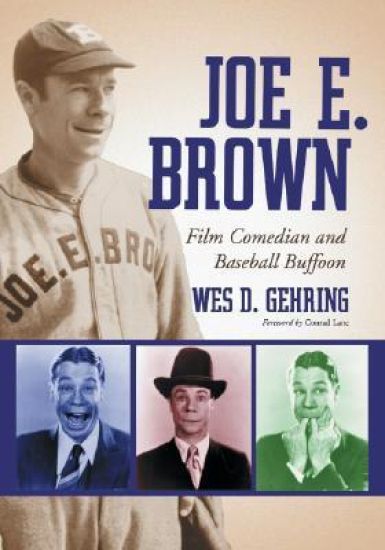
As a young boy in the depths of the 1890s depression, Joe E. Brown had a job: making faces at the firemen on passing coal-burning trains so they would throw coal at him. As a child he also worked as a circus acrobat and newsboy. His inventiveness and spunk helped his family get through hard times but also fueled his fascination with entertainment, and he built up a repertoire of rubber-faced expressions and funny antics that would make his stage and screen work memorable. Baseball was a favorite pursuit in his life and thus a recurring theme in his films and skits. In this biography--the first on one of the top film comedians of the 1930s--the reader learns of Joe's challenging childhood and how it prepared him for later screen roles, and how his love of baseball translated into screen successes. His early career in vaudeville is discussed, his work as a Broadway comedian in the Roaring Twenties, his road to movie stardom, and how he parlayed his love of sports into big hits like 1930's Elmer the Great. The year 1935 gets its own chapter; its films are considered the pinnacle of Brown's career, including Alibi Ike, Bright Lights and A Midsummer Night's Dream. The final chapters reveal what happened after he left Warner Bros., including the bittersweet 1940s, when he entertained troops around the globe while mourning a son lost to the war. The book concludes with a comprehensive filmography of his features from 1928 to 1963.
Film Clowns of the Depression

Film Clowns of the Depression

Wes D. Gehring

McFarland Co Inc
2007
pokkari
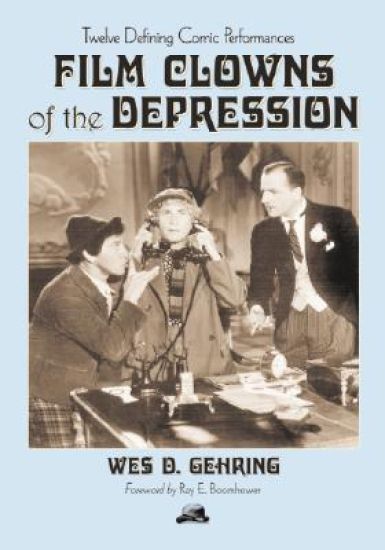
"This work examines the Depression decade's popular type of comedy--the clown. The study filters its analysis through twelve pictures. While some of the comedians in this text have generated previous analysis, some funnymen are all but forgotten. This book addresses these oversights and attempts to re-expose the brilliance and ingenuity the screen clowns contributed"--Provided by publisher.
Forties Film Funnymen

Forties Film Funnymen

Wes D. Gehring

McFarland Co Inc
2010
pokkari
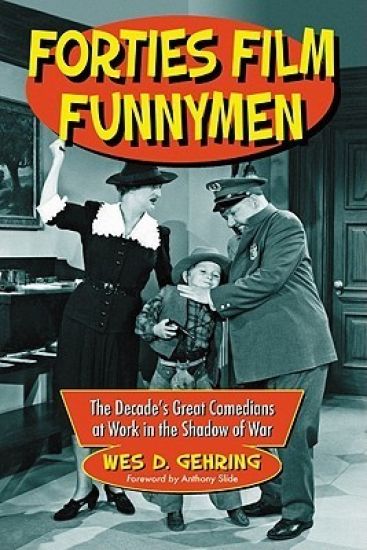
The twelve classic comedy films examined within these pages are distinguished by an equal number of defining comic performances. Ranging from The Great Dictator (1940) to A Southern Yankee (1948), each film focuses on the most central theme of "clown comedy": Resilience, the encouragement or hope that one can survive the most daunting of life's dilemmas--even during the war-torn 1940s. And each film can be regarded as a microcosm of the antiheroic world of its central clown (or clowns). Among the performers represented are Charlie Chaplin, W.C. Fields, Abbott and Costello, Jack Benny, Eddie Bracken, Bob Hope, Bing Crosby, Danny Kaye, the Marx Brothers, Harold Lloyd and Red Skelton. This lavishly illustrated work includes an introduction by noted film critic and historian Anthony Slide.
Will Cuppy, American Satirist

Will Cuppy, American Satirist

Wes D. Gehring

McFarland Co Inc
2013
pokkari
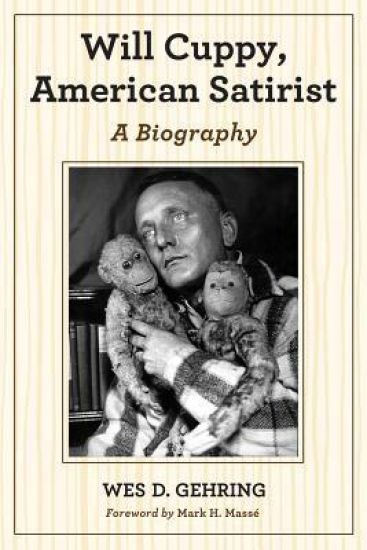
Back in the golden age of humor books (late 1920s-early 1950s), when wits of the pantheon like Robert Benchley, James Thurber, and S.J. Perelman were producing their signature works, there was another singular satirist who more than held his own with such fast company: Will Cuppy (1884-1949). This factual funnyman's metier is dark comedy that flirts with nihilism. His agenda is baldly stated in such classic Cuppy book titles as How to Be a Hermit (1929), How to Tell Your Friends from the Apes (1931), and The Decline and Fall of Practically Everybody (1950). This biography doubles as a critical study of a satirist whose shish-kebabing of humanity was often done through the veiled anthropomorphic use of animals. For a biographer, Will Cuppy represents a treasure trove of possibilities. He was a great humorist, and most of his best work is still in print, but until now he has never been the subject of a book-length study. His mesmerizingly complex and eccentric private life almost trumps the comic accomplishments of his public persona.
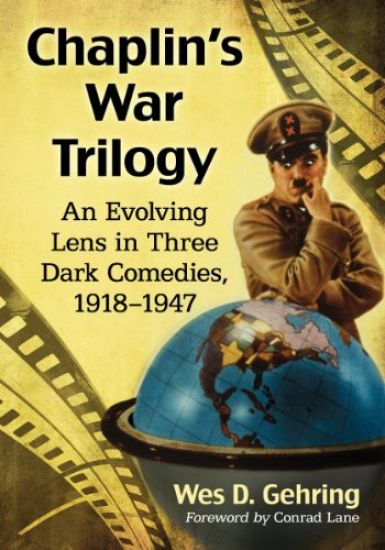
Chaplin's War Trilogy

Chaplin's War Trilogy

Wes D. Gehring

McFarland Co Inc
2014
pokkari
The book examines Charlie Chaplin's evolving perspective on dark comedy in his three war films, Shoulder Arms (1918), The Great Dictator (1940), and Monsieur Verdoux (1947). In the first he uses the genre in a groundbreaking manner but yet for a pro-war cause. In Dictator dark comedy is applied in an antiwar way. In Monsieur Verdoux Chaplin embraces the genre as an individual in defense against a society out to destroy him. All three are pivotal films in the development of the genre in film, with the latter two movies being very controversial for their time.
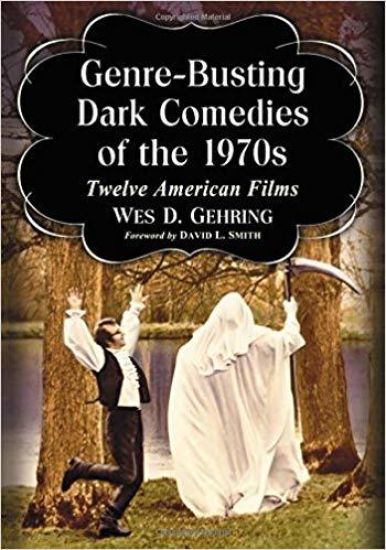
Genre-Busting Dark Comedies of the 1970s

Genre-Busting Dark Comedies of the 1970s

Wes D. Gehring

McFarland Co Inc
2016
pokkari
This examination of dark comedies of the 1970s focuses on films which concealed black humor behind a misleading genre label. All That Jazz (1979) is a musical...about death--hardly Fred and Ginger territory. This masking goes beyond misnomer to a breaking of formula that director Robert Altman called "anti-genre." Altman's MASH (1970) ridiculed the military establishment in general--the Vietnam War in particular--under the guise of a standard military service comedy. The picaresque Western Little Big Man (1970) turned the bluecoats vs. Indians formula upside-down--the audience roots for the Indians instead of the cavalry. The book covers 12 essential films, including Harold and Maude (1971), Slaughterhouse-Five (1972), One Flew Over the Cuckoo's Nest (1975) and Being There (1979), with notes on A Clockwork Orange (1971). These films reveal a compounding complexity that reinforces the absurdity at the heart of dark comedy.
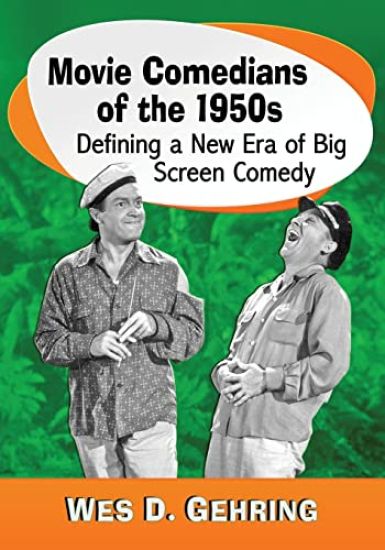
Movie Comedians of the 1950s

Movie Comedians of the 1950s

Wes D. Gehring

McFarland Co Inc
2016
pokkari
The 1950s were a transitional period for film comedians. The artistic suppression of the McCarthy era and the advent of television often resulted in a dumbing down of motion pictures. Cartoonist-turned-director Frank Tashlin contributed a funny but cartoonish effect through his work with comedians like Jerry Lewis and Bob Hope. A new vanguard of comedians appeared without stock comic garb or make-up--fresh faces not easily pigeonholed as merely comedians, such as Tony Randall, Jack Lemmon and Tony Curtis. Some traditional comedians, like Charlie Chaplin, Red Skelton and Danny Kaye, continued their shtick, though with some evident tweaking. This book provides insight into a misunderstood decade of film history with an examination of the "personality comedians." The talents of Dean Martin and Bob Hope are reappraised and the "dumb blonde" stereotype, as applied to Judy Holliday and Marilyn Monroe, is deconstructed.
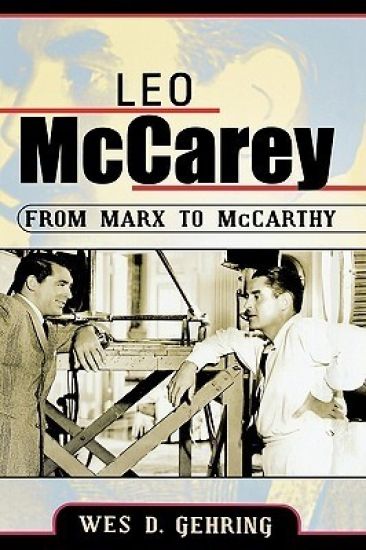
Leo McCarey

Leo McCarey

Wes D. Gehring

Scarecrow Press
2004
sidottu
Early in his Hollywood career, Leo McCarey honed his skills by working with some of the great names of comedy, including Laurel and Hardy, W.C. Fields, and The Marx Brothers, whose 1933 classic, Duck Soup, McCarey directed. Later, as a writer and/or director, McCarey was responsible for a number of classic films, including Ruggles of Red Gap, The Awful Truth, Love Affair, Make Way for Tomorrow, My Favorite Wife, and An Affair to Remember. McCarey's 1944 film Going My Way was nominated for ten Academy Awards and won seven, including the first triple crown awarded to the same person for writing, producing, and directing. Its sequel, The Bells of St. Mary's, would receive eight nominations, including Best Picture and Director. Despite all of his commercial and artistic successes, McCarey has been sadly neglected by film historians and scholars. While many of his contemporaries have been elevated to auteur status, McCarey's contributions to film have not sparked the same level of interest or esteem. Film scholar Wes Gehring seeks to rectify this with Leo McCarey: From Marx to McCarthy, the first full-length biography of this underappreciated artist. By exploring the director's life as filtered through his art, Gehring maintains that McCarey's films were often a reworking of his antiheroic self. In addition, the apparent diversity of his films actually represents an interrelated web of various comedy genres and a pattern of antiheroic characters and themes. The author makes the convincing case that throughout his life and career, McCarey was driven to entertain any audience, from a single person to movie millions, always trying to tell a better story. McCarey's own, long overdue story is finally revealed in this biography about one of the most fascinating figures to ever come out of the Hollywood dream factory.
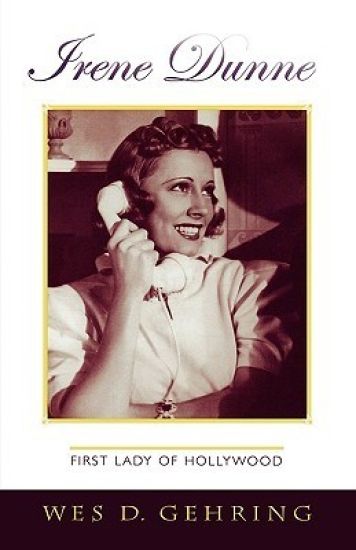
Irene Dunne

Irene Dunne

Wes D. Gehring

Scarecrow Press
2006
nidottu
This is the first full-length biography of Irene Dunne, one of the most versatile actresses of Hollywood's Golden Age. A recipient of the Kennedy Center Honors award in 1985, Dunne's acting highlights include five Best Actress Oscar nominations, occurring in almost as many different genres: the Western Cimarron (1931), the two screwball comedies Theodora Goes Wild (1936) and The Awful Truth (1937), the romantic comedy Love Affair (1939), and the populist I Remember Mama (1948). Her other memorable films include My Favorite Wife (1940), Penny Serenade (1941), Anna and the King of Siam (1946), and Life with Father (1947). After delving into Dunne's childhood and early acting forays, the book reveals details about key events in her life and career, including a difficult, bi-coastal marriage. The author also examines Dunne's pivotal roles on stage and in film, her movement among the genres of melodrama and screwball comedy, her ties to director Leo McCarey, and her post-war film career. Gehring's research and insightful analysis shed light on what made Irene Dunne so unique and her performances so memorable. Includes 16 pages of photos.