Kirjahaku
Etsi kirjoja tekijän nimen, kirjan nimen tai ISBN:n perusteella.
1000 tulosta hakusanalla Wilber R Wallace
This book is designed to create positive cognitive changes that support successful outcomes for its readers with application of its principles across all areas of their life.
In depth look at choices, how they play out in our lives, and offered explanation of how we should look at life situations and circumstances resulting from the choices we make on a daily basis.
A historian who lived the kind of history he wrote, Francis Parkman is a major-and controversial-figure in American historiography. His narrative style, while popular with readers wanting a "good story," has raised many questions with professional historians. Was Parkman writing history or historical fiction? Did he color historical figures with his own heroic self-image? Was his objectivity compromised by his "unbending, conservative, Brahmin" values? These are some of the many issues that Wilbur Jacobs treats in this thought-provoking study.Jacobs carefully considers the "apprenticeship" of Francis Parkman, first spent in facing the rigors of the Oregon Trail and later in struggling to write his histories despite a mysterious, frequently incapacitating illness. He shows how these events allowed Parkman to create a heroic self-image, which impelled his desire for fame as a historian and influenced his treatment of both the "noble" and the "savage" characters of his histories.In addition to assessing the influence of Parkman's development and personality on his histories, Jacobs comments on Parkman's relationship to basic social and cultural issues of the nineteenth century. These include the slavery question, Native American issues, expansion of the suffrage to new groups, including women, and anti-Catholicism.
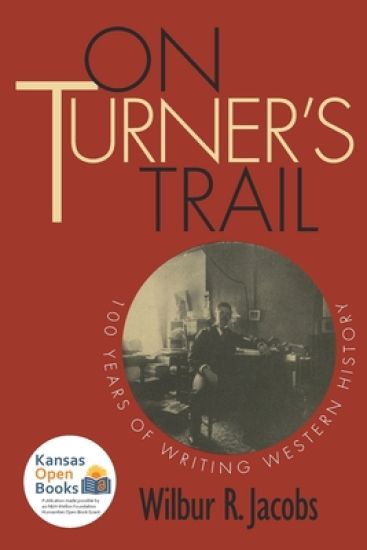
Should Frederick Jackson Turner be revered as “the father of western history” or reviled as a misguided advocate of a frontier spirit and rugged individualism that denied cultural diversity and produced widespread environmental destruction? Dividing into campus over the issue, western historians place him everywhere from one end of the spectrum to the other.In this provocative new interpretation of Turner’s life, work, and legacy, Wilbur Jacobs challenges the views of traditionalists and views of traditionalists and revisionists alike. From extensive research in the Turner archives, a nationwide search for additional Turner correspondence, interviews with historians, and a lifetime of collecting Turner anecdotes, Jacobs chronicles Turner’s professional (and sometimes personal) bequest through 100 years of Western historical writing.Jacobs adds his voice to the heated debate by mixing a sophisticated critique of historical writing with stories of professional intrigue—the fights to protect Turner’s legacy, limit access to the Turner archives, and control the Western history Association. He traces the intellectual development of Turner’s frontier theory; explores the intense rivalry between two major Turnerian disciples, Frederick Merk and Ray A. Billington, as they vied for control of Turner’s legacy; and analyzes the efforts of new western historians who seek to erase Turner and Billington from the landscape of what is now called the history of the “West.”Balanced in his assessments, Jacobs treats Turner and his disciples with a sympathetic yet critical eye. He points out Turner’s limitations in dealing with environmental, racial-ethnic, and urban themes as well as the shortcomings of Merk, Billington, and other Turnerians. At the same time, however, Jacobs illuminates the major contributions of their work.Despite their intense differences, Jacobs argues, all western historians remain inextricably linked by Turner’s legacy.
Forest Trees of Texas
Wilbur R (Wilbur Reed) Mattoon; C B (Cyril Bertram) Webster; John A Haislet

Anson Street Press
2025
pokkari
Forest Trees of Texas
Wilbur R (Wilbur Reed) Mattoon; C B (Cyril Bertram) Webster; John A Haislet

Anson Street Press
2025
sidottu
Diplomacy and Indian Gifts: Anglo-French Rivalry Along the Ohio and Northwest Frontiers, 1748-1763
Wilbur R. Jacobs
Literary Licensing, LLC
2011
nidottu
Forest Trees of Texas: How to Know Them
Wilbur R. Mattoon; C. B. Webster
Literary Licensing, LLC
2012
sidottu
""Forest Trees of Texas: How to Know Them"" is a comprehensive guidebook written by Wilbur R. Mattoon that provides detailed information on the various species of trees found in the forests of Texas. The book is designed to help readers identify and understand the different types of trees that grow in Texas, including their physical characteristics, habitat, and uses. The book is divided into two parts, with the first section covering the basics of tree identification and the second section providing detailed descriptions of each species of tree found in Texas. The book is written in an easy-to-understand language and is accompanied by numerous illustrations and photographs that help readers identify the trees they encounter in the field. Whether you are a nature enthusiast, a professional forester, or just someone who loves the outdoors, ""Forest Trees of Texas: How to Know Them"" is an essential resource that will enhance your knowledge and appreciation of the natural world.Texas Forest Service, Bulletin 20.This scarce antiquarian book is a facsimile reprint of the old original and may contain some imperfections such as library marks and notations. Because we believe this work is culturally important, we have made it available as part of our commitment for protecting, preserving, and promoting the world's literature in affordable, high quality, modern editions, that are true to their original work.
Forest Trees of Oklahoma: How to Know Them
Wilbur R. Mattoon; George R. Phillips

Literary Licensing, LLC
2012
sidottu
""Forest Trees of Oklahoma: How to Know Them"" by Wilbur R. Mattoon is a comprehensive guidebook that provides detailed information about the various tree species found in the forests of Oklahoma. The book is a valuable resource for nature enthusiasts, hikers, and anyone interested in learning more about the flora of Oklahoma.The book begins with an introduction to the forests of Oklahoma, including their history, geography, and ecology. It then goes on to describe the various tree species found in the state, including their physical characteristics, habitat, and uses. The book also includes detailed illustrations and photographs of each tree species, making it easy for readers to identify them in the wild.In addition to the individual tree descriptions, the book also includes chapters on tree identification, tree measurement, and tree conservation. The author provides helpful tips and techniques for identifying trees based on their bark, leaves, and other physical features, as well as methods for measuring tree height, diameter, and volume.Overall, ""Forest Trees of Oklahoma: How to Know Them"" is an essential guidebook for anyone interested in the trees and forests of Oklahoma. It is written in an easy-to-understand style and provides a wealth of information on the various tree species found in the state, making it a valuable resource for nature lovers, hikers, and students alike.Oklahoma Forest Commission Publication No. 1, March, 1928.This scarce antiquarian book is a facsimile reprint of the old original and may contain some imperfections such as library marks and notations. Because we believe this work is culturally important, we have made it available as part of our commitment for protecting, preserving, and promoting the world's literature in affordable, high quality, modern editions, that are true to their original work.
Forest Trees of Oklahoma: How to Know Them
Wilbur R. Mattoon; George R. Phillips

Literary Licensing, LLC
2012
nidottu
Forest Trees of Texas: How to Know Them
Wilbur R. Mattoon; C. B. Webster
Literary Licensing, LLC
2012
nidottu
A History of Private Policing in the United States
Wilbur R. Miller
Bloomsbury Academic
2020
nidottu
Private law enforcement and order maintenance have usually been seen as working against or outside of state authority. A History of Private Policing in the United States surveys private policing since the 1850s to the present, arguing that private agencies have often served as a major component of authority in America as an auxiliary of the state. Wilbur R. Miller defines private policing broadly to include self-defense, stand your ground laws, and vigilantism, as well as private detectives, security guards and patrols from gated community security to the Guardian Angels. He also covers the role of detective agencies in controlling labor organizing through spies, guards and strikebreakers. A History of Private Policing in the United States is an overview integrating various components of private policing to place its history in the context of the development of the American state.
A History of Private Policing in the United States
Wilbur R. Miller
Bloomsbury Academic
2018
sidottu
Private law enforcement and order maintenance have usually been seen as working against or outside of state authority. A History of Private Policing in the United States surveys private policing since the 1850s to the present, arguing that private agencies have often served as a major component of authority in America as an auxiliary of the state. Wilbur R. Miller defines private policing broadly to include self-defense, stand your ground laws, and vigilantism, as well as private detectives, security guards and patrols from gated community security to the Guardian Angels. He also covers the role of detective agencies in controlling labor organizing through spies, guards and strikebreakers. A History of Private Policing in the United States is an overview integrating various components of private policing to place its history in the context of the development of the American state.
Changing Frontiers of Mission reflects on the history of missions and seeks to discern its path for the future. Ever since Jesus' time, mission must precede the church. The renewal of the church is linked to recovery of this priority of mission. Unlike in the past, where the "frontier" was a geographical location, the future "frontier" is symbolized by outward movement, away from the status quo, and toward new challenges, growth and opportunities.
Henry Venn was born and bred among the British evangelical aristocracy at Clapham. Wilberforce, Grant, Macaulay, Stephen, and Thornton were at the height of their powers -- leading the campaign against slavery, promoting public morals, founding philanthropic and missionary societies -- at the turn of the nineteenth century. As powerful leader of the most prominent British missionary society from 1841 to 1872, Venn unhesitatingly used his connections with politicians and statesmen to further the missionary cause. He often found himself at odds with government, but he mastered the art of lobbying skillfully for his interest. Henry Venn was a man of generous hospitality who entertained countless guests in his home. Sir Leslie Stephen, his nephew, conjectured that in evangelical circles noted for their somber mood Venn must have been something of an embarrassment with his irrepressible humor. Venn was an outstanding administrator. Early on he perceived the need to provide the missionary movement with a clear theoretical framework. Out of his search for principles of missionary action emerged the indigenous church ideal that has figured prominently in all missionary thinking since. Henry Venn is perennially up-to-date. Anyone reading him who is concerned with today's Church in today's world will find echoes ringing all the time. It is good to have a comprehensive presentation of him; doubly valuable when it is from one who, like Dr. Shenk, is both a scholar and a missionary administrator himself. --Andrew F. Walls author of 'The Missionary Movement in Christian History' (1996) and 'The Cross Cultural Process in Christian History' (2002) 'The vision is for days yet to come, ' said the prophet. It is with such a vision that this book is concerned--the vision of one of the great missionary leaders of the past, a vision which even today remains to be fully explored. The author presents a careful historical review of Henry Venn's achievements in the setting of his age. He thus enables our own generation, more than a century later, to see with Venn's eyes, to trace the steps by which he advanced toward the great aim of churches in mission throughout the world. --Hans-Werner Gensichen Heidelberg University Wilbert R. Shenk is Senior Professor of Mission History and Contemporary Culture at Fuller Theological Seminary. His other books include 'Changing Frontiers of Mission' (1999).
The federal government's attempt to enforce civil rights measures during Reconstruction is usually regarded as a failure. Far more successful, however, was the collection of federal excise taxes on liquor during the same period -- an effort that secured for the government its single most important source of internal revenue. In Revenuers and Moonshiners Wilbur Miller explores the development and professionalization of the federal bureaucracy by examining federal liquor law enforcement in the mountain South after the Civil War. He addresses the central questions of the conditions under which unpopular federal laws could be enforced and the ways in which enforcement remained limited. The extension of federal taxing power to cover homemade whiskey was fiercely resisted by mountain people, who had long relied on distilling to produce an easily transported and readily salable product made from their corn. As a result, the collection of the tax required the creation of the most extensive civilian law enforcement agency in the nation's history, the Bureau of Internal Revenue. The bureau both regulated taxpaying distilleries and combated illicit production. This battle against moonshiners, Miller argues, implemented by the Republican party's vision of a federal authority capable of reaching into the most remote parts of the nation. Miller concentrates his analysis on the revenuers, but he nevertheless draws a clear picture of the mountain people who resisted them. He dispels traditional views of moonshiners as folk heroes imbued with a stubborn individualism or simple country folk victimized by outside forces beyond their control or understanding. Rather, Miller shows that the men (and sometimes women) who made moonshine were members of a complex and changing society that was a product of both traditional aspects of mountain culture and the forces of industrialization that were reshaping their society after the Civil War. Originally published in 1991. A UNC Press Enduring Edition -- UNC Press Enduring Editions use the latest in digital technology to make available again books from our distinguished backlist that were previously out of print. These editions are published unaltered from the original, and are presented in affordable paperback formats, bringing readers both historical and cultural value.