Kirjojen hintavertailu. Mukana 11 244 527 kirjaa ja 12 kauppaa.

Kirjahaku

Etsi kirjoja tekijän nimen, kirjan nimen tai ISBN:n perusteella.

1000 tulosta hakusanalla Wilhelm Baldensperger

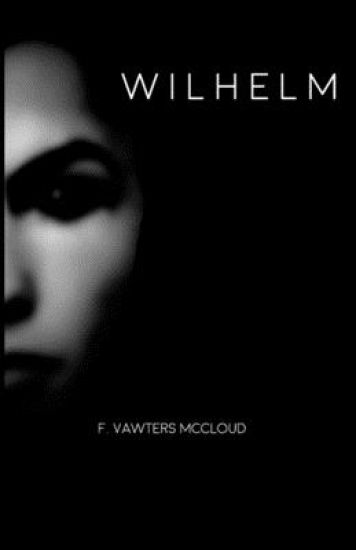
Wilhelm

Wilhelm

F. Vawters McCloud

Independently Published
2019
nidottu
Wilhelm is a riveting psychological thriller about the darkness lurking within us all. Peyton Meryl, a strong-willed, powerful, spiritual leader in her community meets wise, intriguing, and mesmerizing handsome Wilhelm at a New Year's Eve party. Soon after their encounter her perception of what's truth and moral starts to change. What if lies are now the truth? Everyone in Peyton's life who shows goodness, finds that every secret they hid safely away, is exposed in Wilhelm's "light". Wilhelm unmasks that true horror isn't a monster hiding in the dark, but being allowed to see deep within a human heart.
Wilhelm

Wilhelm

Daniel H; Ilona W

Books on Demand
2013
pokkari
Wilhelm ist ein einsamer Mensch, der eigentlich nichts wirklich kann, au er Mathematik. Durch unvorhersehbare Geschehnisse, durchlebt Wilhelm Abenteuer mit Gott, dem Teufel, Drachen, chinesische Mauern, Leuten aus Texas, fliegenden Wodkaflaschen und Lee Bruce in Umgebungen wie China, Atlantis, Australien, Russland oder Deutschland. Seine Freunde, Walkeshema, seine Mutter Verena, Marylin Menroe und M dchen mit Buddah auf dem Shirt helfen ihm, sein Leben zu meistern.
Wilhelm

Wilhelm

Rainer Kraft

Tredition Gmbh
2017
pokkari
"Jahrhundert - Vier Generationen in Deutschland" Zum Inhalt: Das Leben in Deutschland im 20.Jahrhundert wurde wesentlich von den M nnern im Land bestimmt und gepr gt. Die unheilvolle Entwicklung, hin zu zwei Kriegen, die nicht nur Europa in gro es Leid und Elend st rzten, belegt eindr cklich ihr Versagen. In Einzelb chern wird die Familiengeschichte von vier Generationen beleuchtet. Zeitrahmen ist dabei jeweils ein neues Vierteljahrhundert. Die Geschichte spielt in einem fiktiven Dorf, mitten in Sachsen. Dabei werden die ersten Lebensjahre der M nner beschrieben, mit ihren Werten, Vorstellungen und Pr gungen, die sie letztlich auch an die n chste Generation weitergeben. Wichtiges und Wertvolles, aber auch Irrungen und falsche Entscheidungen beeinflussen dadurch auch die Entwicklungen der n chsten Generation. Jedes einzelne Buch dieser Familiengeschichte tr gt den Namen der zentralen Figur. Im ersten Buch wird der Weg des kleinen Wilhelm beschrieben, eingeschlossen in einer berschaubaren Welt und mit kaum hinterfragter Lebensweise. Dennoch wird seine Entwicklung von den gro en Ver nderungen in Europa beeinflusst, von einem Krieg, der 17 Millionen Menschen das Leben kostete und einer Entwicklung, die den Weg in eine neue Katastrophe ebnete.
Wilhelm

Wilhelm

Rainer Kraft

Tredition Gmbh
2017
sidottu
"Jahrhundert - Vier Generationen in Deutschland" Zum Inhalt: Das Leben in Deutschland im 20.Jahrhundert wurde wesentlich von den M nnern im Land bestimmt und gepr gt. Die unheilvolle Entwicklung, hin zu zwei Kriegen, die nicht nur Europa in gro es Leid und Elend st rzten, belegt eindr cklich ihr Versagen. In Einzelb chern wird die Familiengeschichte von vier Generationen beleuchtet. Zeitrahmen ist dabei jeweils ein neues Vierteljahrhundert. Die Geschichte spielt in einem fiktiven Dorf, mitten in Sachsen. Dabei werden die ersten Lebensjahre der M nner beschrieben, mit ihren Werten, Vorstellungen und Pr gungen, die sie letztlich auch an die n chste Generation weitergeben. Wichtiges und Wertvolles, aber auch Irrungen und falsche Entscheidungen beeinflussen dadurch auch die Entwicklungen der n chsten Generation. Jedes einzelne Buch dieser Familiengeschichte tr gt den Namen der zentralen Figur. Im ersten Buch wird der Weg des kleinen Wilhelm beschrieben, eingeschlossen in einer berschaubaren Welt und mit kaum hinterfragter Lebensweise. Dennoch wird seine Entwicklung von den gro en Ver nderungen in Europa beeinflusst, von einem Krieg, der 17 Millionen Menschen das Leben kostete und einer Entwicklung, die den Weg in eine neue Katastrophe ebnete.
Wilhelm Marr

Wilhelm Marr

Moshe Zimmermann

Oxford University Press Inc
1987
sidottu
The creation of the term "anti-Semitism" a century ago signalled a turning point in the history of Jew-hatred, marking the division between the classical, Christian hatred of Jews and the modern, politically-rooted racist attitudes. This is the first biography of radical writer and politician Wilhelm Marr, the man who introduced the term "anti-Semitism" into politics and founded the first "Anti-Semitic League." Marr (1819-1904) began his political career as a democrat and revolutionary, fighting for the emancipation of all oppressed groups including the Jews. But when he became disillusioned with contemporary politics, Jews became the focus of his attack. Drawing on Marr's published and unpublished works, as well as on previously unexamined journals and voluminous correspondence, Zimmermann sets out to discover why an intellectual radical like Marr would become a virulent anti-Semite. As Zimmermann follows Marr's profound influence in the political, literary, and artistic circles of his day and his collaborations with Karl Marx, Richard Wagner, and other radical founders of modern anti-Semitism, he reveals the diverse ways that anti-Semitism came to permeate German thought and illuminates critical moments in the emergence of the German Reich. The book also includes Marr's surprising, never-before-published "Testament of an Anti-Semite," written at the end of his life when he finally turned his back on the movement he helped to create. This is the first volume in a new Oxford series, Studies in Jewish History. The General Editor for the series is Jehuda Reinharz of Brandeis University.
Wilhelm II and the Germans

Wilhelm II and the Germans

Thomas A. Kohut

Oxford University Press Inc
1992
sidottu
This striking biography of Kaiser Wilhelm II is the most penetrating study to date of his development and personality, as well as an important contribution to our understanding of the crucial period in history that bears his name, `Wilhelmine Germany'. A skilful, psychoanalytically informed analysis of the Kaiser's character, the book shows how the powerful leader of Germany's `Second Reich' became the slave of public opinion - restless, impulsive, and easily swayed by flattery or by those with stronger wills. It reveals a man both anxiously insecure and brashly arrogant, flamboyant and confident in public, yet vacillating and ineffective in his political decisions. Despite his political ineptitude, however, Wilhelm II was one of the most successful and beloved symbolic leaders of modern times. Professor Kohut argues that, in this nationalistic age, the new German nation wanted to see itself as it saw its Kaiser - strong, self-assured, and surrounded by pomp and splendour.
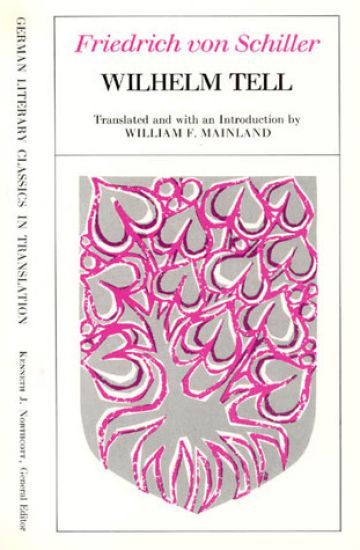
Wilhelm Tell

Wilhelm Tell

Friedrich von Schiller

University of Chicago Press
1973
nidottu
When Schiller completed Wilhelm Tell as a "New Year's Gift for 1805" he foretold that it would cause a stir. He was right. In the midst of Great Power politics a play which drew substance from one of the fourteenth-century liberation movements proved both attractive and inflammatory. Since then the work as become immensely popular. This new English translation by William F. Mainland brings out the essential tragi-comic nature of Wilhelm Tell but also emphasizes its impressive formal unity. Schiller based his play on chronicles of the Swiss liberation movement, in which Wilhelm Tell played a major role. Since Tell's existence has never been proven, Schiller, a historian by profession, felt he had to devise a figure who would bring the uncertainties and contradictions of the various Swiss chronicles into focus. Respected for his courage and skill with a bow, for his peaceable nature and his integrity, Schiller's archer-while always ready to aid his fellows-habitually seeks solitude. In the midst of political turmoil Wilhelm Tell is the nonpolitical man of action. Keenly interested in the problematic interplay of history and legend, Schiller turned it to be dramatic advantage. He constructed his play to illustrate the greatest possible development of the character traits suggested for Tell by the chronicles. The result of Schiller's supreme achievement in historical drama.
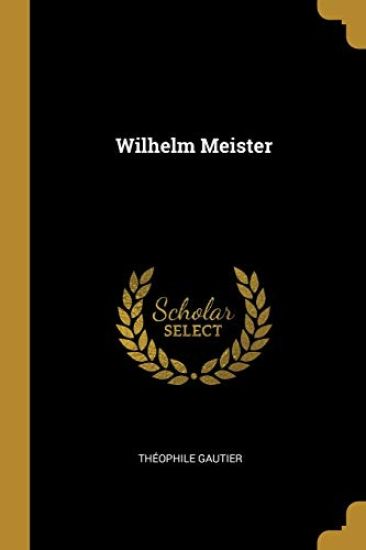
Wilhelm Meister

Wilhelm Meister

Théophile Gautier

Wentworth Press
2018
pokkari
This work has been selected by scholars as being culturally important, and is part of the knowledge base of civilization as we know it. This work was reproduced from the original artifact, and remains as true to the original work as possible. Therefore, you will see the original copyright references, library stamps (as most of these works have been housed in our most important libraries around the world), and other notations in the work.This work is in the public domain in the United States of America, and possibly other nations. Within the United States, you may freely copy and distribute this work, as no entity (individual or corporate) has a copyright on the body of the work.As a reproduction of a historical artifact, this work may contain missing or blurred pages, poor pictures, errant marks, etc. Scholars believe, and we concur, that this work is important enough to be preserved, reproduced, and made generally available to the public. We appreciate your support of the preservation process, and thank you for being an important part of keeping this knowledge alive and relevant.
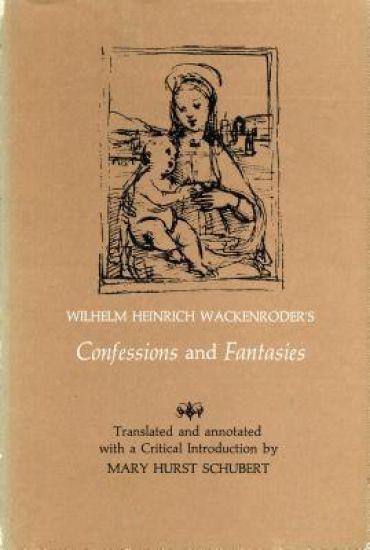
Wilhelm Heinrich Wackenroder’s Confessions and Fantasies

Wilhelm Heinrich Wackenroder’s Confessions and Fantasies

Mary Hurst Schubert

Pennsylvania State University Press
1971
pokkari
This volume makes accessible for the first time in English Wackenroder’s Herzensergiessungen eines kunstliebenden Klosterbruders (1787). One of the most important documents of early German Romanticism, the Confessions from the Heart of an Art-Loving Friar elevated Albrecht Dürer to a position of significance in art history, strongly influenced the Pre-Raphaelite School of painting and the “Nazarenes,” and had a deep impact on such other Romantic authors as Tieck, the Schlegels, Hoffmann, von Arnim, and Brentano. In the realm of music, Wackenroder’s nuclear ideas are realized in the compositions of Mendelssohn, Liszt, Berlioz, and Wagner. Mary Hurst Schubert has produced a gifted, fluent English translation that retains the flowing style and emotion-laden tone of the original German. She also includes all of the contributions to the 1799 edition of Phantasien über die Kunst für Freunde der Kunst (Fantasies on Art for Friends of Art) that are generally acknowledged to be Wackenroder’s work. Preceding the translated texts, Schubert provides a lengthy and valuable introduction that surveys the history of Wackenroder criticism and takes an exciting new approach to the Confessions. The volume is further enhanced by critical annotations to the translated texts, illustrations, a chronological list of all known editions of Wackenroder’s writings, and an extensive bibliography of Wackenroder research.
Wilhelm Wundt in History

Wilhelm Wundt in History

Kluwer Academic/Plenum Publishers
2001
sidottu
In this new millenium it may be fair to ask, "Why look at Wundt?" Over the years, many authors have taken fairly detailed looks at the work and accomplishments of Wilhelm Wundt (1832-1920). This was especially true of the years around 1979, the centennial of the Leipzig Institute for Experimental Psychology, the birthplace of the "graduate program" in psychology. More than twenty years have passed since then, and in the intervening time those centennial studies have attracted the attention and have motivated the efforts of a variety of historians, philosophers, psychologists, and other social scientists. They have profited from the questions raised earlier about theoretical, methodological, sociological, and even political aspects affecting the organized study of mind and behavior; they have also proposed some new directions for research in the history of the behavioral and social sciences. With the advantage of the historiographic perspective that twenty years can bring, this volume will consider this much-heralded "founding father of psychology" once again. Some of the authors are veterans of the centennial who contributed to a very useful volume, edited by Robert W. Rieber, Wilhelm Wundt and the Making of a Scientific Psychology (New York: Plenum Press, 1980). Others are scholars who have joined Wundt studies since then, and have used that book, among others, as a guide to further work. The first chapter, "Wundt before Leipzig," is essentially unchanged from the 1980 volume.