Kirjahaku
Etsi kirjoja tekijän nimen, kirjan nimen tai ISBN:n perusteella.
1000 tulosta hakusanalla William A Jr Lyell
This title is part of UC Press's Voices Revived program, which commemorates University of California Press’s mission to seek out and cultivate the brightest minds and give them voice, reach, and impact. Drawing on a backlist dating to 1893, Voices Revived makes high-quality, peer-reviewed scholarship accessible once again using print-on-demand technology. This title was originally published in 1976.
Stanley K. Sheinbaum: A 20th Century Knight's Quest for Peace, Civil Liberties and Economic Justice
William a. Meis Jr; Stanley K. Sheinbaum
Fairtree
2012
nidottu
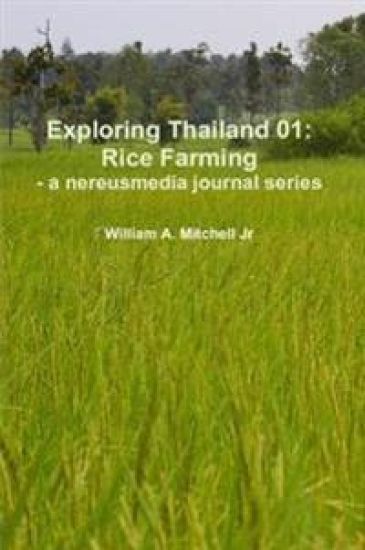
Exploring Thailand 01: Rice Farming - a Nereusmedia Journal Series
William A. Mitchell Jr
Lulu.com
2014
nidottu
The first in a nereusmedia journal series on Exploring Thailand, discover the Rice Cycle by following the farming practices of traditional hand planting, harvesting, threshing, and milling for this staple food of Asia at the heart of Thai cuisine and culture.
Signal from Noise, Information from Data
William a Luker Sr and Bill Luker Jr
Xlibris Corporation
2010
sidottu
Handbook of the Linguistic Atlas of the Middle and South Atlantic States
William A. Kretzschmar Jr.; Virginia G. McDavid; Theodore K. Lerud; Ellen Johnson
University of Chicago Press
1993
sidottu
Who uses "skeeter hawk," "snake doctor," and "dragonfly" to refer to the same insect? Who says "gum band" instead of "rubber band"? The answers can be found in the "Linguistic Atlas of the Middle and South Atlantic States (LAMSAS)", a survey of regional and social differences in spoken American English. It covers the region from New York State to northern Florida and from the coastline to the borders of Ohio and Kentucky. Through interviews with nearly twelve hundred people conducted during the 1930s and 1940s, the LAMSAS mapped regional variations in vocabulary, grammar, and pronunciation at a time when population movements were more limited than they are today, thus providing a unique look at the correspondence of language and settlement patterns. This handbook is a guide to the LAMSAS project, laying out its history and describing its scope and methodology. In addition, the handbook reveals biographical information about the informants and social histories of the communities in which they lived, including primary settlement areas of the original colonies. Dialectologists will rely on it for understanding the LAMSAS, and historians will find it valuable for its original historical research. Since much of the LAMSAS questionnaire concerns rural terms, the data collected from the interviews can pinpoint such language differences as those between areas of plantation and small-farm agriculture. For example, LAMSAS reveals that two waves of settlement through the Appalachians created two distinct speech types. Settlers coming into Georgia and other parts of the Upper South through the Shenandoah Valley and on to the western side of the mountain range had a Pennsylvania-influenced dialect, and were typically small farmers. Those who settled the Deep South in the rich lowlands and plateaus tended to be plantation farmers from Virginia and the Carolinas who retained the vocabulary and speech pattern's of coastal areas.
Handbook of the Linguistic Atlas of the Middle and South Atlantic States
William A. Kretzschmar Jr.; Virginia G. McDavid; Theodore K. Lerud; Ellen Johnson
University of Chicago Press
1993
nidottu
Who uses "skeeter hawk," "snake doctor," and "dragonfly" to refer to the same insect? Who says "gum band" instead of "rubber band"? The answers can be found in the "Linguistic Atlas of the Middle and South Atlantic States (LAMSAS)", a survey of regional and social differences in spoken American English. It covers the region from New York State to northern Florida and from the coastline to the borders of Ohio and Kentucky. Through interviews with nearly twelve hundred people conducted during the 1930s and 1940s, the LAMSAS mapped regional variations in vocabulary, grammar, and pronunciation at a time when population movements were more limited than they are today, thus providing a unique look at the correspondence of language and settlement patterns. This handbook is a guide to the LAMSAS project, laying out its history and describing its scope and methodology. In addition, the handbook reveals biographical information about the informants and social histories of the communities in which they lived, including primary settlement areas of the original colonies. Dialectologists will rely on it for understanding the LAMSAS, and historians will find it valuable for its original historical research. Since much of the LAMSAS questionnaire concerns rural terms, the data collected from the interviews can pinpoint such language differences as those between areas of plantation and small-farm agriculture. For example, LAMSAS reveals that two waves of settlement through the Appalachians created two distinct speech types. Settlers coming into Georgia and other parts of the Upper South through the Shenandoah Valley and on to the western side of the mountain range had a Pennsylvania-influenced dialect, and were typically small farmers. Those who settled the Deep South in the rich lowlands and plateaus tended to be plantation farmers from Virginia and the Carolinas who retained the vocabulary and speech pattern's of coastal areas.
Lyautey and the French Conquest of Morocco describes and analyzes the method of colonial conquest and rule linked to the name of Marshal Louis-Hubert Lyautey (1854-1934), France's first resident-general in Morocco and the most famous of France's 20th-century overseas soldier-administrators. Lyautey popularized the notions of 'peaceful penetration' and 'indirect rule' as part of a grand colonial design of military pacification, economic development, political modernization and social betterment. For Lyautey imperialism could be a life-giving force for both Frenchmen and Moroccans alike and during his thirteen years as resident general he boldly promoted France's actions in Morocco as the 'highest form' of imperialism. This book traces the development of Lyautey's ideas on conquest and rule at home and abroad, and shows how they translated into practice. While there was much that was praiseworthy in Lyautey's approach to colonial matters, in the end force always remained more effective than anything else and, whether used gently or severely, it failed to stem Moroccan resistance to French rule. Based on archival material in Morocco and France, Lyautey and the French Conquest of Morocco is the first book to deal in a detailed manner with French pacification strategy in Morocco and with the mechanics of 'indirect rule' (always, in reality, rather more direct than indirect). It should be of great value to readers of 19th and 20th century French, European and North African history and to students of colonialism and imperialism.
"The Passion of Muhammad Shakir" is a fable written by Guillermo Bosch, the critically acclaimed author of the political/erotic fantasy "Rain". The story details the final days of a horribly wounded prisoner undergoing interrogation, humiliation and degradation in a mysterious prison for a crime he may or may not have committed, as well as the memories that sustain him during his ordeal.
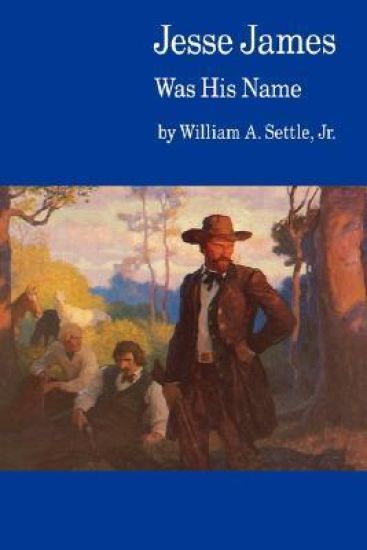
Jesse James Was His Name; or, Fact and Fiction Concerning the Careers of the Notorious James Brothers of Missouri
William A. Settle Jr.
Bison Books
1977
pokkari
"Jesse James," said Carl Sandburg, "is the only American bandit who is classical, who is to this country what Robin Hood or Dick Turpin is to England, whose exploits are so close to the mythical and apocryphal." For this definitive study no significant source of information concerning Jesse James and his brother Frank has been neglected, and from it emerges resolution of the debated point: "Were the Jameses common criminals or gallant Robin Hoods?"
Who is to be included in a political community and on what terms? William A. Barbieri Jr. seeks answers to these questions in this exploration of the controversial concept of citizenship rights-a concept directly related to the nature of democracy, equality, and cultural identity. Through an examination of the case of Germany’s settled “guestworkers” and their families, Ethics of Citizenship investigates the pressing problem of political membership in a world marked by increased migration, rising nationalist sentiment, and the ongoing reorganization of states through both peaceful and violent means. Although some of Germany’s foreign workers have gradually attained a degree of social and economic legitimacy, Barbieri explains how they remain effectively excluded from true German citizenship. Describing how this exclusion has occurred and assessing current attitudes toward political membership in Germany, he argues for a just and democratic policy toward the tax-paying, migrant worker minority, one that would combine the extension of the individual rights of citizenship with the establishment of certain group rights. Through a dissection of ongoing public “membership debates” over issues such as suffrage, dual citizenship, and immigration and refugee policy, Barbieri identifies a range of competing responses to the question of who “belongs” in Germany. After critiquing these views, he proposes an alternative ethic of membership rooted in an account of domination and human rights that seeks to balance individual and group rights within the context of a commitment to democracy and equal citizenship. Indispensable for scholars of German studies, Ethics of Citizenship also raises questions that will attract moral philosophers, constitutional scholars, and those interested in the continuing, global problems associated with migration.
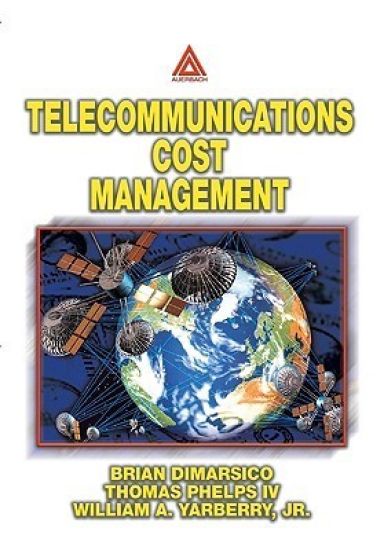
Telecommunications Cost Management
William A. Yarberry Jr.; Brian DiMarsico; Thomas Phelps IV
Auerbach Publishers Inc.
2002
nidottu
Most telecom books focus on either traditional telecom billing audits or pure technology, with the cost saving ideas buried deep in the text. Busy decision-makers need the specifics quickly, without having to plow through details that do not affect the economics of a project. Telecommunications Cost Management takes cost saving techniques and brings them to the forefront where managers and decision makers can quickly use them for real world cost reductions or efficiency gains. Traditional bill auditing texts provide recommendations but only within the context of the existing architecture - for example, they might highlight techniques for reducing circuit switched leased lines but omit the pros and cons of leased lines versus alternatives. Telecommunications Cost Management provides a blueprint for cost reduction across all major technologies - from frame relay to IP telephony to contract recommendations. The text presents the key facts up front, with sample calculations for broadband, local access, equipment, and service alternatives. It provides scenarios showing the effects of different architectural strategies for both voice and data communications. Intended for the busy decision-maker, this reference eliminates the need to wade through unnecessary details and guides the reader directly to the cost saving techniques.
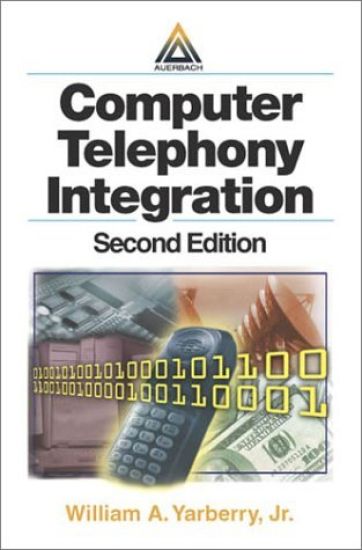
Since the publication of the first edition, the CTI world has changed significantly. Where it was once focused on the integration of voice systems with computers, the focus is now on IP-based voice, or converged networks and services. Today, the telcos are upgrading their systems from circuit-switched to IP-based packet-switched networks. Companies like Cisco Systems and Dow Chemical have installed IP-based phones in their offices worldwide, saving millions of dollars in service fees. Computer Telephony Integration, Second Edition has been updated to reflect these recent changes in the industry and will help managers make the right decisions for their communications infrastructure. It explains the business and economic significance of the major integrated data-voice technologies and highlights the pros and cons of each approach. The text covers convergence, telephony standards, new and powerful tools for call centers, IP telephony(VoIP), infrastructure management tools, and advanced business applications. In addition to the latest developments in standard CTI technologies such as IVR, voicemail, speech recognition, and applications, this edition includes expanded chapters on security, cost management, call center technology, and IP telephony. Case studies provide a real world perspective on many of the newest CTI technologies. Bringing together the author's extensive experience in the field, Computer Telephony Integration, Second Edition will help communications and IT professionals make efficient, cost-effective decisions that will lead to improved customer service, increased productivity, reduced costs, and enhanced workflow automation.