w. A. Poucher's original 'Perfumes, Cosmetics and Soaps', first published in 1923, were the first comprehensive text books to deal exclusively with the work of the perfume and cosmetic industry, and received recognition and approval throughout the world. Their success and popularity was due primarily to the fact that they provided a practical guide not only to those engaged in the industry, but to a section of readers interested in the mystique and romance which at that time was associated with the perfume and cosmetic arts. It was also an outstanding feature that the books were easily readable, subject matter being expressed in a clear and under- standable fashion without the frills of pseudo-science or advanced technology. In revising Volume III and editing Volume I it has been my aim to continue in the pattern and style of their author, and to this end I have not intended to write a new book, but have attempted a true revision, and it is a remarkable fact that many of the original writings made nearly 50 years ago can still apply to an industry which since that time has developed beyond recognition.
William Arthur Deacon was an intellectual patron and prophet in Canadian writing. For forty years, as literary editor of Saturday Night (1922-8), The Mail and Empire (1928-36), and The Globe and Mail (1936-60) he contributed vast amounts of time and energy to building a readership and a sympathetic climate for Canadian writers and writing. His correspondence put him in touch, as no other reviewer before him, with virtually every English- and French-Canadian author of his time. Based on his correspondence, books, and review columns, the biography views Deacon’s life in terms of this involvement and in the context of the cultural and political forces of his time. Deacon’s early years as a lawyer, his self-imposed literary apprenticeship, and his break with the law as a profession concurred with the sense of mission and destiny that were part of his Methodist family background and his personal theosophical beliefs. Coming to Toronto in 1922, he quickly established himself as the country’s premier literary reviewer and poured his energies into that role. In that decade he also published Pens and Pirates, Poteen, The Four Jameses, and the appreciative monograph Peter McArthur. Deacon’s dismissal from Saturday Night and the Depression years tempered his zeal and broadened his awareness beyond literary horizons, although they were still the focus of his energies. His nationalism and pacifism were articulated in My Vision of Canada (1933). He also found himself more aware of the importance of literary community as he became deeply involved in the survival of Canadian writers and publishers. Deacon’s years with the Canadian Author’s Association, first as member, then as Toronto branch president, and finally as national president, witnessed the establishment of the Canadian Writers’ Foundation, the Governor-General’s Awards, the Standard Writers’ Contract, and the recognition by the federal government of special tax arrangements for Canadian writers. The list of those who enjoyed Deacon’s friendship and support reads like a who’s who of Canadian literature, and his associations with French-Canadian writers after the Second World War broadened the cultural awareness of his readers. His service to both reader and writer and to the culture on which both depend was without parallel – as this volume vividly reveals.
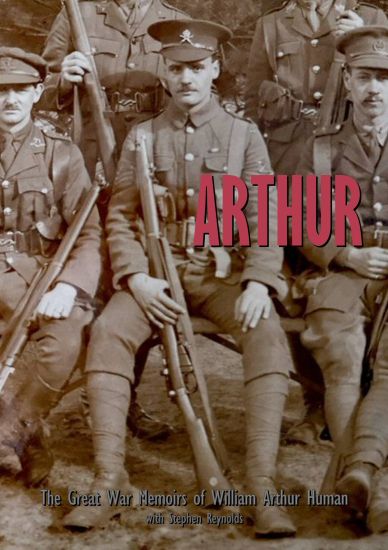
William Arthur Human was 22 years old and serving as a British soldier in India when war broke out in 1914.This is his story, in his own words, covering his first eight months on the Western Front and featuring the Battle of Neuve Chapelle.An extraordinarily vivid account that is heartfelt, captivating, and challenging in equal measure."Nowadays - when I think of it - it gives me a shiver down my back. I wonder how a man could live through it all and yet be sane."Written by William Arthur HumanTranscribed by his great-grandson Stephen Reynolds