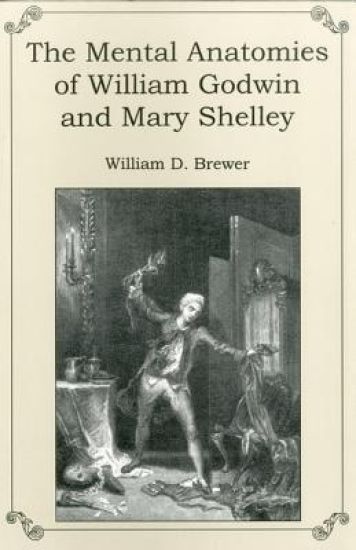
This book explores the influence of Enlightenment and Romantic-era theories of the mind on the writings of Godwin and Shelley and examines the ways in which these writers use their fiction to explore such psychological phenomena as ruling passions, madness, the therapeutic value of confessions (both spoken and written), and the significance of dreams. Unlike most studies of Godwin and Shelley, it does not privilege their masterworks—for the most part, it focuses on their lesser-known writings. Brewer also considers the works of other Romantic-era writers, as well as the seventeenth- and eighteenth-century philosophical and medical theories that informed Godwin’s and Shelley’s presentations of mental states and types of behavior.
Examining chameleonic identities as seen in theatrical performances and literary texts during the Romantic period, this study explores cultural attitudes toward imposture and how it reveals important and much-debated issues about this time period. Brewer shows chameleonism evoked anxieties about both social instability and British selfhood.
Examining chameleonic identities as seen in theatrical performances and literary texts during the Romantic period, this study explores cultural attitudes toward imposture and how it reveals important and much-debated issues about this time period. Brewer shows chameleonism evoked anxieties about both social instability and British selfhood.
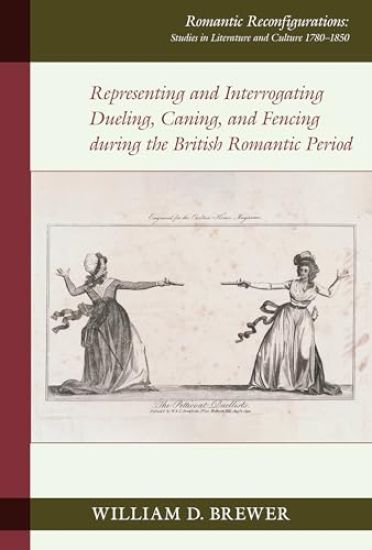
Representing and Interrogating Dueling, Caning, and Fencing during the British Romantic Period examines Romantic-era representations of physical interpersonal conflict and the ways in which they reflect, challenge, and subvert gender roles, class hierarchies, and racial and ethnic stereotypes. Along with fictional depictions of one-on-one physical aggression by writers such as Mary Robinson, William Godwin, Walter Scott, Lord Byron, and Mary Shelley, it considers historical accounts of honor violence. While recent studies of honor disputes during the Romantic period have tended to focus on the codified formal duel, this book considers other forms of physical aggression as well, including unritualized duels, assassinations, canings, public fencing bouts, boxing matches, and brawls. William Brewer argues that many Romantic-era Britons found the aristocratic chivalric code compatible with bourgeois commercial values. Although the middle classes were on the ascendant during the decades before the Great Reform Bill, British society continued to affirm the chivalric ideals of honor, physical courage, duty, service, loyalty, and reverence toward women. Romantic-period representations and interrogations of physical conflict and toxic masculinity, along with the affirmative portrayals in Mary Shelley’s fiction of pacifistic and nurturing models of masculinity, continue to resonate today and testify to the ongoing struggle to contend with and regulate interpersonal aggression.
During the Romantic period, Hannah Cowley (1743–1809) achieved fame both as a playwright and a poet, composing popular comedies and, as Anna Matilda, amorous Della Cruscan verse. But despite a recent surge of scholarly interest in her works, her controversial comedy The World as It Goes; or A Party at Montpelier (performed 1781) has never been published. During its premiere, audience members loudly objected to the play’s bawdy content, and it closed after a single performance. The comedy’s catastrophic failure provides insights into the theatrical tastes, anxieties and mores of late eighteenth-century audiences and influenced the manner in which Cowley handled controversial issues in her subsequent plays. This edition of The World as It Goes is based on the Larpent licensing holograph manuscript held by the Huntington Library (LA 548). The transcription of the play is supplemented with an introduction providing cultural, theatrical, historical and biographical contexts; contemporaneous reviews; and a note on the text.
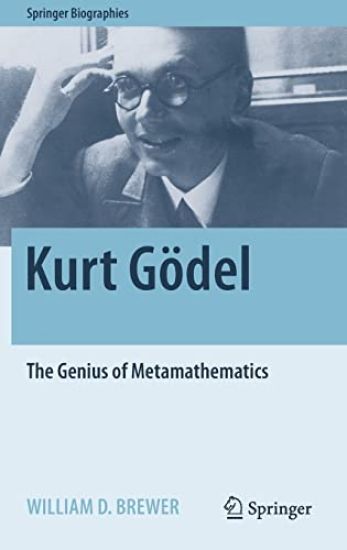
During his lifetime, Kurt Gödel was not well known outside the professional world of mathematicians, philosophers and theoretical physicists. Early in his career, for his doctoral thesis and then for his Habilitation (Dr.Sci.), he wrote earthshaking articles on the completeness and provability of mathematical-logical systems, upsetting the hypotheses of the most famous mathematicians/philosophers of the time. He later delved into theoretical physics, finding a unique solution to Einstein’s equations for gravity, the ‘Gödel Universe’, and made contributions to philosophy, the guiding theme of his life. This book includes more details about the context of Gödel’s life than are found in earlier biographies, while avoiding an elaborate treatment of his mathematical/scientific/philosophical works, which have been described in great detail in other books. In this way, it makes him and his times more accessible to general readers, and will allow them to appreciate the lasting effects of Gödel’s contributions (the latter in a more up-to-date context than in previous biographies, many of which were written 15–25 years ago). His work spans or is relevant to a wide spectrum of intellectual endeavor, and this is emphasized in the book, with recent examples. This biography also examines possible sources of his unusual personality, which combined mathematical genius with an almost childlike naiveté concerning everyday life, and striking scientific innovations with timidity and hesitancy in practical matters. How he nevertheless had a long and successful career, inspiring many younger scholars along the way, with the help of his loyal wife Adele and some of his friends, is a fascinating story in human nature.
During his lifetime, Kurt Gödel was not well known outside the professional world of mathematicians, philosophers and theoretical physicists. Early in his career, for his doctoral thesis and then for his Habilitation (Dr.Sci.), he wrote earthshaking articles on the completeness and provability of mathematical-logical systems, upsetting the hypotheses of the most famous mathematicians/philosophers of the time. He later delved into theoretical physics, finding a unique solution to Einstein’s equations for gravity, the ‘Gödel Universe’, and made contributions to philosophy, the guiding theme of his life. This book includes more details about the context of Gödel’s life than are found in earlier biographies, while avoiding an elaborate treatment of his mathematical/scientific/philosophical works, which have been described in great detail in other books. In this way, it makes him and his times more accessible to general readers, and will allow them to appreciate the lasting effects of Gödel’s contributions (the latter in a more up-to-date context than in previous biographies, many of which were written 15–25 years ago). His work spans or is relevant to a wide spectrum of intellectual endeavor, and this is emphasized in the book, with recent examples. This biography also examines possible sources of his unusual personality, which combined mathematical genius with an almost childlike naiveté concerning everyday life, and striking scientific innovations with timidity and hesitancy in practical matters. How he nevertheless had a long and successful career, inspiring many younger scholars along the way, with the help of his loyal wife Adele and some of his friends, is a fascinating story in human nature.
Zu seinen Lebzeiten war Kurt Gödel außerhalb der Fachwelt der Mathematiker, Philosophen und theoretischen Physiker kaum bekannt. Zu Beginn seiner Karriere schuf er beeindruckende Arbeiten zur Vollständigkeit und Beweisbarkeit formaler logischer Systeme, die zu seiner Dissertation und seiner Habilitations-schrift wurden und ihn unter Fachleuten weltberühmt machten. Seine Unvoll-ständigkeitssätze läuteten das Ende der formal-logischen Programme der Logizisten (Russell et al.) und der Formalisten (Hilbert et al.) ein. Später erzielte er auch signifikante Ergebnisse in der Mengenlehre. Nach seiner Emigration in die USA (Princeton), widmete er sich mehr der Philosophie, dem Leitmotiv seines Lebens, und er fand auch eine einzigartige Lösung zu Einsteins Feld-gleichungen der Gravitation, sein “Gödel-Universum“. Dieses Buch beschreibt sowohl den Gödel, der ein genialer Wissenschaftler war, und der gewagte und neuartige Hypothesen zu den Fundamenten der Mathe-matik und Physik hervorbrachte, - als auch den Gödel, der ein perfekter Rationalist war, aber sein Alltagsleben nur mit Mühe meistern konnte und zeitlebens unter Depressionen, Angstneurosen und Hypochondrie litt. Ein Leben voller Paradoxen, in dem er trotz all seiner psychischen Probleme Beachtliches leistete und zu einem Vorbild für viele jüngere Wissenschaftler wurde. Das Buch liefert den Kontext zu seinen Errungenschaften, die ein verblüffend breites Spektrum intellektueller Unternehmungen darstellen, und zu seiner zunehmenden Geisteskrankheit; und es zeigt, wie er eine lange und erfolgreiche Karriere mit Hilfe seiner loyalen Ehefrau Adele und einigen seiner Freunde durchlaufen konnte. Dies ist eine faszinierende Geschichte der wissen-schaftlichen Genialität und der menschlichen Natur.
Regularly the subject of cartoonists and satirical novelists, Mary Robinson achieved public notoriety as the mistress of the young Prince of Wales (George IV). Her association with figures such as William Godwin and Mary Wollstonecraft, and comparisons with Charlotte Smith, make her a serious figure for scholarly research.
Regularly the subject of cartoonists and satirical novelists, Mary Robinson achieved public notoriety as the mistress of the young Prince of Wales (George IV). Her association with figures such as William Godwin and Mary Wollstonecraft, and comparisons with Charlotte Smith, make her a serious figure for scholarly research.
Regularly the subject of cartoonists and satirical novelists, Mary Robinson achieved public notoriety as the mistress of the young Prince of Wales (George IV). Her association with figures such as William Godwin and Mary Wollstonecraft, and comparisons with Charlotte Smith, make her a serious figure for scholarly research.
Regularly the subject of cartoonists and satirical novelists, Mary Robinson achieved public notoriety as the mistress of the young Prince of Wales (George IV). Her association with figures such as William Godwin and Mary Wollstonecraft, and comparisons with Charlotte Smith, make her a serious figure for scholarly research.
Regularly the subject of cartoonists and satirical novelists, Mary Robinson achieved public notoriety as the mistress of the young Prince of Wales (George IV). Her association with figures such as William Godwin and Mary Wollstonecraft, and comparisons with Charlotte Smith, make her a serious figure for scholarly research.
Regularly the subject of cartoonists and satirical novelists, Mary Robinson achieved public notoriety as the mistress of the young Prince of Wales (George IV). Her association with figures such as William Godwin and Mary Wollstonecraft, and comparisons with Charlotte Smith, make her a serious figure for scholarly research.
Regularly the subject of cartoonists and satirical novelists, Mary Robinson achieved public notoriety as the mistress of the young Prince of Wales (George IV). Her association with figures such as William Godwin and Mary Wollstonecraft, and comparisons with Charlotte Smith, make her a serious figure for scholarly research.
Regularly the subject of cartoonists and satirical novelists, Mary Robinson achieved public notoriety as the mistress of the young Prince of Wales (George IV). Her association with figures such as William Godwin and Mary Wollstonecraft, and comparisons with Charlotte Smith, make her a serious figure for scholarly research.
Regularly the subject of cartoonists and satirical novelists, Mary Robinson achieved public notoriety as the mistress of the young Prince of Wales (George IV). Her association with figures such as William Godwin and Mary Wollstonecraft, and comparisons with Charlotte Smith, make her a serious figure for scholarly research.
Regularly the subject of cartoonists and satirical novelists, Mary Robinson achieved public notoriety as the mistress of the young Prince of Wales (George IV). Her association with figures such as William Godwin and Mary Wollstonecraft, and comparisons with Charlotte Smith, make her a serious figure for scholarly research.
Through a multi-methodology approach, Principles and Methods of Social Research, Fourth Edition covers the latest research techniques and designs and guides readers toward the design and conduct of social research from the ground up. Applauded for its comprehensive coverage, the breadth and depth of content of this new edition is unparalleled.Explained with updated applied examples useful to the social, behavioral, educational, and organizational sciences, the methods described are relevant to contemporary researchers. The underlying logic and mechanics of experimental, quasi-experimental, and non-experimental research strategies are discussed in detail. Introductory chapters cover topics such as validity and reliability furnish readers with a firm understanding of foundational concepts. The book has chapters dedicated to sampling, interviewing, questionnaire design, stimulus scaling, observational methods, content analysis, implicit measures, dyadic and group methods, and meta-analysis to cover these essential methodologies. Notable features include an emphasis on understanding the principles that govern the use of a method to facilitate the researcher’s choice of the best technique for a given situation; use of the laboratory experiment as a touchstone to describe and evaluate field experiments, correlational designs, quasi experiments, evaluation studies, and survey designs; and coverage of the ethics of social research including the power a researcher wields and tips on how to use it responsibly.The new edition features:Increased attention to the distinction between conceptual replication and exact replication and how each contributes to cumulative scienceUpdated research examples that clarify the operation of various research design operationsMore learning tools including more explanation of the basic concepts, more research examples, and more tables and figures, such as additional illustrations to include internet content like social mediaExtensive revisions and expansions of all chaptersA fuller discussion of the dangers of unethical treatment to research participantsPrinciples and Methods of Social Research, Fourth Edition is intended for graduate or advanced undergraduate courses in research methods in psychology, communication, sociology, education, public health, and marketing, and further appeals to researchers in various fields of social research, such as social psychology and communication.
Through a multi-methodology approach, Principles and Methods of Social Research, Fourth Edition covers the latest research techniques and designs and guides readers toward the design and conduct of social research from the ground up. Applauded for its comprehensive coverage, the breadth and depth of content of this new edition is unparalleled.Explained with updated applied examples useful to the social, behavioral, educational, and organizational sciences, the methods described are relevant to contemporary researchers. The underlying logic and mechanics of experimental, quasi-experimental, and non-experimental research strategies are discussed in detail. Introductory chapters cover topics such as validity and reliability furnish readers with a firm understanding of foundational concepts. The book has chapters dedicated to sampling, interviewing, questionnaire design, stimulus scaling, observational methods, content analysis, implicit measures, dyadic and group methods, and meta-analysis to cover these essential methodologies. Notable features include an emphasis on understanding the principles that govern the use of a method to facilitate the researcher’s choice of the best technique for a given situation; use of the laboratory experiment as a touchstone to describe and evaluate field experiments, correlational designs, quasi experiments, evaluation studies, and survey designs; and coverage of the ethics of social research including the power a researcher wields and tips on how to use it responsibly.The new edition features:Increased attention to the distinction between conceptual replication and exact replication and how each contributes to cumulative scienceUpdated research examples that clarify the operation of various research design operationsMore learning tools including more explanation of the basic concepts, more research examples, and more tables and figures, such as additional illustrations to include internet content like social mediaExtensive revisions and expansions of all chaptersA fuller discussion of the dangers of unethical treatment to research participantsPrinciples and Methods of Social Research, Fourth Edition is intended for graduate or advanced undergraduate courses in research methods in psychology, communication, sociology, education, public health, and marketing, and further appeals to researchers in various fields of social research, such as social psychology and communication.