Kirjahaku
Etsi kirjoja tekijän nimen, kirjan nimen tai ISBN:n perusteella.
1000 tulosta hakusanalla William Davies
A Short and Authentic Account of the Particular Circumstances of the Last Twenty-four Hours of the Life and Death of William Davies, who was Executed on Wednesday, December 11th, 1776. By the Rev. Thomas Maxfield,
Thomas Maxfield
Gale Ecco, Print Editions
2018
sidottu
The 18th century was a wealth of knowledge, exploration and rapidly growing technology and expanding record-keeping made possible by advances in the printing press. In its determination to preserve the century of revolution, Gale initiated a revolution of its own: digitization of epic proportions to preserve these invaluable works in the largest archive of its kind. Now for the first time these high-quality digital copies of original 18th century manuscripts are available in print, making them highly accessible to libraries, undergraduate students, and independent scholars.The Age of Enlightenment profoundly enriched religious and philosophical understanding and continues to influence present-day thinking. Works collected here include masterpieces by David Hume, Immanuel Kant, and Jean-Jacques Rousseau, as well as religious sermons and moral debates on the issues of the day, such as the slave trade. The Age of Reason saw conflict between Protestantism and Catholicism transformed into one between faith and logic -- a debate that continues in the twenty-first century.++++The below data was compiled from various identification fields in the bibliographic record of this title. This data is provided as an additional tool in helping to insure edition identification: ++++British LibraryT002490With a half-title.London: printed by J. W. Pasham; and sold at his Chapel in Princes-Street; and by J. Mathews, 1776. 24p.; 8
Hailed as a "masterpiece" (Mark Green, New York Times Book Review), Nervous States offers an astute diagnosis for why our politics has become so fractious and warlike. In this bold and far- reaching book, political economist William Davies argues that our increasing reliance on feeling over fact has transformed democracies. The spread of media technology and the intrusion of mass shootings and terrorist attacks into everyday life has reduced a world of logic and fact into one driven by fear and anxiety. As emotions supplant facts in our politics, we lose the basis for consensus among people who otherwise have little in common. Nervous States "sits at the intersection of ongoing debates about post-truth, the assault on reason, the privileging of personal feelings and the rise of populism" (Financial Times) and provides an essential guide to the turbulent times in which we now live. "An insightful and well- written book that explores the deep roots of the current crisis of expertise." - Yuval Noah Harari, New York Times best-selling author of Sapiens
In this sweeping and provocative work, political economist William Davies draws on a four-hundred-year history of ideas to reframe our understanding of the contemporary world. He argues that global trends decades and even centuries in the making have reduced a world of logic and fact into one driven by emotions-particularly fear and anxiety. This has ushered in an age of "nervous states," both in our individual bodies and our body politic. Eloquently tracing the history of accounting, statistics, science, and human anatomy from the Enlightenment to the present, Davies shows how we invented expertise in the seventeenth century to calm the violent disputes-over God and the nature of reality-that ravaged Europe. By separating truth from emotion, scientific, testable facts paved a way out of constant warfare and established a basis for consensus, which became the bedrock of modern politics, business, and democracy. Informed by research on psychology and economics, Davies reveals how widespread feelings of fear, vulnerability, physical and psychological pain, and growing inequality reshaped our politics, upending these centuries-old ideals of how we understand the world and organize society. Yet Davies suggests that the rise of emotion may open new possibilities for confronting humanity's greatest challenges. Ambitious and compelling, Nervous States is a perceptive and enduring account of our turbulent times.

In the unforgiving Australian outback a young boy is kidnapped by a pastoralist who is tormented by the memory of his own dead son.Under the influence of the ancient landscape and the spirits of its first people their lives are transformed.

Molly, kidnapped by a human trafficking and drug cartel, eventually escapes and takes her revenge only to be recaptured and subjected to even worse torments.Thomas, a young Scottish photographer on a quest to reveal the horrors of the cartels, finds himself drawn to the young woman of high intellect and clear moral purpose. When he discovers that she too has noticed him, the pair set out on a daring and dangerous mission. Can they ever hope to break Molly free of her bonds and even if they do, what will the future hold for them?Would they forever be pursued by gangsters and would Molly ever be able to shake off her own personal demons?There are many twists and turns in this psycho thriller with a strong and unexpected ending.
Offers a study of the formative years of Plaid Cymru.
![A Poet's Calendar. [Poems.]](/covers/9781241542146.jpg)
Title: A Poet's Calendar. Poems.]Publisher: British Library, Historical Print EditionsThe British Library is the national library of the United Kingdom. It is one of the world's largest research libraries holding over 150 million items in all known languages and formats: books, journals, newspapers, sound recordings, patents, maps, stamps, prints and much more. Its collections include around 14 million books, along with substantial additional collections of manuscripts and historical items dating back as far as 300 BC.The POETRY & DRAMA collection includes books from the British Library digitised by Microsoft. The books reflect the complex and changing role of literature in society, ranging from Bardic poetry to Victorian verse. Containing many classic works from important dramatists and poets, this collection has something for every lover of the stage and verse. ++++The below data was compiled from various identification fields in the bibliographic record of this title. This data is provided as an additional tool in helping to insure edition identification: ++++ British Library Davies, William; null 8 . 011645.i.86.
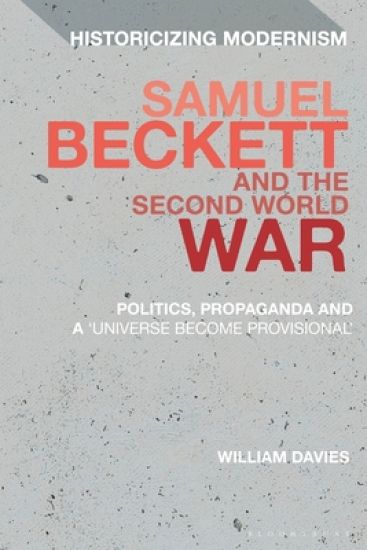
In the wake of the Second World War, Samuel Beckett wrote some of the most significant literary works of the 20th century. This is the first full-length historical study to examine the far-reaching impact of the war on Beckett’s creative and intellectual sensibilities.Drawing on a substantial body of archival material, including letters, manuscripts, diaries and interviews, as well as a wealth of historical sources, this book explores Beckett’s writing in a range of political contexts, from the racist dogma of Nazism and aggressive traditionalism of the Vichy regime to Irish neutrality censorship and the politics of recovery in the French Fourth Republic. Along the way, Samuel Beckett and the Second World War casts new light on Beckett’s political commitments and his concepts of history as they were formed during Europe’s darkest hour.
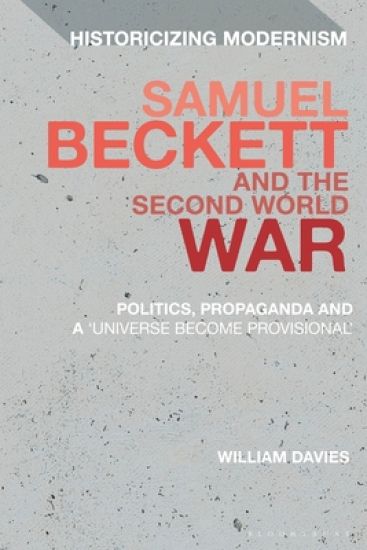
In the wake of the Second World War, Samuel Beckett wrote some of the most significant literary works of the 20th century. This is the first full-length historical study to examine the far-reaching impact of the war on Beckett’s creative and intellectual sensibilities.Drawing on a substantial body of archival material, including letters, manuscripts, diaries and interviews, as well as a wealth of historical sources, this book explores Beckett’s writing in a range of political contexts, from the racist dogma of Nazism and aggressive traditionalism of the Vichy regime to Irish neutrality censorship and the politics of recovery in the French Fourth Republic. Along the way, Samuel Beckett and the Second World War casts new light on Beckett’s political commitments and his concepts of history as they were formed during Europe’s darkest hour.
A Dissertation On The Nature, Claims, And Final Triumph Of Christianity (1859)
William Davies
KESSINGER PUBLISHING, LLC
2008
nidottu



"Brilliant... explains how the rhetoric of competition has invaded almost every domain of our existence." - Evgeny Morozov, author of To Save Everything, Click Here "A sparkling, original, and provocative analysis of neoliberalism... a distinctive account of the diverse, sometimes contradictory, conventions and justifications that lend authority to the extension of the spirit of competitiveness to all spheres of social life." - Professor Bob Jessop, University of Lancaster "In a world that seems to lurch from one financial crisis to the next, this book questions both the sovereignty of markets and the principles of competition and competitiveness that lie at the heart of the neoliberal project." - Professor Nicholas Gane, University of Warwick Since its intellectual inception in the 1930s and its political emergence in the 1970s, neo-liberalism has sought to disenchant politics by replacing it with economics. This agenda-setting text examines the efforts and failures of economic experts to make government and public life amenable to measurement, and to re-model society and state in terms of competition. In particular, it explores the practical use of economic techniques and conventions by policy-makers, politicians, regulators and judges and how these practices are being adapted to the perceived failings of the neoliberal model. By picking apart the defining contradiction that arises from the conflation of economics and politics, this book asks: to what extent can economics provide government legitimacy?
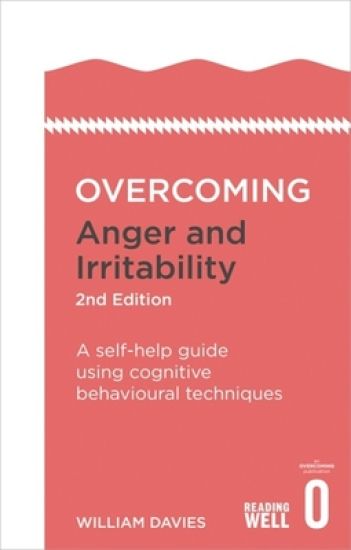
Constant irritability or flashes of bad temper can cause difficulties in relationships with friends, family or colleagues and leave us feeling unhappy and exhausted. This fully updated and revised edition of William Davies' bestselling title is for anyone struggling to control their rage and regretting inappropriate reactions.It explains clearly what provokes anger and what we can do to prevent it. Techniques based on Cognitive Behavioural Therapy (CBT) offer a positive approach with long-term goals in mind and show how you can stay cool and successfully handle situations that would tax even the most easy-going person.Overcoming self-help guides use clinically-proven techniques to treat long-standing and disabling conditions, both psychological and physical. READING WELL This book is recommended by the national Reading Well Books on Prescription scheme for England delivered by The Reading Agency and the Society of Chief Librarians with funding from Arts Council England and Wellcome. www.reading-well.org.uk
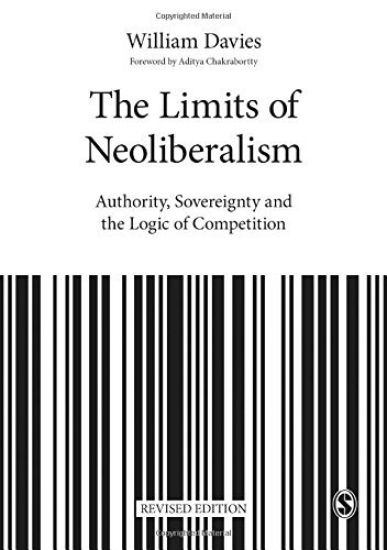
Brilliant...explains how the rhetoric of competition has invaded almost every domain of our existence." —Evgeny Morozov, author of To Save Everything, Click Here" "In this fascinating book Davies inverts the conventional neoliberal practice of treating politics as if it were mere epiphenomenon of market theory, demonstrating that their version of economics is far better understood as the pursuit of politics by other means." —Professor Philip Mirowski, University of Notre Dame "A sparkling, original, and provocative analysis of neoliberalism. It offers a distinctive account of the diverse, sometimes contradictory, conventions and justifications that lend authority to the extension of the spirit of competitiveness to all spheres of social life…This book breaks new ground, offers new modes of critique, and points to post-neoliberal futures." —Professor Bob Jessop, University of Lancaster Since its intellectual inception in the 1930s and its political emergence in the 1970s, neo-liberalism has sought to disenchant politics by replacing it with economics. This agenda-setting text examines the efforts and failures of economic experts to make government and public life amenable to measurement, and to re-model society and state in terms of competition. In particular, it explores the practical use of economic techniques and conventions by policy-makers, politicians, regulators and judges and how these practices are being adapted to the perceived failings of the neoliberal model. By picking apart the defining contradiction that arises from the conflation of economics and politics, this book asks: to what extent can economics provide government legitimacy? Now with a new preface from the author and a foreword by Aditya Chakrabortty.