""Cultural Stratigraphy In The Viru Valley, Northern Peru: The Formative And Florescent Epochs"" is a book written by William Duncan Strong. The book is an archaeological study of the Viru Valley in Northern Peru, focusing on the Formative and Florescent Epochs of the region. The author explores the cultural stratigraphy of the area, examining the different layers of cultural development that have occurred over time. The book includes detailed descriptions of the artifacts and structures found in the area, as well as an analysis of the social and economic systems that were in place during each epoch. The author also discusses the impact of environmental factors, such as climate change, on the development of the region. This book is an important resource for scholars and researchers interested in the archaeology and cultural history of Peru.""Columbia Studies In Archeology And Ethnology, V4.This scarce antiquarian book is a facsimile reprint of the old original and may contain some imperfections such as library marks and notations. Because we believe this work is culturally important, we have made it available as part of our commitment for protecting, preserving, and promoting the world's literature in affordable, high quality, modern editions, that are true to their original work.
This work has been selected by scholars as being culturally important and is part of the knowledge base of civilization as we know it.This work is in the public domain in the United States of America, and possibly other nations. Within the United States, you may freely copy and distribute this work, as no entity (individual or corporate) has a copyright on the body of the work.Scholars believe, and we concur, that this work is important enough to be preserved, reproduced, and made generally available to the public. To ensure a quality reading experience, this work has been proofread and republished using a format that seamlessly blends the original graphical elements with text in an easy-to-read typeface.We appreciate your support of the preservation process, and thank you for being an important part of keeping this knowledge alive and relevant.
This work has been selected by scholars as being culturally important and is part of the knowledge base of civilization as we know it.This work is in the public domain in the United States of America, and possibly other nations. Within the United States, you may freely copy and distribute this work, as no entity (individual or corporate) has a copyright on the body of the work.Scholars believe, and we concur, that this work is important enough to be preserved, reproduced, and made generally available to the public. To ensure a quality reading experience, this work has been proofread and republished using a format that seamlessly blends the original graphical elements with text in an easy-to-read typeface.We appreciate your support of the preservation process, and thank you for being an important part of keeping this knowledge alive and relevant.
Title: Description of the Coast between Aberdeen and Leith. By William Duncan.]Publisher: British Library, Historical Print EditionsThe British Library is the national library of the United Kingdom. It is one of the world's largest research libraries holding over 150 million items in all known languages and formats: books, journals, newspapers, sound recordings, patents, maps, stamps, prints and much more. Its collections include around 14 million books, along with substantial additional collections of manuscripts and historical items dating back as far as 300 BC.The GENERAL HISTORICAL collection includes books from the British Library digitised by Microsoft. This varied collection includes material that gives readers a 19th century view of the world. Topics include health, education, economics, agriculture, environment, technology, culture, politics, labour and industry, mining, penal policy, and social order. ++++The below data was compiled from various identification fields in the bibliographic record of this title. This data is provided as an additional tool in helping to insure edition identification: ++++ British Library Anonymous; Duncan, William; 1837. iv. 123 p.; 12 . 797.d.2.
The 18th century was a wealth of knowledge, exploration and rapidly growing technology and expanding record-keeping made possible by advances in the printing press. In its determination to preserve the century of revolution, Gale initiated a revolution of its own: digitization of epic proportions to preserve these invaluable works in the largest archive of its kind. Now for the first time these high-quality digital copies of original 18th century manuscripts are available in print, making them highly accessible to libraries, undergraduate students, and independent scholars.Medical theory and practice of the 1700s developed rapidly, as is evidenced by the extensive collection, which includes descriptions of diseases, their conditions, and treatments. Books on science and technology, agriculture, military technology, natural philosophy, even cookbooks, are all contained here.++++The below data was compiled from various identification fields in the bibliographic record of this title. This data is provided as an additional tool in helping to insure edition identification: ++++Bodleian Library (Oxford)N001372With a half-title.London: (by assignment from the executors of the late J. Dodsley) printed for W. Otridge & son; R. Faulder; J. Cuthell; Ogilvy and son; R. Lea; and 5 others], 1800. viii,364p.; 12
This book is a genealogy of the descendants of William Duncan the Elder. It includes detailed information on the family's history, including family trees, photographs, and historical documents.This work has been selected by scholars as being culturally important, and is part of the knowledge base of civilization as we know it.This work is in the "public domain in the United States of America, and possibly other nations. Within the United States, you may freely copy and distribute this work, as no entity (individual or corporate) has a copyright on the body of the work.Scholars believe, and we concur, that this work is important enough to be preserved, reproduced, and made generally available to the public. We appreciate your support of the preservation process, and thank you for being an important part of keeping this knowledge alive and relevant.
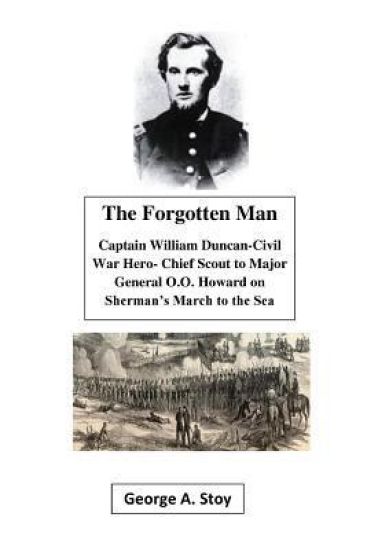
This is the fascinating story of Captain William Duncan, who was born 07/20/1840 in Scotland, near Edinburgh. He came to North America by way of Canada, then settled in Elgin, Illinois. In 1860 he graduated from Elgin Academy and shortly thereafter enlisted to serve in the Thirty Sixth Illinois Infantry of the Union Army. During the war he distinguished himself for valor on many occasions, most notably while serving under General O.O. Howard during Sherman's March to the Sea. When the Union Army reached Savannah, Georgia they found themselves cut -off from their supplies. When ordered by Sherman to locate the supply ships, Howard dispatched Captain Duncan and two others to contact the Union fleet. The journey took three days and at one point Captain Duncan floated by an armed blockade in a hollowed log. Captain Duncan located a Union gunboat that carried him to Hilton Head Island. Supply ships were sent to Savannah, Georgia and Duncan continued on to Washington to deliver news of the successful "March to the Sea" to Secretary of War, Edwin M. Stanton. After the war, Duncan returned to Elgin, Illinois to marry Lucy Harwood before moving to the Dakota Territory where his brothers had already settled. In 1876, he was elected to the legislature of the Dakota Territory and re-elected once again in 1884. Duncan and his wife, Lucy, passed away on the same day, February 4th, 1925. This book has a fascinating story to tell about this "Forgotten Man" who gave so much to his country and received little recognition for his valor. This book is volume one of a series of upcoming books the author, George Stoy plans to write in the near future about other "Forgotten M
The 18th century was a wealth of knowledge, exploration and rapidly growing technology and expanding record-keeping made possible by advances in the printing press. In its determination to preserve the century of revolution, Gale initiated a revolution of its own: digitization of epic proportions to preserve these invaluable works in the largest archive of its kind. Now for the first time these high-quality digital copies of original 18th century manuscripts are available in print, making them highly accessible to libraries, undergraduate students, and independent scholars.Western literary study flows out of eighteenth-century works by Alexander Pope, Daniel Defoe, Henry Fielding, Frances Burney, Denis Diderot, Johann Gottfried Herder, Johann Wolfgang von Goethe, and others. Experience the birth of the modern novel, or compare the development of language using dictionaries and grammar discourses. ++++The below data was compiled from various identification fields in the bibliographic record of this title. This data is provided as an additional tool in helping to insure edition identification: ++++British LibraryT137808Parallel English and Latin texts. With a half-title. The imprint is false (see N026809).London: printed for C.C.T. and T. Robison, and G. Evans, 1796. vi, 2],671, 1]p.; 8





![Description of the Coast Between Aberdeen and Leith. [by William Duncan.]](/covers/9781241151898.jpg)