

Kirjahaku
Etsi kirjoja tekijän nimen, kirjan nimen tai ISBN:n perusteella.
1000 tulosta hakusanalla William F Cody

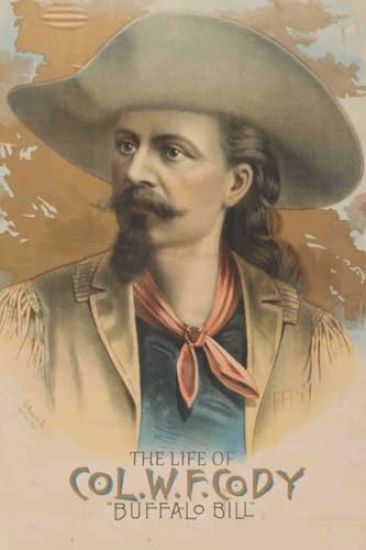
"The life and adventures of Hon. William F. Cody-Buffalo Bill-as told by himself, make up a narrative which reads more like romance than reality, and which in many respects will prove a valuable contribution to the records of our Western frontier history. While no literary excellence is claimed for the narrative, it has the greater merit of being truthful, and is verified in such a manner that no one can doubt its veracity. While many events of his career are known to the public, yet the reader will find in this narrative much that will be entirely new and intensely interesting to both young and old."


William Frederick "Buffalo Bill" Cody (1846- 1917) was an American soldier, bison hunter, and showman. Buffalo Bill started working at the age of eleven, after his father's death, and became a rider for the Pony Express at age 15. During the American Civil War, he served the Union from 1863 to the end of the war in 1865. Later he served as a civilian scout for the US Army during the Indian Wars, receiving the Medal of Honor in 1872.One of the most famous and well-known figures of the American Old West, Buffalo Bill's legend began to spread when he was only 23. Shortly thereafter he started performing in shows that displayed cowboy themes and episodes from the frontier and Indian Wars. He founded Buffalo Bill's Wild West in 1883, taking his large company on tours in the United States and, beginning in 1887, in Great Britain and continental Europe.

What we know of Buffalo Bill Cody (1846–1917) is more myth than man. Yet the stage persona that took audiences by storm was based on the very real encounters of William F. Cody with the American West. This autobiography, infused with the drama of dime novels and stage melodramas that would transform the author into an American icon, recounts a boy's move to the Kansas territory, where his father hoped to homestead, and his subsequent life on the frontier, following his career from trapper to buffalo hunter to Army scout, guide, and Indian fighter. Written when Cody was thirty-three years old, this life story captures both the hard reality of frontier life and the sensational image to which a boy of the time might aspire: the Indian fights, buffalo hunting, and Pony Express escapades that popular history contributed to the myth-making of Buffalo Bill. It is this movement between the personal and the mythic, plain facts and tall tales, William F. Cody and Buffalo Bill, that gives this autobiography its fascination and its power. Based on the original 1879 edition, this volume provides a new introduction, historical materials, and twenty-six additional images. It reveals both the William F. Cody of personal history and the Buffalo Bill of American mythology—and, finally, the curious reality that partakes of both. For information about the Buffalo Bill Cody archive, visit www.codyarchive.org.

The Life of Hon. William F. Cody, Known As Buffalo Bill
William F. Cody
University of Nebraska Press
2011
sidottu
What we know of Buffalo Bill Cody (1846–1917) is more myth than man. Yet the stage persona that took audiences by storm was based on the very real encounters of William F. Cody with the American West. This autobiography, infused with the drama of dime novels and stage melodramas that would transform the author into an American icon, recounts a boy's move to the Kansas territory, where his father hoped to homestead, and his subsequent life on the frontier, following his career from trapper to buffalo hunter to Army scout, guide, and Indian fighter. Written when Cody was thirty-three years old, this life story captures both the hard reality of frontier life and the sensational image to which a boy of the time might aspire: the Indian fights, buffalo hunting, and Pony Express escapades that popular history contributed to the myth-making of Buffalo Bill. It is this movement between the personal and the mythic, plain facts and tall tales, William F. Cody and Buffalo Bill, that gives this autobiography its fascination and its power. Based on the original 1879 edition, this volume provides a new introduction, historical materials, and twenty-six additional images. It reveals both the William F. Cody of personal history and the Buffalo Bill of American mythology—and, finally, the curious reality that partakes of both. For information about the Buffalo Bill Cody archive, visit www.codyarchive.org.
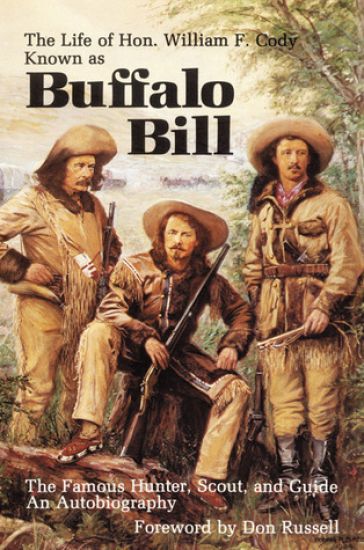
The real achievements of William F. (Buffalo Bill) Cody as a plainsman, hunter, scout, and Indian fighter have tended to be obscured by his fame as a showman. From its opening performance in 1883, Buffalo Bill's Wild West (it was never advertised as a show or circus) enthralled audiences in America and Europe, urchins and crowned heads alike; and probably no one man did more to establish and ro-manticize the tradition of the old West of cowboy and Indian. Because he personified this tradition, Cody inspired an ocean of literature—dime novels, stories, melodramas, allegedly true accounts of his exploits—which tarnished the credibility of his legend even as it increased his renown.This Bison Books edition is the first complete reprinting of the original autobiography since it was published in 1879. It covers the years from Cody's birth in 1846 until his thirty-fourth year—the years during which he grew up on the plains, worked for Russell, Majors & Waddell, rode the Pony Express, went on fourteen expeditions against the Indians, and participated in fifteen Indian fights—the years that underpin the legend of Buffalo Bill and earned him the status of an authentic American Hero.
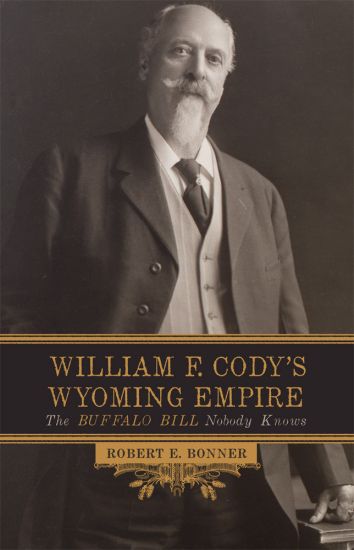
Celebrated showman of the Old West, William F. ""Buffalo Bill"" Cody took on another role unknown to most Americans, that of the western land developer and town promoter. In this captivating study, Robert E. Bonner demonstrates that the skills Cody acquired from decades in show business failed to prepare him for the demanding arena of business and finance.Bonner examines Cody's efforts as president of the Shoshone Irrigation Company to develop the Big Horn Basin through large-scale irrigation and town development. This meticulously researched account shows us a Buffalo Bill preoccupied with making a buck and not at all shy about using his fame to do it.Cody spent huge sums, bullied partners, patronized state officials, and exercised his charm in pursuit of developing the high plains east of Yellowstone National Park. His efforts helped shape the city of Cody and the Big Horn Basin. With the famous Irma Hotel as a cornerstone, he built the first infrastructure of the Cody-Yellowstone tourist trade and connected his little Wyoming town with the wealth of the East through personal hospitality and travel.Laced with engaging anecdotes and featuring more than twenty photographs, William F. Cody's Wyoming Empire is a much needed look at an overly mythologized character. There was more to William F. Cody than the Wild West show - and we cannot construct a full picture of the man without understanding his entrepreneurial activities in Wyoming.


The adventures of Buffalo Bill. By: William F. Cody "Buffalo Bill" William Frederick "Buffalo Bill" Cody (February 26, 1846 - January 10, 1917) was an
William F. Cody Buffalo Bill
Createspace Independent Publishing Platform
2017
nidottu
William Frederick "Buffalo Bill" Cody (February 26, 1846 - January 10, 1917) was an American scout, bison hunter, and showman. He was born in Le Claire, Iowa Territory (now the U.S. state of Iowa), but he lived for several years in his father's hometown in Toronto, Ontario, Canada, before the family returned to the Midwest and settled in the Kansas Territory. Buffalo Bill started working at the age of eleven, after his father's death, and became a rider for the Pony Express at age 14. During the American Civil War, he served the Union from 1863 to the end of the war in 1865. Later he served as a civilian scout for the US Army during the Indian Wars, receiving the Medal of Honor in 1872. One of the most colorful figures of the American Old West, Buffalo Bill's legend began to spread when he was only twenty-three. Shortly thereafter he started performing in shows that displayed cowboy themes and episodes from the frontier and Indian Wars. He founded Buffalo Bill's Wild West in 1883, taking his large company on tours in the United States and, beginning in 1887, in Great Britain and continental Europe. Early life and education Cody was born on February 26, 1846, on a farm just outside Le Claire, Iowa. His father, Isaac Cody, was born on September 5, 1811, in Toronto Township, Upper Canada, now part of Mississauga, Ontario, directly west of Toronto. Mary Ann Bonsell Laycock, Bill's mother, was born about 1817 in New Jersey, near Philadelphia. She moved to Cincinnati to teach school, and there she met and married Isaac. She was a descendant of Josiah Bunting, a Quaker who had settled in Pennsylvania. There is no evidence to indicate Buffalo Bill was raised as a Quaker.In 1847 the couple moved to Ontario, having their son baptized in 1847, as William Cody, at the Dixie Union Chapel in Peel County (present-day Peel Region, of which Mississauga is part), not far from the farm of his father's family. The chapel was built with Cody money, and the land was donated by Philip Cody of Toronto Township. They lived in Ontario for several years. In 1853, Isaac Cody sold his land in rural Scott County, Iowa, for $2000, and the family moved to Fort Leavenworth, Kansas Territory.In the years before the Civil War, Kansas was overtaken by political and physical conflict over the slavery question. Isaac Cody was against slavery. He was invited to speak at Rively's store, a local trading post where pro-slavery men often held meetings. His antislavery speech so angered the crowd that they threatened to kill him if he didn't step down. A man jumped up and stabbed him twice with a Bowie knife. Rively, the store's owner, rushed Cody to get treatment, but he never fully recovered from his injuries. In Kansas, the family was frequently persecuted by pro-slavery supporters. Cody's father spent time away from home for his safety. His enemies learned of a planned visit to his family and plotted to kill him on the way. Bill, despite his youth and being ill at the time, rode 30 miles (48 km) to warn his father. Isaac Cody went to Cleveland, Ohio, to organize a group of thirty families to bring back to Kansas, in order to add to the antislavery population. During his return trip he caught a respiratory infection which, compounded by the lingering effects of his stabbing and complications from kidney disease, led to his death in April 1857.After his death, the family suffered financially. At age 11, Bill took a job with a freight carrier as a "boy extra". On horseback he would ride up and down the length of a wagon train and deliver messages between the drivers and workmen. Next he joined Johnston's Army as an unofficial member of the scouts assigned to guide the United States Army to Utah, to put down a rumored rebellion by the Mormon population of Salt Lake City. According to Cody's account in Buffalo Bill's Own Story, the Utah War was where he began his career as an "Indian fighter"...

The Great Salt Lake trail. By: Colonel Henry Inman (illustrator) and By: Colonel William F. Cody "Buffalo Bill".: William Frederick "Buffalo Bill" Co
Colonel William F. Cody; Colonel Henry Inman
Createspace Independent Publishing Platform
2017
nidottu
(Inman, Henry, 1837-1899)Illustrator. William Frederick "Buffalo Bill" Cody (February 26, 1846 - January 10, 1917) was an American scout, bison hunter, and showman. He was born in Le Claire, Iowa Territory (now the U.S. state of Iowa), but he lived for several years in his father's hometown in Toronto, Ontario, Canada, before the family returned to the Midwest and settled in the Kansas Territory. Buffalo Bill started working at the age of eleven, after his father's death, and became a rider for the Pony Express at age 14. During the American Civil War, he served the Union from 1863 to the end of the war in 1865. Later he served as a civilian scout for the US Army during the Indian Wars, receiving the Medal of Honor in 1872. One of the most colorful figures of the American Old West, Buffalo Bill's legend began to spread when he was only twenty-three. Shortly thereafter he started performing in shows that displayed cowboy themes and episodes from the frontier and Indian Wars. He founded Buffalo Bill's Wild West in 1883, taking his large company on tours in the United States and, beginning in 1887, in Great Britain and continental Europe. Early life and education Cody was born on February 26, 1846, on a farm just outside Le Claire, Iowa. His father, Isaac Cody, was born on September 5, 1811, in Toronto Township, Upper Canada, now part of Mississauga, Ontario, directly west of Toronto. Mary Ann Bonsell Laycock, Bill's mother, was born about 1817 in New Jersey, near Philadelphia. She moved to Cincinnati to teach school, and there she met and married Isaac. She was a descendant of Josiah Bunting, a Quaker who had settled in Pennsylvania. There is no evidence to indicate Buffalo Bill was raised as a Quaker.In 1847 the couple moved to Ontario, having their son baptized in 1847, as William Cody, at the Dixie Union Chapel in Peel County (present-day Peel Region, of which Mississauga is part), not far from the farm of his father's family. The chapel was built with Cody money, and the land was donated by Philip Cody of Toronto Township. They lived in Ontario for several years. In 1853, Isaac Cody sold his land in rural Scott County, Iowa, for $2000, and the family moved to Fort Leavenworth, Kansas Territory.In the years before the Civil War, Kansas was overtaken by political and physical conflict over the slavery question. Isaac Cody was against slavery. He was invited to speak at Rively's store, a local trading post where pro-slavery men often held meetings. His antislavery speech so angered the crowd that they threatened to kill him if he didn't step down. A man jumped up and stabbed him twice with a Bowie knife. Rively, the store's owner, rushed Cody to get treatment, but he never fully recovered from his injuries. In Kansas, the family was frequently persecuted by pro-slavery supporters. Cody's father spent time away from home for his safety. His enemies learned of a planned visit to his family and plotted to kill him on the way. Bill, despite his youth and being ill at the time, rode 30 miles (48 km) to warn his father. Isaac Cody went to Cleveland, Ohio, to organize a group of thirty families to bring back to Kansas, in order to add to the antislavery population. During his return trip he caught a respiratory infection which, compounded by the lingering effects of his stabbing and complications from kidney disease, led to his death in April 1857.After his death, the family suffered financially. At age 11, Bill took a job with a freight carrier as a "boy extra". On horseback he would ride up and down the length of a wagon train and deliver messages between the drivers and workmen. Next he joined Johnston's Army as an unofficial member of the scouts assigned to guide the United States Army to Utah, to put down a rumored rebellion by the Mormon population of Salt Lake City.....

Last of the Great Scouts: The Life Story of William F. "Buffalo Bill" Cody
Helen Cody Wetmore
Createspace Independent Publishing Platform
2014
nidottu
![Last Of The Great Scouts The Life Story Of William F. Cody ["Buffalo Bill" Cody]](/covers/9789374833520.jpg)
Last Of The Great Scouts The Life Story Of William F. Cody ["Buffalo Bill" Cody]
Helen Cody Wetmore
Double 9 Books
2025
pokkari
Last of the great scouts: The life story of William F. Cody "Buffalo Bill" Cody] is a historical biography recounting the life and adventures of William F. Cody through the perspective of his sister. The narrative begins with an intimate portrayal of the Cody family and their homestead in Iowa, providing insight into the environment that shaped his early character. The book explores the joys and hardships of pioneer life, including family tragedies and the hopes and expectations placed upon William as he grows. Through detailed descriptions of childhood experiences, family dynamics, and the challenges of westward migration during the Gold Rush, the account illustrates the formation of Cody's adventurous spirit and resilience. The opening sections highlight both personal and historical contexts, reflecting the interplay of family influence, environmental circumstances, and emerging ambition in shaping a legendary frontiersman. The biography balances factual recounting with personal reminiscence, offering readers a vivid depiction of life on the frontier, the trials of early settlement, and the character traits that would later define Buffalo Bill as a showman, scout, and symbol of American pioneering courage.
