Kirjojen hintavertailu. Mukana 11 244 527 kirjaa ja 12 kauppaa.

Kirjahaku

Etsi kirjoja tekijän nimen, kirjan nimen tai ISBN:n perusteella.

1000 tulosta hakusanalla William F. Shunk

William F. Buckley, Jr.

William F. Buckley, Jr.

John B. Judis

Simon Schuster
2001
pokkari
Possibly more relevant now than ever before, John B. Judis' William F. Buckley, Jr follows the life and times of the "Patron Saint of Conservatives."From Simon & Schuster comes the definitive biography of William F. Buckley, Jr., the "Patron Saint of Conservatives," by journalist and writer John B. Judis. Get your copy of William F. Buckley Jr. today.
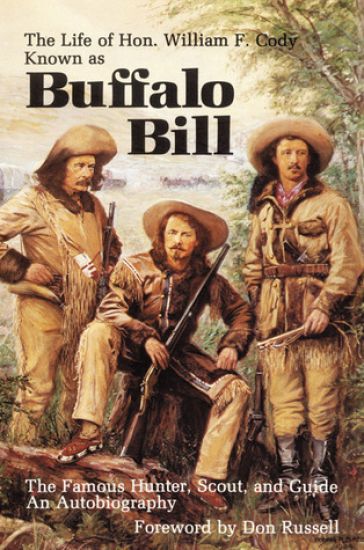
The Life of Hon. William F. Cody, Known As Buffalo Bill
What we know of Buffalo Bill Cody (1846–1917) is more myth than man. Yet the stage persona that took audiences by storm was based on the very real encounters of William F. Cody with the American West. This autobiography, infused with the drama of dime novels and stage melodramas that would transform the author into an American icon, recounts a boy's move to the Kansas territory, where his father hoped to homestead, and his subsequent life on the frontier, following his career from trapper to buffalo hunter to Army scout, guide, and Indian fighter. Written when Cody was thirty-three years old, this life story captures both the hard reality of frontier life and the sensational image to which a boy of the time might aspire: the Indian fights, buffalo hunting, and Pony Express escapades that popular history contributed to the myth-making of Buffalo Bill. It is this movement between the personal and the mythic, plain facts and tall tales, William F. Cody and Buffalo Bill, that gives this autobiography its fascination and its power. Based on the original 1879 edition, this volume provides a new introduction, historical materials, and twenty-six additional images. It reveals both the William F. Cody of personal history and the Buffalo Bill of American mythology—and, finally, the curious reality that partakes of both. For information about the Buffalo Bill Cody archive, visit www.codyarchive.org.
The Life of Hon. William F. Cody, Known As Buffalo Bill

The Life of Hon. William F. Cody, Known As Buffalo Bill

William F. Cody

University of Nebraska Press
2011
sidottu
What we know of Buffalo Bill Cody (1846–1917) is more myth than man. Yet the stage persona that took audiences by storm was based on the very real encounters of William F. Cody with the American West. This autobiography, infused with the drama of dime novels and stage melodramas that would transform the author into an American icon, recounts a boy's move to the Kansas territory, where his father hoped to homestead, and his subsequent life on the frontier, following his career from trapper to buffalo hunter to Army scout, guide, and Indian fighter. Written when Cody was thirty-three years old, this life story captures both the hard reality of frontier life and the sensational image to which a boy of the time might aspire: the Indian fights, buffalo hunting, and Pony Express escapades that popular history contributed to the myth-making of Buffalo Bill. It is this movement between the personal and the mythic, plain facts and tall tales, William F. Cody and Buffalo Bill, that gives this autobiography its fascination and its power. Based on the original 1879 edition, this volume provides a new introduction, historical materials, and twenty-six additional images. It reveals both the William F. Cody of personal history and the Buffalo Bill of American mythology—and, finally, the curious reality that partakes of both. For information about the Buffalo Bill Cody archive, visit www.codyarchive.org.
The Life of Hon. William F. Cody

The Life of Hon. William F. Cody

William F. Cody; Don Russell

Bison Books
1978
pokkari
The real achievements of William F. (Buffalo Bill) Cody as a plainsman, hunter, scout, and Indian fighter have tended to be obscured by his fame as a showman. From its opening performance in 1883, Buffalo Bill's Wild West (it was never advertised as a show or circus) enthralled audiences in America and Europe, urchins and crowned heads alike; and probably no one man did more to establish and ro-manticize the tradition of the old West of cowboy and Indian. Because he personified this tradition, Cody inspired an ocean of literature—dime novels, stories, melodramas, allegedly true accounts of his exploits—which tarnished the credibility of his legend even as it increased his renown.This Bison Books edition is the first complete reprinting of the original autobiography since it was published in 1879. It covers the years from Cody's birth in 1846 until his thirty-fourth year—the years during which he grew up on the plains, worked for Russell, Majors & Waddell, rode the Pony Express, went on fourteen expeditions against the Indians, and participated in fifteen Indian fights—the years that underpin the legend of Buffalo Bill and earned him the status of an authentic American Hero.
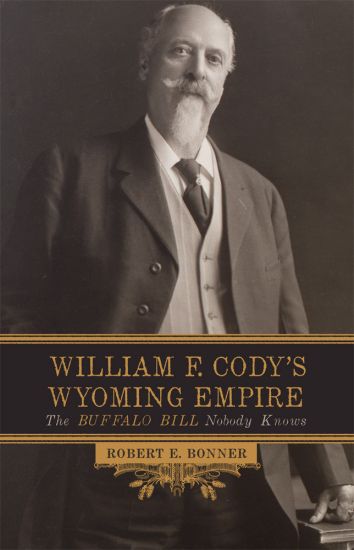
William F. Cody's Wyoming Empire

William F. Cody's Wyoming Empire

Robert E. Bonner

University of Oklahoma Press
2016
nidottu
Celebrated showman of the Old West, William F. ""Buffalo Bill"" Cody took on another role unknown to most Americans, that of the western land developer and town promoter. In this captivating study, Robert E. Bonner demonstrates that the skills Cody acquired from decades in show business failed to prepare him for the demanding arena of business and finance.Bonner examines Cody's efforts as president of the Shoshone Irrigation Company to develop the Big Horn Basin through large-scale irrigation and town development. This meticulously researched account shows us a Buffalo Bill preoccupied with making a buck and not at all shy about using his fame to do it.Cody spent huge sums, bullied partners, patronized state officials, and exercised his charm in pursuit of developing the high plains east of Yellowstone National Park. His efforts helped shape the city of Cody and the Big Horn Basin. With the famous Irma Hotel as a cornerstone, he built the first infrastructure of the Cody-Yellowstone tourist trade and connected his little Wyoming town with the wealth of the East through personal hospitality and travel.Laced with engaging anecdotes and featuring more than twenty photographs, William F. Cody's Wyoming Empire is a much needed look at an overly mythologized character. There was more to William F. Cody than the Wild West show - and we cannot construct a full picture of the man without understanding his entrepreneurial activities in Wyoming.
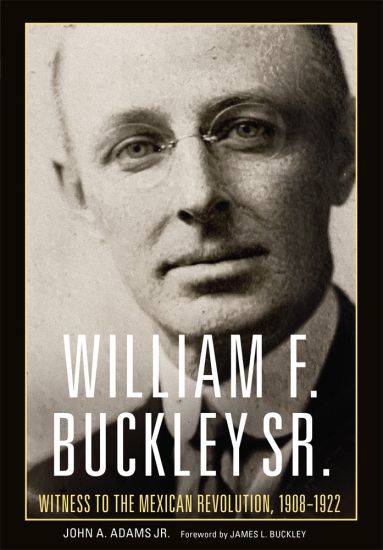
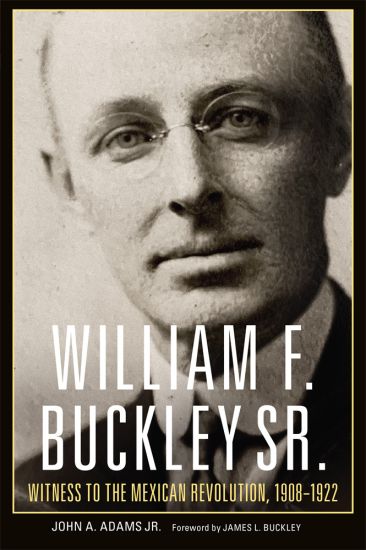
William F. Buckley Sr.

William F. Buckley Sr.

John A. Adams; James L. Buckley

UNIVERSITY OF OKLAHOMA PRESS
2023
sidottu
In 1909, young William F. Buckley Sr. (1881–1958), who grew up in the dusty South Texas town of San Diego, graduated from the University of Texas law school and headed for Mexico City. Fluent in Spanish, familiar with Mexican traditions, and soon fit to practice law south of the border, Buckley was headed up the aisle to vast wealth and cultural power. On the way, he took a front-row seat at the Mexican Revolution and played a key role in steering the nascent oil industry through tumultuous and dangerous times. This book for the first time tells the story of the man behind the family that would become nothing short of a conservative institution, reaching its apogee in the career of William F. Buckley Jr., arguably the most prominent conservative commentator of the twentieth century. Buckley witnessed the overthrow and exit of President Porfirio DÍaz, the rise of Madero, and the coup of General Victoriano Huerta, all while building the Pantepec Oil Company, the most profitable small petroleum producer in Mexico. He faced down Pancho Villa, survived encounters with hired assassins, evaded snipers in the streets of Veracruz, gambled and won in many a business venture—and ultimately was expelled from the country. As the narrative follows Buckley from his small-town Texas beginnings to the founding of a family dynasty, the streak of independence and distrust of government that would become the Buckley hallmark can be seen in the making. An eventful chapter in the life and career of a singular character, this dramatic account of a man and his moment is a document of political and historical significance—but it is also a remarkable story, told with irresistible brio.
William F. Buckley Sr.

William F. Buckley Sr.

John A. Adams; James L. Buckley

UNIVERSITY OF OKLAHOMA PRESS
2023
nidottu
In 1909, young William F. Buckley Sr. (1881–1958), who grew up in the dusty South Texas town of San Diego, graduated from the University of Texas law school and headed for Mexico City. Fluent in Spanish, familiar with Mexican traditions, and soon fit to practice law south of the border, Buckley was headed up the aisle to vast wealth and cultural power. On the way, he took a front-row seat at the Mexican Revolution and played a key role in steering the nascent oil industry through tumultuous and dangerous times. This book for the first time tells the story of the man behind the family that would become nothing short of a conservative institution, reaching its apogee in the career of William F. Buckley Jr., arguably the most prominent conservative commentator of the twentieth century. Buckley witnessed the overthrow and exit of President Porfirio DÍaz, the rise of Madero, and the coup of General Victoriano Huerta, all while building the Pantepec Oil Company, the most profitable small petroleum producer in Mexico. He faced down Pancho Villa, survived encounters with hired assassins, evaded snipers in the streets of Veracruz, gambled and won in many a business venture—and ultimately was expelled from the country. As the narrative follows Buckley from his small-town Texas beginnings to the founding of a family dynasty, the streak of independence and distrust of government that would become the Buckley hallmark can be seen in the making. An eventful chapter in the life and career of a singular character, this dramatic account of a man and his moment is a document of political and historical significance—but it is also a remarkable story, told with irresistible brio.
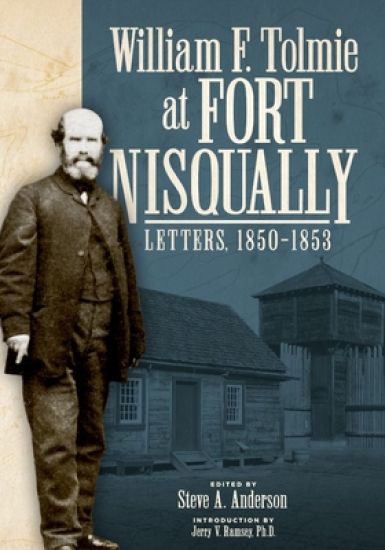
William F. Tolmie at Fort Nisqually

William F. Tolmie at Fort Nisqually

Washington State University Press
2019
pokkari
Scottish-born Hudson's Bay Company (HBC) Chief Trader William Fraser Tolmie took charge of Fort Nisqually and its outstations in 1843. The first white settlement on Puget Sound, it functioned as a vital communications, banking, and shipping center, as well as a commodities and livestock broker, annually exporting tons of hides and produce. The International Boundary Treaty of 1846 between Great Britain and the United States spawned myriad legal and regulatory problems, and by 1850, HBC agents, government officials, and settlers disagreed over numerous issues.In 2006, Steve A. Anderson discovered complete hand-written volumes of Fort Nisqually's letter books at the HBC Archives in Winnipeg, Manitoba. He transcribed several, spanning from January 1850 to the threshold of Puget Sound's Indian War. Very few published primary documents about this period exist. "The discovery of Tolmie's letters changed everything," he says. They offer privileged, private conversations, weighty business discussions, gossip, political intrigue, patterns of commerce, deadly epidemics, and an eyewitness account of San Francisco's devastating fire. The documents--more than 400 total--present a rare British perspective on the state of law and international affairs in 1850s Puget Sound, a glimpse of higher-level HBC and Puget Sound Agricultural Company (PSAC) operations, and insight into conflicts that followed the 1846 treaty.