Kirjahaku
Etsi kirjoja tekijän nimen, kirjan nimen tai ISBN:n perusteella.
1000 tulosta hakusanalla William Foggoe
Unto the Right Honourable, the Lords of Council and Session, the Petition of William and Henry Foggoes, and David Young, Merchants in Glasgow, in Company, James Weir Late Commander of the Ship, The Diamond of Glasgow
William Foggoe
Gale Ecco, Print Editions
2018
sidottu
The 18th century was a wealth of knowledge, exploration and rapidly growing technology and expanding record-keeping made possible by advances in the printing press. In its determination to preserve the century of revolution, Gale initiated a revolution of its own: digitization of epic proportions to preserve these invaluable works in the largest archive of its kind. Now for the first time these high-quality digital copies of original 18th century manuscripts are available in print, making them highly accessible to libraries, undergraduate students, and independent scholars.This collection reveals the history of English common law and Empire law in a vastly changing world of British expansion. Dominating the legal field is the Commentaries of the Law of England by Sir William Blackstone, which first appeared in 1765. Reference works such as almanacs and catalogues continue to educate us by revealing the day-to-day workings of society.++++The below data was compiled from various identification fields in the bibliographic record of this title. This data is provided as an additional tool in helping to insure edition identification: ++++National Library of ScotlandT229075Dated at head of the drop-head title on p. 3]: November 16th, 1739. Signed: William Grant. With a half-title. Edinburgh, 1739]. 16p.; 4
Foggerty's Fairy and Other Tales (1890) by: William Schwenck Gilbert
William Schwenck Gilbert
Createspace Independent Publishing Platform
2017
nidottu
Sir William Schwenck Gilbert (18 November 1836 - 29 May 1911) was an English dramatist, librettist, poet and illustrator best known for the fourteen comic operas (known as the Savoy operas) produced in collaboration with the composer Sir Arthur Sullivan. The most famous of these include H.M.S. Pinafore, The Pirates of Penzance and one of the most frequently performed works in the history of musical theatre, The Mikado.The popularity of these works was supported for over a century by year-round performances of them, in Britain and abroad, by the repertory company that they founded, the D'Oyly Carte Opera Company. Eleven of the Savoy operas continue to be frequently performed in the English-speaking world and beyond by opera companies, repertory companies, schools and community theatre groups. Lines from these works have become part of the English language, such as "short, sharp shock", "What, never? Well, hardly ever ", and "Let the punishment fit the crime".Gilbert's creative output included over 75 plays and libretti, and numerous short stories, poems and lyrics, both comic and serious. After brief careers as a government clerk and a lawyer, Gilbert began to focus, in the 1860s, on writing light verse, including his Bab Ballads, short stories, theatre reviews and illustrations, often for Fun magazine
Foggerty's Fairy and Other Tales.
William Schwenck Gilbert
British Library, Historical Print Editions
2011
pokkari
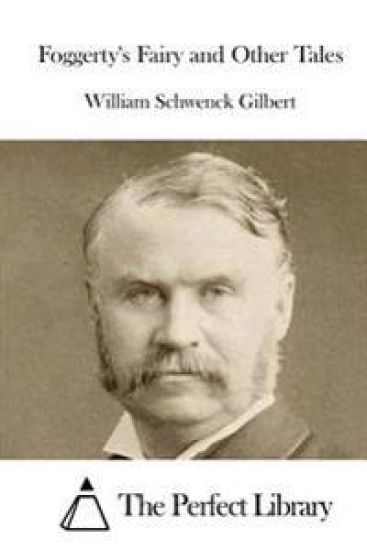
Foggerty's Fairy and Other Tales
William Schwenck Gilbert
Createspace Independent Publishing Platform
2015
nidottu
Foggerty's Fairy - And other Tales is an unchanged, high-quality reprint of the original edition of 1890. Hansebooks is editor of the literature on different topic areas such as research and science, travel and expeditions, cooking and nutrition, medicine, and other genres. As a publisher we focus on the preservation of historical literature. Many works of historical writers and scientists are available today as antiques only. Hansebooks newly publishes these books and contributes to the preservation of literature which has become rare and historical knowledge for the future.
Foggerty's Fairy - And other tales is an unchanged, high-quality reprint of the original edition of 1892. Hansebooks is editor of the literature on different topic areas such as research and science, travel and expeditions, cooking and nutrition, medicine, and other genres. As a publisher we focus on the preservation of historical literature. Many works of historical writers and scientists are available today as antiques only. Hansebooks newly publishes these books and contributes to the preservation of literature which has become rare and historical knowledge for the future.
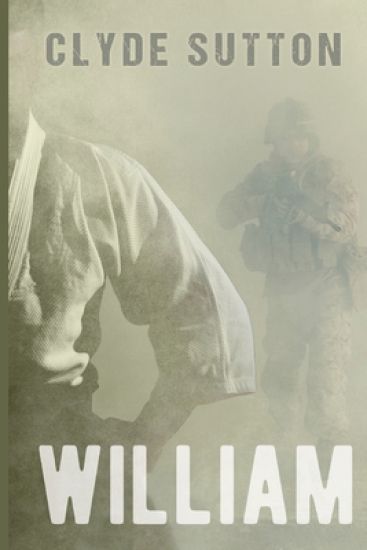
William traces the ordeal of an American army veteran whose unusual abilities have attracted the interest of military authorities. We follow William as he flees a covert US Army experimental facility and, in a dangerous game of cat and mouse, is hunted by shadowy operatives. Along the way, as he fights off his pursuers and his own demons, he seeks solace in his martial arts practice, particularly Aikido, and falls into a reluctant friendship with a young woman.

Psychological horror meets cyber noir in this delicious one-sitting read--a haunted house story in which the haunting is by AI. Henry is a brilliant engineer who, after untold hours spent in his home lab, has achieved the breakthrough of his career--he's created an artificially intelligent consciousness. He calls the half-formed robot William. No one knows about William. Henry's agoraphobia keeps him inside the house, and his fixation on his project keeps him up in the attic, away from everyone, including his pregnant wife, Lily. When Lily's coworkers show up, wanting to finally meet Henry and see the new house--the smartest of smart homes--Henry decides to introduce them to William, and things go from strange to much worse. Soon Henry and Lily discover the security upgrades intended to keep danger out of the house are even better at locking it in.


Psychological horror meets cyber noir in this delicious one-sitting read--a haunted house story in which the haunting is by AI. Henry is a brilliant engineer who, after untold hours spent in his home lab, has achieved the breakthrough of his career--he's created an artificially intelligent consciousness. He calls the half-formed robot William. No one knows about William. Henry's agoraphobia keeps him inside the house, and his fixation on his project keeps him up in the attic, away from everyone, including his pregnant wife, Lily. When Lily's coworkers show up, wanting to finally meet Henry and see the new house--the smartest of smart homes--Henry decides to introduce them to William, and things go from strange to much worse. Soon Henry and Lily discover the security upgrades intended to keep danger out of the house are even better at locking it in.

A 1919 novel about the harowing effect of the First World War on William, a socialist clerk, and Griselda, a suffragette.

1066 is the most famous date in English history. On 14 October, on Senlac Hill near Hastings, a battle was fought that would change the face of England forever. Over the next twenty years, Norman culture was imposed on England, and English politics and society were radically reshaped. But how much is really known about William 'the Conqueror', the Norman duke who led his men to victory on that autumn Saturday in what was to be the last successful invasion of England? Mark Hagger here takes a fresh look at William - his life and leadership. As king, he spent much of his reign threatened by rebellion and invasion. In response, he ordered castles and strongholds to be built across the land - a symbol of the force with which he defended his realm and which, along with Domesday Book, England's first public record, attest to a powerful legacy. This book provides a rounded portrait of one of England's greatest rulers.

*An AI twist on Frankenstein. Perfect for fans of Stephen King and Black Mirror*'Best thing I've read this year' Will Dean'Terrifying' Kiran Millwood Hargrave'A brilliantly plotted story' Guardian'Gripping . . . A twist on The Shining' New York Times'Its chilling final twist will have you turning directly back to the first page' Mail on Sunday Henry, a brilliant but reclusive engineer, has achieved the crowning discovery of his career: he's created an artificially intelligent consciousness. He names the half-formed robot William.But there's something strange about William.It's not that his skin feels like balloon rubber and is the colour of curdled milk, nor is it his thick gurgling laugh or the way his tongue curls towards his crooked top teeth. It is the way he looks at Henry's wife, Lily.Henry created William but he is starting to lose control of him. As William's fixation with Lily grows and threatens to bring harm to their house, Henry has no choice but to destroy William.But William isn't gone. Filled with jealousy for humanity, for its capacity to love and create life, William starts to haunt the house.He lurks behind each locked door. You can hear him muttering in the eaves of the attic. He is whispering in Henry's head. And he will be the one to take control . . .Readers are loving William:'Nothing prepared me for the final twist' ?????'A weird and wonderful book' ?????'Creepy, terrifying and has a killer twist that I did not see coming' ?????'Truly scary and unpredictable! What a brilliant book' ?????'An addictive read' ?????

*An up-all-night slice of Halloween horror, perfect for fans of Stephen King, Black Mirror, and Frankenstein*'[A] timely spin on fears about AI developing consciousness . . . a diabolically disguised twist will bring you up short. Sleep tight' The TimesHenry, a brilliant but reclusive engineer, has achieved the crowning discovery of his career: he's created an artificially intelligent consciousness. He names the half-formed robot William.But there's something strange about William. It is the way he looks at Henry's pregnant wife, Lily.As William's fixation with Lily grows and threatens to bring harm to their house, Henry has no choice but to destroy him. But William isn't gone. In this smartest of smart homes, William becomes a haunting presence.He lurks behind each locked door. You can hear him muttering in the eaves of the attic. He is whispering in Henry's head. And he will be the one to take control . . .'Its chilling final twist will have you turning directly back to the first page' Mail on Sunday

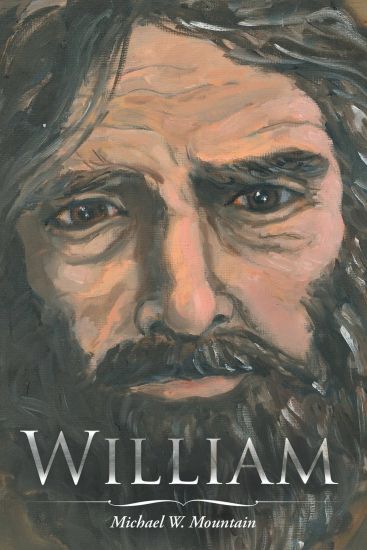
"William" is the action packed sequel of "The Saga of the Brothers Mountain." The fictional tale begins in 1844 as it follows the Mountain family and their journey through the untamed Territory of Wisconsin and into the newly formed State of Minnesota. The family, originally from the small farming village of Killeagh, in County Cork Ireland, is forced to go into hiding in order to escape the wrath of English landlord Charles Webb. Webb sent mercenaries to America to find and kill the Mountain family as retribution for destroying his compound back in Ireland. In an unexpected turn of events, the Mountain family survived the attack and killed the mercenaries. With the fear of continual reprisal from Webb, the family moved and secretly settled in the newly formed town of Hudson, in Wisconsin Territory. The Mountain family quickly learned that lawlessness was a prevalent way of life in their new country, America. Instead of finding a peaceful existence, they found nothing but turmoil and potential death.

Everyone's favourite troublemaker, William Brown, is back in Richmal Crompton's William, a hilarious collection of stories from the classic Just William series – with a gorgeous cover illustrated by the award-winning Lauren Child and an introduction by actress Bonnie Langford.Greyhound racing was a wonderfully exciting idea. After all, William's dog, Jumble was as likely to be a greyhound as anything, and surely no one would mind the Outlaws borrowing another dog to race against him. Would they?This tousle-headed, snub-nosed, hearty, lovable imp of mischief has been harassing his unfortunate family and delighting his admirers since 1922.Enjoy more of William's adventures in William the Bad and William's Happy Days.