

Kirjahaku
Etsi kirjoja tekijän nimen, kirjan nimen tai ISBN:n perusteella.
1000 tulosta hakusanalla William Frederick Traill

The Great Salt Lake trail. By: Colonel Henry Inman (illustrator) and By: Colonel William F. Cody "Buffalo Bill".: William Frederick "Buffalo Bill" Co
Colonel William F. Cody; Colonel Henry Inman
Createspace Independent Publishing Platform
2017
nidottu
(Inman, Henry, 1837-1899)Illustrator. William Frederick "Buffalo Bill" Cody (February 26, 1846 - January 10, 1917) was an American scout, bison hunter, and showman. He was born in Le Claire, Iowa Territory (now the U.S. state of Iowa), but he lived for several years in his father's hometown in Toronto, Ontario, Canada, before the family returned to the Midwest and settled in the Kansas Territory. Buffalo Bill started working at the age of eleven, after his father's death, and became a rider for the Pony Express at age 14. During the American Civil War, he served the Union from 1863 to the end of the war in 1865. Later he served as a civilian scout for the US Army during the Indian Wars, receiving the Medal of Honor in 1872. One of the most colorful figures of the American Old West, Buffalo Bill's legend began to spread when he was only twenty-three. Shortly thereafter he started performing in shows that displayed cowboy themes and episodes from the frontier and Indian Wars. He founded Buffalo Bill's Wild West in 1883, taking his large company on tours in the United States and, beginning in 1887, in Great Britain and continental Europe. Early life and education Cody was born on February 26, 1846, on a farm just outside Le Claire, Iowa. His father, Isaac Cody, was born on September 5, 1811, in Toronto Township, Upper Canada, now part of Mississauga, Ontario, directly west of Toronto. Mary Ann Bonsell Laycock, Bill's mother, was born about 1817 in New Jersey, near Philadelphia. She moved to Cincinnati to teach school, and there she met and married Isaac. She was a descendant of Josiah Bunting, a Quaker who had settled in Pennsylvania. There is no evidence to indicate Buffalo Bill was raised as a Quaker.In 1847 the couple moved to Ontario, having their son baptized in 1847, as William Cody, at the Dixie Union Chapel in Peel County (present-day Peel Region, of which Mississauga is part), not far from the farm of his father's family. The chapel was built with Cody money, and the land was donated by Philip Cody of Toronto Township. They lived in Ontario for several years. In 1853, Isaac Cody sold his land in rural Scott County, Iowa, for $2000, and the family moved to Fort Leavenworth, Kansas Territory.In the years before the Civil War, Kansas was overtaken by political and physical conflict over the slavery question. Isaac Cody was against slavery. He was invited to speak at Rively's store, a local trading post where pro-slavery men often held meetings. His antislavery speech so angered the crowd that they threatened to kill him if he didn't step down. A man jumped up and stabbed him twice with a Bowie knife. Rively, the store's owner, rushed Cody to get treatment, but he never fully recovered from his injuries. In Kansas, the family was frequently persecuted by pro-slavery supporters. Cody's father spent time away from home for his safety. His enemies learned of a planned visit to his family and plotted to kill him on the way. Bill, despite his youth and being ill at the time, rode 30 miles (48 km) to warn his father. Isaac Cody went to Cleveland, Ohio, to organize a group of thirty families to bring back to Kansas, in order to add to the antislavery population. During his return trip he caught a respiratory infection which, compounded by the lingering effects of his stabbing and complications from kidney disease, led to his death in April 1857.After his death, the family suffered financially. At age 11, Bill took a job with a freight carrier as a "boy extra". On horseback he would ride up and down the length of a wagon train and deliver messages between the drivers and workmen. Next he joined Johnston's Army as an unofficial member of the scouts assigned to guide the United States Army to Utah, to put down a rumored rebellion by the Mormon population of Salt Lake City.....
Followers of the Trail
Zoe Meyer; William F (William Frederick) Stecher
Anson Street Press
2025
pokkari
Followers of the Trail
Zoe Meyer; William F (William Frederick) Stecher
Anson Street Press
2025
sidottu
The Great Salt Lake Trail.
Henry Inman; William Frederick Cody
British Library, Historical Print Editions
2011
pokkari
Title: The Great Salt Lake Trail.Publisher: British Library, Historical Print EditionsThe British Library is the national library of the United Kingdom. It is one of the world's largest research libraries holding over 150 million items in all known languages and formats: books, journals, newspapers, sound recordings, patents, maps, stamps, prints and much more. Its collections include around 14 million books, along with substantial additional collections of manuscripts and historical items dating back as far as 300 BC.The GENERAL HISTORICAL collection includes books from the British Library digitised by Microsoft. This varied collection includes material that gives readers a 19th century view of the world. Topics include health, education, economics, agriculture, environment, technology, culture, politics, labour and industry, mining, penal policy, and social order. ++++The below data was compiled from various identification fields in the bibliographic record of this title. This data is provided as an additional tool in helping to insure edition identification: ++++ British Library Inman, Henry; Cody, William Frederick; 1898. xiii. 529 p.; 8 . MFE33/04016 *1*
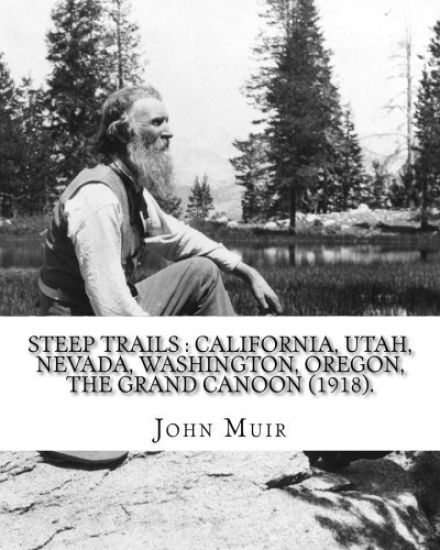
Steep trails: California, Utah, Nevada, Washington, Oregon, the Grand Cañon (1918). By: John Muir, edited By: William Frederic Badè with illustrations
William Frederic Badè; John Muir
Createspace Independent Publishing Platform
2018
nidottu
William Frederic Bad (January 22, 1871 - March 4, 1936), perhaps best known as the literary executor and biographer of John Muir, was a versatile scholar of wide interests. As an archaeologist, he led the excavation of Tell en-Nasbeh in Palestine, now believed on the basis of his work to be the biblical city of Mizpah in Benjamin. He was also an ordained Moravian minister, a professor of ancient languages, a theologian and bible scholar, a mountaineer, a conservationist and a naturalist. Born and raised in Minnesota, he studied at Moravian College and its seminary as well as other universities. He served on the faculties of Moravian Theological Seminary and then the Pacific School of Religion. He also served as interim president and subsequently as dean of the Pacific School of Religion and was founding director of the school's Palestine Institute. He was president of the Sierra Club 1919-1922 and edited the Sierra Club Bulletin for 12 years.................. John Muir ( April 21, 1838 - December 24, 1914) also known as "John of the Mountains", was a Scottish-American naturalist, author, environmental philosopher, glaciologist and early advocate for the preservation of wilderness in the United States. His letters, essays, and books describing his adventures in nature, especially in the Sierra Nevada, have been read by millions. His activism has helped to preserve the Yosemite Valley, Sequoia National Park and many other wilderness areas. The Sierra Club, which he co-founded, is a prominent American conservation organization. The 211-mile (340 km) John Muir Trail, a hiking trail in the Sierra Nevada, was named in his honor. Other such places include Muir Woods National Monument, Muir Beach, John Muir College, Mount Muir, Camp Muir, Muir Grove, and Muir Glacier. In Scotland, the John Muir Way, a 130-mile-long route, was named in honor of him. In his later life, Muir devoted most of his time to the preservation of the Western forests. As part of the campaign to make Yosemite a national park, Muir published two landmark articles on wilderness preservation in The Century Magazine, "The Treasures of the Yosemite" and "Features of the Proposed Yosemite National Park"; this helped support the push for U.S. Congress to pass a bill in 1890 establishing Yosemite National Park. The spiritual quality and enthusiasm toward nature expressed in his writings has inspired readers, including presidents and congressmen, to take action to help preserve large nature areas.Today Muir is referred to as the "Father of the National Parks" and the National Park Service has produced a short documentary about his life. John Muir has been considered "an inspiration to both Scots and Americans". Muir's biographer, Steven J. Holmes, believes that Muir has become "one of the patron saints of twentieth-century American environmental activity," both political and recreational. As a result, his writings are commonly discussed in books and journals, and he is often quoted by nature photographers such as Ansel Adams. "Muir has profoundly shaped the very categories through which Americans understand and envision their relationships with the natural world," writes Holmes. Muir was noted for being an ecological thinker, political spokesman, and religious prophet, whose writings became a personal guide into nature for countless individuals, making his name "almost ubiquitous" in the modern environmental consciousness. According to author William Anderson, Muir exemplified "the archetype of our oneness with the earth", while biographer Donald Worster says he believed his mission was "...saving the American soul from total surrender to materialism." On April 21, 2013, the first ever John Muir Day was celebrated in Scotland, which marked the 175th anniversary of his birth, paying homage to the conservationist.....................

William Frederick Poole and the Modern Library Movement
William Landram Williamson
Columbia University Press
2020
sidottu
William Frederick Kuhn, 1849-1924: The Man and His Work
Ray V. Denslow
Literary Licensing, LLC
2013
nidottu

William Frederick Harnden, 1813-1845: Founder of the Express Business in America!
Alfred Lawson Hammell
Literary Licensing, LLC
2013
nidottu
William Frederick Harnden: Founder of the Express Business in America!
Alfred L. Hammell
Literary Licensing, LLC
2013
nidottu
Anti-Slavery Opinions Before the Year 1800; Read Before the Cincinnati Literary Club, November 16, 1872, by William Frederick Poole. to Which is Appended A Fac Simile Reprint of Dr. George Buchanan'S oration On the Moral and Political Evil of Slavery, Deli
William Frederick Poole
University of Michigan Library
2006
pokkari
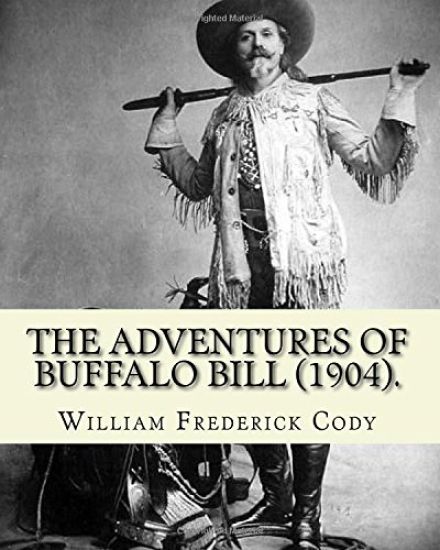
The adventures of Buffalo Bill (1904). By: William Frederick Cody Buffalo Bill: William Frederick Buffalo Bill Cody (February 26, 1846 - January 10, 1
William Frederick Cody
Createspace Independent Publishing Platform
2018
nidottu
William Frederick "Buffalo Bill" Cody (February 26, 1846 - January 10, 1917) was an American scout, bison hunter, and showman. He was born in Le Claire, Iowa Territory (now the U.S. state of Iowa), but he lived for several years in his father's hometown in Toronto, Ontario, Canada, before the family returned to the Midwest and settled in the Kansas Territory.Buffalo Bill started working at the age of eleven, after his father's death, and became a rider for the Pony Express at age 14. During the American Civil War, he served the Union from 1863 to the end of the war in 1865. Later he served as a civilian scout for the US Army during the Indian Wars, receiving the Medal of Honor in 1872.One of the most colorful figures of the American Old West, Buffalo Bill's legend began to spread when he was only twenty-three. Shortly thereafter he started performing in shows that displayed cowboy themes and episodes from the frontier and Indian Wars. He founded Buffalo Bill's Wild West in 1883, taking his large company on tours in the United States and, beginning in 1887, in Great Britain and continental Europe.Early life and education edit]Cody was born on February 26, 1846, on a farm just outside Le Claire, Iowa. His father, Isaac Cody, was born on September 5, 1811, in Toronto Township, Upper Canada, now part of Mississauga, Ontario, directly west of Toronto. Mary Ann Bonsell Laycock, Bill's mother, was born about 1817 in New Jersey, near Philadelphia. She moved to Cincinnati to teach school, and there she met and married Isaac. She was a descendant of Josiah Bunting, a Quaker who had settled in Pennsylvania. There is no evidence to indicate Buffalo Bill was raised as a Quaker. In 1847 the couple moved to Ontario, having their son baptized in 1847, as William Cody, at the Dixie Union Chapel in Peel County (present-day Peel Region, of which Mississauga is part), not far from the farm of his father's family. The chapel was built with Cody money, and the land was donated by Philip Cody of Toronto Township.They lived in Ontario for several years.In 1853, Isaac Cody sold his land in rural Scott County, Iowa, for $2000, and the family moved to Fort Leavenworth, Kansas Territory. In the years before the Civil War, Kansas was overtaken by political and physical conflict over the slavery question. Isaac Cody was against slavery. He was invited to speak at Rively's store, a local trading post where pro-slavery men often held meetings. His antislavery speech so angered the crowd that they threatened to kill him if he didn't step down. A man jumped up and stabbed him twice with a Bowie knife. Rively, the store's owner, rushed Cody to get treatment, but he never fully recovered from his injuries.In Kansas, the family was frequently persecuted by pro-slavery supporters. Cody's father spent time away from home for his safety. His enemies learned of a planned visit to his family and plotted to kill him on the way. Bill, despite his youth and being ill at the time, rode 30 miles (48 km) to warn his father. Isaac Cody went to Cleveland, Ohio, to organize a group of thirty families to bring back to Kansas, in order to add to the antislavery population. During his return trip he caught a respiratory infection which, compounded by the lingering effects of his stabbing and complications from kidney disease, led to his death in April 1857.After his death, the family suffered financially. At age 11, Bill took a job with a freight carrier as a "boy extra". On horseback he would ride up and down the length of a wagon train and deliver messages between the drivers and workmen. Next he joined Johnston's Army as an unofficial member of the scouts assigned to guide the United States Army to Utah, to put down a rumored rebellion by the Mormon population of Salt Lake City.According to Cody's account in Buffalo Bill's Own Story, the Utah War was where he began his career as an "Indian fighter" .............
This book provides a detailed biographical account of the industrious late nineteenth-century astronomer William Frederick Denning who, in later life, rose to be a celebrated public figure and a highly respected amateur astronomer. The book also examines Denning’s many contributions to the astronomy of his time. As an indomitable promotor of amateur astronomy, Denning was closely involved in the formation of the short-lived, but historically pivotal, Observational Astronomy Society (OAS) in 1869. Readers will learn about the origins and the observational programs initiated by the OAS, and the author also presents a series of biographical sketches of its most industrious members. Furthermore, by examining Denning’s letters and publications, the author shows how he helped to nurture the growth of amateur astronomy, also teaching amateur observers how to make their efforts scientifically useful. A stalwart observer and enthusiast himself, Denning was a key player in the development of meteor astronomy in England, culminating in his being invited, in 1922, to be the first President of Commission 22 (meteors, meteorites and interplanetary dust) of the newly formed International Astronomical Union. The text follows the development and rapid growth of meteor astronomy during the nineteenth century, focusing upon the key observations and important theoretical advances. In addition, it pays tribute to pioneering practitioners, who, along with Denning, set out to unravel the story and secrets of the shooting stars. While not an openly forthright or strident figure, Denning, at the height of his career, became embroiled in two public and controversial issues. The first related to his pseudo-scientific theory of optical blurring, and his belief that large-aperture telescopes performed less efficiently than smaller-aperture telescopes when used in the study of planetary disks. The second concerned the mysterious issue of stationary meteor shower radiants—an apparent observational reduction that was completely at odds with both the standard theories of gravitational dynamics and the generally accepted notion of meteoroid stream structure. The book explores these two controversies and uses them to examine Denning’s outlook on scientific methodology.
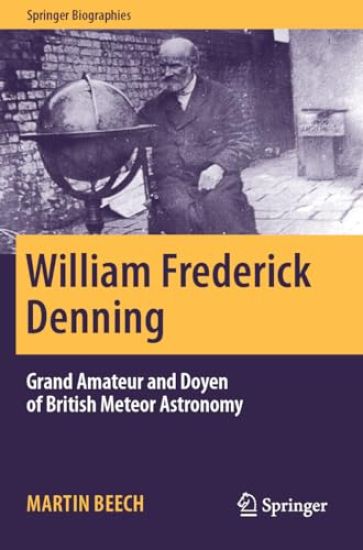
This book provides a detailed biographical account of the industrious late nineteenth-century astronomer William Frederick Denning who, in later life, rose to be a celebrated public figure and a highly respected amateur astronomer. The book also examines Denning’s many contributions to the astronomy of his time. As an indomitable promotor of amateur astronomy, Denning was closely involved in the formation of the short-lived, but historically pivotal, Observational Astronomy Society (OAS) in 1869. Readers will learn about the origins and the observational programs initiated by the OAS, and the author also presents a series of biographical sketches of its most industrious members. Furthermore, by examining Denning’s letters and publications, the author shows how he helped to nurture the growth of amateur astronomy, also teaching amateur observers how to make their efforts scientifically useful. A stalwart observer and enthusiast himself, Denning was a key player in the development of meteor astronomy in England, culminating in his being invited, in 1922, to be the first President of Commission 22 (meteors, meteorites and interplanetary dust) of the newly formed International Astronomical Union. The text follows the development and rapid growth of meteor astronomy during the nineteenth century, focusing upon the key observations and important theoretical advances. In addition, it pays tribute to pioneering practitioners, who, along with Denning, set out to unravel the story and secrets of the shooting stars. While not an openly forthright or strident figure, Denning, at the height of his career, became embroiled in two public and controversial issues. The first related to his pseudo-scientific theory of optical blurring, and his belief that large-aperture telescopes performed less efficiently than smaller-aperture telescopes when used in the study of planetary disks. The second concerned the mysterious issue of stationary meteor shower radiants—an apparent observational reduction that was completely at odds with both the standard theories of gravitational dynamics and the generally accepted notion of meteoroid stream structure. The book explores these two controversies and uses them to examine Denning’s outlook on scientific methodology.

The Life And Letters Of George William Frederick, Fourth Earl Of Clarendon
Herbert Maxwell
Kessinger Pub
2007
pokkari
The Life and Letters of George William Frederick, Fourth Earl of Clarendon, K. G., G. C. B
Herbert Maxwell
Hutson Street Press
2025
sidottu
The Life and Letters of George William Frederick, Fourth Earl of Clarendon, K. G., G. C. B
Herbert Maxwell
Hutson Street Press
2025
pokkari