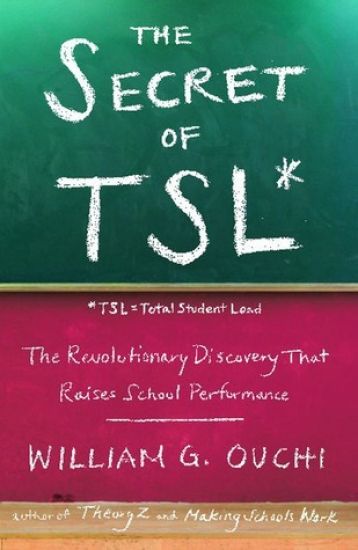
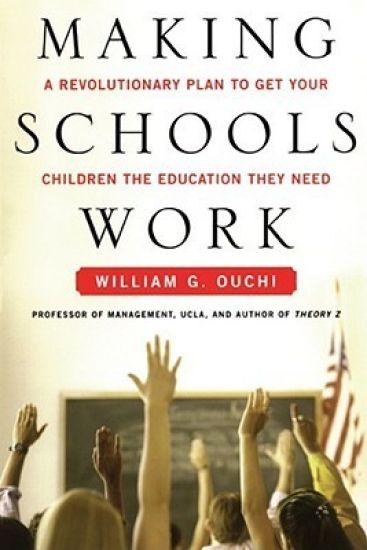
From the author of the acclaimed and influential Making Schools Work comes Untitled on Education, a guide to the revolutionary reforms that are changing public education in some of the nation's biggest cities. - Builds on the author's growing reputation. Making Schools Work influenced New York City Schools Chancellor Joel Klein's effort to radically decentralize the nation's largest school system. Seven of the ten largest school districts in the u.S. have now implemented the decentralization championed in that book. - Based on a groundbreaking study by the author. Ouchi studied 442 schools in Boston, Chicago, Houston, New York City, Oakland, St. Paul, San Francisco, and Seattle that have embraced school decentralization. He shows how decentralization has improved school performance as measured by standardized tests. - Explains the key to school success. Principals must be given control of their budgets and other authority. When they are empowered, they allocate funds to increase the number of teachers and lower the Total Student Load (TSL) per teacher. TSL is the key factor in school performance. Principals with autonomy invariably lower their school's TSL.
Introducing a bold, persuasive new argument into the national debate over education, Dr. William Ouchi describes a revolutionary approach to creating successful public schools. This program has produced significant, lasting improvements in the school districts where it has already been implemented. Drawing on the results of a landmark study of 223 schools in six cities, a project that Ouchi supervised and that was funded in part by the National Science Foundation, "Making Schools Work" shows that a school's educational performance may be most directly affected by how the school is managed. Ouchi's 2001-2002 study examined innovative school systems in Edmonton (Canada), Seattle, and Houston, and compared them with the three largest traditional school systems: New York, Los Angeles, and Chicago. Researchers discovered that the schools that consistently performed best also had the most decentralized management systems, in which autonomous principals -- not administrators in a central office -- controlled school budgets and personnel hiring policies. They were fully responsible and fully accountable for the performance of their schools. With greater freedom and flexibility to shape their educational programs, hire specialists as needed, and generally determine the direction of their school, the best principals will act as entrepreneurs, says Ouchi. Those who do poorly are placed under the supervision of successful principals, who assume responsibility for the failing schools. An essential component of this management approach is the Weighted Student Formula, a budgetary tool whereby every student is evaluated and assessed a certain dollar value in educational services (a non-English-speaking or autistic student, or one from a low-income family, for example, would receive a higher dollar value than a middle-class student with no special needs). Families have the freedom to choose among public schools, and when schools must compete for students, good schools flourish while those that do poorly literally go out of business. Such accountability has long worked for religious and independent schools, where parents pay a premium for educational performance. "Making Schools Work" shows how the same approach can be adapted to public schools. The book also provides guidelines for parents on how to evaluate a school and make sure their child is getting the best education possible. Revolutionary yet practical, "Making Schools Work" shows that positive educational reform is within reach and, indeed, already happening in schools across the country.
As circuit rider, editor, and politican, Brownlow's career was bound up with all the surging battles of religion, war, politics, and journalism in America from the time of John Quincy Adams through the inauguration of Rutherford B. Hayes. A staunch Unionist, he was banished to the North because of his bitter campaigns against the Confederacy. After the war he returned to the South to become Governor of Tennessee and later a U.S. senator.Originally published in 1937.A UNC Press Enduring Edition - UNC Press Enduring Editions use the latest in digital technology to make available again books from our distinguished backlist that were previously out of print. These editions are published unaltered from the original, and are presented in affordable paperback formats, bringing readers both historical and cultural value.
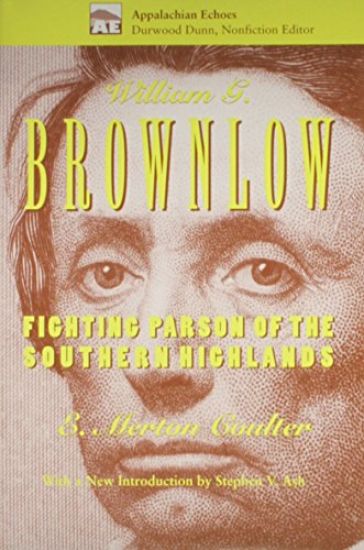
"The 'Fighting Parson' has endured the passage of time and changing interpretation and remains an enduring and scholarly work." —Tennessee Historical Quarterly"We should know Parson Brownlow. The successes and failures of his radicalism can instruct us in more constructive ways for our own time." —Knoxville News-SentinelTennessee has had its share of outrageous characters over the years but none more outrageous than William G. Brownlow. A legend in his own time and a myth in times after, Parson Brownlow was a circuit-riding Methodist minister, upstart journalist, and political activist who wielded a vitriolic tongue and pen in defense of both slavery and the Union.E. Merton Coulter's 1937 biography of Brownlow remains the standard account of the Parson and his times. It traces his religious, journalistic, and political career and shows that wherever he went, Brownlow created a storm, becoming a hero to his admirers and the devil incarnate to his enemies. "If I have any talent in the world," he once wrote, "it is that talent which consists in piling up one epithet upon another."Coulter drew on a wide range of sources and his own knowledge of Southern history to bring Parson Brownlow to life, and his lively prose captures the exaggerated rhetoric with which Brownlow assaulted all enemies—democrats, abolitionists, Presbyterians, and finally Rebels. Although Coulter's interpretations were biased by racism, his vision of the American South included Appalachian inhabitants and African Americans at a time when most of his contemporaries ignored those groups.Stephen V. Ash's introduction brings Coulter's biography in step with recent scholarship, noting discrepancies between Brownlow's personal life and rhetoric and pointing out some of the limitations in Coulter's account. The reputations of author and subject have made this book a milestone in Southern history, and this new edition conveys the passion of both men to a new generation of readers.The Author: E. Merton Coulter was Regents Professor Emeritus of history at the University of Georgia and editor of the Georgia Historical Quarterly. He was the first president of the Southern Historical Association and the author or editor of nearly thirty books.Stephen V. Ash is associate professor of history at the University of Tennessee and editor of the Journal of East Tennessee History.
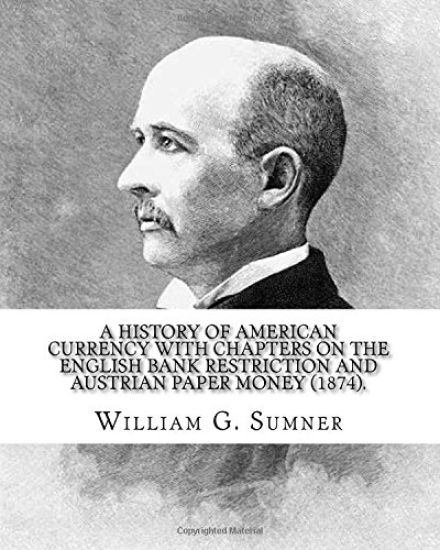
William Graham Sumner (October 30, 1840 - April 12, 1910) was a classical liberal (now a branch of "libertarianism" in American political philosophy) American social scientist. He taught social sciences at Yale, where he held the nation's first professorship in sociology. He was one of the most influential teachers at Yale or any major schools. Sumner was a polymath with numerous books and essays on American history, economic history, political theory, sociology, and anthropology. He supported laissez-faire economics, free markets, and the gold standard. He adopted the term "ethnocentrism" to identify the roots of imperialism, which he strongly opposed. He was a spokesman against imperialism and in favor of the "forgotten man" of the middle class, a term he coined. He had a long-term influence on conservatism in the United States.Sumner wrote an autobiographical sketch for the fourth of the histories of the Class of 1863 Yale College. In 1925, Rev. Harris E. Starr, class of 1910 Yale Department of Theology, published the first full length biography of Sumner. A second full length biography by Bruce Curtis was published in 1981. Other authors have included biographical information about Sumner as shown by citations in this "Biography" section.Sumner was born in Paterson, New Jersey, on October 30, 1840. His father, Thomas Sumner, was born in England and immigrated to the United States in 1836. His mother, Sarah Graham, was also born in England. She was brought to the United States in 1825 by her parents. Sumner's mother died when he was eight.In 1841, Sumner's father went prospecting as far west as Ohio, but came back east to New England and settled in Hartford, Connecticut, in about 1845. Sumner wrote about his high regard for his father: "His principles and habits of life were the best possible." Earlier in his life, Sumner said, that he accepted from others "views and opinions" different from his father's. However, "at the present time," Sumner wrote, "in regard to those matters, I hold with him and not with the others." Sumner did not name the "matters". Sumner was educated in the Hartford public schools. After graduation, he worked for two years as a clerk in a store before going to Yale College from which he graduated in 1863. Sumner achieved an impressive record at Yale as a scholar and orator. He was elected to the Phi Beta Kappa Society in his junior year and in his senior year to the secretive Skull and Bones society. Sumner avoided being drafted to fight in the American Civil War by paying a "substitute" $250, given to him by a friend, to enlist for three years. This and money given to him by his father and friends allowed Sumner to go to Europe for further studies. He spent his first year in the University of Geneva studying Latin and Hebrew and the following two years in the University of G ttingen studying ancient languages, history and Biblical science.All told, in his formal education, Sumner learned Hebrew, Greek, Latin, French, and German. In addition, after middle age he taught himself Dutch, Spanish, Portuguese, Italian, Russian, Polish, Danish, and Swedish. In May 1866, he went to Oxford University to study theology. At Oxford, Henry Thomas Buckle planted the sociology seed in Sumner's mind. However, Herbert Spencer was to have the "dominating influence upon Sumner's thought"....

![[Diary of William G. DeGolyer, 1937-1978]](/covers/9781014119414.jpg)