Kirjojen hintavertailu. Mukana 12 016 292 kirjaa ja 12 kauppaa.

Kirjahaku

Etsi kirjoja tekijän nimen, kirjan nimen tai ISBN:n perusteella.

1000 tulosta hakusanalla William H. Brock

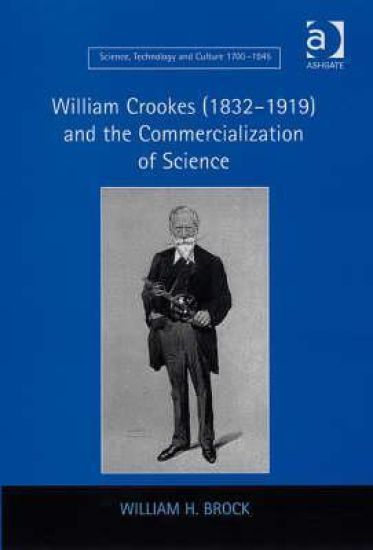
William Crookes (1832–1919) and the Commercialization of Science
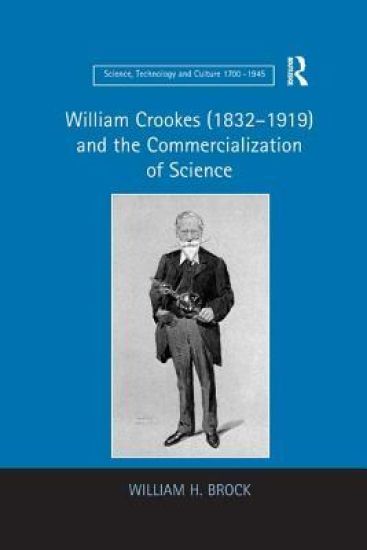
William Crookes' long life was one of unbroken scientific and business activity, culminating in his appointment as President of the Royal Society in 1913. Throughout his career he was an important science journalist, the discoverer of thallium, the inventor of the radiometer, investigator of cathode rays and the vacuum, a spectroscopist of significance in rare earth chemistry, and a spokesman for a chemical solution to the problems with the world's food supplies. He was also, and perhaps most controversially, an occultist who played a significant role in spiritualism in the 1870s, and was involved with D.D. Home (Browning's Mr Sludge) and other notable mediums of the day. Previous literature on Crookes has tended to focus on his involvement with the spiritualists, sometimes to the detriment of his many scientific achievements. This, the first biography of William Crookes, gives us the whole man: one of the most complex, public, and interesting figures in the history of science. Professor Brock guides us through the abundant catalogue of Crookes' accomplishments, placing his scientific activities in the context of the business of making a living from science - something that Crookes did principally as a science journalist and editor with his Chemical News (the model for today's Nature), and by business enterprises ranging from water analysis, sewerage schemes, and goldmining to the design of electric light bulbs. We also see Crookes in the lab, as an independent researcher, and learn the processes behind his discovery of thallium, his investigations into matter and energy, and his crucial work on cathode rays. We see the public man, the celebrity who was much sought after for his opinions on the latest discovery, and who was widely regarded as Britain's leading scientist at the beginning of the twentieth century. Scientist, spiritualist, entrepreneur: Sir William Crookes' extraordinary life and many endeavours provide a unique window into Victorian and Edwardian science and industry.
William Crookes (1832–1919) and the Commercialization of Science
William Crookes' long life was one of unbroken scientific and business activity, culminating in his appointment as President of the Royal Society in 1913. Throughout his career he was an important science journalist, the discoverer of thallium, the inventor of the radiometer, investigator of cathode rays and the vacuum, a spectroscopist of significance in rare earth chemistry, and a spokesman for a chemical solution to the problems with the world's food supplies. He was also, and perhaps most controversially, an occultist who played a significant role in spiritualism in the 1870s, and was involved with D.D. Home (Browning's Mr Sludge) and other notable mediums of the day. Previous literature on Crookes has tended to focus on his involvement with the spiritualists, sometimes to the detriment of his many scientific achievements. This, the first biography of William Crookes, gives us the whole man: one of the most complex, public, and interesting figures in the history of science. Professor Brock guides us through the abundant catalogue of Crookes' accomplishments, placing his scientific activities in the context of the business of making a living from science - something that Crookes did principally as a science journalist and editor with his Chemical News (the model for today's Nature), and by business enterprises ranging from water analysis, sewerage schemes, and goldmining to the design of electric light bulbs. We also see Crookes in the lab, as an independent researcher, and learn the processes behind his discovery of thallium, his investigations into matter and energy, and his crucial work on cathode rays. We see the public man, the celebrity who was much sought after for his opinions on the latest discovery, and who was widely regarded as Britain's leading scientist at the beginning of the twentieth century. Scientist, spiritualist, entrepreneur: Sir William Crookes' extraordinary life and many endeavours provide a unique window into Victorian and Edwardian science and industry.
The History of Chemistry

The History of Chemistry

William H. Brock

Oxford University Press
2016
nidottu
From man's first exploration of natural materials and their transformations to today's materials science, chemistry has always been the central discipline that underpins both the physical and biological sciences, as well as technology. In this Very Short Introduction, William H Brock traces the unique appeal of this fundamental science throughout history. Covering alchemy, early-modern chemistry, pneumatic chemistry and Lavoisier's re-interpretation of chemical change, the rise of organic and physical chemistry, and the transforming power of synthesis, Brock explores the extraordinary and often puzzling transformations of natural and artificial materials, as well as the men and women who experimented, speculated, and explained matter and change. ABOUT THE SERIES: The Very Short Introductions series from Oxford University Press contains hundreds of titles in almost every subject area These pocket-sized books are the perfect way to get ahead in a new subject quickly Our expert authors combine facts, analysis, perspective, new ideas, and enthusiasm to make interesting and challenging topics highly readable.
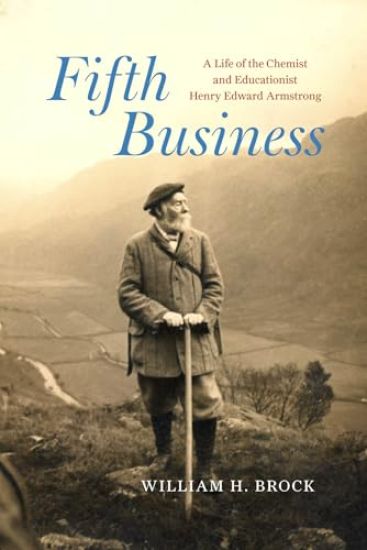
Fifth Business

Fifth Business

William H. Brock

THE UNIVERSITY OF CHICAGO PRESS
2025
sidottu
A biography of Henry Edward Armstrong, an underappreciated maverick in the history of chemistry. Fifth Business is a biography of the English chemist, educator, and scientific critic Henry Edward Armstrong. Today, Armstrong, who was a central figure in the development of the science of chemistry between 1885 and 1914, is more remembered for his campaigns to improve the teaching of chemistry, and science generally, and less for his theory of residual affinity and reverse electrolysis—or his hostility toward physical chemistry. However, right up until his retirement, Armstrong was a significant and prolific organic chemist, as well as a major figure in the academic and social life of the Chemical Society. Fifth Business is structured as chronologically as possible, with Armstrong’s life and achievements as an active chemist in Part I (1848–1911) and as a critic in his long retirement in Part II (1911–1937). Brock’s authoritative biography provides a unique inside look at its subject, allowing us to better understand the history of British science, scientific institutions, scientific education, pedagogical theory, and social relations of science during the last third of the nineteenth century and the first third of the twentieth.
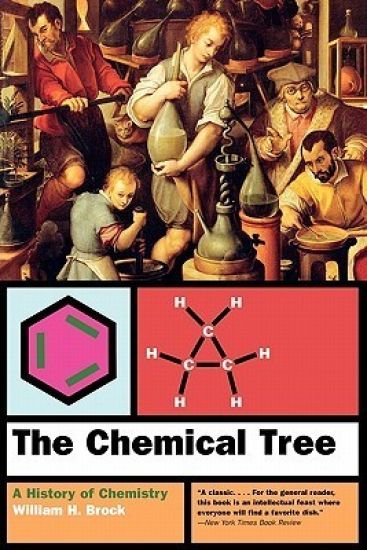
The Chemical Tree

The Chemical Tree

William H. Brock

WW NORTON CO
2000
nidottu
In this authoritative volume, a New York Times Notable Book of 1993, scientific researcher and historian William Brock recounts the astonishing rise of a sophisticated science. Tracing the roots of chemistry back to the alchemists' futile attempts to turn lead into gold, he follows the emergence of the modern study of chemistry through the works of Boyle, Lavoisier, and Dalton, and the twentieth-century breakthroughs of Linus Pauling and others. This timely, comprehensive history examines the shifting conceptions of chemistry over the past centuries--from its development as a scientific philosophy to, more recently, its practical applications in the commercial, industrial arena. Originally published under the title The Norton History of Chemistry.
Justus von Liebig

Justus von Liebig

William H. Brock

Cambridge University Press
2002
pokkari
One of the founding fathers of organic chemistry and also a great teacher, the German scientist Justus von Liebig transformed scientific education, medical practice, and agriculture in Great Britain. William H. Brock’s fresh interpretation of Liebig’s stormy career shows how he moved chemistry into the sociopolitical marketplace, demonstrating its significance for society in food production, nutrition, and public health. Through his controversial ideas on artificial fertilizers and recycling, his theory of disease, and his stimulating suggestions concerning food and nutrition, he warned the world of the dangers of failing to recycle sewage or to replace soil nutrients. Liebig also played the role of an elder statesman of European science by commenting, via popular lectures and expansions of his readable Chemical Letters, on such issues as scientific methodology and materialism.
Justus von Liebig

Justus von Liebig

William H. Brock

Cambridge University Press
1997
sidottu
One of the founding fathers of organic chemistry and also a great teacher, the German scientist Justus von Liebig transformed scientific education, medical practice, and agriculture in Great Britain. William H. Brock's fresh interpretation of Liebig's stormy career shows how he moved chemistry into the sociopolitical marketplace, demonstrating its significance for society in food production, nutrition, and public health. Through his controversial ideas on artificial fertilizers and recycling, his theory of disease, and his stimulating suggestions concerning food and nutrition, he warned the world of the dangers of failing to recycle sewage or to replace soil nutrients. Liebig also played the role of an elder statesman of European science by commenting, via popular lectures and expansions of his readable Chemical Letters, on such issues as scientific methodology and materialism.
Science for All

Science for All

William H. Brock

Variorum
1996
sidottu
This set of essays - four, including the long title essay, being published here for the first time - reflects the author's long interest in the science and culture of the Victorian period. The first section examines the patronage of science and the activities of the British Association of the Advancement of Science and the Cavendish Society. The following one explores natural theology and natural history, and the impact of German scientists on British culture. Ten essays on science education then provide a broad perspective, as well as specific insights into heurism, technical education in periodicals, school examinations, and the unexpected role of Japan in stimulating educational innovation in Britain. In addition, Professor Brock addresses the long history of the linkage made between poor science education and national decline, and Britain's continuing need to enhance the opportunities of Science for All.
Viewegs Geschichte der Chemie

Viewegs Geschichte der Chemie

William H. Brock

Springer-Verlag Berlin and Heidelberg GmbH Co. K
2012
nidottu
DaR aile Pflanzen unmittelbar. und substantiell vom Element Wasser abstarnmen, erfuhr ich aus fol- gendem Experiment: Ich nahm ein irdenes GefaE und schuttete zweihundert Pfund Erde hinein, die ich zuvor in einem Ofen gerrocknet hatte. Ich wiisserte sie mit Regenwasser und pflanzte ein Weiden- baumchen ein, das fiinf Pfund wog. Funf Jahre spater hatte sich daraus ein Baum entwickelt, der hundertneunundsechzig Pfund und etwa drei Unzen wog. Nur Regen (oder destilliertes Wasser) wur- de hinzugefiigt. Das groBe GefaE wurde in Erde eingelassen und oben mit einer verzinkten Eisenplat- te abgedeckt, in der viele k1eine LOcher waren. Ich habe das Gewicht der Blatter, die in den vier Herbstzeiten abfielen, nicht gewogen. Schlieillich trocknete ich die Erde in dem GefaE wieder und GBPand in etwa dieselben zweihundert Pfund vor, allerdings zwei Unzen weniger. Also entwickelten sich hundertvierundsechzig Pfund Holz, Aste und Wurze\n, allein aus Wasser. Johann Baptist van Helmont, 1648 Helmonts spannendes Experiment und seine Schlugfolgerung betreffen den Kern des Problems chemischer Veranderungen. Wie und warum werden Wasser und Luft zum Material eines Baumes - oder, falls das zu sehr nach Biochemie klingt - wie und warum werden Wasserstoff und Sauerstoff zu Wasser? Warum nimmt die unbelebte, bloge Ma- terie haufig eine symmetrisch geordnete, feste Form an? Helmonts Experiment stellt auch die Frage nach dem Verhaltnis von qualitativer und quantitativer Oberlegung in der Ge- schichte der Chemie.
Justus von Liebig

Justus von Liebig

William H. Brock; W. Lewicki; W. Caesar

Springer-Verlag Berlin and Heidelberg GmbH Co. K
2012
nidottu
Sieht man sich auf dem Buchmarkt urn, tiber welche Personen Biographien geschrieben wurden, so fmdet man an erster Stelle die Inhaber der politis chen Macht, seien es Monar- chen, Diktatoren oder demokratisch gewahlte Politiker, die das Schicksal der von ihnen regierten Hinder und der darin wohnenden BevOlkerung maBgeblich bestimm(t)en; ihnen folgen die Kiinsder im weitesten Sinne, also Maler, Dichter, Musiker, Schauspieler, Re- gisseure und andere Repriisentanten der Kultur, die teils kreativ, teils kritisch unser Le- ben begleiten, reflektieren und damit auch zur Auseinandersetzung mit uns selbst und unserer Gesellschaft aufrufen; erst in groBem Abstand folgen die Wissenschaftler, Tech- niker, Industrielle und Handelsleute, deren Entdeckungen und Erfmdungen zwar die matenellen Grundlagen unseres Lebens pdigen, dies aber in vielen Fallen nicht so un- mittel bar, daB der Zusammenhang mit dem Urheber des jeweiligen Fortschritts noch erkennbar ist. DaB ein Wissenschaftler schon zu Lebzeiten aufgrund seiner Leistungen popular war und auch damber hinaus bleibende Anerkennung genieBt, z. B. Albert Ein- stein, ist eher die Ausnahme. Riickblickend erkennen wir heute einige Personen als hochst bedeutsam, die zu Lebzeiten verkannt waren wie Ignaz Semmelweis oder deren Identitat erst nach Jahrhunderten einigermaBen gesichert werden konnte, wie im Fall des Johannes Gutenberg, des Erfmders des Buchdrucks mit beweglichen gegossenen Metall-Lettern. Bereits zu Lebzeiten international bekannt und auch in der Gegenwart nicht vergessen - so konnte man das Renommee des Chemikers Justus von Uebig einordnen, ja man darf sagen, daB er einer der bekanntesten Chemiker aller Zeiten ist.
Case of the Poisonous Socks

Case of the Poisonous Socks

William H Brock

Royal Society of Chemistry
2011
nidottu
In 1868, The Times reported that poisons contained in dyes were affecting the public's health. A doctor informed a London magistrate that brilliantly coloured socks had caused severe "constitutional and local complaint" to several of his patients. In one case, a patient's foot had become so swollen that his boots had to be cut off. Respected chemist, William Crookes, offered to identify the poison if doctors would send him samples of the deadly socks. The story of how he solved the mystery gives this book its title and forms the basis of the first chapter. Written by a respected science historian and established author, this collection of essays contains 42 tales of chemists and their discoveries from the nineteenth and twentieth centuries. Other topics covered include: the quirky beliefs of American philanthropist, George Hodgkins; the development of the chemical laboratory since the 1830s, and the career of C.P. Snow before he became a novelist. Its broad coverage and modern approach makes it of interest to chemists, teachers, historians and laypeople with an interest in science. Written with a light style and presented in a series of unconnected vignettes the book is easy to dip into at leisure.
Ballads and Songs ... with Original Illustrations by H. M. Brock.

Ballads and Songs ... with Original Illustrations by H. M. Brock.

William Makepeace Thackeray; Henry Brock

British Library, Historical Print Editions
2011
pokkari
Title: Ballads and Songs ... With original illustrations by H. M. Brock.Publisher: British Library, Historical Print EditionsThe British Library is the national library of the United Kingdom. It is one of the world's largest research libraries holding over 150 million items in all known languages and formats: books, journals, newspapers, sound recordings, patents, maps, stamps, prints and much more. Its collections include around 14 million books, along with substantial additional collections of manuscripts and historical items dating back as far as 300 BC.The POETRY & DRAMA collection includes books from the British Library digitised by Microsoft. The books reflect the complex and changing role of literature in society, ranging from Bardic poetry to Victorian verse. Containing many classic works from important dramatists and poets, this collection has something for every lover of the stage and verse. ++++The below data was compiled from various identification fields in the bibliographic record of this title. This data is provided as an additional tool in helping to insure edition identification: ++++ British Library Thackeray, William; Brock, Henry; 1896. xiv. 276 p.; 8 . 11611.bbb.45.
Report on the Whitby, Scarborough, and Bridlington Pier Duties on Coals ... by W. H. Brockett, Hon. Sec.
Title: Report on the Whitby, Scarborough, and Bridlington Pier Duties on coals ... By W. H. Brockett, Hon. Sec.Publisher: British Library, Historical Print EditionsThe British Library is the national library of the United Kingdom. It is one of the world's largest research libraries holding over 150 million items in all known languages and formats: books, journals, newspapers, sound recordings, patents, maps, stamps, prints and much more. Its collections include around 14 million books, along with substantial additional collections of manuscripts and historical items dating back as far as 300 BC.The HISTORY OF BRITAIN & IRELAND collection includes books from the British Library digitised by Microsoft. As well as historical works, this collection includes geographies, travelogues, and titles covering periods of competition and cooperation among the people of Great Britain and Ireland. Works also explore the countries' relations with France, Germany, the Low Countries, Denmark, and Scandinavia. ++++The below data was compiled from various identification fields in the bibliographic record of this title. This data is provided as an additional tool in helping to insure edition identification: ++++ British Library Anonymous; Brockett, William Henry; 1841. 15 p.; 8 . 10347.ee.25.(8.)