Kirjahaku
Etsi kirjoja tekijän nimen, kirjan nimen tai ISBN:n perusteella.
1000 tulosta hakusanalla William H. Davies
Collected Poems By William H. Davies
William Henry Davies; William (ILT) Rothenstein
Kessinger Pub
2008
pokkari
William Henry Davies, a poet famed for his talented portrayals of nature and indigence, penned numerous evocative verses. This 1916 anthology is a summation of his early to midlife work.As a young man, Davies favored the life of a homeless person. Born in Wales, he spent part of his youth in North America, making his way through various locales on foot or by train as a tramp. In 1899 he experienced a serious accident; while aboard a moving train in Ontario he slipped and his foot was caught and crushed by a moving wheel. His leg was amputated below the knee, necessitating a peg leg. This shocking event marked the beginning of Davies' poetic career.The style of Davies' poems is simple yet distinctive, his economy with words coinciding with unique impact and grace. Meditations upon the beauty of the natural world are accompanied by descriptive verse on such topics as childhood, emotional states, the warmth of a good fire, and creatures of the great outdoors. Despite further blows to his health as the years passed, Davies was productive for decades, publishing fondly-received anthologies well into the 1930s.


7 Great Methods to help Manage your Business Technology
William H. Davies
Createspace Independent Publishing Platform
2012
nidottu

The Autobiography of a Super-Tramp (Fifield, 1908) (autobiographical)
William H. Davies
Createspace Independent Publishing Platform
2016
nidottu

William Henry Davies was born in the Pillgwenlly district of Newport, Monmouthshire, Wales, a busy port on July 3rd, 1871. Davies seemed to find childhood difficult. By the age of 13 he was arrested, part of a gang of five schoolmates, and charged with stealing handbags. He was given twelve strokes of the birch. The following year, 1885, Davies wrote his first poem; "Death". His yearning was to travel. In a half dozen years, he crossed the Atlantic at least annually by working on cattle ships. He travelled through many of the states, sometimes begging, sometimes taking seasonal work, but would often spend any savings on a drinking spree with a fellow traveller. In London, he came across a newspaper story about the riches to be made in the Klondike and immediately set off to make his fortune in Canada. Attempting to jump a freight train at Renfrew, Ontario, on March 20th, 1899, he lost his footing and his right foot was crushed under the wheels of the train. The leg later had to be amputated below the knee and he wore a wooden prosthetic leg thereafter. On October 12th, 1905 Davies met the poet Edward Thomas, then the literary critic for the Daily Chronicle. Thomas rented for Davies a nearby tiny two-roomed cottage. Thomas now adopted the role of protective guardian as he helped Davies to develop his career. In 1907, the manuscript of The Autobiography of a Super-Tramp drew the attention of George Bernard Shaw, who agreed to write a preface. In 1911, Davies was awarded a Civil List Pension of 50, which later increased to 100 and then to 150. The Georgian poetry publisher Edward Marsh introduced him, in 1913, to DH Lawrence who was captivated by Davies and later invited him to Germany. Despite this early enthusiasm, Lawrence's opinion waned and he noted the newer verses seemed "so thin, one can hardly feel them". On February 5th, 1923, Davies married 23-year-old Helen Matilda Payne, at the Registry Office in East Grinstead in Sussex. His book Young Emma chronicles the relationship in a very frank and revealing way. Having second thoughts he retrieved the book from the publishers and it was only published after Helens death. He had met her near Marble Arch decanting from a bus wearing a "saucy-looking little velvet cap with tassels". At the time Helen was unmarried and pregnant. While living with Davies in London, before their marriage, Helen suffered an almost fatal miscarriage. Davies made over a dozen broadcasts for the BBC, reading his own work, between 1924 and 1940. Davies returned to Newport, in September 1938, for the unveiling of a plaque in his honour, and with an address given by the Poet Laureate John Masefield. His health had now deteriorated, and this proved to be his last public appearance. W. H. Davies' health continued to worsen and he died, on September 26th, 1940, at the age of 69.

William Henry Davies was born in the Pillgwenlly district of Newport, Monmouthshire, Wales, a busy port on July 3rd, 1871. Davies seemed to find childhood difficult. By the age of 13 he was arrested, part of a gang of five schoolmates, and charged with stealing handbags. He was given twelve strokes of the birch. The following year, 1885, Davies wrote his first poem; "Death". His yearning was to travel. In a half dozen years, he crossed the Atlantic at least annually by working on cattle ships. He travelled through many of the states, sometimes begging, sometimes taking seasonal work, but would often spend any savings on a drinking spree with a fellow traveller. In London, he came across a newspaper story about the riches to be made in the Klondike and immediately set off to make his fortune in Canada. Attempting to jump a freight train at Renfrew, Ontario, on March 20th, 1899, he lost his footing and his right foot was crushed under the wheels of the train. The leg later had to be amputated below the knee and he wore a wooden prosthetic leg thereafter. On October 12th, 1905 Davies met the poet Edward Thomas, then the literary critic for the Daily Chronicle. Thomas rented for Davies a nearby tiny two-roomed cottage. Thomas now adopted the role of protective guardian as he helped Davies to develop his career. In 1907, the manuscript of The Autobiography of a Super-Tramp drew the attention of George Bernard Shaw, who agreed to write a preface. In 1911, Davies was awarded a Civil List Pension of 50, which later increased to 100 and then to 150. The Georgian poetry publisher Edward Marsh introduced him, in 1913, to DH Lawrence who was captivated by Davies and later invited him to Germany. Despite this early enthusiasm, Lawrence's opinion waned and he noted the newer verses seemed "so thin, one can hardly feel them". On February 5th, 1923, Davies married 23-year-old Helen Matilda Payne, at the Registry Office in East Grinstead in Sussex. His book Young Emma chronicles the relationship in a very frank and revealing way. Having second thoughts he retrieved the book from the publishers and it was only published after Helens death. He had met her near Marble Arch decanting from a bus wearing a "saucy-looking little velvet cap with tassels". At the time Helen was unmarried and pregnant. While living with Davies in London, before their marriage, Helen suffered an almost fatal miscarriage. Davies made over a dozen broadcasts for the BBC, reading his own work, between 1924 and 1940. Davies returned to Newport, in September 1938, for the unveiling of a plaque in his honour, and with an address given by the Poet Laureate John Masefield. His health had now deteriorated, and this proved to be his last public appearance. W. H. Davies' health continued to worsen and he died, on September 26th, 1940, at the age of 69.



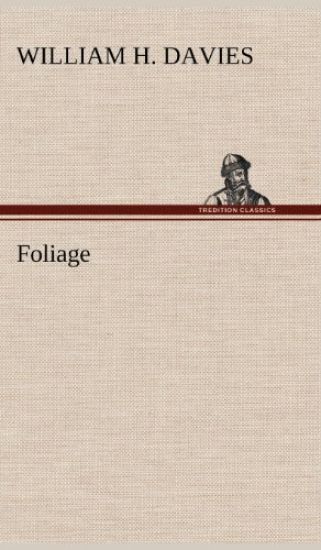

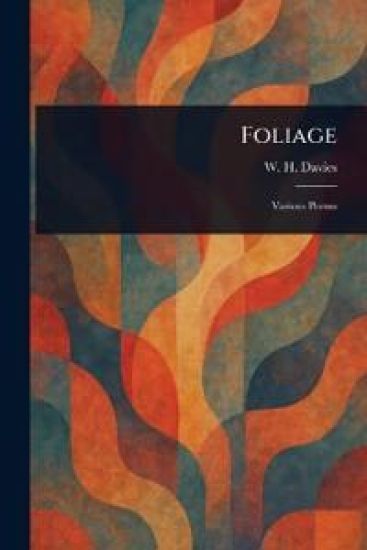
Dive into the heart of nature with William H. Davies' "Foliage: Various Poems," a collection of lyrical poetry that captures the essence of the natural world. This carefully curated volume showcases Davies' signature style, blending keen observation with profound emotional depth. A significant contribution to 20th-century English literature, "Foliage" offers a diverse selection of poems that explore themes of beauty, simplicity, and the interconnectedness of life. Davies' work resonates with a timeless quality, inviting readers to pause and appreciate the small wonders that surround us. This edition, meticulously prepared for print republication, preserves the original charm and elegance of Davies' verse, making it a treasured addition to any poetry lover's library. A captivating journey through the landscapes of the soul, "Foliage" is a testament to the enduring power of poetry.This work has been selected by scholars as being culturally important, and is part of the knowledge base of civilization as we know it.This work is in the public domain in the United States of America, and possibly other nations. Within the United States, you may freely copy and distribute this work, as no entity (individual or corporate) has a copyright on the body of the work.Scholars believe, and we concur, that this work is important enough to be preserved, reproduced, and made generally available to the public. We appreciate your support of the preservation process, and thank you for being an important part of keeping this knowledge alive and relevant.