Kirjojen hintavertailu. Mukana 11 244 527 kirjaa ja 12 kauppaa.

Kirjahaku

Etsi kirjoja tekijän nimen, kirjan nimen tai ISBN:n perusteella.

1000 tulosta hakusanalla William H. Rice

Ralph Ellison and the Politics of the Novel

Ralph Ellison and the Politics of the Novel

William H. Rice

Lexington Books
2003
sidottu
In this engaging study, H. William Rice illuminates the mystery that is Ralph Ellison: the author of one complex, important novel who failed to complete his second; a black intellectual who remained notably reticent on political issues during the desegregation of his native South. Rice reads both Invisible Man and the posthumously published Juneteenth as novels that focus on the political uses of language. He explores Ellison's concept of the novel, promulgated in that author's two collections of essays, as an inherently political form of art. And he carefully considers the political context that undoubtedly impacted Ellison's work and thought: a world and a time rocked to its foundation by such revolutionary actors as Martin Luther King, Jr., and Malcolm X. Rice guides his reader to a greater understanding of Ralph Ellison, his oeuvre, and the American novel.
Ralph Ellison and the Politics of the Novel

Ralph Ellison and the Politics of the Novel

William H. Rice

Lexington Books
2007
nidottu
In this engaging study, H. William Rice illuminates the mystery that is Ralph Ellison: the author of one complex, important novel who failed to complete his second; a black intellectual who remained notably reticent on political issues during the desegregation of his native South. Rice reads both Invisible Man and the posthumously published Juneteenth as novels that focus on the political uses of language. He explores Ellison's concept of the novel, promulgated in that author's two collections of essays, as an inherently political form of art. And he carefully considers the political context that undoubtedly impacted Ellison's work and thought: a world and a time rocked to its foundation by such revolutionary actors as Martin Luther King, Jr., and Malcolm X. Rice guides his reader to a greater understanding of Ralph Ellison, his oeuvre, and the American novel.
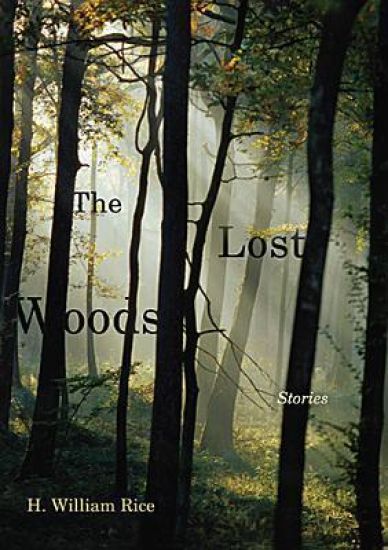
The Lost Woods

The Lost Woods

H. William Rice

University of South Carolina Press
2014
sidottu
The Lost Woods is a collection of fifteen short stories, most of them set in and around the fictional small town of Sledge, South Carolina. The events narrated in the stories begin in the 1930s and continue to the present day. The stories aren't accounts of hunting methods or legends of trophy kills--they are serious stories about hunting that are similar in style to William Faulkner's Go Down, Moses. The collection traces the evolution of two families--the Whites and the Chapmans--as well as the changes in hunting and land use of the past eighty years. Some of these stories are narrated in third person; others are told by a wide range of characters, from grown men and women to children, but only from one perspective--that of the hunter. As they walk the woods in search of turkeys, deer, or raccoons, these characters seek something more than food. They seek a lost connection to some part of themselves. The title ""the lost woods"" is adapted from Cherokee myths and stories wherein people must return again and again to the woods to find animals that were lost. Thereby, we find not only food, but who we are. Through these stories Rice reminds us that hunting is inextricably entwined with identity. As one of the oldest rituals that we as a species know, it reflects both our nobility and our depravity. Through it we return again and again to find the lost woods inside ourselves.
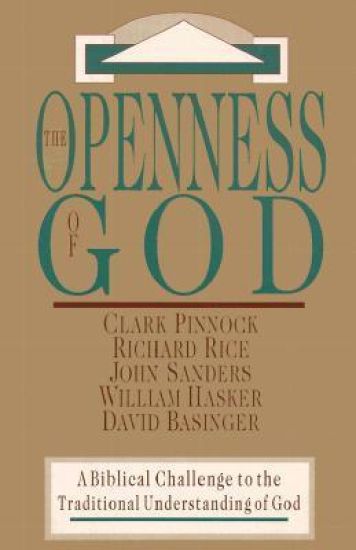
The Openness of God – A Biblical Challenge to the Traditional Understanding of God

The Openness of God – A Biblical Challenge to the Traditional Understanding of God

Clark H. Pinnock; Richard Rice; John Sanders; William Hasker; David Basinger

Inter-Varsity Press
1994
nidottu
Voted one of Christianity Today's Books of the Year The Openness of God presents a careful and full-orbed argument that the God known through Christ desires "responsive relationship" with his creatures. While it rejects process theology, the book asserts that such classical doctrines as God's immutability, impassibility and foreknowledge demand reconsideration. The authors insist that our understanding of God will be more consistently biblical and more true to the actual devotional lives of Christians if we profess that "God, in grace, grants humans significant freedom" and enters into relationship with a genuine "give-and-take dynamic." The Openness of God is remarkable in its comprehensiveness, drawing from the disciplines of biblical, historical, systematic and philosophical theology. Evangelical and other orthodox Christian philosophers have promoted the "relational" or "personalist" perspective on God in recent decades. Now here is the first major attempt to bring the discussion into the evangelical theological arena.
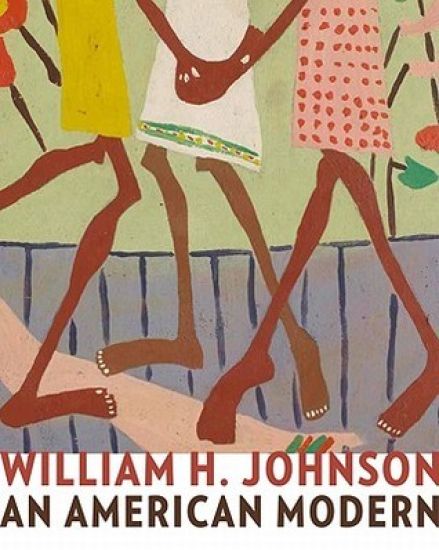
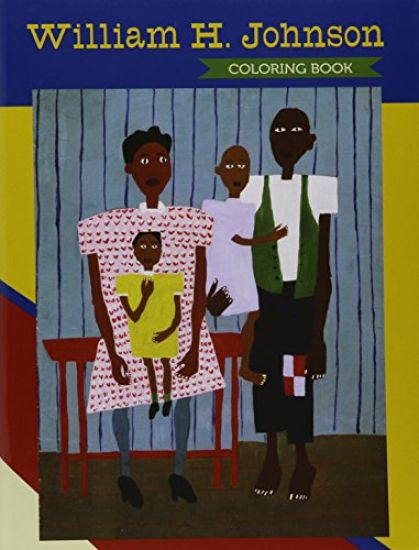
William H. Johnson

William H. Johnson

University of Washington Press
2011
pokkari
"My aim is to express in a natural way what I feel, what is in me, both rhythmically and spiritually, all that which in time has been saved up in my family of primitiveness and tradition, and which is now concentrated in me."--William H. Johnson An essential figure in modern American art, William H. Johnson (1901-1970) was a virtuoso skilled in various media and techniques, who produced thousands of works over a career that spanned decades, continents, and genres. This volume considers paintings from the collection of Morgan State University in Baltimore, Maryland, that show the pivotal stages in Johnson's career as a modernist painter of post-impressionist and expressionist works reminiscent of Cezanne, Van Gogh, and Soutine, and the vernacular paintings in which he articulates his specific, unforgettable voice as an artist.In this lavishly illustrated book, some of the world's premier scholars of William H. Johnson and African American art history examine the artist and his artistic genius in fresh new ways, including his relationship with one of his earliest patrons, the Harmon Foundation; the critical role played by scholars at the nation's historically black colleges and universities; the context of Johnson's experiences living in Harlem and his deep southern roots; and Johnson as a trailblazer in the genres of still life and landscape painting.