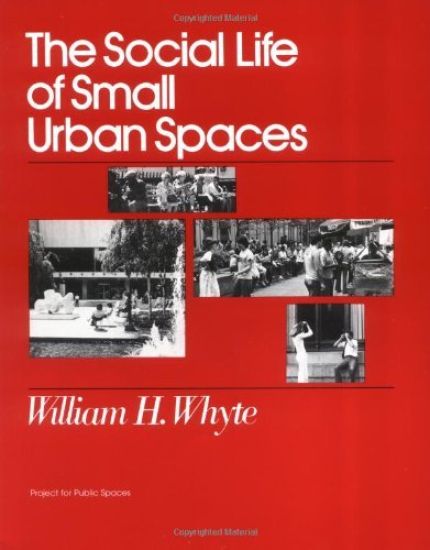
The Essential William H. Whyte offers the core writings of a great observer of the postwar American scene. Included are selections from The Organization Man, Securing Space for Urban America: Conservation Easements, The Last Landscape, The Social Life of Urban Spaces, and City: Rediscovering the Center, as well as many of Whyte's articles from Fortune Magazine.
The Essential William H. Whyte offers the core writings of a great observer of the postwar American scene. Included are selections from The Organization Man, Securing Space for Urban America: Conservation Easements, The Last Landscape, The Social Life of Urban Spaces, and City: Rediscovering the Center, as well as many of Whyte's articles from Fortune Magazine.
William Whyte’s core idea in The Organization Man is that the Protestant Ethic that characterized financial and personal success in American history had been replaced in modern times by the Social Ethic. This stressed the group as the source of creativity and emphasized that the greatest need of the individual is to belong to a group. To investigate this idea, Whyte spent years interviewing the CEOs of Fortune 500 companies when he was an editor at Fortune magazine, one of the top business publications in the United States at the time. What he found was that the recruitment and training were much more focused on “cultural fit” than on technical skill or experience level. As the ranks of new junior executives grew in post-World War II America, so did their impact on urban development and consumer spending. Droves of “package suburbs” sprang up in the fields surrounding major metropolitan areas, and a strong post-war economy coupled with funding from the GI Bill made new homes, cars, and household goods affordable for young families.
William Whyte’s core idea in The Organization Man is that the Protestant Ethic that characterized financial and personal success in American history had been replaced in modern times by the Social Ethic. This stressed the group as the source of creativity and emphasized that the greatest need of the individual is to belong to a group. To investigate this idea, Whyte spent years interviewing the CEOs of Fortune 500 companies when he was an editor at Fortune magazine, one of the top business publications in the United States at the time. What he found was that the recruitment and training were much more focused on “cultural fit” than on technical skill or experience level. As the ranks of new junior executives grew in post-World War II America, so did their impact on urban development and consumer spending. Droves of “package suburbs” sprang up in the fields surrounding major metropolitan areas, and a strong post-war economy coupled with funding from the GI Bill made new homes, cars, and household goods affordable for young families.
The remaining corner of an old farm, unclaimed by developers. The brook squeezed between housing plans. Abandoned railroad lines. The stand of woods along an expanded highway. These are the outposts of what was once a larger pattern of forests and farms, the "last landscape." According to William H. Whyte, the place to work out the problems of our metropolitan areas is within those areas, not outside them. The age of unchecked expansion without consequence is over, but where there is waste and neglect there is opportunity. Our cities and suburbs are not jammed; they just look that way. There are in fact plenty of ways to use this existing space to the benefit of the community, and The Last Landscape provides a practical and timeless framework for making informed decisions about its use. Called "the best study available on the problems of open space" by the New York Times when it first appeared in 1968, The Last Landscape introduced many cornerstone ideas for land conservation, urging all of us to make better use of the land that has survived amid suburban sprawl. Whyte's pioneering work on easements led to the passage of major open space statutes in many states, and his argument for using and linking green spaces, however small the areas may be, is a recommendation that has more currency today than ever before.
Regarded as one of the most important sociological and business commentaries of modern times, The Organization Man developed the first thorough description of the impact of mass organization on American society. During the height of the Eisenhower administration, corporations appeared to provide a blissful answer to postwar life with the marketing of new technologies-television, affordable cars, space travel, fast food-and lifestyles, such as carefully planned suburban communities centered around the nuclear family. William H. Whyte found this phenomenon alarming. As an editor for Fortune magazine, Whyte was well placed to observe corporate America; it became clear to him that the American belief in the perfectibility of society was shifting from one of individual initiative to one that could be achieved at the expense of the individual. With its clear analysis of contemporary working and living arrangements, The Organization Man rapidly achieved bestseller status. Since the time of the book's original publication, the American workplace has undergone massive changes. In the 1990s, the rule of large corporations seemed less relevant as small entrepreneurs made fortunes from new technologies, in the process bucking old corporate trends. In fact this "new economy" appeared to have doomed Whyte's original analysis as an artifact from a bygone day. But the recent collapse of so many startup businesses, gigantic mergers of international conglomerates, and the reality of economic globalization make The Organization Man all the more essential as background for understanding today's global market. This edition contains a new foreword by noted journalist and author Joseph Nocera. In an afterword Jenny Bell Whyte describes how The Organization Man was written.
Named by Newsweek magazine to its list of "Fifty Books for Our Time." For sixteen years William Whyte walked the streets of New York and other major cities. With a group of young observers, camera and notebook in hand, he conducted pioneering studies of street life, pedestrian behavior, and city dynamics. City: Rediscovering the Center is the result of that research, a humane, often amusing view of what is staggeringly obvious about the urban environment but seemingly invisible to those responsible for planning it. Whyte uses time-lapse photography to chart the anatomy of metropolitan congestion. Why is traffic so badly distributed on city streets? Why do New Yorkers walk so fast-and jaywalk so incorrigibly? Why aren't there more collisions on the busiest walkways? Why do people who stop to talk gravitate to the center of the pedestrian traffic stream? Why do places designed primarily for security actually worsen it? Why are public restrooms disappearing? "The city is full of vexations," Whyte avers: "Steps too steep; doors too tough to open; ledges you cannot sit on. . . . It is difficult to design an urban space so maladroitly that people will not use it, but there are many such spaces." Yet Whyte finds encouragement in the widespread rediscovery of the city center. The future is not in the suburbs, he believes, but in that center. Like a Greek agora, the city must reassert its most ancient function as a place where people come together face-to-face.
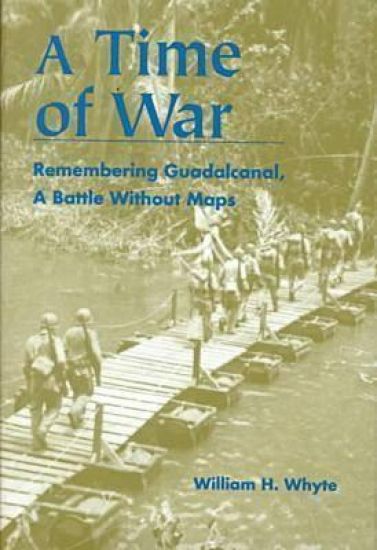
A memoir by William H. Whyte. The battle for control of Guadalcanal in 1942 and what the Americans learned from it forms the heart of the book. The battle was the first real test of land combat between the United States and Japan.
A memoir by William H. Whyte. The battle for control of Guadalcanal in 1942 and what the Americans learned from it forms the heart of the book. The battle was the first real test of land combat between the United States and Japan.
Psychological Anthropology: Approaches to Culture and Personality is a comprehensive book written by Francis Lang Kwang Hsu that explores the relationship between culture and personality. The book provides a detailed analysis of how cultural norms, beliefs, and values shape individual behavior, emotions, and cognition. It also examines how personality traits, such as extraversion, neuroticism, and openness, are influenced by cultural factors.The book is divided into three parts. The first part introduces the basic concepts and theories of psychological anthropology, including the concept of culture, personality, and the relationship between the two. The second part focuses on specific cultural domains, such as kinship, gender, and religion, and how they influence personality development. The third part explores the applications of psychological anthropology in various fields, including education, health, and cross-cultural research.The author uses a wide range of case studies and examples from different cultures to illustrate the concepts and theories discussed in the book. The book is written in a clear and accessible style, making it suitable for students and scholars in psychology, anthropology, sociology, and related fields. It provides a valuable resource for anyone interested in understanding the complex interplay between culture and personality.Contributing Authors Include Edward Norbeck, George De Vos, Robert A. Levine, And Many Others. Dorsey Series In Anthropology And Sociology.This scarce antiquarian book is a facsimile reprint of the old original and may contain some imperfections such as library marks and notations. Because we believe this work is culturally important, we have made it available as part of our commitment for protecting, preserving, and promoting the world's literature in affordable, high quality, modern editions, that are true to their original work.
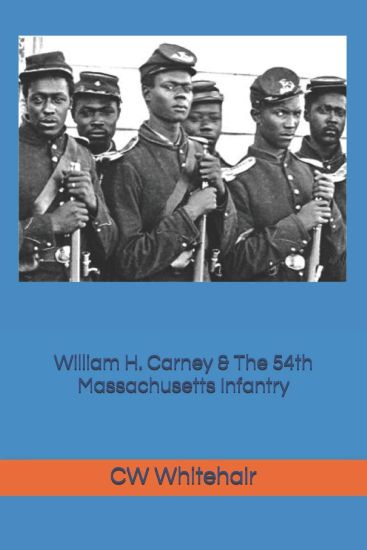
Sergeant William Harvey Carney, Company C, 54th Massachusetts Infantry was the first African American Union soldier to be awarded the Congressional Medal of Honor for bravery at the Battle of Fort Wagner, South Carolina. Carney was a former slave from Virginia, escaping to New Bedford, Massachusetts prior to America's Civil War. He had hoped to become a minister of the Gospel of Jesus Christ, but once the war began, he believed his services could be better used in the effort to free his people still in bondage.After the Civil War, Sergeant Carney became a strong advocate for racial equality, a role model for the African American community, and a loyal patriot for the country and Constitution he had sworn to protect and defend. The 54th Massachusetts Infantry was the first organized African American Union regiment to serve in America's Civil War. Many Northern politicians and soldiers did not believe the African American would take up arms and fight for his freedom, nor would they make well-discipline soldiers. Governor John Andrews of Massachusetts and African American leader Frederick Douglass believed otherwise. They believed in the ability and commitment of African Americans to train, fight, obey, and willingly share the dangers and hardships of soldiers fighting a war. The book, William H. Carney & the 54th Massachusetts, covers the life of Carney and the battles of the 54th Massachusetts Infantry. Author CW Whitehair has used primary and secondary resources, letters, and period newspapers to chronicle the regiment's history.
A Summer's Vacation at the White Mountains - Third season is an unchanged, high-quality reprint of the original edition of 1879. Hansebooks is editor of the literature on different topic areas such as research and science, travel and expeditions, cooking and nutrition, medicine, and other genres. As a publisher we focus on the preservation of historical literature. Many works of historical writers and scientists are available today as antiques only. Hansebooks newly publishes these books and contributes to the preservation of literature which has become rare and historical knowledge for the future.
A historical investigation into the political and ideological foundations of the "miseducation of the Negro" in America, this timely and provocative volume explores the men and ideas that helped shape educational and societal apartheid from the Civil War to the new millennium. It is a study of how big corporate power uses private wealth to legislate, shape unequal race relations, broker ideas, and define "acceptable" social change. Drawing on little-known biographies of White power brokers who shaped Black education, William Watkins explains the structuring of segregated education that has plagued the United States for much of the 20th century. With broad and interdisciplinary appeal, this book is written in a language accessible to lay people and scholars alike.