Kirjojen hintavertailu. Mukana 11 244 527 kirjaa ja 12 kauppaa.

Kirjahaku

Etsi kirjoja tekijän nimen, kirjan nimen tai ISBN:n perusteella.

1000 tulosta hakusanalla William H. Williams

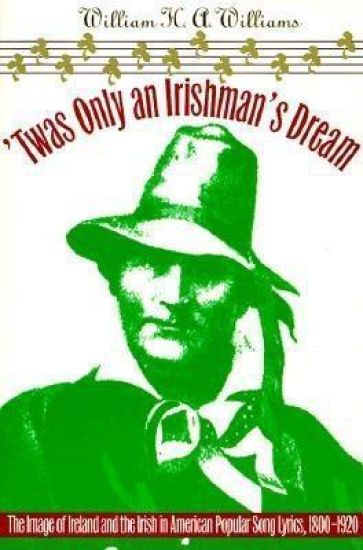
'Twas Only an Irishman's Dream

'Twas Only an Irishman's Dream

William H. Williams

University of Illinois Press
1996
nidottu
Over time, the image of the Irish in the United States changed from that of hard-drinking Paddies to genial working-class citizens. In 'Twas Only an Irishman's Dream, William H. A. Williams traces the change in this image through more than seven hundred pieces of sheet music--popular songs from the stage and for the parlor--to show how Americans' opinions of Ireland and the Irish swung from one extreme to the other. As Williams shows, sheet music's place as a commercial item meant it had to be acceptable to the broadest possible song-buying public. Negotiations about the image of the Irish and Irish Americans involved Irish songwriters, performers, and pressured groups on one side, and non-Irish writers, publishers, and audiences on the other. Williams ties the contents of song lyrics to the history of the Irish diaspora, revealing how societies create ethnic stereotypes and how such stereotypes evolve, and even disappear, from mainstream popular culture.
Slavery and Freedom in Delaware, 1639-1865

Slavery and Freedom in Delaware, 1639-1865

William H. Williams

Rowman Littlefield
1996
sidottu
William H. Williams fills a gap in the literature on slavery in America. This book is the first comprehensive analysis of the 'peculiar institution' in the First State. An excellent text for courses in colonial and antebellum history, Slavery and Freedom in Delaware provides valuable insight into this unfortunate, unforgettable period in the nation's history.
Slavery and Freedom in Delaware, 1639-1865

Slavery and Freedom in Delaware, 1639-1865

William H. Williams

Rowman Littlefield
1999
nidottu
William H. Williams fills a gap in the literature on slavery in America. This book is the first comprehensive analysis of the 'peculiar institution' in the First State. An excellent text for courses in colonial and antebellum history, Slavery and Freedom in Delaware provides valuable insight into this unfortunate, unforgettable period in the nation's history.
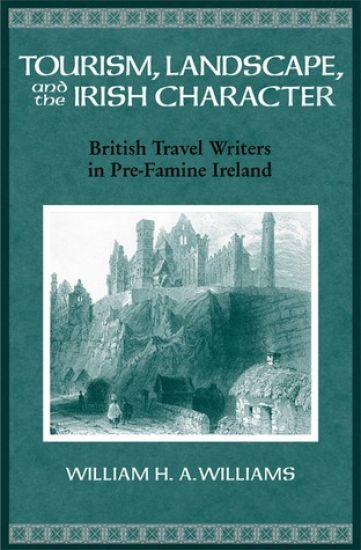
Tourism, Landscape, and the Irish Character

Tourism, Landscape, and the Irish Character

William H. A. Williams

University of Wisconsin Press
2008
sidottu
British tourists in Ireland in the eighteenth and nineteenth centuries were both charmed and repulsed. Picturesque but poor, abject yet sublime in its Gothic melancholy, the Ireland they experienced did not fit their British sense of progress, propriety, and Protestantism. ""Tourism, Landscape, and the Irish Character"" draws from more than one hundred accounts by English, Scottish, Welsh, and Anglo-Irish tourists written between 1750 and 1850 to probe the moral judgments British observers made about the Irish countryside and its native inhabitants. Whether consciously or not, these travel writers defined their own British identity in opposition to a perceived Irish strangeness: the rituals of Catholicism, the seemingly histrionic lamentations of the funeral wake, cemeteries with displays of human bones, the archaic Irish language or the Celtic-infused English that they heard spoken. Overlooking the acute despair in England's own industrial cities, they opined that the poverty, bog lands, and ill-thatched houses of rural Ireland indicated failures of the Irish character. By the eve of the Famine of the 1840s, travel writers were employing stereotypes of Celtic, Catholic carelessness in the south of Ireland and Saxon neatness and enterprise in predominantly Protestant Ulster, even calling for ""Saxon"" colonization of the west of Ireland. The Famine cleared the land of many of the peasants, but the western landscape, magnificent in its scenery but poor in its soil, eventually defeated most of the British ""colonists,"" leaving the region to an ever-increasing number of tourists who could enjoy the picturesque mountainscapes without the distracting contradiction of an impoverished populace.
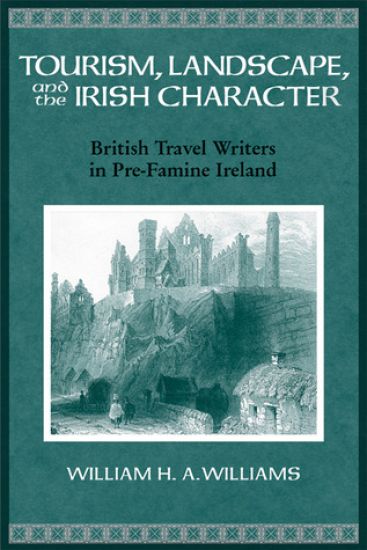
Tourism, Landscape and the Irish Character

Tourism, Landscape and the Irish Character

William H. A. Williams

University of Wisconsin Press
2012
nidottu
British tourists in Ireland in the eighteenth and nineteenth centuries were both charmed and repulsed. Picturesque but poor, abject yet sublime in its Gothic melancholy, the Ireland they experienced did not fit their British sense of progress, propriety, and Protestantism. Tourism, Landscape, and the Irish Character draws from more than one hundred accounts by English, Scottish, Welsh, and Anglo-Irish tourists written between 1750 and 1850 to probe the moral judgements British observers made about the Irish countryside and its native inhabitants. Whether consciously or not, these travel writers defined their own British identity in opposition to a perceived Irish strangeness: the rituals of Catholicism, the seemingly histrionic lamentations of the funeral wake, cemeteries with displays of human bones, the archaic Irish language or the Celtic-infused English that they heard spoken. Overlooking the acute despair in England's own industrial cities, they opined that the poverty, bog lands, and ill-thatched houses of rural Ireland indicated failures of the Irish character. By the eve of the Famine of the 1840s, travel writers were employing stereotypes of Celtic, Catholic carelessness in the south of Ireland and Saxon neatness and enterprise in predominantly Protestant Ulster, even calling for "Saxon" colonisation of the west of Ireland. The Famine cleared the land of many of the peasants, but the western landscape, magnificent in its scenery but poor in its soil, eventually defeated most of the British "colonists," leaving the region to an ever-increasing number of tourists who could enjoy the picturesque mountainscapes without the distracting contradiction of an impoverished populace.
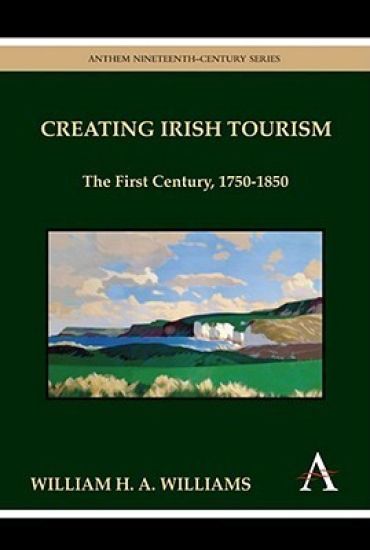
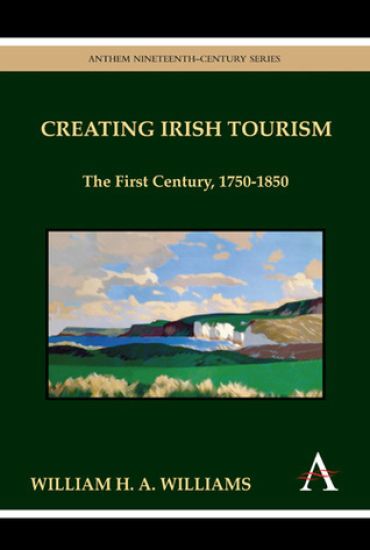
Creating Irish Tourism

Creating Irish Tourism

William H. A. Williams

Anthem Press
2011
nidottu
Based on the accounts of British and Anglo-Irish travelers, ‘Creating Irish Tourism’ charts the development of tourism in Ireland from its origins in the mid-eighteenth century to the country's emergence as a major European tourist destination a century later. The work shows how the Irish tourist experience evolved out of the interactions among travel writers, landlords, and visitors with the peasants who, as guides, jarvies, venders, porters and beggars, were as much a part of Irish tourism as the scenery itself.
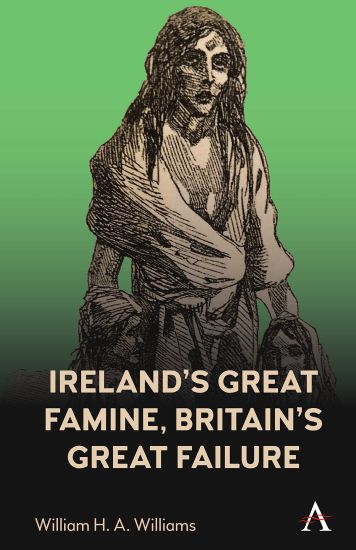
Ireland’s Great Famine, Britain’s Great Failure

Ireland’s Great Famine, Britain’s Great Failure

William H. A. Williams

ANTHEM PRESS
2022
sidottu
This book provides readers with a unique, in-depth understanding of the background to the Irish Famine and a detailed account of the crisis, as well as the immediate and long-term results of the catastrophe. In addition to exploring the ecological and agriculture factors, this work shows how cultural, economic and political influences shaped British attitudes and policies. When the entire potato crop failed in the fall of 1846, what began as an ecological disaster quickly became a political one. Hampered by long-standing prejudice and Anglo-Irish tensions, the British government’s various attempts to deal with the humanitarian crisis were muddled by competing economic and social goals. Among these was the idea that the Famine represented an “opportunity” to purge Ireland of fragmented land holding and potato dependency by encouraging an English-type market-driven agriculture. Changes did occur, but the government’s imperial dreams eventually ran up against Irish realities.
Ireland’s Great Famine, Britain’s Great Failure

Ireland’s Great Famine, Britain’s Great Failure

William H. A. Williams

ANTHEM PRESS
2023
nidottu
This book provides readers with a unique, in-depth understanding of the background to the Irish Famine and a detailed account of the crisis, as well as the immediate and long-term results of the catastrophe. In addition to exploring the ecological and agriculture factors, this work shows how cultural, economic and political influences shaped British attitudes and policies. When the entire potato crop failed in the fall of 1846, what began as an ecological disaster quickly became a political one. Hampered by long-standing prejudice and Anglo-Irish tensions, the British government’s various attempts to deal with the humanitarian crisis were muddled by competing economic and social goals. Among these was the idea that the Famine represented an “opportunity” to purge Ireland of fragmented land holding and potato dependency by encouraging an English-type market-driven agriculture. Changes did occur, but the government’s imperial dreams eventually ran up against Irish realities.
Creating Irish Tourism

Creating Irish Tourism

William H. A. Williams

Anthem Press
2010
sidottu
Based on the accounts of British and Anglo-Irish travelers, ‘Creating Irish Tourism’ charts the development of tourism in Ireland from its origins in the mid-eighteenth century to the country's emergence as a major European tourist destination a century later. The work shows how the Irish tourist experience evolved out of the interactions among travel writers, landlords, and visitors with the peasants who, as guides, jarvies, venders, porters and beggars, were as much a part of Irish tourism as the scenery itself.
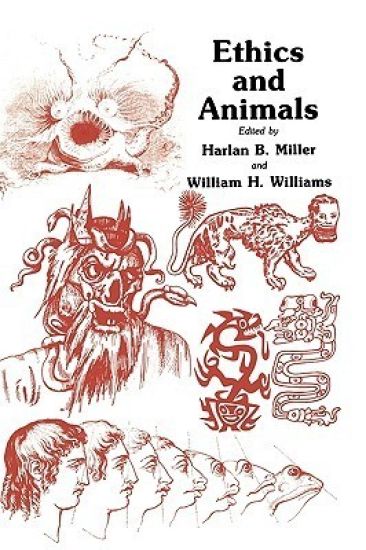
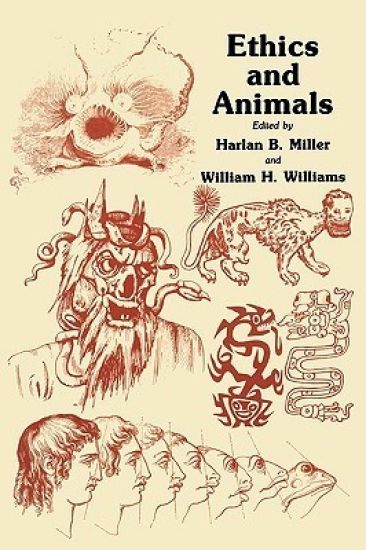
Ethics and Animals

Ethics and Animals

Miller Harlan B.; Williams William H.

Humana Press Inc.
1983
sidottu
This volume is a collection of essays concerned with the morality of hu­ man treatment of nonhuman animals. The contributors take very different approaches to their topics and come to widely divergent conclusions. The goal of the volume as a whole is to shed a brighter light upon an aspect of human life-our relations with the other animals-that has recently seen a great increase in interest and in the generation of heat. The discussions and debates contained herein are addressed by the contributors to each other, to the general public, and to the academic world, especially the biological, philosophical, and political parts of that world. The essays are organized into eight sections by topics, each sec­ tion beginning with a brief introduction linking the papers and the sec­ tions to one another. There is also a general introduction and an Epilog that suggests alternate possible ways of organizing the material. The first two sections are concerned with the place of animals in the human world: Section I with the ways humans view animals in literature, philosophy, and other parts of human culture, and Section II with the place of animals in human legal and moral community. The next three sections concern comparisons between human and nonhuman animals: Section III on the rights and wrongs of killing, Section IV on the humanity of animals and the animality of humans, and Section V on questions of the conflict of human and animal interests.
Uncensored (Volume I): Sentenced to an Adult Maximum-Security Prison at Age 15

Uncensored (Volume I): Sentenced to an Adult Maximum-Security Prison at Age 15

Iris M. Williams; William H. Graves

Butterfly Typeface
2018
nidottu
"Uncensored: Volume I" is the complete uncensored truth about Arkansas Prisons and the prison system from 1968 to 2014 written by an ex-convict who was there. In writing this book, it is the author's intention to do all that he can to give the readers a vivid and complete understanding of the environment that he endured off and on from 1968 until 2014. Author William Graves Jr. also wants the readers to comprehend the physical structure and environment of the prison in the 60's, 70's, 80's, 90's, and the new millenniums.
Ethics and Animals

Ethics and Animals

Harlan B. Miller; William H. Williams

Humana Press Inc.
1983
nidottu
This volume is a collection of essays concerned with the morality of hu­ man treatment of nonhuman animals. The contributors take very different approaches to their topics and come to widely divergent conclusions. The goal of the volume as a whole is to shed a brighter light upon an aspect of human life-our relations with the other animals-that has recently seen a great increase in interest and in the generation of heat. The discussions and debates contained herein are addressed by the contributors to each other, to the general public, and to the academic world, especially the biological, philosophical, and political parts of that world. The essays are organized into eight sections by topics, each sec­ tion beginning with a brief introduction linking the papers and the sec­ tions to one another. There is also a general introduction and an Epilog that suggests alternate possible ways of organizing the material. The first two sections are concerned with the place of animals in the human world: Section I with the ways humans view animals in literature, philosophy, and other parts of human culture, and Section II with the place of animals in human legal and moral community. The next three sections concern comparisons between human and nonhuman animals: Section III on the rights and wrongs of killing, Section IV on the humanity of animals and the animality of humans, and Section V on questions of the conflict of human and animal interests.