
Kirjahaku
Etsi kirjoja tekijän nimen, kirjan nimen tai ISBN:n perusteella.
1000 tulosta hakusanalla William Henry Bragg
Concerning the Nature of Things: Six Lectures Delivered at the Royal Institution
William Henry Bragg
Hassell Street Press
2021
sidottu
Concerning the Nature of Things: Six Lectures Delivered at the Royal Institution
William Henry Bragg
Hassell Street Press
2021
nidottu
This work has been selected by scholars as being culturally important and is part of the knowledge base of civilization as we know it.This work is in the public domain in the United States of America, and possibly other nations. Within the United States, you may freely copy and distribute this work, as no entity (individual or corporate) has a copyright on the body of the work.Scholars believe, and we concur, that this work is important enough to be preserved, reproduced, and made generally available to the public. To ensure a quality reading experience, this work has been proofread and republished using a format that seamlessly blends the original graphical elements with text in an easy-to-read typeface.We appreciate your support of the preservation process, and thank you for being an important part of keeping this knowledge alive and relevant.


Dieser Buchtitel ist Teil des Digitalisierungsprojekts Springer Book Archives mit Publikationen, die seit den Anfängen des Verlags von 1842 erschienen sind. Der Verlag stellt mit diesem Archiv Quellen für die historische wie auch die disziplingeschichtliche Forschung zur Verfügung, die jeweils im historischen Kontext betrachtet werden müssen. Dieser Titel erschien in der Zeit vor 1945 und wird daher in seiner zeittypischen politisch-ideologischen Ausrichtung vom Verlag nicht beworben.
Craftsmanship and Science: (Presidential Address to the British Association, September 5, 1928)
William Henry 1862-1942 N. 79 Bragg
Hassell Street Press
2021
nidottu
This work has been selected by scholars as being culturally important and is part of the knowledge base of civilization as we know it.This work is in the public domain in the United States of America, and possibly other nations. Within the United States, you may freely copy and distribute this work, as no entity (individual or corporate) has a copyright on the body of the work.Scholars believe, and we concur, that this work is important enough to be preserved, reproduced, and made generally available to the public. To ensure a quality reading experience, this work has been proofread and republished using a format that seamlessly blends the original graphical elements with text in an easy-to-read typeface.We appreciate your support of the preservation process, and thank you for being an important part of keeping this knowledge alive and relevant.

The Necessity of Unity a Sermon Preached in St. Andrew's Church Dublin, Before the Honourable House of Commons, on the Twenty-Third Day of October, 1761. ... by William Henry, ...
William Henry
Gale Ecco, Print Editions
2010
pokkari

The Necessity of Unity a Sermon Preached in St. Andrew's Church Dublin, Before the Honourable House of Commons, on the Twenty-third day of October, 1761. ... By William Henry,
William Henry
Gale Ecco, Print Editions
2018
sidottu
The 18th century was a wealth of knowledge, exploration and rapidly growing technology and expanding record-keeping made possible by advances in the printing press. In its determination to preserve the century of revolution, Gale initiated a revolution of its own: digitization of epic proportions to preserve these invaluable works in the largest archive of its kind. Now for the first time these high-quality digital copies of original 18th century manuscripts are available in print, making them highly accessible to libraries, undergraduate students, and independent scholars.The Age of Enlightenment profoundly enriched religious and philosophical understanding and continues to influence present-day thinking. Works collected here include masterpieces by David Hume, Immanuel Kant, and Jean-Jacques Rousseau, as well as religious sermons and moral debates on the issues of the day, such as the slave trade. The Age of Reason saw conflict between Protestantism and Catholicism transformed into one between faith and logic -- a debate that continues in the twenty-first century.++++The below data was compiled from various identification fields in the bibliographic record of this title. This data is provided as an additional tool in helping to insure edition identification: ++++British LibraryT066235 Dublin]: Printed for Samuel Price in Dame-Street, 1761?]. 24p.; 8

William Henry
Antigonos Verlag
2024
sidottu

Although William Henry Harrison died a month after becoming President, he lived a full and accomplished life before assuming the presidency. As a member of Congress, he sponsored legislation dividing the Northwest Territory. As governor of the Indiana Territory, he led a movement to suspend the provisions of the Northwest Ordinance and earned a reputation for acquiring large land cessions from the Indian tribes, winning the affection of white settlers and the animosity of Native Americans. Serving as brigadier general during the War of 1812, he then served in the Ohio legislature and the U.S. Senate, and was named minister to Colombia. This bibliography provides a guide to the literature on his extensive career.


Poems By William Henry Burleigh (1841)
William Henry Burleigh
KESSINGER PUBLISHING, LLC
2008
sidottu

This English translation of De Quilmes a Hyde Park: Las fronteras culturales en la vida y la obra de W. H. Hudson, which won the 2001 Annual Prize in Literature of Uruguay, analyzes how the richness of Hudson's work is linked to the overlapping of several cultures in his life. His work and life developed in the opposition of Romanticism to Enlightenment, wavering between literature and science. Combining biographical details with analysis of his philosophy and works, the study follows Hudson's life from his childhood on a cattle farm in Argentina to his emigration to England in 1874, including the years he fought on the frontier between whites and indigenous populations and the years he spent traveling abroad. The study concludes with a bibliography of Hudson's books, poems, posthumously published works, and translations into Spanish, as well as critical studies of Hudson.
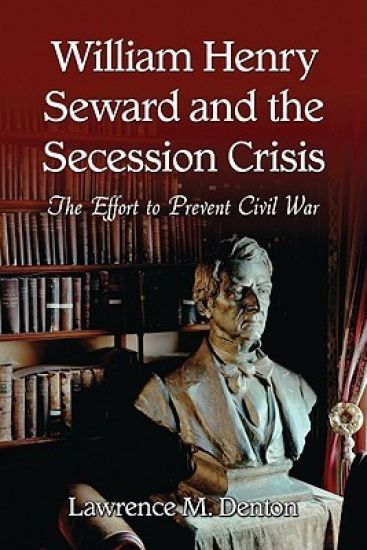
While Abraham Lincoln was taking center stage in a divided country, a political rival-turned-ally was exerting a major influence on national affairs. William Henry Seward, U.S. senator and former New York governor, lost the Republican Party nomination but aided Lincoln by touring the country on behalf of the Republican ticket. As Southern states prepared to withdraw from the Union, Secretary of State Seward sought to reunite the country. This biography explores Seward's political power and the theory that, as president, he might have prevented the Civil War.

William Henry Welch and the Heroic Age of American Medicine
Simon Flexner; James Thomas Flexner
Johns Hopkins University Press
1993
sidottu
During American medicine's "Heroic Age," when medical training and practice underwent revolutionary change, William Henry Welch emerged as a singular, revolutionary hero. The first full-time faculty member at the Johns Hopkins University School of Medicine, he became the undisputed leader of American scientific medicine and the greatest shaping force in American medical education. He won international fame as America's preeminent authority on medical issues—"our greatest statesman in the field of public health," in the words of Herbert Hoover—and earned the enduring affection of generations of colleagues and students as "Popsy", a brilliant, charming, and dedicated mentor. William Henry Welch and the Heroic Age of American Medicine was originally published in 1941. By then Welch—who died in 1934 at age 84—was already a legend. He had founded the country's first pathological laboratory at the Bellevue Hospital Medical College. His "radical" innovations at the new Johns Hopkins School of Medicine had become the standard in American medical education: high entrance requirements, instruction in the laboratory, emphasis on basic science, and fostering of research. His vision had shaped a variety of other important institutions, including the Rockefeller Institute, the Association of American Physicians, Peking Union Medical College, and the country's first school of public health and hygiene, established at Johns Hopkins largely through his efforts. Welch's eightieth birthday had been celebrated nationally, with ceremonies in Washington, D.C., attended by President Hoover and broadcast around the world.
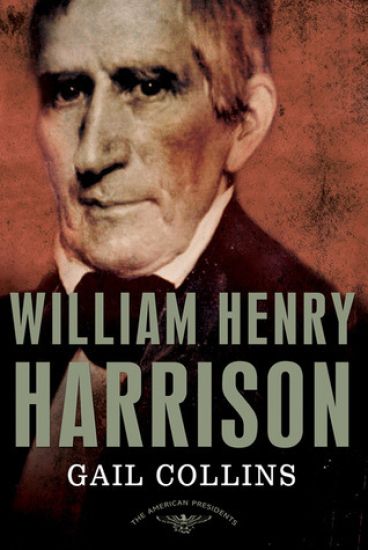
The president who served the shortest term--just a single month--but whose victorious election campaign rewrote the rules for candidates seeking America's highest officeWilliam Henry Harrison died just thirty-one days after taking the oath of office in 1841. Today he is a curiosity in American history, but as Gail Collins shows in this entertaining and revelatory biography, he and his career are worth a closer look. The son of a signer of the Declaration of Independence, Harrison was a celebrated general whose exploits at the Battle of Tippecanoe and in the War of 1812 propelled him into politics, and in time he became a leader of the new Whig Party, alongside Daniel Webster and Henry Clay. But it was his presidential campaign of 1840 that made an indelible mark on American political history. Collins takes us back to that pivotal year, when Harrison's "Log Cabin and Hard Cider" campaign transformed the way candidates pursued the presidency. It was the first campaign that featured mass rallies, personal appearances by the candidate, and catchy campaign slogans like "Tippecanoe and Tyler, Too." Harrison's victory marked the coming-of-age of a new political system, and its impact is still felt in American politics today. It may have been only a one-month administration, but we're still feeling the effects.