
Kirjahaku
Etsi kirjoja tekijän nimen, kirjan nimen tai ISBN:n perusteella.
1000 tulosta hakusanalla William Henry Corrie Kerr

The Heroides of Ovid - Epistles I. and XIII. is an unchanged, high-quality reprint of the original edition of 1865. Hansebooks is editor of the literature on different topic areas such as research and science, travel and expeditions, cooking and nutrition, medicine, and other genres. As a publisher we focus on the preservation of historical literature. Many works of historical writers and scientists are available today as antiques only. Hansebooks newly publishes these books and contributes to the preservation of literature which has become rare and historical knowledge for the future.

Letters on Yellow Fever Addressed to Dr. William Currie: Supplements to the Bulletin of the History of Medicine, No. 9
Noah Webster; Henry E. Sigerist; Benjamin Spector
Literary Licensing, LLC
2011
nidottu

The Necessity of Unity a Sermon Preached in St. Andrew's Church Dublin, Before the Honourable House of Commons, on the Twenty-Third Day of October, 1761. ... by William Henry, ...
William Henry
Gale Ecco, Print Editions
2010
pokkari

The Necessity of Unity a Sermon Preached in St. Andrew's Church Dublin, Before the Honourable House of Commons, on the Twenty-third day of October, 1761. ... By William Henry,
William Henry
Gale Ecco, Print Editions
2018
sidottu
The 18th century was a wealth of knowledge, exploration and rapidly growing technology and expanding record-keeping made possible by advances in the printing press. In its determination to preserve the century of revolution, Gale initiated a revolution of its own: digitization of epic proportions to preserve these invaluable works in the largest archive of its kind. Now for the first time these high-quality digital copies of original 18th century manuscripts are available in print, making them highly accessible to libraries, undergraduate students, and independent scholars.The Age of Enlightenment profoundly enriched religious and philosophical understanding and continues to influence present-day thinking. Works collected here include masterpieces by David Hume, Immanuel Kant, and Jean-Jacques Rousseau, as well as religious sermons and moral debates on the issues of the day, such as the slave trade. The Age of Reason saw conflict between Protestantism and Catholicism transformed into one between faith and logic -- a debate that continues in the twenty-first century.++++The below data was compiled from various identification fields in the bibliographic record of this title. This data is provided as an additional tool in helping to insure edition identification: ++++British LibraryT066235 Dublin]: Printed for Samuel Price in Dame-Street, 1761?]. 24p.; 8

William Henry
Antigonos Verlag
2024
sidottu

Although William Henry Harrison died a month after becoming President, he lived a full and accomplished life before assuming the presidency. As a member of Congress, he sponsored legislation dividing the Northwest Territory. As governor of the Indiana Territory, he led a movement to suspend the provisions of the Northwest Ordinance and earned a reputation for acquiring large land cessions from the Indian tribes, winning the affection of white settlers and the animosity of Native Americans. Serving as brigadier general during the War of 1812, he then served in the Ohio legislature and the U.S. Senate, and was named minister to Colombia. This bibliography provides a guide to the literature on his extensive career.



Poems By William Henry Burleigh (1841)
William Henry Burleigh
KESSINGER PUBLISHING, LLC
2008
sidottu

This English translation of De Quilmes a Hyde Park: Las fronteras culturales en la vida y la obra de W. H. Hudson, which won the 2001 Annual Prize in Literature of Uruguay, analyzes how the richness of Hudson's work is linked to the overlapping of several cultures in his life. His work and life developed in the opposition of Romanticism to Enlightenment, wavering between literature and science. Combining biographical details with analysis of his philosophy and works, the study follows Hudson's life from his childhood on a cattle farm in Argentina to his emigration to England in 1874, including the years he fought on the frontier between whites and indigenous populations and the years he spent traveling abroad. The study concludes with a bibliography of Hudson's books, poems, posthumously published works, and translations into Spanish, as well as critical studies of Hudson.

While Abraham Lincoln was taking center stage in a divided country, a political rival-turned-ally was exerting a major influence on national affairs. William Henry Seward, U.S. senator and former New York governor, lost the Republican Party nomination but aided Lincoln by touring the country on behalf of the Republican ticket. As Southern states prepared to withdraw from the Union, Secretary of State Seward sought to reunite the country. This biography explores Seward's political power and the theory that, as president, he might have prevented the Civil War.

William Henry Welch and the Heroic Age of American Medicine
Simon Flexner; James Thomas Flexner
Johns Hopkins University Press
1993
sidottu
During American medicine's "Heroic Age," when medical training and practice underwent revolutionary change, William Henry Welch emerged as a singular, revolutionary hero. The first full-time faculty member at the Johns Hopkins University School of Medicine, he became the undisputed leader of American scientific medicine and the greatest shaping force in American medical education. He won international fame as America's preeminent authority on medical issues—"our greatest statesman in the field of public health," in the words of Herbert Hoover—and earned the enduring affection of generations of colleagues and students as "Popsy", a brilliant, charming, and dedicated mentor. William Henry Welch and the Heroic Age of American Medicine was originally published in 1941. By then Welch—who died in 1934 at age 84—was already a legend. He had founded the country's first pathological laboratory at the Bellevue Hospital Medical College. His "radical" innovations at the new Johns Hopkins School of Medicine had become the standard in American medical education: high entrance requirements, instruction in the laboratory, emphasis on basic science, and fostering of research. His vision had shaped a variety of other important institutions, including the Rockefeller Institute, the Association of American Physicians, Peking Union Medical College, and the country's first school of public health and hygiene, established at Johns Hopkins largely through his efforts. Welch's eightieth birthday had been celebrated nationally, with ceremonies in Washington, D.C., attended by President Hoover and broadcast around the world.
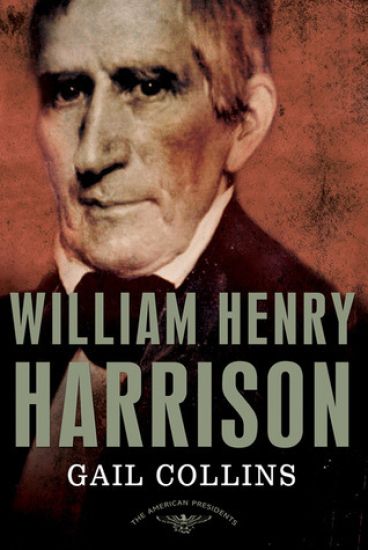
The president who served the shortest term--just a single month--but whose victorious election campaign rewrote the rules for candidates seeking America's highest officeWilliam Henry Harrison died just thirty-one days after taking the oath of office in 1841. Today he is a curiosity in American history, but as Gail Collins shows in this entertaining and revelatory biography, he and his career are worth a closer look. The son of a signer of the Declaration of Independence, Harrison was a celebrated general whose exploits at the Battle of Tippecanoe and in the War of 1812 propelled him into politics, and in time he became a leader of the new Whig Party, alongside Daniel Webster and Henry Clay. But it was his presidential campaign of 1840 that made an indelible mark on American political history. Collins takes us back to that pivotal year, when Harrison's "Log Cabin and Hard Cider" campaign transformed the way candidates pursued the presidency. It was the first campaign that featured mass rallies, personal appearances by the candidate, and catchy campaign slogans like "Tippecanoe and Tyler, Too." Harrison's victory marked the coming-of-age of a new political system, and its impact is still felt in American politics today. It may have been only a one-month administration, but we're still feeling the effects.
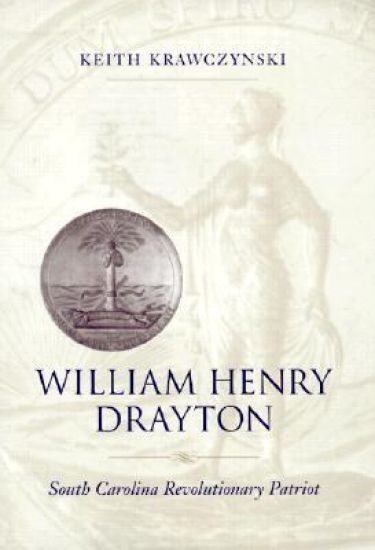
In this exhaustive biography, Keith Krawczynski details the political and social career of William Henry Drayton (1742-1779), an ambitious, wealthy lowcountry planter and zealous patriot leader who was at the center of Revolutionary activity in South Carolina from 1774 until his death five years later. Considered the most effective Whig polemicist in the lower South, Drayton served on all his state's important Revolutionary governing bodies, commanded a frigate of war, was elected chief justice in 1776, co-authored South Carolina's 1778 constitution, and represented the state in the Continental Congress from 1778 until his demise. Although Drayton was a leading radical and the central figure of the American Revolution in South Carolina, historians have largely ignored his contributions. With William Henry Drayton, Krawczynski removes this fascinating man from the shadows of history.Drayton was an improbable rebel. After receiving his formal education in England, the South Carolina-born Drayton returned to his birthplace as a planter and continued to espouse Royalist ideals. During a later visit to Britain, he was hailed as a champion of British sovereignty. In fact, South Carolina harbored few early revolutionaries, as low-country planters and merchants remained entrenched in the imperial system of trade, backcountry residents strongly identified with the king, and whites feared showing division lest their slaves launch a rebellion. Yet, disgruntled with the king's increasing infringement on American liberties, Drayton embraced the rebel cause with the zealotry of a recent convert and eventually did more to resist British rule than any other resident of the Palmetto State. Because he entered the Revolution as a supporter of the Crown, Drayton's life sheds light on why the planter-mercantile gentry rebelled against the mother country on which it relied for its economic status. His energetic attempts to preserve the provincial hierarchy and keep the reins of government firmly in the hands of the local aristocracy also help to explain why South Carolina's rebellion was more politically conservative than that of other states. By raising the profile of this South Carolina patriot, William Henry Drayton brings new depth to our understanding of the American Revolution.

William Henry Harrison and Other Poems
David R. Slavitt
Louisiana State University Press
2006
nidottu
The prodigiously imaginative mind and penetrating wit of David R. Slavitt are on full display in his newest collection of poetry that is perhaps his most engaging to date. The title poem begins by fooling around- ""With three names like that, it sounds as though his mother is calling him and she's really angry""- but then builds into a shrewd, thoughtful account of the life of the ninth U.S. president. A second long poem offers a fresh and very amusing appraisal of the practice of buying, writing, and sending souvenir postcards. In between this pair, there are shorter pieces impressive in their range and tone and theme (be sure to read ""Poem without Even One Word"") that dazzle in an already glittering body of work.Slavitt's poems can be playful, even silly, and then astonishingly convert levity into earnest urgency. Dark lines glint with the light of intelligence and mirth, even as artful puns and jokes reveal a rueful aspect. The poet gets older but his work is as graceful as ever, the lovable little boy signaling from inside the sometimes-cranky septuagenarian.

This is the story of a southern farm boy, reared in the dark days of Reconstruction, who became a pioneer of modern merchandising in the South and built a small country store into a huge mercantile group of over 350 establishments that now do a business of more than a hundred million dollars a year. William Henry Belk was a child of less than three when his father was killed, a victim of Sherman's raiders in the last months of the Civil War; at the age of fourteen he got his first job in a store in Monroe, North Carolina; and at the age of twenty-six he had started his own business, a business which was to spread from North Carolina to every state in the South. He witnessed, as he played a part in, the whole creation of the New South that has been built on the ashes of the Civil War.At a time when the South was in the grip of dire poverty and a vicious credit system, Mr. Belk and his brother, Dr. John Belk, pioneered in such innovations as an all-cash business, clearly marked retail prices with no haggling at the counter, and the unquestioned refunding of the purchase price when the customer was not satisfied. They were also uniquely sucessful in creating a system in which the individual stores retained complete freedom, with managers who were part owners, while enjoying the benefits of mass purchasing. Much of this book is the story of how the Belk brothers trained young men -- many of them southern farm boys like the Belks -- to be merchants, set them up in stores under their direction, and helped them to spread the Belk way of doing business through the South. The result is that the Belk group of stores today is not a chain system, but rather a family of stores in which each store retains its individuality while the group as a whole works together for their common benefit.William Henry Belk gives an unusual slant to the history of the South since the Civil War. It is a lively picture of the hard times of the seventies, the panic of 1893, southern life at the turn of the century, and the boom days of the twenties as they were seen by the clerk behind the counter or the buyer trying to get wares the public wanted. But most of all this book is the story of a man whose success was built on a religious faith that was as firm as it was simple, an unfailing zest for ""trading and trafficking,"" and an unshakable belief through good times and bad, in the future of his country.A UNC Press Enduring Edition -- UNC Press Enduring Editions use the latest in digital technology to make available again books from our distinguished backlist that were previously out of print. These editions are published unaltered from the original, and are presented in affordable paperback formats, bringing readers both historical and cultural value.
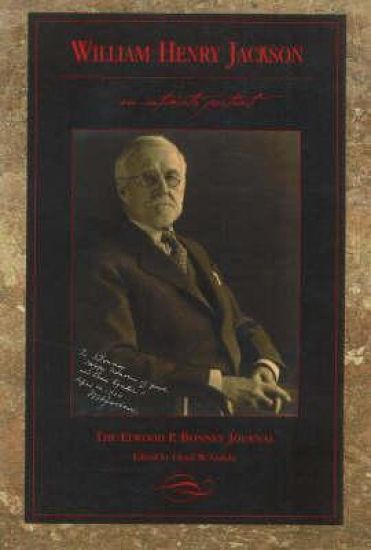
During the final decade of his century-long life, pioneer photographer William Henry Jackson became a living symbol of the Old West. Remarkably active well into his nineties, Jackson painted scenes of the Oregon Trail and traded stories with other old-timers who met regularly at the Explorers Club and the Adventurers' Club in New York City. One of this closest friends and admirers, a young man named Elwood P Bonney, kept a journal of Jackson's thoughts, recollections, and accomplishments during those years. Based on Bonney's journal, "William Henry Jackson: An Intimate Portrait" is an engaging personal look at a man whose life and work spanned the development and transformation of the West, from the 1860s to World War II. Edited, annotated, and with an introduction by Lloyd W Gundy, this first-hand biographical portrait includes full-colour images of Jackson's paintings of major western explorations and black-and-white illustrations of the distinguished photographer's last years.

William Henry Fox Talbot and the Promise of Photography
Carnegie Museum of Art,U.S.
2018
sidottu
A handsome primer on the work of William Henry Fox Talbot. This beautiful, small format publication serves as a primer on the work of William Henry Fox Talbot, a true interdisciplinary innovator who drew on his knowledge of art history, botany, chemistry and optics to become one of the inventors of photography in 1839. Talbot’s ‘photogenic drawings’ (photograms), calotypes and salted paper prints are some of the first ever examples of images captured on paper. Accompanying an exhibition at Carnegie Museum of Art in Pittsburgh opening in November 2017, this book brings together approximately 30 photographs by Talbot that demonstrate his wide ranging interests, including nature, still life, portraiture, architecture and landscape. Approximately one quarter of the featured images have been unpublished since Talbot’s time. Through thematic groupings elucidated by noted Talbot scholar Larry Schaaf, the book reveals the photographer’s early striving to test the boundaries of his medium at a historic moment when art and science intersected. With its luminous reproductions of Talbot’s fragile works, this publication demonstrates that, in its earliest days, photography required a form of magic making and innovation that continues to inspire people today.