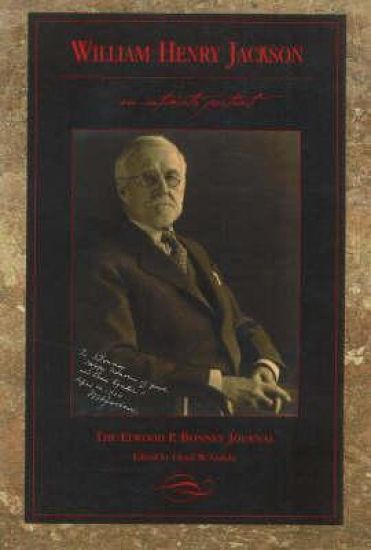
During the final decade of his century-long life, pioneer photographer William Henry Jackson became a living symbol of the Old West. Remarkably active well into his nineties, Jackson painted scenes of the Oregon Trail and traded stories with other old-timers who met regularly at the Explorers Club and the Adventurers' Club in New York City. One of this closest friends and admirers, a young man named Elwood P Bonney, kept a journal of Jackson's thoughts, recollections, and accomplishments during those years. Based on Bonney's journal, "William Henry Jackson: An Intimate Portrait" is an engaging personal look at a man whose life and work spanned the development and transformation of the West, from the 1860s to World War II. Edited, annotated, and with an introduction by Lloyd W Gundy, this first-hand biographical portrait includes full-colour images of Jackson's paintings of major western explorations and black-and-white illustrations of the distinguished photographer's last years.
Time Exposure: The Autobiography of William Henry Jackson is a memoir written by the renowned American photographer, William Henry Jackson. The book provides an intimate and detailed account of Jackson's life, from his early childhood in upstate New York to his travels across the American West and his eventual rise to prominence as one of the most celebrated photographers of his time.Throughout the book, Jackson shares his experiences of working as a photographer during a time when the medium was still in its infancy. He recounts his adventures in the American West, where he captured some of the most iconic images of the landscape and the people who lived there. He also provides insights into the challenges he faced as a photographer, including the technical difficulties of capturing images in the field and the grueling physical demands of lugging heavy equipment across rugged terrain.In addition to his experiences as a photographer, Jackson also shares his personal life, including his relationships with his family, his struggles with alcoholism, and his eventual retirement from photography. The book also includes a number of Jackson's stunning photographs, providing readers with a visual representation of the landscapes and people he encountered during his travels.Overall, Time Exposure is a fascinating and insightful account of one of America's most important photographers, offering readers a unique perspective on the history of photography and the American West.This scarce antiquarian book is a facsimile reprint of the old original and may contain some imperfections such as library marks and notations. Because we believe this work is culturally important, we have made it available as part of our commitment for protecting, preserving, and promoting the world's literature in affordable, high quality, modern editions, that are true to their original work.
The Diaries of William Henry Jackson, Frontier Photographer: The Far West and the Rockies Historical Series, Volume 10, 1820-1875 is a book that compiles the personal diaries of William Henry Jackson, a renowned photographer who captured the beauty of the American West during the late 19th century. The book provides a unique insight into the life and experiences of Jackson, who was not only a photographer but also an explorer, artist, and writer. The diaries cover the period from 1820 to 1875, which was a time of rapid expansion and change in the American West. Jackson's entries document his travels through the Rocky Mountains, his encounters with Native American tribes, his work as a surveyor for the U.S. government, and his experiences as a photographer. The book includes photographs taken by Jackson, as well as illustrations and maps that help to contextualize his diaries. Overall, The Diaries of William Henry Jackson, Frontier Photographer: The Far West and the Rockies Historical Series, Volume 10, 1820-1875 is a fascinating and informative read for anyone interested in the history of the American West, photography, or exploration.To California And Return, 1866-1867; And With The Hayden Surveys To The Central Rockies, 1873, And To The Utes And Cliff Dwellings, 1874.This scarce antiquarian book is a facsimile reprint of the old original and may contain some imperfections such as library marks and notations. Because we believe this work is culturally important, we have made it available as part of our commitment for protecting, preserving, and promoting the world's literature in affordable, high quality, modern editions, that are true to their original work.
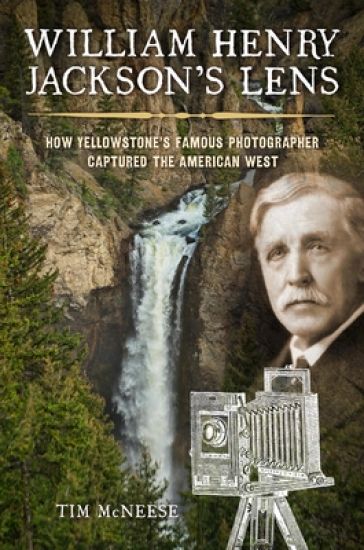
William Henry Jackson was an explorer, photographer, and artist. He is also one of those most often overlooked figures of the American West. His larger claim to fame involves his repeated forays into the western lands of nineteenth-century America as a photographer. Jackson’s life spanned multiple incarnations of the American West. In a sense, he played a singular role in revealing the West to eastern Americans. While others opened the frontier with the axe and the rifle, Jackson did so with his collection of cameras. He dispelled the geological myths through a lens no one could deny or match. His wet plate collodion prints not only helped to reframe the nation’s image of the West, but they also enticed businessmen, investors, scientists, and even tourists to venture into the western regions of the United States. Prior to Jackson’s widely circulated photographs, the American West was little understood and unmapped—mysterious lands that required a camera and a cameraman to reveal their secrets and, ultimately, provide the first photographic record of such exotic destinations as Yellowstone, Mesa Verde, and the Rocky Mountains. Jackson’s story was long and his life full, as he lived to the enviable age of 99. This biography presents the good, bad, and ugly of Jackson’s life, both personal and professional, through the use primary source materials, including Jackson’s autobiographies, letters, and government reports on the Hayden Surveys.
Step into a world long forgotten with "Descriptive Catalogue of Photographs of North American Indians" by William Henry Jackson a mesmerizing journey through time, now revived after decades out of print. This rare gem, republished by Alpha Editions, is not just a book; it's a collector's item and a cultural treasure, meticulously restored for today's and future generations. Immerse yourself in the vivid imagery and rich history of North America's indigenous peoples, captured through the lens of one of the 19th century's most renowned photographers. Jackson's work offers an unparalleled glimpse into the lives, traditions, and landscapes of Native American tribes, making this edition a unique and invaluable resource for historians, photography enthusiasts, and lovers of classic literature alike. This beautifully restored edition is more than a reprint; it's a testament to the enduring legacy of a culture and a celebration of the artistry that brings it to life. Whether you're a casual reader or a dedicated collector, this book promises to captivate your imagination and enrich your understanding of a pivotal era in American history. Don't miss the chance to own a piece of the past, lovingly preserved for the future.
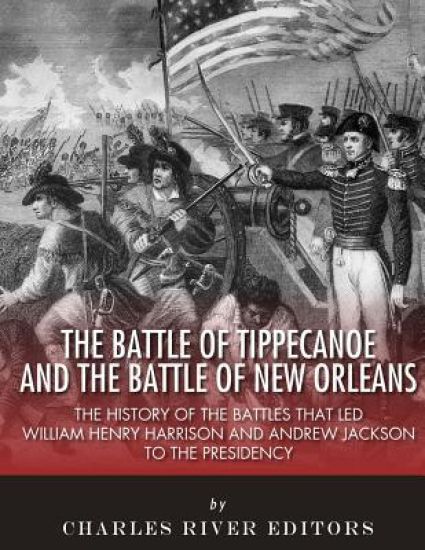
*Includes pictures *Includes accounts of the battles written by participants *Includes bibliographies for further reading *Includes a table of contents The Battle of Tippecanoe, fought on November 7, 1811 near present-day Lafayette, Indiana, involved forces of fewer than 2,000 Native American warriors and white soldiers, and only about 300 men were killed or wounded on both sides. Given those numbers, it's apparent that the battle was far from being a Saratoga or a Gettysburg in terms of its scale or significance as an historical turning point, yet it was one of the most important battles in shaping American history during the early 19th century. The battle also involved an epic confrontation between two important American figures: William Henry Harrison, who would become the 9th president of the United States by running on his success in the battle, and the Shawnee war chief Tecumseh, arguably the most famous Native American leader in American history. The initial Native American attack struck the southern point of Harrison's defensive perimeter around 4:30 a.m. on November 7, 1811, and almost immediately the warriors rushed in among the American defenders manning that sector. Soldiers defending the southern side of the perimeter suffered the highest casualties, with the Yellow Jackets suffering a 30% casualty rate, but in fighting lasting about two hours Harrison's force of roughly 1,000, suffered only 62 dead and about 120 wounded. As the sun rose, the warriors began running low on ammunition, and the light revealed their small numbers, leading them to break off the attack and retreat towards Prophetstown. The battle was hardly a decisive victory, but at the end of the fighting the Americans still held their perimeter, allowing them to claim victory. While Tippecanoe was clearly not a total victory, and Native American resistance would continue through the War of 1812, the battle is widely considered the end of Tecumseh's War and did help bring about the decline of Native American ascendance in the region. There are countless examples of battles that take place in wars after a peace treaty is signed. The last battle of the Civil War was a skirmish in Texas that Confederate forces won, nearly a month after Lee's surrender at Appomattox. But it's certainly rare for the most famous battle of a war to take place after the peace treaty is signed. Luckily for Andrew Jackson, the War of 1812 was that unique exception. Less than a year after his victory in the Battle of Horseshoe Creek, Jackson led his forces into a more important battle at the Battle of New Orleans. The British hoped to grab as much of the land on the western frontier as they could, especially New Orleans, which had a prominent position on the Mississippi River for trading. With more than 8,000 soldiers aboard a British fleet sailing in from Jamaica in early January 1815, the attack on New Orleans promised to be a significant one, while Jackson's men defended New Orleans with about half that number. This went on despite the fact that the two sides had signed the Treaty of Ghent on Christmas Eve 1814, which was supposed to end the war. However, the slow nature of bringing news from England to America ensured that the battle would take place anyway. Though it was an enormous victory for Jackson and the Americans - the most important of the entire war - it proved to be a completely unnecessary one. The Treaty of Ghent had officially ended the war by keeping the status quo ante bellum. Regardless, the nation much appreciated Jackson's skills and the Battle of New Orleans was forever christened as one of the greatest in American history. Jackson was honored with a "Thanks from Congress," which was then the nation's highest military honor. Jackson would subsequently become one of the 19th century's most influential presidents. This book analyzes both battles and their legacies.