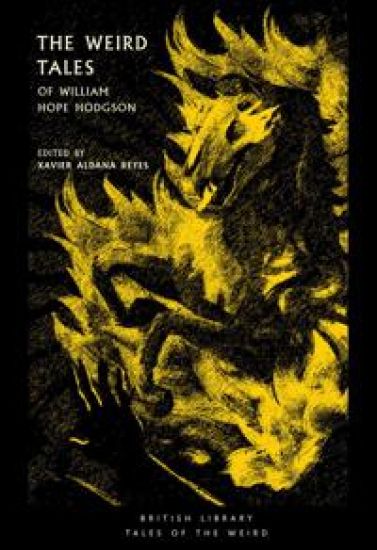
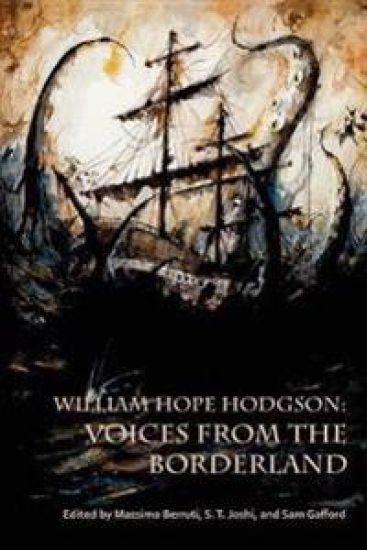
A splash of something huge resounds through the sea-fog. In the stillness of a dark room, some unspeakable evil is making its approach. This new selection offers the most chilling and unsettling of Hodgson's short fiction, from encounters with abominations at sea to fireside tales of otherworldly forces from his inventive `occult detective' character Carnacki, the ghost finder. A master of conjuring atmosphere, when the horror inevitably arrives it is delivered with breathtaking pace and the author's unique evocation of overwhelming panic.
The novels and short stories of William Hope Hodgson (1877-1918), though almost entirely unknown during his lifetime, have become some of the most influential early works in fields of literature as diverse as fantasy, science fiction, and horror. Hodgson's earliest short fiction was inspired and deeply informed by his experiences at sea while a young man; his ambivalent attitude toward the ocean-mingled reverence, awe, fear, and hatred of it-is perhaps nowhere so starkly presented as in his "Sargasso Sea" stories, a series of fictions set in the shared world of the mythical Sargasso, a place of ancient derelicts, monstrous creatures, and hapless human castaways. Mesembria Press is proud to present this new collection of William Hope Hodgson's Sargasso Sea stories, which includes a complete set of notes designed to guide the interested reader through the obscure nautical terminology and stylistic nuances of Hodgson's writing. Includes: - From the Tideless Sea, Part I - From the Tideless Sea, Part II - The Mystery of the Derelict - The Thing in the Weeds - The Finding of the Graiken - The Call in the Dawn plus - Explanatory and critical notes
Detective stories in which the great Thomas Carnacki investigates the supernatural using scientific tools, such as photography, and tools that are augmented by theories of the supernatural, such as the electric pentacle, which uses vacuum tubes to repel supernatural forces.
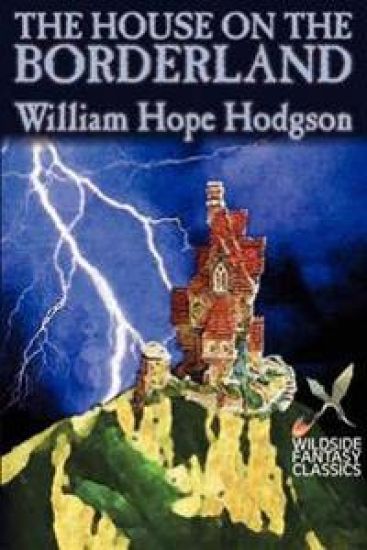
The House on the Borderland (1908) is a supernatural horror novel by British fantasist William Hope Hodgson. The novel is a hallucinatory account of a recluse's stay at a remote house, and his experiences of supernatural creatures and otherworldly dimensions. Plot summary On the third day of their fishing holiday to the remote Irish village of Kraighten, Tonnison and Berreggnog stumble upon the ruins of a strangely shaped house on a large lake. They discover the mouldering journal of the Recluse, an unidentified man who recorded his last days in the house before its destruction. The Recluse begins his journal with descriptions of how he acquired the house, along with his daily life with his sister and his faithful dog, Pepper. He started the diary to record the strange experiences and horrors occurring in and around the house. The Recluse relates a vision in which he travels to a remote and vast arena, "the Plain of Silence", surrounded by mountains with representations of mythological beast-gods, demons, and other "bestial horrors" on their slopes. In the center of the plain stands a house almost identical to his own, save that the house in the arena is much larger and appears to be made of a green jade-like substance. Along the way, he sees a huge, menacing humanoid with swine-like features. Shortly after his vision of the "arena," the Recluse is attacked by humanoid pig-like creatures that he names "the swine-things", which appear to come from the depths of a great chasm under the house. The struggle with these creatures lasts for several nights of increasing ferocity, but the man kills several of the creatures and drives them off. As he searches for the origin of the swine-things, the man finds a pit beyond the gardens where a river descends into the earth. There he finds a tunnel leading to the great chasm. A rock slide dams the water in the pit. The man is trapped, but Pepper rescues him. The house transports the Recluse to an unknown place called "the Sea of Sleep" where he briefly reunites with his lost love. Tonnison and Berreggnog must stop reading there as the house's collapse has destroyed much of the journal. Except for an enigmatic fragment, the book becomes unreadable between the passage describing "the Sea of Sleep" and a later entry titled "The noise in the night". They realise that the water from the dammed pit has overflowed to create the lake. They suppose that the destroyed section of the journal may have explained other mysteries about the house. As the Recluse's story continues, he notices that the passage of day and night has increased in speed, eventually blurring into a never-ending twilight. As he watches, his surroundings decay and collapse to dust. The dead world slowly grinds to a halt and the sun goes out after several million millennia. Once the world ends, the man floats through space, seeing angelic, human, and demonic forms passing before his eyes. Later, he finds himself back in his own study on Earth, with everything apparently returned to normality, with one exception: Pepper is dead. The malicious swine-beast from his earlier journeys to the "arena" has followed him back to his own dimension. The creature infects the man's new dog with a luminous fungal disease. Although the man shoots the suffering animal, he also contracts the disease. The manuscript ends with the man, by then partly covered by the fungal growth, locked (from the outside only) in his study as the creature comes through a trap door in the basement from the chasm under the house. As he ponders suicide to end his suffering, the creature tries to open the study door and the diary abruptly ends.... William Hope Hodgson (15 November 1877 - April 1918) was an English author. He produced a large body of work, consisting of essays, short fiction, and novels, spanning several overlapping genres including horror, fantastic fiction, and science fiction...............
The Ghost Pirates is a novel by William Hope Hodgson, first published in 1909. The economic style of writing has led horror writer Robert Weinberg to describe The Ghost Pirates as "one of the finest examples of the tightly written novel ever published." 1] In it, Hodgson never describes in any remarkable details the ghosts - if this is indeed what they are, since their true nature is left ambiguous - he merely reports on their gradual commandeering of the ship. "The Ghost Pirates . . . is a powerful account of a doomed and haunted ship on its last voyage, and of the terrible sea-devils (of quasi-human aspect, and perhaps the spirits of bygone buccaneers) that besiege it and finally drag it down to an unknown fate. With its command of maritime knowledge, and its clever selection of hints and incidents suggestive of latent horrors in nature, this book at times reaches enviable peaks of power." - H.P. Lovecraft.... Story The novel is presented as the transcribed testimony of Jessop, who we ultimately discover is the only survivor of the final voyage of the Mortzestus, having been rescued from drowning by the crew of the passing Sangier. It begins with Jessop's recounting how he came to be aboard the ill-fated Mortzestus and the rumors surrounding the vessel. Jessop then begins to recount the unusual events that rapidly increase in both frequency and severity. In the telling of his tale, Jessop offers only sparse interpretation of the events, spending most of the time relating the story in an almost journalistic fashion, presenting a relatively unvarnished description of the events and conversations as they occurred. He describes his confusion and uncertainty about what he believes he has seen, at times fearing for his own sanity. He eventually hears other members of the crew speak of strange events, most of which the rest of the crew pass off as either bad luck or the result of the witness being either tired or "dotty". Jessop only offers brief personal interpretation; he states that while he cannot discount the idea that the beings plaguing the ship may be ghosts, he presents his theory that they may be beings from another dimension that, while sharing the same physical space as theirs, are normally completely separated to the extent that neither dimension is aware of the existence of the other. He offers only vague, superficial suggestions as to the cause of his theorized dimensional breach..... William Hope Hodgson (15 November 1877 - April 1918) was an English author. He produced a large body of work, consisting of essays, short fiction, and novels, spanning several overlapping genres including horror, fantastic fiction, and science fiction. Hodgson used his experiences at sea to lend authentic detail to his short horror stories, many of which are set on the ocean, including his series of linked tales forming the "Sargasso Sea Stories". His novels, such as The House on the Borderland (1908) and The Night Land (1912), feature more cosmic themes, but several of his novels also focus on horrors associated with the sea. Early in his writing career Hodgson dedicated effort to poetry, although few of his poems were published during his lifetime. He also attracted some notice as a photographer and achieved renown as a bodybuilder. He died in World War I at age 40. Early years and life at sea: Hodgson was born in Blackmore End, Essex, the son of the Reverend Samuel Hodgson, an Anglican priest, and Lissie Sarah Brown. He was the second of 12 children, three of whom died in infancy. The death of a child is a theme in several of Hodgson's works including the short stories "The Valley of Lost Children", "The Sea-Horses", and "The Searcher of the End House". Hodgson's father was moved frequently and served 11 different parishes in 21 years, including one in County Galway, Ireland. This setting was later featured in Hodgson's novel The House on the Borderland......
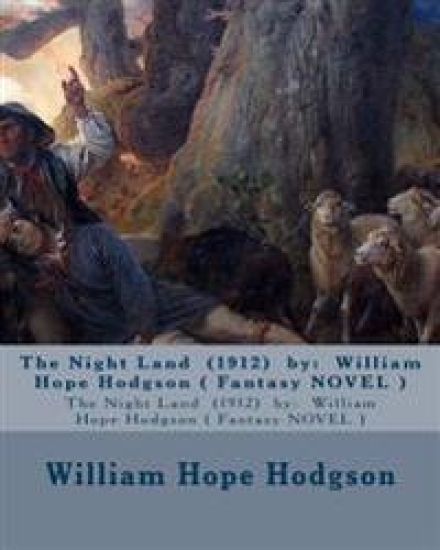
The Night Land was revived in paperback by Ballantine Books, which republished the work in two parts as the 49th and 50th volumes of its Ballantine Adult Fantasy series in July 1972. H. P. Lovecraft's essay "Supernatural Horror in Literature" describes the novel as "one of the most potent pieces of macabre imagination ever written". Clark Ashton Smith wrote of it that "In all literature, there are few works so sheerly remarkable, so purely creative, as The Night Land. Whatever faults this book may possess, however inordinate its length may seem, it impresses the reader as being the ultimate saga of a perishing cosmos, the last epic of a world beleaguered by eternal night and by the unvisageable spawn of darkness. Only a great poet could have conceived and written this story; and it is perhaps not illegitimate to wonder how much of actual prophecy may have been mingled with the poesy."... Plot summary The beginning of the book establishes the framework in which a 17th-century gentleman, mourning the death of his beloved, Lady Mirdath, is given a vision of a far-distant future where their souls will be re-united, and sees the world of that time through the eyes of a future incarnation. The language and style used are intended to resemble that of the 17th century, though the prose has features characteristic of no period whatsoever: the almost-complete lack of dialogue and proper names, for example. Critic Ian Bell has suggested that John Milton's epic poem "Paradise Lost" (1667) is probably a partial literary inspiration for Hodgson's novel, especially due to the hellish visions of sombre intensity which mark both works, and other similarities including the use of massive structures (the Temple of Pandemonium in Milton and the Last Redoubt in The Night Land). 2] Once into the book, the 17th century framing is mostly inconsequential. Instead, the story focuses on the future. The Sun has gone out and the Earth is lit only by the glow of residual vulcanism. The last few millions of the human race are gathered together in a gigantic metal pyramid, nearly eight miles high - the Last Redoubt, under siege from unknown forces and Powers outside in the dark. These are held back by a shield known as the "air clog", powered from a subterranean energy source called the "Earth Current". For millennia, vast living shapes-the Watchers-have waited in the darkness near the pyramid. It is thought they are waiting for the inevitable time when the Circle's power finally weakens and dies. Other living things have been seen in the darkness beyond, some of unknown origins, and others that may once have been human.To leave the protection of the Circle means almost certain death, or worse an ultimate destruction of the soul. As the story commences, the narrator establishes mind contact with an inhabitant of another, forgotten Lesser Redoubt. First one expedition sets off to succour the inhabitants of the Lesser Redoubt, whose own Earth Current has been exhausted, only to meet with disaster. After that, the narrator sets off alone into the darkness to find the girl he has made contact with, knowing now that she is the reincarnation of his past love. At the conclusion of the adventure, the narrative does not return to the framework story, instead ending with the homecoming of the couple and his inauguration into the ranks of their most honoured heroes.................... William Hope Hodgson (15 November 1877 - April 1918) was an English author. He produced a large body of work, consisting of essays, short fiction, and novels, spanning several overlapping genres including horror, fantastic fiction, and science fiction. Hodgson used his experiences at sea to lend authentic detail to his short horror stories, many of which are set on the ocean, including his series of linked tales forming the "Sargasso Sea Stories"..............
William Hope Hodgson was born on 15th November 1877 in Blackmore End near Braintree in Essex, the son of an Anglican priest and the second of 12 children. By the time he was 13 Hodgson ran away from his boarding school to become a sailor. He was caught and returned to his family, but was eventually allowed to be apprenticed for 4 years as a cabin boy. Bullying at sea caused him to take up self-defence through body-building which he would eventually use to start an on-shore business. He was also a keen photographer. In 1899, at age 22, he opened a School of Physical Culture in Blackburn "the inventor and teacher of a system that will cure indigestion". Hodgson soon found that he could not earn a living running his business and shut it down. He began writing articles on health but it was a limited market and so he turned to fiction, first publishing a short story in 1904. Hodgson also began to give paid lectures, illustrated with his photography, about his experiences at sea. He wrote a number of poems, with only a handful published during his lifetime, but continued to sell short stories to American and British magazines throughout his career, carefully managing the rights to maximize his revenue. Hodgson still lived with his mother and despite the critical success of his novels, he remained relatively poor. To alleviate this he began working on the first of his recurring characters, Thomas Carnacki, an occult detective. In 1912, Hodgson married Betty Farnworth, who wrote the "agony" column for the magazine Home Notes. They moved to the south of France, with its cheaper cost of living and there he continued to publish across genres, although financial security still to eluded him. With the outbreak of war they returned to England. Hodgson joined the University of London's Officers' Training Corps. In 1916, he was thrown from a horse and received a mandatory discharge. He returned to writing but recovered sufficiently to re-enlist. William Hope Hodgson was killed at the age of 40 by the direct impact of a shell at the Fourth Battle of Ypres in April 1918.
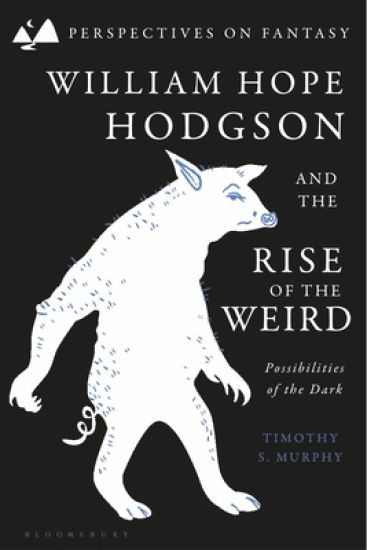
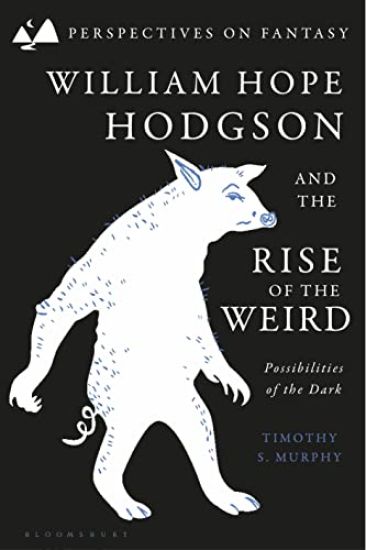
The first comprehensive study of the works of William Hope Hodgson, one of the true innovators of Weird fiction, this book examines the Weird novels and stories upon which his posthumous reputation rests, his non-fantastic writing, identifiable literary influences, and the historical contexts in which he wrote. Focusing extensively upon major works such as The House on the Borderland (1908) and The Night Land (1912), Timothy S. Murphy surveys topics including Hodgson’s experiments with code switching and linguistic experimentation; his depictions of racial and ethnic differences and gender and sexuality; the function of space and place in his writing; the adaptation of his shipboard experiences; and his use of abyssal time. With special attention paid to his paradoxical nihilist humanism, this book explores what made Hodgson a respected precursor to later innovators such as H. P. Lovecraft and C.L. Moore, and what makes him an important ancestor to 21st-century writers such as China Miéville, Greg Bear, and Charlie Jane Anders. Demonstrating how his work is both of his time and ‘untimely’, Murphy recovers Hodgson as the most significant figure to precede the fantastically popular but deeply controversial Lovecraft, as well as a figure whose work challenges what has thus far been accepted about the genre and the interpretive perspectives from which we view it.
The first comprehensive study of the works of William Hope Hodgson, one of the true innovators of Weird fiction, this book examines the Weird novels and stories upon which his posthumous reputation rests, his non-fantastic writing, identifiable literary influences, and the historical contexts in which he wrote. Focusing extensively upon major works such as The House on the Borderland (1908) and The Night Land (1912), Timothy S. Murphy surveys topics including Hodgson’s experiments with code switching and linguistic experimentation; his depictions of racial and ethnic differences and gender and sexuality; the function of space and place in his writing; the adaptation of his shipboard experiences; and his use of abyssal time. With special attention paid to his paradoxical nihilist humanism, this book explores what made Hodgson a respected precursor to later innovators such as H. P. Lovecraft and C.L. Moore, and what makes him an important ancestor to 21st-century writers such as China Miéville, Greg Bear, and Charlie Jane Anders. Demonstrating how his work is both of his time and ‘untimely’, Murphy recovers Hodgson as the most significant figure to precede the fantastically popular but deeply controversial Lovecraft, as well as a figure whose work challenges what has thus far been accepted about the genre and the interpretive perspectives from which we view it.