
Kirjahaku
Etsi kirjoja tekijän nimen, kirjan nimen tai ISBN:n perusteella.
1000 tulosta hakusanalla William J Timmerman
The author presents cogent reasons why it is so important that we pray at noontime. He traces the Biblical history that honors "noon" as important time in the day. He reminds us that it was the "sixth" hour (noon=12 pm) marking that time when Jesus was suffering on the Cross. Matthew, Mark and Luke all center on noon as a critical time regarding the crucifixion. "When it was noon, darkness came over the whole land until three in the afternoon" when Jesus cried out with a loud voice and died (Mark 15:33-34). The book also acknowledges that the number 12 is a symbol of God's authority handed over to human leadership which obviously in today's world does not work for God's kingdom on earth when one examines the ever-growing secularism in our country, the increasing assaults on religious freedom here and around the world and the disintegration of the traditional beliefs and the moral integrity within the church. A current website called "12 O'Clock Prayer Challenge-God's Answer for America" is mentioned in the book that coincides with the author's call out for people to seriously consider praying specifically at 12 noon to God for our country and for us.

Suffering and Spirituality: My Story
William J. Timmerman
Createspace Independent Publishing Platform
2017
nidottu

Bless Me, Break Any Curse On Me: My Prayer
William J. Timmerman Phd
Createspace Independent Publishing Platform
2017
nidottu
Do you believe in curses? The author does. The book focuses on four major sources of curses with a special emphasis on self-imposed curses. They are more common and dangerous than you would think. He presents actual cases from his own life of being "cursed by others" and of suspected generational curses. He treats curses with both a heavy and light touch and spells out how a curse can be broken providing the format and numerous prayer examples. The book finishes by highlighting the power of blessings. If you believe there is more power in a curse compared to a blessing, the author hopes to change your mind.

"Can the Devil Read Our Minds?"
William J. Timmerman Phd
Createspace Independent Publishing Platform
2018
nidottu
Polls show that a majority of people do not believe in a creature called the Devil. Of those who do most of them claim the Devil cannot read our minds. This includes pastors, scientists, theologians and blogs from lay people. The author disagrees with the majority opinion and provides cogent reasoning why the Devil can read into human minds. The book ends with how a person needs to protect oneself citing both spiritual and psychological weapons.
Progress in Drug Research / Fortschritte der Arzneimittelforschung / Progrès des Recherches Pharmaceutiques
Vijendra K. Singh; Margaret E. Gnegy; S. P. Gupta; R. Leurs; R. C. Vollinga; H. Timmerman; Ray W. Fuller; Nissim Claude Cohen; Vincenzo Tschinke; Elaine J. Benaksas; E. David Murray; William J. Wechter; Indra Dwivedy; Suprabhat Ray
Springer Basel
2012
nidottu
Volume 45 of "Progress in Drug Research" contains eight reviews and the various indexes which facilitate its use and establish the connection with the previous volumes. The articles in this volume deal with neuro peptides as native immune modulators, with Calmodulin and with effects of cell stimuli and drugs on cellular activation, with recent advances in benzodiazepine receptor binding studies, with the medicinal chemistry and therapeutic potentials of ligands of the histamine H3 receptor, with Serotonin uptake inhibitors, with computer-aided drug design, with natri uretic hormones and with the recent developments in the chemotherapy of osteoporosis. In the 36 years that PDR has existed, the Editor has enjoyed the valu able help and advice of many colleagues. Readers, the authors of the reviews and, last but not least, the reviewers have all contributed greatly to the success of this series. Although the comments received so far have generally been favorable, it is nevertheless necessary to analyze and to reassess the current position and the future direction of such a series of monographs. So far, it has been the Editor's intention to help disseminate information on the vast domain of drug research, and to provide the reader with a tool with which to keep abreast of the latest developments and trends. The reviews in PDR are useful to the nonspecialist, who can obtain an overview of a particular field of drug research in a relatively short time.
Process Modelling And Simulation With Finite Element Methods
William B J Zimmerman
World Scientific Publishing Co Pte Ltd
2004
sidottu
This book presents a systematic description and case studies of chemical engineering modelling and simulation based on the MATLAB/FEMLAB tools, in support of selected topics in undergraduate and postgraduate programmes that require numerical solution of complex balance equations (ordinary differential equations, partial differential equations, nonlinear equations, integro-differential equations). These systems arise naturally in analysis of transport phenomena, process systems, chemical reactions and chemical thermodynamics, and particle rate processes. Templates are given for modelling both state-of-the-art research topics (e.g. microfluidic networks, film drying, multiphase flow, population balance equations) and case studies of commonplace design calculations - mixed phase reactor design, heat transfer, flowsheet analysis of unit operations, flash distillations, etc. The great strength of this book is that it makes modelling and simulating in the MATLAB/FEMLAB environment approachable to both the novice and the expert modeller.
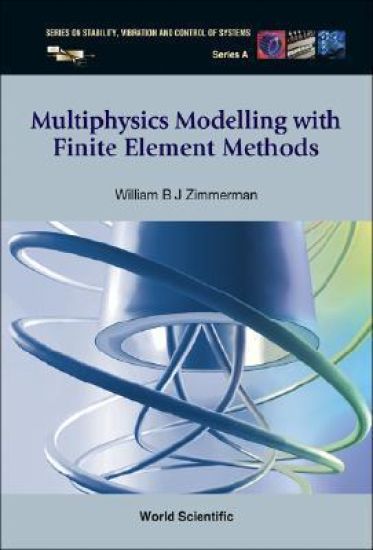
Multiphysics Modeling With Finite Element Methods
William B J Zimmerman
World Scientific Publishing Co Pte Ltd
2006
sidottu
Finite element methods for approximating partial differential equations that arise in science and engineering analysis find widespread application. Numerical analysis tools make the solutions of coupled physics, mechanics, chemistry, and even biology accessible to the novice modeler. Nevertheless, modelers must be aware of the limitations and difficulties in developing numerical models that faithfully represent the system they are modeling.This textbook introduces the intellectual framework for modeling with Comsol Multiphysics, a package which has unique features in representing multiply linked domains with complex geometry, highly coupled and nonlinear equation systems, and arbitrarily complicated boundary, auxiliary, and initial conditions. But with this modeling power comes great opportunities and great perils.Progressively, in the first part of the book the novice modeler develops an understanding of how to build up complicated models piecemeal and test them modularly. The second part of the book introduces advanced analysis techniques. The final part of the book deals with case studies in a broad range of application areas including nonlinear pattern formation, thin film dynamics and heterogeneous catalysis, composite and effective media for heat, mass, conductivity, and dispersion, population balances, tomography, multiphase flow, electrokinetic, microfluidic networks, plasma dynamics, and corrosion chemistry.As a revision of Process Modeling and Simulation with Finite Element Methods, this book uses the very latest features of Comsol Multiphysics. There are new case studies on multiphase flow with phase change, plasma dynamics, electromagnetohydrodynamics, microfluidic mixing, and corrosion. In addition, major improvements to the level set method for multiphase flow to ensure phase conservation is introduced.

Will to Fight
Ben Connable; Michael J McNerney; William Marcellino; Aaron Frank; Henry Hargrove; Marek N Posard; S Rebecca Zimmerman; Natasha Lander; Jasen J Castillo; James Sladden
RAND
2018
nidottu
This report defines and describes will to fight and provides a model of unit will to fight that can be applied to ground combat units of any scale. The model provides a research-grounded template for case-by-case adviser assessment of partner or allied military forces and the intelligence analysis of adversary forces. This report also provides a theoretical basis for adding will to fight to military war gaming and simulation.

Closely associated with artists such as T. C. Steele and J. Ottis Adams, William J. Forsyth studied at the Royal Academy in Munich then returned home to paint what he knew best—the Indiana landscape. It proved a rewarding subject. His paintings were exhibited nationally and received major awards. With full-color reproductions of Forsyth's most important paintings and previously unpublished photographs of the artist and his work, this book showcases Forsyth's fearless experiments with artistic styles and subjects. Drawing on his personal letters and other sources, Rachel Berenson Perry discusses Forsyth and his art and offers fascinating insights into his personality, his relationships with his students, and his lifelong devotion to teaching and educating the public about the importance of art.

The volume is made up of three main chapters. The first provides a biography of Fellner. The second is an annotated bibliography of Fellner's published works and includes sections on books he wrote, his articles and essays, books he edited, and his public remarks. The third chapter is an annotated bibliography of works about Fellner and his ideas. This volume also includes name and subject indexes.In a volume that will be both useful to the professional economist and accessible to the nonspecialist, this bio-bibliography provides a guide to the work of William J. Fellner, a respected economist, policy adviser, and highly regarded member of the public policy research establishment. His work contains the full sweep of contemporary economic thought. The volume includes a biography, an annotated bibliography of Fellner's published works, and an annotated bibliography of works about Fellner and his ideas. It also includes name and subject indexes.
Memoirs And Sermons Of William J. Armstrong
William J. Armstrong; Hollis (EDT) Read
Kessinger Pub
2007
pokkari
Treaties for the Advancement of Peace Between the United States and Other Powers Negotiated by the Honourable William J. Bryan, Secretary of State of the United States
William J Bryan
Trieste Publishing
2018
nidottu

William J. Seymour and the Origins of Global Pentecostalism
Gastón Espinosa
Duke University Press
2014
sidottu
In 1906, William J. Seymour (1870–1922) preached Pentecostal revival at the Azusa Street mission in Los Angeles. From these and other humble origins the movement has blossomed to 631 million people around the world. Gastón Espinosa provides new insight into the life and ministry of Seymour, the Azusa Street revival, and Seymour's influence on global Pentecostal origins. After defining key terms and concepts, he surveys the changing interpretations of Seymour over the past 100 years, critically engages them in a biography, and then provides an unparalleled collection of primary sources, all in a single volume. He pays particular attention to race relations, Seymour's paradigmatic global influence from 1906 to 1912, and the break between Seymour and Charles Parham, another founder of Pentecostalism. Espinosa's fragmentation thesis argues that the Pentecostal propensity to invoke direct unmediated experiences with the Holy Spirit empowers ordinary people to break the bottle of denominationalism and to rapidly indigenize and spread their message.The 104 primary sources include all of Seymour's extant writings in full and without alteration and some of Parham's theological, social, and racial writings, which help explain why the two parted company. To capture the revival's diversity and global influence, this book includes Black, Latino, Swedish, and Irish testimonies, along with those of missionaries and leaders who spread Seymour's vision of Pentecostalism globally.

William J. Seymour and the Origins of Global Pentecostalism
Gastón Espinosa
Duke University Press
2014
pokkari
In 1906, William J. Seymour (1870–1922) preached Pentecostal revival at the Azusa Street mission in Los Angeles. From these and other humble origins the movement has blossomed to 631 million people around the world. Gastón Espinosa provides new insight into the life and ministry of Seymour, the Azusa Street revival, and Seymour's influence on global Pentecostal origins. After defining key terms and concepts, he surveys the changing interpretations of Seymour over the past 100 years, critically engages them in a biography, and then provides an unparalleled collection of primary sources, all in a single volume. He pays particular attention to race relations, Seymour's paradigmatic global influence from 1906 to 1912, and the break between Seymour and Charles Parham, another founder of Pentecostalism. Espinosa's fragmentation thesis argues that the Pentecostal propensity to invoke direct unmediated experiences with the Holy Spirit empowers ordinary people to break the bottle of denominationalism and to rapidly indigenize and spread their message.The 104 primary sources include all of Seymour's extant writings in full and without alteration and some of Parham's theological, social, and racial writings, which help explain why the two parted company. To capture the revival's diversity and global influence, this book includes Black, Latino, Swedish, and Irish testimonies, along with those of missionaries and leaders who spread Seymour's vision of Pentecostalism globally.
William J. Gedney's Comparative Tai Source Book
Thomas John Hudak
University of Hawai'i Press
2007
nidottu
This volume provides accurate and reliable data from 1,159 common cognates found in 19 dialects from the Tai language family. Originally collected by noted Tai linguist the late William J. Gedney, the data are organized into the three branches of the Tai language family, the Southwestern, the Central, and the Northern, to facilitate comparisons among the various sound systems within the individual branches and within the Tai language family as a whole. Supplementing the cognates are phonological descriptions of each of the dialects.Included among the nineteen dialects are Siamese, White Tai, Black Tai, Shan, Lue, Yay, Saek, and dialects found at Leiping, Lungming, Pingsiang, and Ningming in China. The meticulous attention paid to consonants, vowels, and tones found in each cognate will allow for further dialect studies, for the investigation of questions concerning the tripartite division of the Tai language family, and for the continuing investigation into the reconstruction of the Proto-Tai language family and its wider genetic relationships.
William J. Gedney's Concise Saek-English, English-Saek Lexicon
William J. Gedney
University of Hawai'i Press
2011
nidottu
Saek, a Northern Tai language spoken in villages in Nakhon Phanom province on the border of Northeast Thailand and Laos, is noted for its unique phonological features within the Tai language family. This lexicon, originally compiled by the late Tai linguist William J. Gedney in the 1970s and organized by rhyme, highlights those characteristics that identify the older generation of Saek speakers. Because of these features, linguists believe that Saek will play an important role in the reconstruction of the proto-language of the Tai family. To make the lexicon more accessible, an English-Saek section has been added, something that does not appear in other treatments of Saek.
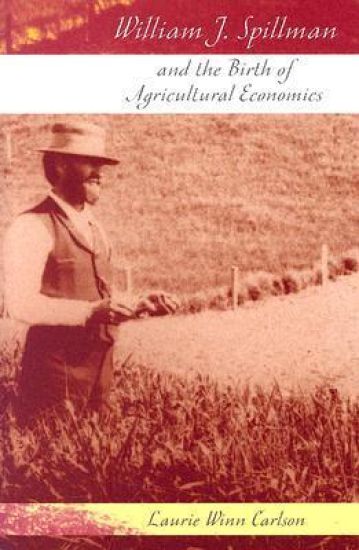
William J. Spillman and the Birth of Agricultural Economics
Laurie Winn Carlson
University of Missouri Press
2005
sidottu
William J. Spillman (1863-1931), considered the founder of agricultural economics, was a scientist and popular agricultural educator for the United States Department of Agriculture (USDA). As the author of more than three hundred articles and four books, Spillman left a lasting mark on American agriculture during the late nineteenth and early twentieth centuries with his pioneering solutions for the problems of overproduction and low prices. Spillman grew up in Lawrence County, Missouri, and received his bachelor's and master's degrees from the University of Missouri in Columbia. In this biography, Laurie Winn Carlson looks at Spillman's career as he moved from Missouri to Washington, D.C., where his concepts shaped what became the agricultural New Deal and, eventually, the current farm allotment programs. By placing Spillman's story within the larger context of American agricultural history, Carlson takes readers inside the USDA during the years our nation's agricultural policy took shape. She studies the development of the field of genetics, the conflicts regarding agricultural education and the creation of the Cooperative Extension Service, the overproduction crisis after World War I and Spillman's ideas for allotment, and the commercial fertilizer industry and the Law of Diminishing Returns. She also looks at efforts to restrict research, the censorship of publications directed toward farmers, and personal rivalries within the USDA. This examination of agricultural through Spillman's eyes reveals that industrialized agriculture was not inevitable but a carefully crafted ideology that farmers were pushed to embrace. Although highly contested by farmers as well as employees within the USDA, industry, government, politics, and technology, industrialized agriculture moved people off the land, replacing them with large-scale mechanized production. An iconoclast within the USDA bureaucracy, Spillman was a ""farm evangelist,"" taking his message of diversified farming across the country. He believed that farmers should integrate livestock and rotate crops, rather than continue the monoculture production that was evolving due to the increasing industrialization of farming. Those issues, as well as the Law of Diminishing Returns, sustainability, and popular education, are all matters to which Spillman devoted his career and are more important today than ever.

William J. Gedney's Southwestern Tai Dialects
William J. Gedney; Thomas John (EDT) Hudak
Univ of Michigan Center for
1995
sidottu