Kirjojen hintavertailu. Mukana 12 016 292 kirjaa ja 12 kauppaa.

Kirjahaku

Etsi kirjoja tekijän nimen, kirjan nimen tai ISBN:n perusteella.

1000 tulosta hakusanalla William J. Abraham

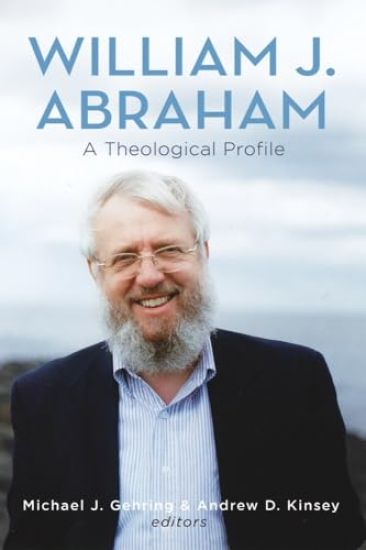
William J. Abraham

William J. Abraham

Baylor University Press
2024
sidottu
One of the most prominent theologians in the late twentieth and early twenty-first centuries was William J. Abraham, affectionately known as "Billy" to many. The impact of Abraham's teaching and preaching within the larger Methodist and Wesleyan families has created a substantial legacy that will continue to shape the church as well as challenge a new generation of scholarship. William J. Abraham: A Theological Profile seeks to begin a critical assessment and appreciation of Abraham's contributions over the years and explore these contributions in a wide range of fields—mission and evangelism, philosophy of religion, epistemology, and systematic theology, to name a few. The contributors to this volume include scholars and practitioners from different disciplines and ministries. They provide helpful insights into Abraham's work as well as offer personal reflections on the relational sensibilities that marked Billy as a true friend of the gospel. Their collective insights honor Abraham's memory, solidify his legacy, and preserve a piece of his rich theological imagination for future generations of the church.
Abraham Lincoln

Abraham Lincoln

William J Johnson

Trieste Publishing
2018
nidottu
Trieste Publishing has a massive catalogue of classic book titles. Our aim is to provide readers with the highest quality reproductions of fiction and non-fiction literature that has stood the test of time. The many thousands of books in our collection have been sourced from libraries and private collections around the world.The titles that Trieste Publishing has chosen to be part of the collection have been scanned to simulate the original. Our readers see the books the same way that their first readers did decades or a hundred or more years ago. Books from that period are often spoiled by imperfections that did not exist in the original. Imperfections could be in the form of blurred text, photographs, or missing pages. It is highly unlikely that this would occur with one of our books. Our extensive quality control ensures that the readers of Trieste Publishing's books will be delighted with their purchase. Our staff has thoroughly reviewed every page of all the books in the collection, repairing, or if necessary, rejecting titles that are not of the highest quality. This process ensures that the reader of one of Trieste Publishing's titles receives a volume that faithfully reproduces the original, and to the maximum degree possible, gives them the experience of owning the original work.We pride ourselves on not only creating a pathway to an extensive reservoir of books of the finest quality, but also providing value to every one of our readers. Generally, Trieste books are purchased singly - on demand, however they may also be purchased in bulk. Readers interested in bulk purchases are invited to contact us directly to enquire about our tailored bulk rates.
Feelings 102: Bible Studies for LIVING God's Written Word, Volume 1, 3rd Edition: Trials from Adam & Eve to Abraham & Sarah
We all experience trials How often do we study trials in the Bible as part of preparing for our own? A relationship with God is real The Lord and His Spirit seek to communicate to us in every trial, difficulty or challenge we face because we need His help But, such times can be quite confusing, and we often have lots of questions - How am I being tempted? - How is the Lord trying to grow me in this situation? - How do I let the Lord live THE LIFE through me, or do I have to figure this out myself? - What steps of faith God does wants me to take? Feelings 102 lessons walk you through discerning need-to-know answers from the Lord - answers He's trying to get across to you The lessons help you to experience the part of the spiritual walk that makes the Christian life vibrant, comforting and exciting Great for individuals and small groups (3-10 persons). Guidance for facilitators is also included. Recommended for ages 18 and up.
Canon and Criterion in Christian Theology

Canon and Criterion in Christian Theology

William J. Abraham

Clarendon Press
1998
sidottu
The book provides an original and important narrative on the significance of canon in the Christian tradition. Standard accounts of canon reduce canon to scripture and treat scripture as a criterion of truth. Scripture is then related in positive or negative ways to tradition, reason, and experience. Such projects involve a misreading of the meaning and content of canon --- they locate the canonical heritage of the church within epistemology --- and Abraham charts the fatal consquences of this move, from the Fathers to modern feminist theology. In the process he shows that the central epistemological concerns of the Enlightenment have Christian origins and echoes. He also shows that the crucial developments of theology from the Reformation onwards involve extraordinary efforts to fix the foundations of faith. This trajectory is now exhausted theologically and spiritually. Hence, the door is opened for a recovery of the full canonical heritage of the early church and for fresh work on the epistemology of theology.
Divine Agency and Divine Action, Volume I

Divine Agency and Divine Action, Volume I

William J. Abraham

Oxford University Press
2017
sidottu
Divine Agency and Divine Action, Volume I lays the groundwork for a constructive contribution to the contemporary debate regarding divine action. Noted scholar, William J. Abraham argues that the concept of divine action is not a closed concept-like knowledge-but an open concept with a variety of context-dependent meanings. The volume charts the history of debate about divine action among key Anglophone philosophers of religion, and observes that they were largely committed to this erroneous understanding of divine action as a closed concept. After developing an argument that divine action should be understood as an open, fluid concept, Abraham engages the work of William Alston, Process metaphysics, quantum physics, analytic Thomist philosophy of religion, and the theology of Kathryn Tanner. Abraham argues that divine action as an open concept must be shaped by distinctly theological considerations, and thus all future work on divine action among philosophers of religion must change to accord with this vision. Only deep engagement with the Christian theological tradition will remedy the problems ailing contemporary discourse on divine action.
Divine Agency and Divine Action, Volume II

Divine Agency and Divine Action, Volume II

William J. Abraham

Oxford University Press
2017
sidottu
Divine Agency and Divine Action, Volume II builds on Volume I, which established that no generic concept of action will suffice for understanding the character of divine actions explicit in the Christian faith. Volume II argues that in order to understand divine action, one must begin with the array of specific actions predicated of God in the Christian tradition. William J. Abraham argues that one must practice theology in order to analyze properly the concept of divine action. Abraham offers a careful review and evaluation of the particularities of divine action as they appear in the work of biblical, patristic, medieval, and Reformation-era theologians. Particular attention is given to the divine inspiration of scripture, creation, incarnation, transubstantiation in the Eucharist, predestination, and divine concurrence. The work does not simply repeat the doctrinal formulations found in the Christian tradition, but examines them in order to find fresh ways of thinking about these issues for our own time, especially with respect to the contemporary debates about divine agency and divine action.
Divine Agency and Divine Action, Volume III

Divine Agency and Divine Action, Volume III

William J. Abraham

Oxford University Press
2018
sidottu
Volume III of a tetralogy devoted to Divine Agency and Divine Action articulates a comprehensive vision of systematic theology focused on divine action from creation to eschatology. Volume I developed the foundational conceptual work by showing that the concept of action is a radically open concept that readily makes possible the appropriation of divine action for today. Volume II explained that in exploring divine action one needs to specify the actual divine actions under review and thus showed that there could be no progress with extensive soundings across the tradition from Paul to Molina. Work on divine action requires extended work in doctrinal criticism rooted in the history of theology as a prelude to normative work that communicates a normative vision of divine action for today. This vision is best explored by taking up the great themes of systematic theology from creation to eschatology yet treating them in a deflationary manner that sees systematic theology as university-level, postbaptismal, Christian instruction. Leading scholar William J. Abraham recognises that we live in a golden period of theological studies-the range and depth of material is extraordinary-yet we also live in a period of disorientation and confusion that calls for a fresh engagement with the demands of systematic theology. Divine Agency and Divine Action, Volume III meets that demand by insisting that systematic theology has its own content and modes of inquiry; that it belongs intimately to the journey of faith; and that it requires authentic academic clarity and rigor. It reclaims the rightful place of systematic theology as the center of gravity for theological studies but does so in a manner that makes it available to both the church and to the academy.
Divine Agency and Divine Action, Volume IV

Divine Agency and Divine Action, Volume IV

William J. Abraham

Oxford University Press
2021
sidottu
In the final of four volumes, William J. Abraham seeks an account of God as an agent. Systematic theology raises deep metaphysical questions about the central concepts we use in our thinking about God. If God is an agent, the question of how to articulate this conviction arises. Abraham illumines the concept of God as agent by attending to various traditional problems in Christian doctrine like the relation of freedom and grace, divine action in liberation theology, the presence of God in the Eucharist, divine providence, the relationship of Christianity and Islam, the relation of the natural sciences to theology and apparent design, and the realm of the demonic. Divine action is the point of departure for reflection on these topics. It not only clarifies the concept of God as an agent but also solutions to these traditional problems.
Methodism

Methodism

William J. Abraham

Oxford University Press
2019
nidottu
Beginning as a renewal movement within Anglicanism in the eighteenth century, Methodism had become the largest Protestant denomination in the USA in the nineteenth century, and is today one of the most vibrant forms of Christianity. Representing a complex spiritual and evangelistic experiment that involves a passionate commitment to worldwide mission, it covers a global network of Christian denominations. In this Very Short Introduction William J. Abraham trace Methodism from its origins in the work of John Wesley and the hymns of his brother, Charles Wesley, in the eighteenth century, right up to the present. Considering the identity, nature, and history of Methodism, Abraham provides a fresh account of the place of Methodism in the life and thought of the Christian Church. Describing the message of Methodism, and who the Methodists are, he also considers the practices of Methodism, and discusses the global impact of Methodism and its decline in the homelands. Finally Abraham looks forward, and considers the future prospects for Methodism. ABOUT THE SERIES: The Very Short Introductions series from Oxford University Press contains hundreds of titles in almost every subject area. These pocket-sized books are the perfect way to get ahead in a new subject quickly. Our expert authors combine facts, analysis, perspective, new ideas, and enthusiasm to make interesting and challenging topics highly readable.
Canon and Criterion in Christian Theology

Canon and Criterion in Christian Theology

William J. Abraham

Oxford University Press
2002
nidottu
Canon and Criterion in Christian Theology provides an original and important narrative on the significance of canon in the Christian tradition. Standard accounts of canon reduce canon to scripture and treat scripture as a criterion of truth. Scripture is then related in positive or negative ways to tradition, reason, and experience. Such projects involve a misreading of the meaning and content of canon --- they locate the canonical heritage of the church within epistemology --- and Abraham charts the fatal consequences of this move, from the Fathers to modern feminist theology. In the process he shows that the central epistemological concerns of the Enlightenment have Christian origins and echoes. He also shows that the crucial developments of theology from the Reformation onwards involve extraordinary efforts to fix the foundations of faith. This trajectory is now exhausted theologically and spiritually. Hence, the door is opened for a recovery of the full canonical heritage of the early church and for fresh work on the epistemology of theology.
Wesley for Armchair Theologians

Wesley for Armchair Theologians

William J. Abraham

Westminster/John Knox Press,U.S.
2005
nidottu
Wesley for Armchair Theologians engagingly presents the life and theology of John Wesley, the founder of Methodism. Written by prominent Wesley scholar William Abraham, who aimed to "make Wesley come alive for those who would truly love to become armchair theologians," the book is an excellent, entertaining, and expert guide to the work of this important Christian figure.Written by experts but designed for the novice, the Armchair series provides accurate, concise, and witty overviews of some of the most profound moments and theologians in Christian history. These books are essential supplements for first-time encounters with primary texts, lucid refreshers for scholars and clergy, and enjoyable reads for the theologically curious.
Waking from Doctrinal Amnesia

Waking from Doctrinal Amnesia

William J. Abraham

Abingdon Press
1995
pokkari
Asserting that the "return to Wesley" that is represented in the Quadrilateral is "intellectually wrongheaded," William J. Abraham argues that the Quadrilateral is not, and should not be, United Methodist doctrine. Abraham's lively treatise makes a provocative appeal for a reasoned exploration of the significance of the UMC's doctrinal identity. He reveals how churches have faced incompatible doctrinal proposals within their midst and examines the specific issues facing the United Methodist church as a whole.
Crossing the Threshold of Divine Revelation

Crossing the Threshold of Divine Revelation

William J. Abraham

William B Eerdmans Publishing Co
2006
nidottu
The last few decades have seen a revolution in debates about the rationality of Christian belief. Among the array of current options for justifying religious belief, however, nearly every one assumes that a general theory of knowing and a minimal version of theism must be adopted before the rationality of Christian belief can be tackled. In Crossing the Threshold of Divine Revelation William J. Abraham confronts both of these assumptions, arguing that epistemology must begin with its particular target of inquiry -- in Abraham's case the full-blooded "canonical theism" of the early, undivided Christian church. He argues, moreover, that special divine revelation forms a crucial threshold at the entrance to the epistemology of Christian belief. Sure to intrigue philosophers, theologians, and curious students, Abraham's robust vision of Christian faith provides a creative solution to many of the current difficulties in philosophy and theology.