Kirjojen hintavertailu. Mukana 11 342 296 kirjaa ja 12 kauppaa.

Kirjahaku

Etsi kirjoja tekijän nimen, kirjan nimen tai ISBN:n perusteella.

1000 tulosta hakusanalla William J. Bass

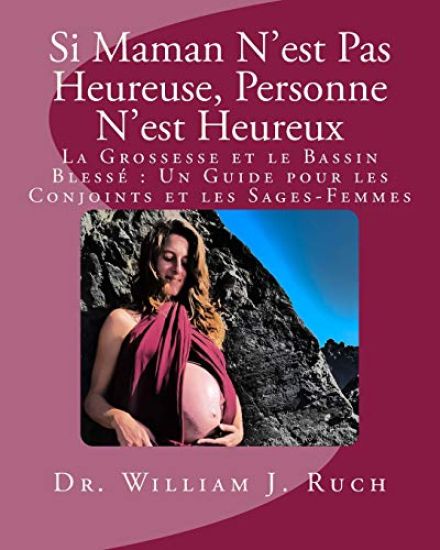
Si Maman N'est Pas Heureuse, Personne N'est Heureux: La Grossesse et le Bassin Blessé Un Guide pour les Conjoints et les Sages-Femmes
Finalement, un livre qui adresse l'importance du bassin bless et ses effets sur la femmeenceinte. Le Dr Ruch puise sur plus de trente ans d'exp rience en soins chiropratiques pourd montrer comment la douleur caus e par le d salignement de l'os iliaque d'une femmeenceinte peut facilement tre soulag en quelques minutes par jour. Avec l'aide d'un partenaireou d'une sage-femme, elle n'aura pas besoin de souffrir tout au long de sa grossesse.CE LIVRE PR SENTE- Une discussion anatomique du bassin enceinte bless - Des photographies en couleur et des instructions ( tape par tape)- Des conseils th rapeutiques sur comment garder la m re heureuse et fonctionnelle
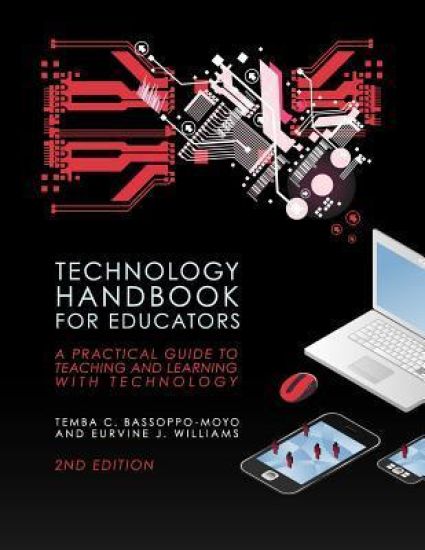
Technology Handbook for Educators

Technology Handbook for Educators

Temba C. Bassoppo-Moyo; Eurvine J. Williams

Cognella, Inc
2011
nidottu
This text is truly for all teachers who are unfamiliar and apprehensive about integrating technology in their classroom. This book provides detailed explanations and clear instructions on how to integrate technology in the classroom using the most common productivity software package available to educators, particularly in the United States. It provides a detailed background on technology sufficient for any beginner within classroom settings and then walks the practitioner through the types of software applications for use in the classroom environment. It provides concrete examples and assignments that can be created with each application. Student assignment design, implementation, and evaluation for each application are also discussed.
William J. Forsyth

William J. Forsyth

Rachel Berenson Perry

Indiana University Press
2014
sidottu
Closely associated with artists such as T. C. Steele and J. Ottis Adams, William J. Forsyth studied at the Royal Academy in Munich then returned home to paint what he knew best—the Indiana landscape. It proved a rewarding subject. His paintings were exhibited nationally and received major awards. With full-color reproductions of Forsyth's most important paintings and previously unpublished photographs of the artist and his work, this book showcases Forsyth's fearless experiments with artistic styles and subjects. Drawing on his personal letters and other sources, Rachel Berenson Perry discusses Forsyth and his art and offers fascinating insights into his personality, his relationships with his students, and his lifelong devotion to teaching and educating the public about the importance of art.
William J. Fellner

William J. Fellner

James Marshall

Greenwood Press
1992
sidottu
The volume is made up of three main chapters. The first provides a biography of Fellner. The second is an annotated bibliography of Fellner's published works and includes sections on books he wrote, his articles and essays, books he edited, and his public remarks. The third chapter is an annotated bibliography of works about Fellner and his ideas. This volume also includes name and subject indexes.In a volume that will be both useful to the professional economist and accessible to the nonspecialist, this bio-bibliography provides a guide to the work of William J. Fellner, a respected economist, policy adviser, and highly regarded member of the public policy research establishment. His work contains the full sweep of contemporary economic thought. The volume includes a biography, an annotated bibliography of Fellner's published works, and an annotated bibliography of works about Fellner and his ideas. It also includes name and subject indexes.
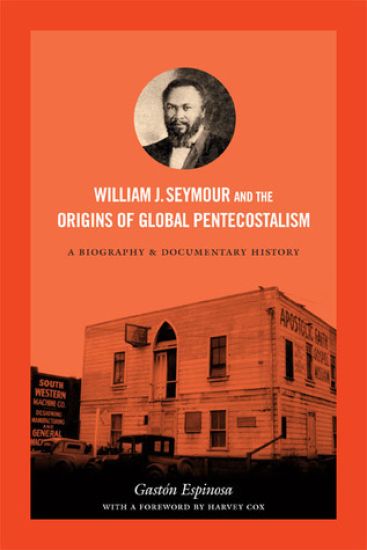
William J. Seymour and the Origins of Global Pentecostalism
In 1906, William J. Seymour (1870–1922) preached Pentecostal revival at the Azusa Street mission in Los Angeles. From these and other humble origins the movement has blossomed to 631 million people around the world. Gastón Espinosa provides new insight into the life and ministry of Seymour, the Azusa Street revival, and Seymour's influence on global Pentecostal origins. After defining key terms and concepts, he surveys the changing interpretations of Seymour over the past 100 years, critically engages them in a biography, and then provides an unparalleled collection of primary sources, all in a single volume. He pays particular attention to race relations, Seymour's paradigmatic global influence from 1906 to 1912, and the break between Seymour and Charles Parham, another founder of Pentecostalism. Espinosa's fragmentation thesis argues that the Pentecostal propensity to invoke direct unmediated experiences with the Holy Spirit empowers ordinary people to break the bottle of denominationalism and to rapidly indigenize and spread their message.The 104 primary sources include all of Seymour's extant writings in full and without alteration and some of Parham's theological, social, and racial writings, which help explain why the two parted company. To capture the revival's diversity and global influence, this book includes Black, Latino, Swedish, and Irish testimonies, along with those of missionaries and leaders who spread Seymour's vision of Pentecostalism globally.
William J. Seymour and the Origins of Global Pentecostalism
In 1906, William J. Seymour (1870–1922) preached Pentecostal revival at the Azusa Street mission in Los Angeles. From these and other humble origins the movement has blossomed to 631 million people around the world. Gastón Espinosa provides new insight into the life and ministry of Seymour, the Azusa Street revival, and Seymour's influence on global Pentecostal origins. After defining key terms and concepts, he surveys the changing interpretations of Seymour over the past 100 years, critically engages them in a biography, and then provides an unparalleled collection of primary sources, all in a single volume. He pays particular attention to race relations, Seymour's paradigmatic global influence from 1906 to 1912, and the break between Seymour and Charles Parham, another founder of Pentecostalism. Espinosa's fragmentation thesis argues that the Pentecostal propensity to invoke direct unmediated experiences with the Holy Spirit empowers ordinary people to break the bottle of denominationalism and to rapidly indigenize and spread their message.The 104 primary sources include all of Seymour's extant writings in full and without alteration and some of Parham's theological, social, and racial writings, which help explain why the two parted company. To capture the revival's diversity and global influence, this book includes Black, Latino, Swedish, and Irish testimonies, along with those of missionaries and leaders who spread Seymour's vision of Pentecostalism globally.
William J. Gedney's Comparative Tai Source Book

William J. Gedney's Comparative Tai Source Book

Thomas John Hudak

University of Hawai'i Press
2007
nidottu
This volume provides accurate and reliable data from 1,159 common cognates found in 19 dialects from the Tai language family. Originally collected by noted Tai linguist the late William J. Gedney, the data are organized into the three branches of the Tai language family, the Southwestern, the Central, and the Northern, to facilitate comparisons among the various sound systems within the individual branches and within the Tai language family as a whole. Supplementing the cognates are phonological descriptions of each of the dialects.Included among the nineteen dialects are Siamese, White Tai, Black Tai, Shan, Lue, Yay, Saek, and dialects found at Leiping, Lungming, Pingsiang, and Ningming in China. The meticulous attention paid to consonants, vowels, and tones found in each cognate will allow for further dialect studies, for the investigation of questions concerning the tripartite division of the Tai language family, and for the continuing investigation into the reconstruction of the Proto-Tai language family and its wider genetic relationships.
William J. Gedney's Concise Saek-English, English-Saek Lexicon

William J. Gedney's Concise Saek-English, English-Saek Lexicon

William J. Gedney

University of Hawai'i Press
2011
nidottu
Saek, a Northern Tai language spoken in villages in Nakhon Phanom province on the border of Northeast Thailand and Laos, is noted for its unique phonological features within the Tai language family. This lexicon, originally compiled by the late Tai linguist William J. Gedney in the 1970s and organized by rhyme, highlights those characteristics that identify the older generation of Saek speakers. Because of these features, linguists believe that Saek will play an important role in the reconstruction of the proto-language of the Tai family. To make the lexicon more accessible, an English-Saek section has been added, something that does not appear in other treatments of Saek.
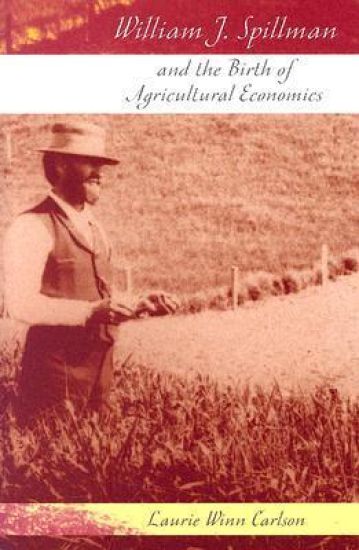
William J. Spillman and the Birth of Agricultural Economics

William J. Spillman and the Birth of Agricultural Economics

Laurie Winn Carlson

University of Missouri Press
2005
sidottu
William J. Spillman (1863-1931), considered the founder of agricultural economics, was a scientist and popular agricultural educator for the United States Department of Agriculture (USDA). As the author of more than three hundred articles and four books, Spillman left a lasting mark on American agriculture during the late nineteenth and early twentieth centuries with his pioneering solutions for the problems of overproduction and low prices. Spillman grew up in Lawrence County, Missouri, and received his bachelor's and master's degrees from the University of Missouri in Columbia. In this biography, Laurie Winn Carlson looks at Spillman's career as he moved from Missouri to Washington, D.C., where his concepts shaped what became the agricultural New Deal and, eventually, the current farm allotment programs. By placing Spillman's story within the larger context of American agricultural history, Carlson takes readers inside the USDA during the years our nation's agricultural policy took shape. She studies the development of the field of genetics, the conflicts regarding agricultural education and the creation of the Cooperative Extension Service, the overproduction crisis after World War I and Spillman's ideas for allotment, and the commercial fertilizer industry and the Law of Diminishing Returns. She also looks at efforts to restrict research, the censorship of publications directed toward farmers, and personal rivalries within the USDA. This examination of agricultural through Spillman's eyes reveals that industrialized agriculture was not inevitable but a carefully crafted ideology that farmers were pushed to embrace. Although highly contested by farmers as well as employees within the USDA, industry, government, politics, and technology, industrialized agriculture moved people off the land, replacing them with large-scale mechanized production. An iconoclast within the USDA bureaucracy, Spillman was a ""farm evangelist,"" taking his message of diversified farming across the country. He believed that farmers should integrate livestock and rotate crops, rather than continue the monoculture production that was evolving due to the increasing industrialization of farming. Those issues, as well as the Law of Diminishing Returns, sustainability, and popular education, are all matters to which Spillman devoted his career and are more important today than ever.
William J. Glackens

William J. Glackens

Guy Pène Du Bois

Hassell Street Press
2021
nidottu
This work has been selected by scholars as being culturally important and is part of the knowledge base of civilization as we know it.This work is in the public domain in the United States of America, and possibly other nations. Within the United States, you may freely copy and distribute this work, as no entity (individual or corporate) has a copyright on the body of the work.Scholars believe, and we concur, that this work is important enough to be preserved, reproduced, and made generally available to the public. To ensure a quality reading experience, this work has been proofread and republished using a format that seamlessly blends the original graphical elements with text in an easy-to-read typeface.We appreciate your support of the preservation process, and thank you for being an important part of keeping this knowledge alive and relevant.