Kirjojen hintavertailu. Mukana 12 390 323 kirjaa ja 12 kauppaa.

Kirjahaku

Etsi kirjoja tekijän nimen, kirjan nimen tai ISBN:n perusteella.

1000 tulosta hakusanalla William James; Ralph Barton Perry

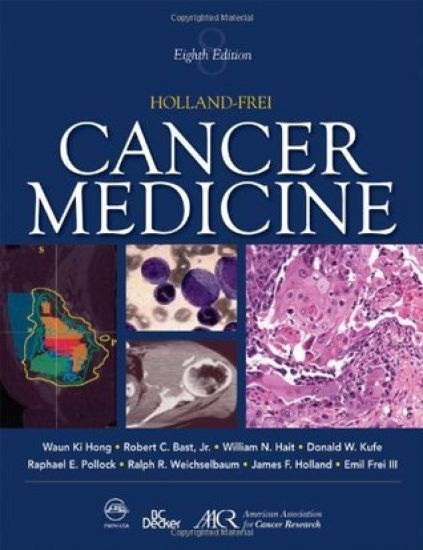
Holland-Frei Cancer Medicine 8

Holland-Frei Cancer Medicine 8

Waun Ki Hong; Robert Bast Jr; William Hait; Donald Kufe; Raphael Pollock; Ralph Weichselbaum; James Holland; Emil Frei

PMPH-USA Limited
2010
sidottu
The consummate reference source for medical oncologists, radiation oncologists, internists, surgical oncologists and others who treat cancer patients, Cancer Medicine 8 covers the ever-widening sphere of current cancer knowledge and clinical practice. In this new 8th edition an outstanding editorial team from world-renowned medical centers continues to hone the leading edge forged in previous editions, with timely information on biology, immunology, etiology, epidemiology, prevention, screening, pathology, imaging and therapy. The book is a testament to the editorial panel’s creed that innovative, comprehensive, multidisciplinary treatment of cancer patients must be grounded in a fundamental understanding of cancer biology. Cancer Medicine 8 does a superb job of bringing scientific principles into clinical practice. This text is the ultimate resource of new information providing the basis for better informed cancer therapy choices.Cancer Medicine 8 features hundreds of 4-color illustrations, photographs, tables, graphs and algorithms that make this text an invaluable clinical tool in recognizing characteristic appearances of both patient and tissue.The 137 tightly focused chapters are organized into 5 sections:I: Cardinal Manifestations of CancerII: Scientific Foundations of CancerIII: Principles of Cancer DiagnosisIV: Principles of Therapeutic ModalitiesV: Principles of Multidisciplinary ManagementMajor Revisions:Chapter 6: Oncogenes An entire section is devoted to oncogenes like kit, Ret, Braf, Akt genes and the new drugs that specifically target them. This chapter not only provides a list of these new therapies but also insight as to how they target the oncogenes and their mutations, as well as therapy response and efficacy.Chapter 11: Tumor Angiogenesis This chapter provides a wealth of new data and understanding of the mechanisms of angiogenesis and how it contributes to the malignancy of various cancers The Clinical Advancement section provides an extensive summary of new trials investigating numerous novel angiogenesis agents Chapter 33: Chemoprevention This chapter also provides a considerable amount of new information for a broad range of clinical trials such as the HPV vaccine trial Future, Select, Star, Approve and PreSAP. The rationales for these trials are discussed and resulting data from the completed trials are presented. Chapter 55: Cytokines Research on cytokines is another area that is exploding in magnitude. This chapter presents a wealth of new information on promising new therapeutic agents.There is also updated information on the therapeutic usage of currently available agents such as hemotopoietic growth factors (HGF), erythropoietin and thromobopoietic agents. Chapter 56: Monoclonal Serotherapy A considerable amount of research has been done in the past few years on therapeutic and targeted agents in cancer therapy. Updated information and data is provided from recent trials for therapies previously discussed in Cancer Medicine edition 7 covering therapeutic agents and targeted toxins.Chapter 77: Neoplasms of the Head and Neck There is a discussion of changes in treatment methods for certain cancers such as the recent shift from surgery to combined chemotherapy with radiotherapy for tonsillar cancer, nasal and paranasal sinuses cancers and laryngeal cancer. Chapter 78: Lung Cancer Advances in diagnostic techniques are described such as ultrasound-guided fine needle aspiration or electromagnetic navigation diagnostic bronchoscopy. Video assisted thoracoscopic surgery (VATS) discussion is updated. New sections are devoted to prognostic and predictive biomarkers.
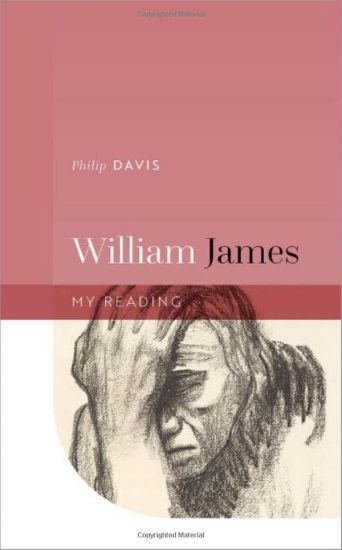
William James

William James

Philip Davis

Oxford University Press
2022
sidottu
Discusses the life and work of William James, a founder of the study of psychology. William James (1842-1910) was elder brother to the novelist Henry James and a founder of the study of psychology. But he was also a thinker who sought to work across conventional boundaries, and did not believe in separate disciplines or over-professionalized ways of thinking. James was above all interested in those moments when thoughts suddenly come into being, 'hot' and 'alive'. William James is for anyone who has experienced the personal need for such thinking and feels the excitement of ideas. It concerns the personal experience of reading James, involving extensive quotation from his work in relation to Philip Davis' own inner life and the lives of other readers of James--a thinker who is defiantly convinced of the fundamental validity of the inner life in the making of the Real. This book is about William James's life-writing, writing for the sake of existence, that puts together a mix of literature, psychology, philosophy, and biography in the search for purpose and human flourishing, in place of formal religion. It includes James' interest in his brother's novels and in Shakespearean drama, as well as Thomas Hardy's pessimistic challenge to James. Davis is a reader of literature who feels that readers of novels and poems also need the help of psychology and philosophy, to get the thinking out, to make it into a working part of a life. His book is for readers, especially readers of literature, seeking to create, like William James, a literary way of thinking outside the realm of literature.
William James

William James

Philip Davis

Oxford University Press
2026
nidottu
Discusses the life and work of William James, a founder of the study of psychology. William James (1842-1910) was elder brother to the novelist Henry James and a founder of the study of psychology. But he was also a thinker who sought to work across conventional boundaries, and did not believe in separate disciplines or over-professionalized ways of thinking. James was above all interested in those moments when thoughts suddenly come into being, 'hot' and 'alive'. William James is for anyone who has experienced the personal need for such thinking and feels the excitement of ideas. It concerns the personal experience of reading James, involving extensive quotation from his work in relation to Philip Davis's own inner life and the lives of other readers of James- a thinker who is defiantly convinced of the fundamental validity of the inner life in the making of the Real. This book is about William James's life-writing, writing for the sake of existence, that puts together a mix of literature, psychology, philosophy, and biography in the search for purpose and human flourishing, in place of formal religion. It includes James's interest in his brother's novels and in Shakespearean drama, as well as Thomas Hardy's pessimistic challenge to James. Professor Davis is a reader of literature who feels that readers of novels and poems also need the help of psychology and philosophy, to get the thinking out, to make it into a working part of a life. His book is for readers, especially readers of literature, seeking to create, like William James, a literary way of thinking outside the realm of literature.
William James

William James

Gerald E. Myers

Yale University Press
2001
pokkari
This magisterial book is the first comprehensive interpretive and critical study of one of America’s foremost philosophers and psychologists. Gerald Myers traces James’s life and career and then uses this fresh biographical information to illuminate his writings and ideas.
William James: Essays and Lectures

William James: Essays and Lectures

William James

Routledge Member of the Taylor and Francis Group
2006
nidottu
Part of the “Longman Library of Primary Sources in Philosophy,” this edition of the William James' Selected Essays is framed by a pedagogical structure designed to make this important work of philosophy more accessible and meaningful for undergraduates.
William James

William James

Henry Jackman

Routledge
2026
nidottu
William James (1842-1910) is widely regarded as one of the most important philosophers of the nineteenth and twentieth centuries, and a major figure in the history of psychology. Renowned for his philosophical theories of pragmatism and "the will to believe", his work encompassed a rich array of subjects from consciousness and free will to religion, evolution, ethics and the meaning of life. In this clear and engaging book Henry Jackman introduces and explains William James’s philosophy. Beginning with an overview of James’s life and work, he explores the following key topics: James’s life and workspsychology and its importance for James’s philosophyrationality, belief and faithpragmatism and meaningpragmatism and truthethics and religionJames’s reception and philosophical legacy.Including chapter summaries, annotated further reading and a glossary, this book is ideal for those coming to James for the first time as well as those already acquainted with his thought. It will be of interest to anyone studying James, American philosophy, twentieth-century philosophy, and also to those in related subjects such as religion and the history of psychology.
Brazil through the Eyes of William James

Brazil through the Eyes of William James

William James

Harvard University, The David Rockefeller Center for Latin American Studies
2006
sidottu
In 1865, twenty-three-year-old William James began his studies at the Harvard Medical School. When he learned that one of his most esteemed professors, Louis Agassiz, then director of the recently established Museum of Comparative Zoology, was preparing a research expedition to Brazil, James offered his services as a voluntary collector. Over the course of a year, James kept a diary, wrote letters to his family, and sketched the plants, animals, and people he observed. During this journey, James spent time primarily in Rio de Janeiro, Belem, and Manaus, and along the rivers and tributaries of the Amazon Basin.This volume is a critical, bilingual (English–Portuguese) edition of William James’s diaries and letters and also includes reproductions of his drawings. This original material belongs to the Houghton Archives at Harvard University and is of great interest to both William James scholars and Brazilian studies experts.
The Heart of William James

The Heart of William James

William James

Harvard University Press
2012
nidottu
On the one hundredth anniversary of the death of William James, Robert Richardson, author of the magisterial William James: In the Maelstrom of American Modernism, assembles a wide-ranging selection of essays and writings that reveal the evolution of James’s thought over time, especially as it was continually being shaped by the converging influences of psychology, philosophy, and religion throughout his life.Proceeding chronologically, the volume begins with “What Is an Emotion,” James’s early, notable, and still controversial argument that many of our emotions follow from (rather than cause) physical or physiological reactions. The book concludes with “The Moral Equivalent of War,” one of the greatest anti-war pieces ever written, perhaps even more relevant now than when it was first published. In between, in essays on “The Dilemma of Determinism,” “The Hidden Self,” “Habit,” and “The Will”; in chapters from The Principles of Psychology and The Varieties of Religious Experience; and in such pieces as “On a Certain Blindness in Human Beings,” “What Makes a Life Significant,” and “Philosophical Conceptions and Practical Results,” we witness the evolution of James’s philosophical thinking, his pragmatism, and his radical empiricism. Throughout, Richardson’s deeply informed introductions place James’s work in its proper biographical, historical, and philosophical context.In essay after essay, James calls us to live a fuller, richer, better life, to seek out and use our best energies and sympathies. As every day is the day of creation and judgment, so every age was once the new age—and as this book makes abundantly clear, William James’s writings are still the gateway to many a new world.
William James

William James

Kennan Ferguson

Rowman Littlefield Publishers
2007
sidottu
William James is known today strictly as a philosopher of pragmatism. Williams James: Politics in the Pluriverse challenges this understanding. Kennan Ferguson argues that James should instead be known as the progenitor of pluralism, one of the most influential and durable American political philosophies of the twentieth century. James contended that engagement with the foreign, the difficult, and the uncomfortable makes us who we are. Rather than mitigating differences or attempting to resolve conflicts, he embraced them, wholeheartedly advocating the opportunity to be transformed. Pluralism, in the mind of the thinker who popularized the term, led to a more complex, more contentious, and far more interesting world. Ferguson traces the historical importance and contemporary possibilities of pluralism's original political insight. In this important work he examines the trajectory of pluralism in the United States and England, the mutual influences of turn-of-the-century American and European philosophical traditions, and the relationship between pluralism and James's active anti-imperialism. James's unexpected political concepts and commitments both illuminate political philosophy of the 20th century and challenge contemporary assumptions about the desirability of unanimity. Pluralism, not unity, should be the goal of both politics and philosophy.