
Kirjahaku
Etsi kirjoja tekijän nimen, kirjan nimen tai ISBN:n perusteella.
1000 tulosta hakusanalla William Kennedy Moore


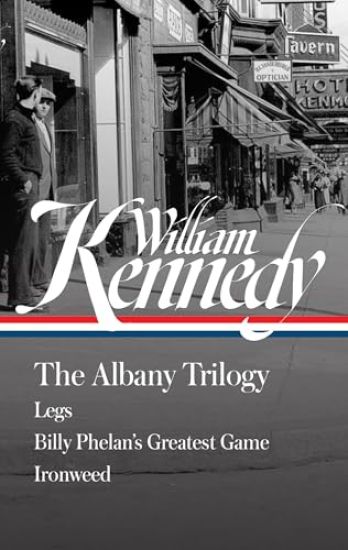
William Kennedy: The Albany Trilogy (Loa #397): Legs / Billy Phelan's Greatest Game / Ironweed
William Kennedy
Library of America
2026
sidottu
A landmark of American historical fiction for the first time in a deluxe collector's edition Prohibition-Era Albany comes to life in a trilogy of novels of crime and corruption, hope and redemption Unfolding in Albany during Prohibition and the Depression, here are three intertwined tales of thwarted yearning, doomed ambition, and hard-won resilience that are now "among the most exuberant literary feats of the past half-century," as Colum McCann writes in this volume's Introduction. Legs (1975) brilliantly envisions the exploits of infamous gangster Jack "Legs" Diamond in the early 1930s. Mining the "truths and secret lies" of Legs's story, the novel delves deeply into our collective fascination with the underworld, casting Legs's criminal career as an alternative version of the American Dream--"the dream," Kennedy writes, "that you can grow up and shoot your way to fame and fortune." Billy Phelan's Greatest Game (1978) strips criminality of all illicit glamour, as its hero, a gambler and pool hustler at the end of his luck, runs afoul of the corrupt Irish American machine that calls the shots in Depression-era Albany. Ironweed (1983) catapulted Kennedy into overnight literary stardom, earning him a Pulitzer Prize, and a National Book Critics Circle Award. Francis Phelan, Billy's father and once a promising ballplayer, is now a homeless alcoholic, a haunted wraith of a man who returns to Albany looking to make peace with his life's misfortunes. The Albany Trilogy also includes, in an appendix, an essay about Legs Diamonds and the speculation about who might have killed him, along with useful explanatory notes and a newly researched Chronology of Kennedy's life and career.
William Kennedy of Chester County, Pennsylvania, and His Descendants: A Compiled Genealogy (Including Davis, Smith, Wallace, Russell, and McClure)
Kathryn Chambers Torpey
Createspace Independent Publishing Platform
2014
nidottu
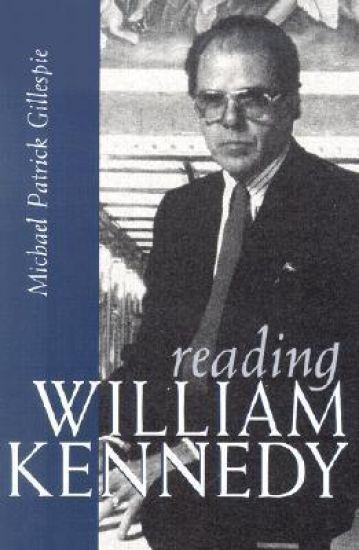
This text provides an introduction to students and others interested in William Kennedy's work. It provides an analysis of Kennedy's best-known works, a firm base for interpretation, and a better understanding of the cultural world that shapes the characters and plots. Rather than laying down what one should see when reading Kennedy's works, the text moves to the next stage of exploring diverse responses to Kennedy's canon, broadening the reader's awareness of the range of alternative strategies and perspective. It begins with an introduction that lays out the imaginative context for Kennedy's work. Subsequent chapters, in three parts, provide extended treatments of his early work, key elements in the first three Albany novels, and finally the maturity of his overall fiction.
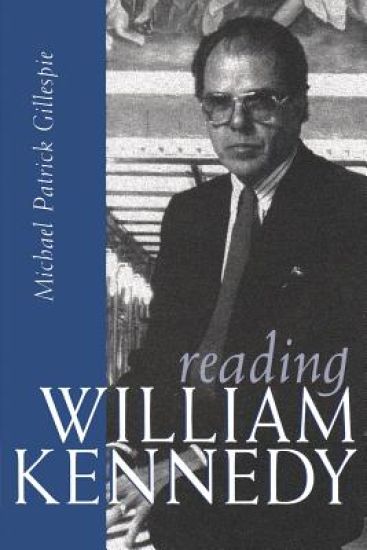
This text provides an introduction to students and others interested in William Kennedy's work. It provides an analysis of Kennedy's best-known works, a firm base for interpretation, and a better understanding of the cultural world that shapes the characters and plots. Rather than laying down what one should see when reading Kennedy's works, the text moves to the next stage of exploring diverse responses to Kennedy's canon, broadening the reader's awareness of the range of alternative strategies and perspective. It begins with an introduction that lays out the imaginative context for Kennedy's work. Subsequent chapters, in three parts, provide extended treatments of his early work, key elements in the first three Albany novels, and finally the maturity of his overall fiction.

Conversations with William Kennedy
University Press of Mississippi
2013
nidottu
To read these interviews given between 1969 and 1996 is to gain insights into William Kennedy's high seriousness in pursuing the craft of fiction and to witness the artistic growth of this remarkable writer. The twenty-four interviews in this collection reveal how the opportunities and challenges in Kennedy's writing life parallel those other contemporary writers have faced in the last years of the century.""The high drama of imagined worlds,"" he says, ""becomes a Rosetta Stone, the key that unlocks the very real mysteries and complexities of our daily lives.""""You're inventing out of a confluence of known facts and random ideas,"" he says about the process of writing, ""juxtaposing reality and abstractions, and then wham! You've got something brand new in your head, and on the page. You're functioning on a plane of existence you didn't know was possible. That's creation, and it's profound pleasure. It's what you live for.""Readers of these interviews will be privy to another process as well, the arduous but exciting process by which Kennedy has emerged as a major voice in contemporary letters. His meteoric rise to fame in 1983 and his continuing popularity since are the stuff of drama and folklore. In that year his novel Ironweed, rejected earlier by thirteen publishers, was finally published by Viking. It earned him a MacArthur Award, the New York Book Critics Circle Award, and a Pulitzer Prize. Governor Mario Cuomo honored him with the New York State Governor's Arts Award and declared that in Kennedy ""Albany [had] found its Homer."" Hollywood came calling and secured screen rights to Ironweed, Legs, and Billy Phelan's Greatest Game. With Francis Ford Coppola, Kennedy co-wrote the screenplay of The Cotton Club.The career that lifted off with such dramatic momentum has shown no signs of flagging. With steady regularity, Kennedy continues to add to his Albany Cycle of novels, as he experiments boldly with the craft of fiction.
History of the Descendants of William Kennedy and His Wife Mary or Marian Henderson
Elias Davidson Kennedy
Hansebooks
2017
pokkari
History of the Descendants of William Kennedy and His Wife Mary or Marian Henderson - From 1730 to 1880, carried down by numbers. To which is added the meaning of the name Kennedy, with some facts connected with their history in Scotland and Ireland is an unchanged, high-quality reprint of the original edition of 1881. Hansebooks is editor of the literature on different topic areas such as research and science, travel and expeditions, cooking and nutrition, medicine, and other genres. As a publisher we focus on the preservation of historical literature. Many works of historical writers and scientists are available today as antiques only. Hansebooks newly publishes these books and contributes to the preservation of literature which has become rare and historical knowledge for the future.

History of the Descendants of William Kennedy and His Wife Mary or Marian Henderson, from 1730 to 1880
Elias Davidson Kennedy
Outlook Verlag
2024
nidottu

History of the Descendants of William Kennedy and His Wife Mary or Marian Henderson, from 1730 to 1880
Elias Davidson Kennedy
Antigonos Verlag
2025
nidottu


Annals Of Aberdeen: From The Reign Of King William The Lion, To The End Of The Year 1818 (1818)
William Kennedy
KESSINGER PUBLISHING, LLC
2008
nidottu

The second novel in William Kennedy’s much-loved Albany cycle depicts Billy Phelan, a slightly tarnished poker player, pool hustler, and small-time bookie. A resourceful man full of Irish pluck, Billy works the fringes of the Albany sporting life with his own particular style and private code of honor, until he finds himself in the dangerous position of potential go-between in the kidnapping of a political boss’s son.
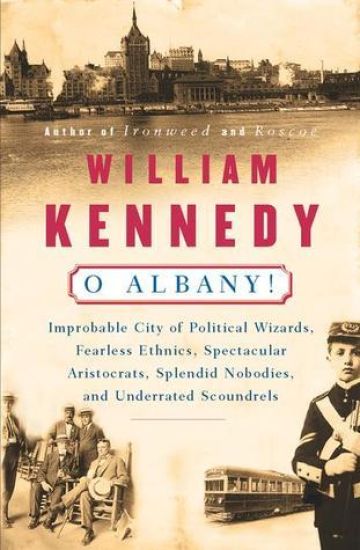
O Albany!: Improbable City of Political Wizards, Fearless Ethnics, Spectacular, Aristocrats, Splendid Nobodies, and Underrated Scoundrels
William Kennedy
PENGUIN BOOKS
1985
nidottu
The Pulitzer Prize-winning author of Ironweed offers an eloquent history of his colorful hometown in this marvelous book that's part journalism and part memoir. William Kennedy's celebrated cycle of novels has put Albany on the literary map. In O Albany we visit the city's ethnic and social neighborhoods. We meet uncommon characters who tread on Kennedy's stage--Erastus Corning, America's longest-running mayor (forty-three years in office); the Prohibition celebrity Jack "Legs" Diamond; the black matriarch Olivia Rorie, who transformed Albany's slums; Nelson Rockefeller and the "greatest marble project in the history of the world"; the political boss Dan O'Connell, who took City Hall in 1921 and never let go, even after he died. Embellished with fifty-five vintage photographs and eleven maps drawn for this book, O Albany is a historical lover letter from Kennedy to his native city. "A nice blend of nostalgia and serious history...You come away from this book's fascinating view of the American experience, the human experience, feeling hopeful."--The New York Times Book Review
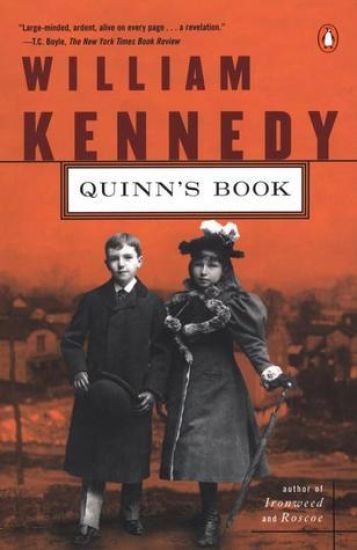
Filled with Dickensian characters, a vivid sense of history, and marvelously inventive humor, Quinn's Book is an engaging delight from the Pulitzer Prize-winning author of Ironweed "Kennedy writes with verve and nerve. His wit, always sharp, has rarely been sharper. He paints a full and lively canvas...Quinn's Book casts a lovely light, indeed."--Stephen King From the moment he rescues the beautiful, passionate Maud Fallon from the icy waters of the Hudson one wintry day in 1849, Daniel Quinn, a twelve-year-old orphan, is thrust into a bewildering, adventure-filled journey through the tumult of nineteenth-century America. As he quests after the beguiling and elusive Maud (she's fourteen), Daniel will witness the rise and fall of great dynasties in upstate New York, epochal prize fights, exotic life in the theater, visitations from spirits beyond the grave, horrific battles between Irish immigrants and the "Know-Nothings," the vicious New York draft riots, heroic passages through the Underground Railroad, and the bloody despair of the Civil War. William Kennedy's Albany Cycle of novels reflect what he once described as the fusion of his imagination with a single place. A native and longtime resident of Albany, New York, his work moves from the mid-nineteenth to the mid-twentieth century, chronicling family life, the city's netherworld, and its spheres of power--financial, ethnic, political--often among the Irish-Americans who dominated the city in this period. The novels in his cycle include, Legs, Billy Phelan's Greatest Game, Ironweed, Quinn's Book, Very Old Bones, The Flaming Corsage, and Roscoe.

Moving back and forth between the 1880s and 1912, this sixth novel in William Kennedy's acclaimed Albany cycle follows the lives of Edward Daugherty, a first generation Irish American who will break out beyond Albany as a playwright, and Katrina Taylor, a beautiful, seductive woman with complex attitudes towards life. Their marriage is a passionate one, but a cataclysmic hotel fire changes it into something else altogether. The Flaming Corsage evocatively portrays the seething, contradictory impulses of our humanity, lusts and furies that know no bounds of time or place.

"Kennedy's justly acclaimed Albany Cycle is] one of the imperishable products of American literature since the Second World War. These books can be read singly or in sequence, but read they must be. Kennedy is one of our necessary writers."--GQ Legs inaugurated William Kennedy's celebrated cycle of novels set in Albany, New York. True to both life and myth. Legs evokes the flamboyant career of the legendary gangster Jack "Legs" Diamond, who was finally murdered in Albany, and his showgirl mistress as they blaze a trail across the tabloid pages of the 1920s and 1930s. The second novel in the Albany cycle depicts Billy Phelan, a slightly tarnished poker player, pool hustler, and small-time bookie, as he moves through the lurid nighttime glare of a tough Depression-era town. Full of Irish pluck, he works the fringes of Albany sporting life with his own particular style--until he falls from underworld grace. In the Pulitzer Prize-winning novel, Ironweed, Francis Phelan, ex-ballplayer, part-time gravedigger, and full-time drunk, has hit bottom. Years ago he left Albany after killing a scab during a workers' strike, and again after he accidentally--and fatally--dropped his infant son. Now, in 1938, Francis is back, roaming familiar streets and trying to make peace with ghosts of the past and present. William Kennedy's Albany Cycle of novels reflect what he once described as the fusion of his imagination with a single place. A native and longtime resident of Albany, New York, his work moves from the mid-nineteenth to the mid-twentieth century, chronicling family life, the city's netherworld, and its spheres of power--financial, ethnic, political--often among the Irish-Americans who dominated the city in this period. The novels in his cycle include, Legs, Billy Phelan's Greatest Game, Ironweed, Quinn's Book, Very Old Bones, The Flaming Corsage, and Roscoe.

"Thick with crime, passion, and backroom banter" (The New Yorker), Roscoe is an odyssey of great scope and linguistic verve, a deadly, comic masterpiece from the Pulitzer Prize-winning author of Ironweed It's V-J Day, the war is over, and Roscoe Conway, after twenty-six years as the second in command of Albany's notorious political machine, decides to quit politics forever. But there's no way out, and only his Machiavellian imagination can help him cope with the erupting disasters. Every step leads back to the past--to the early loss of his true love, the takeover of city hall, the machine's fight with FDR and Al Smith to elect a governor, and the methodical assassination of gangster Jack "Legs" Diamond. William Kennedy's Albany Cycle of novels reflect what he once described as the fusion of his imagination with a single place. A native and longtime resident of Albany, New York, his work moves from the mid-nineteenth to the mid-twentieth century, chronicling family life, the city's netherworld, and its spheres of power--financial, ethnic, political--often among the Irish-Americans who dominated the city in this period. The novels in his cycle include, Legs, Billy Phelan's Greatest Game, Ironweed, Quinn's Book, Very Old Bones, The Flaming Corsage, and Roscoe.