Sonnets and other Poems - By the Rev. W. L. Bowles, A. M. Third Edition is an unchanged, high-quality reprint of the original edition of 1794. Hansebooks is editor of the literature on different topic areas such as research and science, travel and expeditions, cooking and nutrition, medicine, and other genres. As a publisher we focus on the preservation of historical literature. Many works of historical writers and scientists are available today as antiques only. Hansebooks newly publishes these books and contributes to the preservation of literature which has become rare and historical knowledge for the future.
The 18th century was a wealth of knowledge, exploration and rapidly growing technology and expanding record-keeping made possible by advances in the printing press. In its determination to preserve the century of revolution, Gale initiated a revolution of its own: digitization of epic proportions to preserve these invaluable works in the largest archive of its kind. Now for the first time these high-quality digital copies of original 18th century manuscripts are available in print, making them highly accessible to libraries, undergraduate students, and independent scholars.Western literary study flows out of eighteenth-century works by Alexander Pope, Daniel Defoe, Henry Fielding, Frances Burney, Denis Diderot, Johann Gottfried Herder, Johann Wolfgang von Goethe, and others. Experience the birth of the modern novel, or compare the development of language using dictionaries and grammar discourses. ++++The below data was compiled from various identification fields in the bibliographic record of this title. This data is provided as an additional tool in helping to insure edition identification: ++++British LibraryT119657Printer's name from half-title and colophon. A supplementary volume entitled 'Poems, by the Reverend Wm. Lisle Bowles. Vol.II' was published in 1801. Bath]: Printed by Cruttwell] for T. Cadell, Jun. and W. Davies, and J. Mawman, London; and R. Cruttwell, Bath, 1800. xi, 1],180p., plates; 8
The 18th century was a wealth of knowledge, exploration and rapidly growing technology and expanding record-keeping made possible by advances in the printing press. In its determination to preserve the century of revolution, Gale initiated a revolution of its own: digitization of epic proportions to preserve these invaluable works in the largest archive of its kind. Now for the first time these high-quality digital copies of original 18th century manuscripts are available in print, making them highly accessible to libraries, undergraduate students, and independent scholars.Western literary study flows out of eighteenth-century works by Alexander Pope, Daniel Defoe, Henry Fielding, Frances Burney, Denis Diderot, Johann Gottfried Herder, Johann Wolfgang von Goethe, and others. Experience the birth of the modern novel, or compare the development of language using dictionaries and grammar discourses. ++++The below data was compiled from various identification fields in the bibliographic record of this title. This data is provided as an additional tool in helping to insure edition identification: ++++British LibraryT049516With a half-title.Bath: printed and sold by R. Cruttwell; sold also by C. Dilly, London; and J. Rann, Oxford, 1789. 31, 1]p.; 4
Florence in the Renaissance is a comprehensive book written by William Greene that explores the cultural, artistic, and political developments that occurred in Florence during the Renaissance period. The book provides a detailed account of the city's transformation into a center of artistic and intellectual innovation, highlighting the contributions of notable figures such as Leonardo da Vinci, Michelangelo, and Galileo Galilei. The author also examines the social and economic factors that contributed to the city's growth and prosperity during this time, including the rise of the Medici family and the emergence of the banking industry. Through a series of engaging and informative chapters, readers are transported back in time to experience the sights, sounds, and ideas that shaped the Renaissance in Florence. Whether you are a history buff, an art lover, or simply curious about this fascinating period in human history, Florence in the Renaissance is a must-read book that offers a unique and insightful perspective on one of the most transformative eras in Western civilization.Additional Editor Is Bruce Mazlish.This scarce antiquarian book is a facsimile reprint of the old original and may contain some imperfections such as library marks and notations. Because we believe this work is culturally important, we have made it available as part of our commitment for protecting, preserving, and promoting the world's literature in affordable, high quality, modern editions, that are true to their original work.
William L. Dawson is recognized for his genre-defining choral spirituals and for his Negro Folk Symphony, a masterpiece enjoying a twenty-first-century renaissance. Gwynne Kuhner Brown’s engaging and tirelessly researched biography reintroduces a musical leader whose legacy is more important today than ever. Born in 1899, Dawson studied at the Tuskegee Institute in Alabama. He worked as a church, jazz, and orchestral musician in Kansas City and Chicago in the 1920s while continuing his education as a composer. He then joined the Tuskegee faculty, where for 25 years he led the Tuskegee Institute Choir to national prominence through performances of spirituals at the opening of Radio City Music Hall, on radio and television, and at the White House. The Philadelphia Orchestra conducted by Leopold Stokowski premiered Dawson’s Negro Folk Symphony in 1934. Engaging and long overdue, William L. Dawson celebrates a pioneering Black composer whose contributions to African American music, history, and education inspire performers and audiences to this day.
William L. Dawson is recognized for his genre-defining choral spirituals and for his Negro Folk Symphony, a masterpiece enjoying a twenty-first-century renaissance. Gwynne Kuhner Brown’s engaging and tirelessly researched biography reintroduces a musical leader whose legacy is more important today than ever. Born in 1899, Dawson studied at the Tuskegee Institute in Alabama. He worked as a church, jazz, and orchestral musician in Kansas City and Chicago in the 1920s while continuing his education as a composer. He then joined the Tuskegee faculty, where for 25 years he led the Tuskegee Institute Choir to national prominence through performances of spirituals at the opening of Radio City Music Hall, on radio and television, and at the White House. The Philadelphia Orchestra conducted by Leopold Stokowski premiered Dawson’s Negro Folk Symphony in 1934. Engaging and long overdue, William L. Dawson celebrates a pioneering Black composer whose contributions to African American music, history, and education inspire performers and audiences to this day.
William Rowe is one of the leading thinkers in contemporary philosophy of religion. Although he is best known for his contributions to the problem of evil, he has produced innovative and influential work across a wide array of subjects at the interface between philosophy and religion. He has, for example, written extensively on the existentialist theologian, Paul Tillich, on the challenging problem of divine freedom, and on the traditional arguments in support of the existence of God. His work in these areas is distinguished by its clarity, rigour, originality, and sensitivity towards the claims of his theistic opponents. Indeed, Rowe's work has played a pivotal role in the remarkable revival of analytic philosophy of religion since the 1970s. The present collection brings together for the first time Rowe's most significant contributions to the philosophy of religion. This diverse but representative selection of Rowe's writings will provide students, professional scholars as well as general readers with stimulating and accessible discussions on such topics as the philosophical theology of Paul Tillich, the problem of evil, divine freedom, arguments for the existence of God, religious experience, life after death, and religious pluralism.
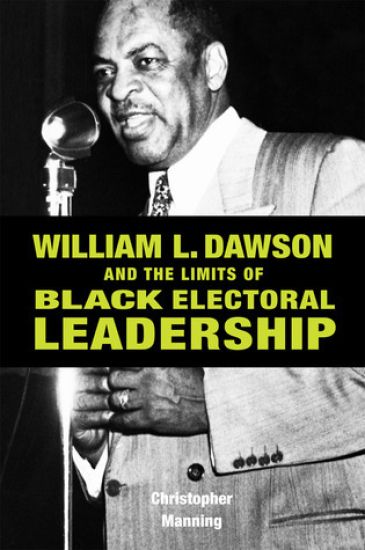
A native of Georgia, William L. Dawson experienced a political awakening during World War I when he witnessed the U.S. military's unfair treatment of black soldiers. After the war, he became involved in the Republican Party in Chicago and, in 1933, won election as Second Ward Alderman. When his campaign against discrimination in housing and employment failed and he recognized that Republicans were losing power, Dawson decided to switch parties and change tactics. In 1938, he joined forces with two former Army colleagues to create an independent black wing of the Democratic Party. The plan succeeded, and within four years, Dawson was elected as a representative of the First Congressional district. Over the next decade, he became one of the most powerful black politicians of the twentieth century. Dawson was the first African American to create and sustain a powerful black Democratic faction in Chicago, to chair a standing committee in Congress, to serve as vice-chairman of the Democratic Party, and to receive a Cabinet nomination. Despite these personal achievements, Dawson was not as successful in making gains for his constituents. This detailed analysis of Dawson's career—from his work with the local Republican Party in Chicago in the 1920s to his declining years as a Congressman in Washington, D.C., four decades later—assesses the viability of electoral politics as a tool for racial advancement. Manning broadens our understanding of the development of modern American politics by outlining the strengths and limitations of black electoral leadership in the postwar era. He argues that black electoral leadership, as embodied in Dawson's political strategies, provided considerable opportunities for advancing a racially progressive agenda at the national level of the Democratic Party but faced severe limitations within Congress and could do nothing to ease systemic inequality in Chicago. This political biography will appeal to scholars of African American history, to U.S. political historians, and to those interested in black politics.
This work has been selected by scholars as being culturally important and is part of the knowledge base of civilization as we know it.This work is in the public domain in the United States of America, and possibly other nations. Within the United States, you may freely copy and distribute this work, as no entity (individual or corporate) has a copyright on the body of the work.Scholars believe, and we concur, that this work is important enough to be preserved, reproduced, and made generally available to the public. To ensure a quality reading experience, this work has been proofread and republished using a format that seamlessly blends the original graphical elements with text in an easy-to-read typeface.We appreciate your support of the preservation process, and thank you for being an important part of keeping this knowledge alive and relevant.






![Letter to **** ****** [I.E. John Murray], on the REV. W. L. Bowles' Strictures on the Life and Writings of Pope.](/covers/9781241169152.jpg)