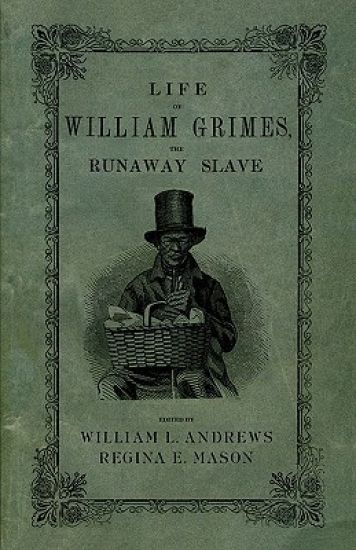
Life of William Grimes, the Runaway Slave is the first fugitive slave narrative in American history. When it appeared in New York in 1825, it was the longest African American autobiography published up to that time. Because Grimes wrote and published his narrative on his own, without deference to white editors, publishers, or sponsors, his Life has an immediacy, candor, and no-holds-barred realism unparalleled in antebellum slave narratives. The famous fugitives of the 1840s and 1850s, even Douglass, Brown, and Harriet Jacobs, all wrote in accordance with an antislavery script that circumscribed their freedom to speak out about what they had experienced as slaves in the South and as quasi-free men and women in the North. William Grimes, however, wrote before this formulaic script had been composed. Life appeared years before the advent of any organized national American antislavery movement, before David Walker's Appeal (1829), before the first African American newspaper, before William Lloyd Garrison had publicly acknowledged himself an abolitionist, before Frederick Douglass could read the word "abolitionist." Beholden to no one and unschooled in antislavery propaganda, Grimes's Life represents a truly unfiltered and personally authentic account of both southern slavery and the severely compromised "freedom" of the northern states in antebellum America. This edition of Life of William Grimes represents an historic partnership between a prominent scholar of the African American slave narrative and a genealogist who is also direct descendant of Grimes himself. Regina Mason, the great-great-great-granddaughter of William Grimes, combines her extensive historical research into her family and the text of her ancestor with William L. Andrews's scholarship on the origins and development of African American autobiography. The result is an authoritative, copiously annotated text that features pages from an original Grimes family Bible, transcriptions of the 1824 correspondence that set the terms for the author's self-purchase in Connecticut (nine years after his escape from Savannah, Georgia), and many other striking images that invoke the life and times of William Grimes.
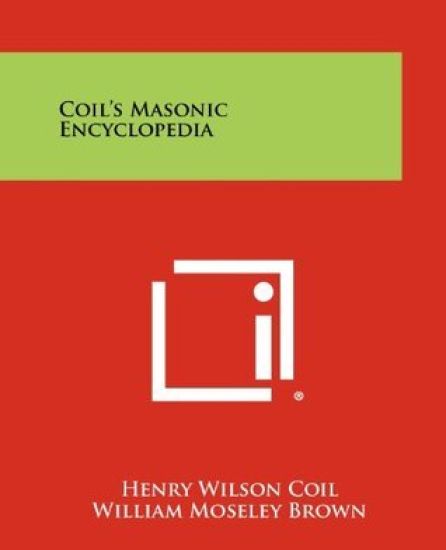
Coil's Masonic Encyclopedia is a comprehensive reference book that delves into the history, practices, and symbols of Freemasonry. Written by Henry Wilson Coil, a prominent Masonic scholar, the book covers a wide range of topics related to the Masonic fraternity, including its origins, rituals, and beliefs.The encyclopedia is organized alphabetically, making it easy to locate information on specific topics. It includes entries on famous Masons, Masonic lodges, Masonic symbols and emblems, and the various degrees and orders of Freemasonry. The book also explores the role of women in Freemasonry and the controversies surrounding the organization.In addition to its detailed entries, Coil's Masonic Encyclopedia includes numerous illustrations and photographs, as well as a glossary of Masonic terms and a bibliography of additional resources for those interested in further study.Overall, Coil's Masonic Encyclopedia is an essential resource for anyone interested in the history and practices of Freemasonry, from seasoned Masons to curious outsiders looking to learn more about this mysterious and fascinating organization.Additional Editor Is Harold Van Buren Voorhis.This scarce antiquarian book is a facsimile reprint of the old original and may contain some imperfections such as library marks and notations. Because we believe this work is culturally important, we have made it available as part of our commitment for protecting, preserving, and promoting the world's literature in affordable, high quality, modern editions, that are true to their original work.
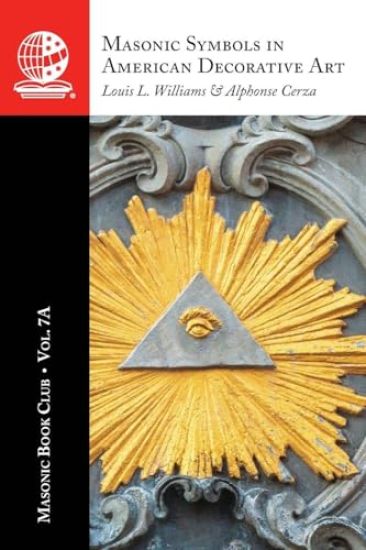
When the Ancient Accepted Scottish Rite of Freemasons of the Northern Masonic Jurisdiction of the United States of America dedicated its new Museum-Library in Lexington, Massachusetts on April 20,1975, two hundred years and one day after Paul Revere's ride, it gave an outstanding Bicentennial gift to the people of the United States. Nestling against a hillside on Massachusetts Avenue, approximately one mile east of the historic Minuteman Statue on Lexington Green, this six million dollar structure is dedicated to the patriotic ideals of the founders of our country. It was built for the express purpose of telling the story of the founding of our United States, of the lofty ideals of those patriots who conceived and brought our Country into being, and of her history down through the years that have followed. Many of those founders were Masons. Revere, Warren, Hancock, Washington, LaFayette- all carried out in their devotion to this country the high ideals that govern the Masonic Fraternity. To show how the emblems and symbols used by the Craft were in turn used to decorate the material possessions of the day is the purpose of the exhibit of which this catalog is evidence. It is the first major and inclusive showing of such use by any major Museum anywhere. Thus the Scottish Rite Masonic Museum of Our National Heritage seeks to serve the ideals which animated its builders. The Masonic Book Club is pleased to be a co-sponsor of the publication of this catalog with the Museum. This catalog is also a first in its field, and will itself become a collector's item as the years go by. So we are happy to place in the hands of our members this unusual Masonic item for your study and pleasure.
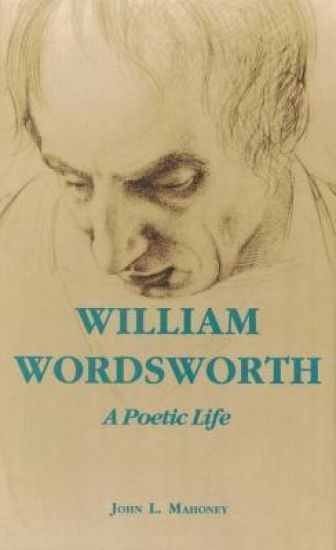
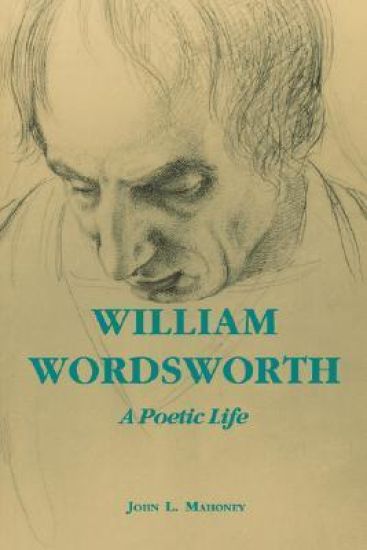
Wordsworth: A Poetic Life is a new biography of the great father of British Romanticism. It is new in several ways, most notably in the way it approaches the life of the poet. Paying its proper respect to the classic lives of Wordsworth by Mary Moorman and Stephen Gill, it attempts to tell the story of the life through a more rigorous reading of key and representative works of the poet, through careful blending of life and poetry. Wordsworth offers the story of the literariness of the poet's life - childhood and adolescence in the Lake District, education at Cambridge, love and political radicalism in France, the long period of residence in Grasmere and Rydal, celebrity, and national and international recognition. Its reading of the poems, in tune with current theoretical practice, offers a sense of the continuities in Wordsworth's career as it moves away from familiar theories of a Golden Decade of creativity and a period of long decline. The book also works closely and rigorously with Wordsworth's poetry as a method of dramatizing the essentially poetic character of the poet's life.
William L. Dawson is recognized for his genre-defining choral spirituals and for his Negro Folk Symphony, a masterpiece enjoying a twenty-first-century renaissance. Gwynne Kuhner Brown’s engaging and tirelessly researched biography reintroduces a musical leader whose legacy is more important today than ever. Born in 1899, Dawson studied at the Tuskegee Institute in Alabama. He worked as a church, jazz, and orchestral musician in Kansas City and Chicago in the 1920s while continuing his education as a composer. He then joined the Tuskegee faculty, where for 25 years he led the Tuskegee Institute Choir to national prominence through performances of spirituals at the opening of Radio City Music Hall, on radio and television, and at the White House. The Philadelphia Orchestra conducted by Leopold Stokowski premiered Dawson’s Negro Folk Symphony in 1934. Engaging and long overdue, William L. Dawson celebrates a pioneering Black composer whose contributions to African American music, history, and education inspire performers and audiences to this day.
William Rowe is one of the leading thinkers in contemporary philosophy of religion. Although he is best known for his contributions to the problem of evil, he has produced innovative and influential work across a wide array of subjects at the interface between philosophy and religion. He has, for example, written extensively on the existentialist theologian, Paul Tillich, on the challenging problem of divine freedom, and on the traditional arguments in support of the existence of God. His work in these areas is distinguished by its clarity, rigour, originality, and sensitivity towards the claims of his theistic opponents. Indeed, Rowe's work has played a pivotal role in the remarkable revival of analytic philosophy of religion since the 1970s. The present collection brings together for the first time Rowe's most significant contributions to the philosophy of religion. This diverse but representative selection of Rowe's writings will provide students, professional scholars as well as general readers with stimulating and accessible discussions on such topics as the philosophical theology of Paul Tillich, the problem of evil, divine freedom, arguments for the existence of God, religious experience, life after death, and religious pluralism.
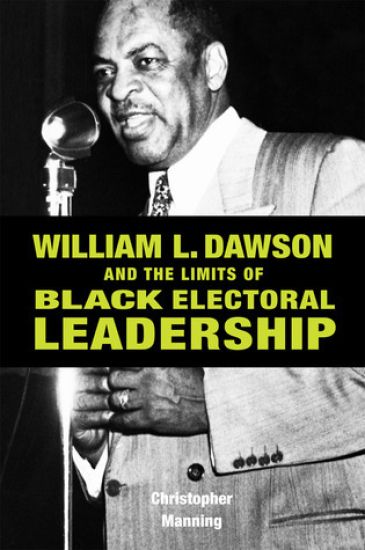
A native of Georgia, William L. Dawson experienced a political awakening during World War I when he witnessed the U.S. military's unfair treatment of black soldiers. After the war, he became involved in the Republican Party in Chicago and, in 1933, won election as Second Ward Alderman. When his campaign against discrimination in housing and employment failed and he recognized that Republicans were losing power, Dawson decided to switch parties and change tactics. In 1938, he joined forces with two former Army colleagues to create an independent black wing of the Democratic Party. The plan succeeded, and within four years, Dawson was elected as a representative of the First Congressional district. Over the next decade, he became one of the most powerful black politicians of the twentieth century. Dawson was the first African American to create and sustain a powerful black Democratic faction in Chicago, to chair a standing committee in Congress, to serve as vice-chairman of the Democratic Party, and to receive a Cabinet nomination. Despite these personal achievements, Dawson was not as successful in making gains for his constituents. This detailed analysis of Dawson's career—from his work with the local Republican Party in Chicago in the 1920s to his declining years as a Congressman in Washington, D.C., four decades later—assesses the viability of electoral politics as a tool for racial advancement. Manning broadens our understanding of the development of modern American politics by outlining the strengths and limitations of black electoral leadership in the postwar era. He argues that black electoral leadership, as embodied in Dawson's political strategies, provided considerable opportunities for advancing a racially progressive agenda at the national level of the Democratic Party but faced severe limitations within Congress and could do nothing to ease systemic inequality in Chicago. This political biography will appeal to scholars of African American history, to U.S. political historians, and to those interested in black politics.
This work has been selected by scholars as being culturally important and is part of the knowledge base of civilization as we know it.This work is in the public domain in the United States of America, and possibly other nations. Within the United States, you may freely copy and distribute this work, as no entity (individual or corporate) has a copyright on the body of the work.Scholars believe, and we concur, that this work is important enough to be preserved, reproduced, and made generally available to the public. To ensure a quality reading experience, this work has been proofread and republished using a format that seamlessly blends the original graphical elements with text in an easy-to-read typeface.We appreciate your support of the preservation process, and thank you for being an important part of keeping this knowledge alive and relevant.
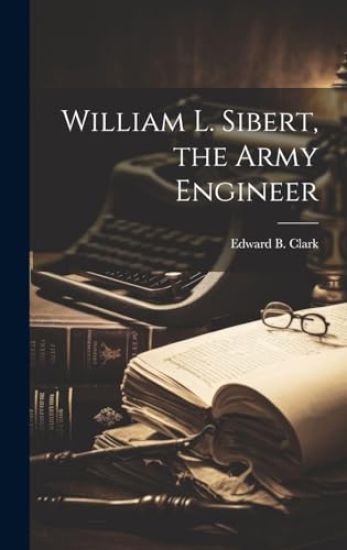
A biography of William L. Sibert, an American army engineer who served in both World War I and II. The book details Sibert's military career and his contributions to engineering and construction projects throughout the world.This work has been selected by scholars as being culturally important, and is part of the knowledge base of civilization as we know it.This work is in the "public domain in the United States of America, and possibly other nations. Within the United States, you may freely copy and distribute this work, as no entity (individual or corporate) has a copyright on the body of the work.Scholars believe, and we concur, that this work is important enough to be preserved, reproduced, and made generally available to the public. We appreciate your support of the preservation process, and thank you for being an important part of keeping this knowledge alive and relevant.