Kirjojen hintavertailu. Mukana 11 244 527 kirjaa ja 12 kauppaa.

Kirjahaku

Etsi kirjoja tekijän nimen, kirjan nimen tai ISBN:n perusteella.

1000 tulosta hakusanalla William L. Rowe; Nick Trakakis

William L. Rowe on Philosophy of Religion

William L. Rowe on Philosophy of Religion

William L. Rowe; Nick Trakakis

Ashgate Publishing Limited
2007
sidottu
William Rowe is one of the leading thinkers in contemporary philosophy of religion. Although he is best known for his contributions to the problem of evil, he has produced innovative and influential work across a wide array of subjects at the interface between philosophy and religion. He has, for example, written extensively on the existentialist theologian, Paul Tillich, on the challenging problem of divine freedom, and on the traditional arguments in support of the existence of God. His work in these areas is distinguished by its clarity, rigour, originality, and sensitivity towards the claims of his theistic opponents. Indeed, Rowe's work has played a pivotal role in the remarkable revival of analytic philosophy of religion since the 1970s. The present collection brings together for the first time Rowe's most significant contributions to the philosophy of religion. This diverse but representative selection of Rowe's writings will provide students, professional scholars as well as general readers with stimulating and accessible discussions on such topics as the philosophical theology of Paul Tillich, the problem of evil, divine freedom, arguments for the existence of God, religious experience, life after death, and religious pluralism.
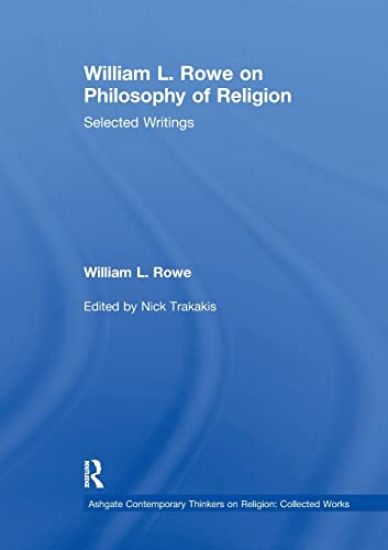
William L. Rowe on Philosophy of Religion

William L. Rowe on Philosophy of Religion

William L. Rowe; Nick Trakakis

TAYLOR FRANCIS LTD
2022
nidottu
William Rowe is one of the leading thinkers in contemporary philosophy of religion. Although he is best known for his contributions to the problem of evil, he has produced innovative and influential work across a wide array of subjects at the interface between philosophy and religion. He has, for example, written extensively on the existentialist theologian, Paul Tillich, on the challenging problem of divine freedom, and on the traditional arguments in support of the existence of God. His work in these areas is distinguished by its clarity, rigour, originality, and sensitivity towards the claims of his theistic opponents. Indeed, Rowe's work has played a pivotal role in the remarkable revival of analytic philosophy of religion since the 1970s. The present collection brings together for the first time Rowe's most significant contributions to the philosophy of religion. This diverse but representative selection of Rowe's writings will provide students, professional scholars as well as general readers with stimulating and accessible discussions on such topics as the philosophical theology of Paul Tillich, the problem of evil, divine freedom, arguments for the existence of God, religious experience, life after death, and religious pluralism.
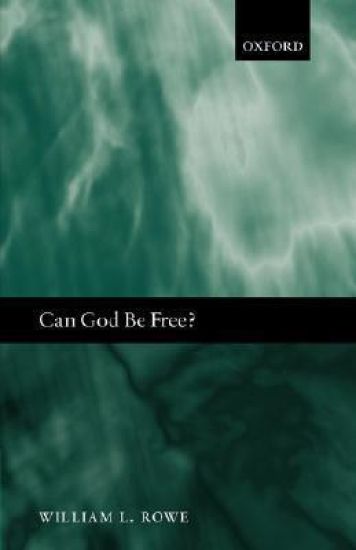
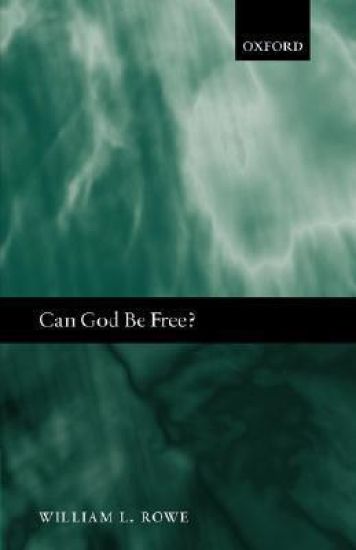
Can God Be Free?

Can God Be Free?

William L. Rowe

Clarendon Press
2004
sidottu
In the three major religions of the West, God is understood to be a being whose goodness, knowledge, and power is such that it is impossible for any being, including God himself, to have a greater degree of goodness, knowledge, and power. This book focuses on God's freedom and praiseworthiness in relation to his perfect goodness. Given his necessary perfections, if there is a best world for God to create he would have no choice other than to create it. For, as Leibniz tells us, 'to do less good than one could is to be lacking in wisdom or in goodness.' But if God could not do otherwise than create the best world, he created the world of necessity, not freely. And, if that is so, it may be argued that we have no reason to be thankful to God for creating us, since, as parts of the best possible world, God was simply unable to do anything other than create us - he created us of necessity, not freely. Moreover, we are confronted with the difficulty of having to believe that this world, with its Holocaust, and innumerable other evils, is the best that an infinitely powerful, infinitely good being could do in creating a world. Neither of these conclusions, taken by itself, seems at all plausible. Yet each conclusion appears to follow from the conception of God now dominant in the great religions of the West. William Rowe presents a detailed study of this important problem, both historically in the writings of Gottfried Leibniz, Samuel Clarke, Thomas Aquinas, and Jonathan Edwards, as well as in the contemporary philosophical literature devoted to the issue. Rowe argues that this problem is more serious than is commonly thought and may require some significant revision in contemporary thinking about the nature of God.
Can God Be Free?

Can God Be Free?

William L. Rowe

Clarendon Press
2006
nidottu
In the three major religions of the West, God is understood to be a being whose goodness, knowledge, and power are such that it is impossible for any being, including God himself, to have a greater degree of goodness, knowledge, and power. This book focuses on God's freedom and praiseworthiness in relation to his perfect goodness. Given his necessary perfections, if there is a best world for God to create he would have no choice other than to create it. For, as Leibniz tells us, 'to do less good than one could is to be lacking in wisdom or in goodness'. But if God could not do otherwise than create the best world, he created the world of necessity, not freely. And, if that is so, it may be argued that we have no reason to be thankful to God for creating us, since, as parts of the best possible world, God was simply unable to do anything other than create us---he created us of necessity, not freely. Moreover, we are confronted with the difficulty of having to believe that this world, with its Holocaust, and innumerable other evils, is the best that an infinitely powerful, infinitely good being could do in creating a world. Neither of these conclusions, taken by itself, seems at all plausible. Yet each conclusion appears to follow from the conception of God now dominant in the great religions of the West. William Rowe presents a detailed study of this important problem, both historically in the writings of Gottfried Leibniz, Samuel Clarke, Thomas Aquinas, and Jonathan Edwards, and in the contemporary philosophical literature devoted to the issue. Rowe argues that this problem is more serious than is commonly thought and may require some significant revision in contemporary thinking about the nature of God.
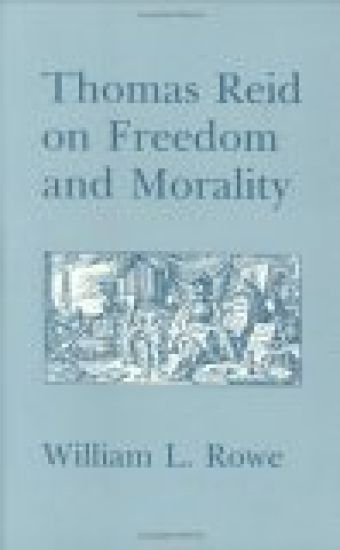
Thomas Reid on Freedom and Morality

Thomas Reid on Freedom and Morality

William L. Rowe

Cornell University Press
1991
sidottu
In this succinct and well-written book, one of our most eminent philosophers provides a fresh reading of the view of freedom and morality developed by Thomas Reid (1710-1796). Although contemporary theorists have written extensively about the Scottish philosopher's contributions to the theory of knowledge, this is the first book-length study of his contributions to the controversy over freedom and necessity. William L. Rowe argues that Reid developed a subtle, systematic theory of moral freedom based on the idea of the human being as a free and morally responsible agent. He carefully reconstructs the theory and explores the intellectual background to Reid's views in the work of John Locke, Samuel Clarke, and Anthony Collins. Rowe develops a novel account of Reid's conception of free action and relates it to contemporary arguments that moral responsibility for an action implies the power to have done otherwise. Distilling from Reid's work a viable version of the agency theory of freedom and responsibility, he suggests how Reid's theory can be defended against the major objections—both historical and contemporary—that have been advanced against it. Blending to good effect historical and philosophical analysis, Thomas Reid on Freedom and Morality should interest philosophers, political theorists, and intellectual historians.
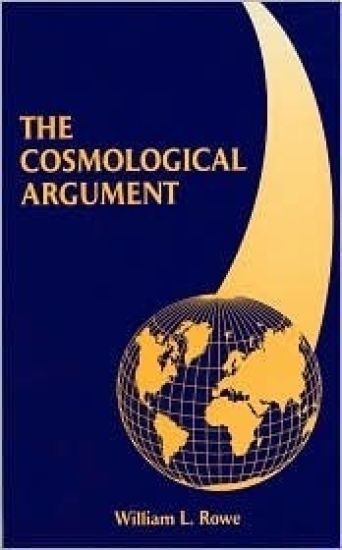
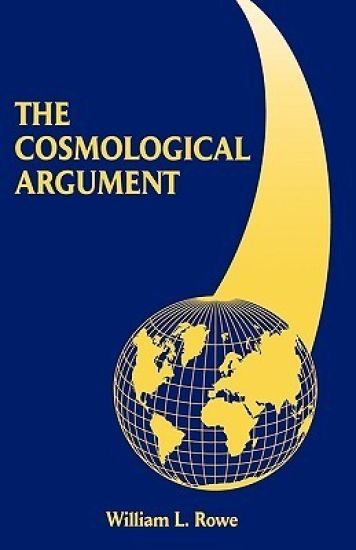
The Cosmological Argument

The Cosmological Argument

William L. Rowe

Fordham University Press
1998
sidottu
This book provides a comprehensive, critical study of the oldest and most famous argument for the existence of God: the Cosmological Argument. Professor Rowe examines and interprets historically significant versions of the argument from Aquinas to Samuel Clarke and explores the major objections that have been advances against it. Beginning with analyses of the Cosmological Argument as expressed by Aquinas and Duns Scotus in the thirteenth century, the author seeks to uncover, clairfy , and critically explore the philosophical concepts and theses essential to the reasoning exhibited in the principal versions of the Cosmological Argument. The major focus of the book is on the form that the argument takes in the eighteenth century, principally in the writings of Samuel Clarke. The author concludes with a discussion of the extent to which the Cosmological Argument may provide a justification for the belief in God. In a new Preface, the author offers some updates on his own thinking as well as that of others who have grappled with this topic.
The Cosmological Argument

The Cosmological Argument

William L. Rowe

Fordham University Press
1998
pokkari
This book provides a comprehensive, critical study of the oldest and most famous argument for the existence of God: the Cosmological Argument. Professor Rowe examines and interprets historically significant versions of the argument from Aquinas to Samuel Clarke and explores the major objections that have been advances against it. Beginning with analyses of the Cosmological Argument as expressed by Aquinas and Duns Scotus in the thirteenth century, the author seeks to uncover, clairfy , and critically explore the philosophical concepts and theses essential to the reasoning exhibited in the principal versions of the Cosmological Argument. The major focus of the book is on the form that the argument takes in the eighteenth century, principally in the writings of Samuel Clarke. The author concludes with a discussion of the extent to which the Cosmological Argument may provide a justification for the belief in God. In a new Preface, the author offers some updates on his own thinking as well as that of others who have grappled with this topic.
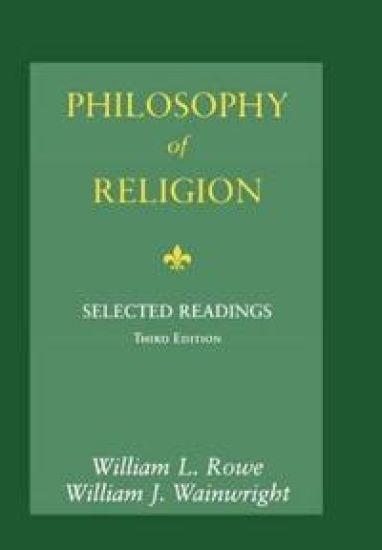
Philosophy of Religion

Philosophy of Religion

William L. Rowe; William J. Wainwright

Oxford University Press Inc
1998
nidottu
This third edition of Philosophy of Religion offers a wide variety of readings designed to introduce students to important issues in the philosophy of religion. The authors have coupled new readings--including essays by Robert M. Adams, Peter Van Inwagen, and William P. Alston--with readings from classical philosophers, thus offering instructors and students an even more comprehensive and well-focused textbook. Many of the essays are particularly accessible to beginning philosophy students. New essays cover religious pluralism, teleological and moral arguments for God's existence, and the problem of evil. Philosophy of Religion, 3/e is an excellent choice for use as a main text or as a supplement for introductory courses in philosophy and religion.
William L. Dawson

William L. Dawson

Gwynne Kuhner Brown

UNIVERSITY OF ILLINOIS PRESS
2024
sidottu
William L. Dawson is recognized for his genre-defining choral spirituals and for his Negro Folk Symphony, a masterpiece enjoying a twenty-first-century renaissance. Gwynne Kuhner Brown’s engaging and tirelessly researched biography reintroduces a musical leader whose legacy is more important today than ever. Born in 1899, Dawson studied at the Tuskegee Institute in Alabama. He worked as a church, jazz, and orchestral musician in Kansas City and Chicago in the 1920s while continuing his education as a composer. He then joined the Tuskegee faculty, where for 25 years he led the Tuskegee Institute Choir to national prominence through performances of spirituals at the opening of Radio City Music Hall, on radio and television, and at the White House. The Philadelphia Orchestra conducted by Leopold Stokowski premiered Dawson’s Negro Folk Symphony in 1934. Engaging and long overdue, William L. Dawson celebrates a pioneering Black composer whose contributions to African American music, history, and education inspire performers and audiences to this day.
William L. Dawson

William L. Dawson

Gwynne Kuhner Brown

UNIVERSITY OF ILLINOIS PRESS
2024
nidottu
William L. Dawson is recognized for his genre-defining choral spirituals and for his Negro Folk Symphony, a masterpiece enjoying a twenty-first-century renaissance. Gwynne Kuhner Brown’s engaging and tirelessly researched biography reintroduces a musical leader whose legacy is more important today than ever. Born in 1899, Dawson studied at the Tuskegee Institute in Alabama. He worked as a church, jazz, and orchestral musician in Kansas City and Chicago in the 1920s while continuing his education as a composer. He then joined the Tuskegee faculty, where for 25 years he led the Tuskegee Institute Choir to national prominence through performances of spirituals at the opening of Radio City Music Hall, on radio and television, and at the White House. The Philadelphia Orchestra conducted by Leopold Stokowski premiered Dawson’s Negro Folk Symphony in 1934. Engaging and long overdue, William L. Dawson celebrates a pioneering Black composer whose contributions to African American music, history, and education inspire performers and audiences to this day.
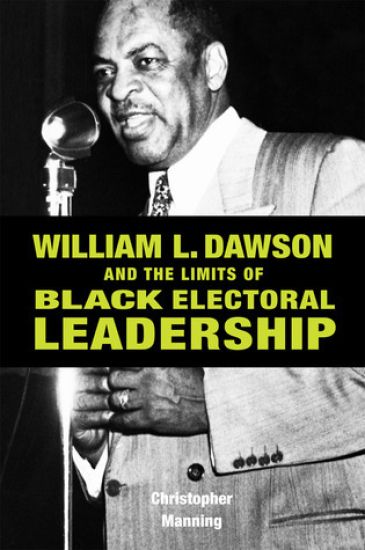
William L. Dawson and the Limits of Black Electoral Leadership

William L. Dawson and the Limits of Black Electoral Leadership

Christopher Manning

Northern Illinois University Press
2009
sidottu
A native of Georgia, William L. Dawson experienced a political awakening during World War I when he witnessed the U.S. military's unfair treatment of black soldiers. After the war, he became involved in the Republican Party in Chicago and, in 1933, won election as Second Ward Alderman. When his campaign against discrimination in housing and employment failed and he recognized that Republicans were losing power, Dawson decided to switch parties and change tactics. In 1938, he joined forces with two former Army colleagues to create an independent black wing of the Democratic Party. The plan succeeded, and within four years, Dawson was elected as a representative of the First Congressional district. Over the next decade, he became one of the most powerful black politicians of the twentieth century. Dawson was the first African American to create and sustain a powerful black Democratic faction in Chicago, to chair a standing committee in Congress, to serve as vice-chairman of the Democratic Party, and to receive a Cabinet nomination. Despite these personal achievements, Dawson was not as successful in making gains for his constituents. This detailed analysis of Dawson's career—from his work with the local Republican Party in Chicago in the 1920s to his declining years as a Congressman in Washington, D.C., four decades later—assesses the viability of electoral politics as a tool for racial advancement. Manning broadens our understanding of the development of modern American politics by outlining the strengths and limitations of black electoral leadership in the postwar era. He argues that black electoral leadership, as embodied in Dawson's political strategies, provided considerable opportunities for advancing a racially progressive agenda at the national level of the Democratic Party but faced severe limitations within Congress and could do nothing to ease systemic inequality in Chicago. This political biography will appeal to scholars of African American history, to U.S. political historians, and to those interested in black politics.
William L. Sibert, the Army Engineer

William L. Sibert, the Army Engineer

Edward B. (Edward Brayton) B. Clark

Hassell Street Press
2021
nidottu
This work has been selected by scholars as being culturally important and is part of the knowledge base of civilization as we know it.This work is in the public domain in the United States of America, and possibly other nations. Within the United States, you may freely copy and distribute this work, as no entity (individual or corporate) has a copyright on the body of the work.Scholars believe, and we concur, that this work is important enough to be preserved, reproduced, and made generally available to the public. To ensure a quality reading experience, this work has been proofread and republished using a format that seamlessly blends the original graphical elements with text in an easy-to-read typeface.We appreciate your support of the preservation process, and thank you for being an important part of keeping this knowledge alive and relevant.
William L. Sibert, the Army Engineer

William L. Sibert, the Army Engineer

Edward B. (Edward Brayton) B. Clark

Hassell Street Press
2023
sidottu
A biography of William L. Sibert, an American army engineer who served in both World War I and II. The book details Sibert's military career and his contributions to engineering and construction projects throughout the world.This work has been selected by scholars as being culturally important, and is part of the knowledge base of civilization as we know it.This work is in the "public domain in the United States of America, and possibly other nations. Within the United States, you may freely copy and distribute this work, as no entity (individual or corporate) has a copyright on the body of the work.Scholars believe, and we concur, that this work is important enough to be preserved, reproduced, and made generally available to the public. We appreciate your support of the preservation process, and thank you for being an important part of keeping this knowledge alive and relevant.
William L. McKnight, Industrialist: A Biographical Sketch of the Chairman of the Board, Minnesota Mining and Manufacturing Company
The book ""William L. McKnight, Industrialist: A Biographical Sketch Of The Chairman Of The Board, Minnesota Mining And Manufacturing Company"" by Mildred Houghton Comfort is a comprehensive account of the life and career of William L. McKnight, a prominent industrialist and the chairman of the board of the Minnesota Mining and Manufacturing Company (3M). The book provides a detailed and engaging narrative of McKnight's early life, education, and professional journey, highlighting his exceptional leadership skills, innovative ideas, and entrepreneurial spirit.The author delves into McKnight's personal and professional relationships, his management style, and his contributions to the growth and success of 3M. The book also explores the challenges and obstacles that McKnight faced during his career, including economic downturns, labor disputes, and technological disruptions.Through meticulous research and insightful analysis, Comfort paints a vivid portrait of McKnight as a visionary leader who transformed 3M into a global powerhouse through his commitment to innovation, collaboration, and employee empowerment. The book is a must-read for anyone interested in the history of American business, leadership, and entrepreneurship.Men Of Achievement Series.This scarce antiquarian book is a facsimile reprint of the old original and may contain some imperfections such as library marks and notations. Because we believe this work is culturally important, we have made it available as part of our commitment for protecting, preserving, and promoting the world's literature in affordable, high quality, modern editions, that are true to their original work.