

Kirjahaku
Etsi kirjoja tekijän nimen, kirjan nimen tai ISBN:n perusteella.
1000 tulosta hakusanalla William L. Weaver

This book has been considered by academicians and scholars of great significance and value to literature. This forms a part of the knowledge base for future generations. So that the book is never forgotten we have represented this book in a print format as the same form as it was originally first published. Hence any marks or annotations seen are left intentionally to preserve its true nature.

Fertilizer Experiments With Greenhouse Tomatoes
John William 1876- Lloyd; B. L. (Brayton Ladd) 1888- Weaver
Hassell Street Press
2021
sidottu
This work has been selected by scholars as being culturally important and is part of the knowledge base of civilization as we know it.This work is in the public domain in the United States of America, and possibly other nations. Within the United States, you may freely copy and distribute this work, as no entity (individual or corporate) has a copyright on the body of the work.Scholars believe, and we concur, that this work is important enough to be preserved, reproduced, and made generally available to the public. To ensure a quality reading experience, this work has been proofread and republished using a format that seamlessly blends the original graphical elements with text in an easy-to-read typeface.We appreciate your support of the preservation process, and thank you for being an important part of keeping this knowledge alive and relevant.
Fertilizer Experiments With Greenhouse Tomatoes
John William 1876- Lloyd; B. L. (Brayton Ladd) 1888- Weaver
Hassell Street Press
2021
nidottu
This work has been selected by scholars as being culturally important and is part of the knowledge base of civilization as we know it.This work is in the public domain in the United States of America, and possibly other nations. Within the United States, you may freely copy and distribute this work, as no entity (individual or corporate) has a copyright on the body of the work.Scholars believe, and we concur, that this work is important enough to be preserved, reproduced, and made generally available to the public. To ensure a quality reading experience, this work has been proofread and republished using a format that seamlessly blends the original graphical elements with text in an easy-to-read typeface.We appreciate your support of the preservation process, and thank you for being an important part of keeping this knowledge alive and relevant.

Administrative Procedure and Practice
William F. Funk; Sidney A. Shapiro; Russell L. Weaver
West Academic
2014
sidottu

William L. Dawson is recognized for his genre-defining choral spirituals and for his Negro Folk Symphony, a masterpiece enjoying a twenty-first-century renaissance. Gwynne Kuhner Brown’s engaging and tirelessly researched biography reintroduces a musical leader whose legacy is more important today than ever. Born in 1899, Dawson studied at the Tuskegee Institute in Alabama. He worked as a church, jazz, and orchestral musician in Kansas City and Chicago in the 1920s while continuing his education as a composer. He then joined the Tuskegee faculty, where for 25 years he led the Tuskegee Institute Choir to national prominence through performances of spirituals at the opening of Radio City Music Hall, on radio and television, and at the White House. The Philadelphia Orchestra conducted by Leopold Stokowski premiered Dawson’s Negro Folk Symphony in 1934. Engaging and long overdue, William L. Dawson celebrates a pioneering Black composer whose contributions to African American music, history, and education inspire performers and audiences to this day.

William L. Dawson is recognized for his genre-defining choral spirituals and for his Negro Folk Symphony, a masterpiece enjoying a twenty-first-century renaissance. Gwynne Kuhner Brown’s engaging and tirelessly researched biography reintroduces a musical leader whose legacy is more important today than ever. Born in 1899, Dawson studied at the Tuskegee Institute in Alabama. He worked as a church, jazz, and orchestral musician in Kansas City and Chicago in the 1920s while continuing his education as a composer. He then joined the Tuskegee faculty, where for 25 years he led the Tuskegee Institute Choir to national prominence through performances of spirituals at the opening of Radio City Music Hall, on radio and television, and at the White House. The Philadelphia Orchestra conducted by Leopold Stokowski premiered Dawson’s Negro Folk Symphony in 1934. Engaging and long overdue, William L. Dawson celebrates a pioneering Black composer whose contributions to African American music, history, and education inspire performers and audiences to this day.

William L. Rowe on Philosophy of Religion
William L. Rowe; Nick Trakakis
Ashgate Publishing Limited
2007
sidottu
William Rowe is one of the leading thinkers in contemporary philosophy of religion. Although he is best known for his contributions to the problem of evil, he has produced innovative and influential work across a wide array of subjects at the interface between philosophy and religion. He has, for example, written extensively on the existentialist theologian, Paul Tillich, on the challenging problem of divine freedom, and on the traditional arguments in support of the existence of God. His work in these areas is distinguished by its clarity, rigour, originality, and sensitivity towards the claims of his theistic opponents. Indeed, Rowe's work has played a pivotal role in the remarkable revival of analytic philosophy of religion since the 1970s. The present collection brings together for the first time Rowe's most significant contributions to the philosophy of religion. This diverse but representative selection of Rowe's writings will provide students, professional scholars as well as general readers with stimulating and accessible discussions on such topics as the philosophical theology of Paul Tillich, the problem of evil, divine freedom, arguments for the existence of God, religious experience, life after death, and religious pluralism.
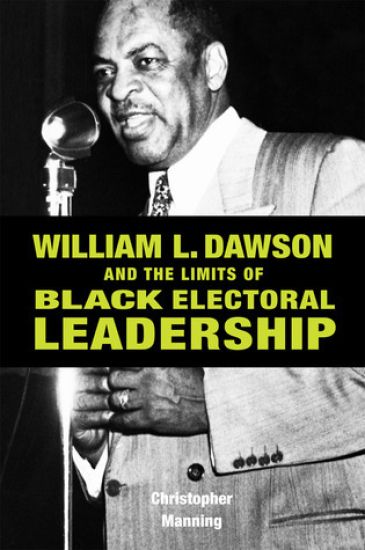
William L. Dawson and the Limits of Black Electoral Leadership
Christopher Manning
Northern Illinois University Press
2009
sidottu
A native of Georgia, William L. Dawson experienced a political awakening during World War I when he witnessed the U.S. military's unfair treatment of black soldiers. After the war, he became involved in the Republican Party in Chicago and, in 1933, won election as Second Ward Alderman. When his campaign against discrimination in housing and employment failed and he recognized that Republicans were losing power, Dawson decided to switch parties and change tactics. In 1938, he joined forces with two former Army colleagues to create an independent black wing of the Democratic Party. The plan succeeded, and within four years, Dawson was elected as a representative of the First Congressional district. Over the next decade, he became one of the most powerful black politicians of the twentieth century. Dawson was the first African American to create and sustain a powerful black Democratic faction in Chicago, to chair a standing committee in Congress, to serve as vice-chairman of the Democratic Party, and to receive a Cabinet nomination. Despite these personal achievements, Dawson was not as successful in making gains for his constituents. This detailed analysis of Dawson's career—from his work with the local Republican Party in Chicago in the 1920s to his declining years as a Congressman in Washington, D.C., four decades later—assesses the viability of electoral politics as a tool for racial advancement. Manning broadens our understanding of the development of modern American politics by outlining the strengths and limitations of black electoral leadership in the postwar era. He argues that black electoral leadership, as embodied in Dawson's political strategies, provided considerable opportunities for advancing a racially progressive agenda at the national level of the Democratic Party but faced severe limitations within Congress and could do nothing to ease systemic inequality in Chicago. This political biography will appeal to scholars of African American history, to U.S. political historians, and to those interested in black politics.

William L. Sibert, the Army Engineer
Edward B. (Edward Brayton) B. Clark
Hassell Street Press
2021
nidottu
This work has been selected by scholars as being culturally important and is part of the knowledge base of civilization as we know it.This work is in the public domain in the United States of America, and possibly other nations. Within the United States, you may freely copy and distribute this work, as no entity (individual or corporate) has a copyright on the body of the work.Scholars believe, and we concur, that this work is important enough to be preserved, reproduced, and made generally available to the public. To ensure a quality reading experience, this work has been proofread and republished using a format that seamlessly blends the original graphical elements with text in an easy-to-read typeface.We appreciate your support of the preservation process, and thank you for being an important part of keeping this knowledge alive and relevant.
William L. Sibert, the Army Engineer
Edward B. (Edward Brayton) B. Clark
Hassell Street Press
2023
sidottu
A biography of William L. Sibert, an American army engineer who served in both World War I and II. The book details Sibert's military career and his contributions to engineering and construction projects throughout the world.This work has been selected by scholars as being culturally important, and is part of the knowledge base of civilization as we know it.This work is in the "public domain in the United States of America, and possibly other nations. Within the United States, you may freely copy and distribute this work, as no entity (individual or corporate) has a copyright on the body of the work.Scholars believe, and we concur, that this work is important enough to be preserved, reproduced, and made generally available to the public. We appreciate your support of the preservation process, and thank you for being an important part of keeping this knowledge alive and relevant.
William L. Rowe on Philosophy of Religion
William L. Rowe; Nick Trakakis
TAYLOR FRANCIS LTD
2022
nidottu
William Rowe is one of the leading thinkers in contemporary philosophy of religion. Although he is best known for his contributions to the problem of evil, he has produced innovative and influential work across a wide array of subjects at the interface between philosophy and religion. He has, for example, written extensively on the existentialist theologian, Paul Tillich, on the challenging problem of divine freedom, and on the traditional arguments in support of the existence of God. His work in these areas is distinguished by its clarity, rigour, originality, and sensitivity towards the claims of his theistic opponents. Indeed, Rowe's work has played a pivotal role in the remarkable revival of analytic philosophy of religion since the 1970s. The present collection brings together for the first time Rowe's most significant contributions to the philosophy of religion. This diverse but representative selection of Rowe's writings will provide students, professional scholars as well as general readers with stimulating and accessible discussions on such topics as the philosophical theology of Paul Tillich, the problem of evil, divine freedom, arguments for the existence of God, religious experience, life after death, and religious pluralism.

Religious Services And Address Of William L. Foster
William L. Foster
KESSINGER PUBLISHING, LLC
2010
sidottu

William L. McKnight, Industrialist: A Biographical Sketch of the Chairman of the Board, Minnesota Mining and Manufacturing Company
Mildred Houghton Comfort
Literary Licensing, LLC
2011
sidottu
The book ""William L. McKnight, Industrialist: A Biographical Sketch Of The Chairman Of The Board, Minnesota Mining And Manufacturing Company"" by Mildred Houghton Comfort is a comprehensive account of the life and career of William L. McKnight, a prominent industrialist and the chairman of the board of the Minnesota Mining and Manufacturing Company (3M). The book provides a detailed and engaging narrative of McKnight's early life, education, and professional journey, highlighting his exceptional leadership skills, innovative ideas, and entrepreneurial spirit.The author delves into McKnight's personal and professional relationships, his management style, and his contributions to the growth and success of 3M. The book also explores the challenges and obstacles that McKnight faced during his career, including economic downturns, labor disputes, and technological disruptions.Through meticulous research and insightful analysis, Comfort paints a vivid portrait of McKnight as a visionary leader who transformed 3M into a global powerhouse through his commitment to innovation, collaboration, and employee empowerment. The book is a must-read for anyone interested in the history of American business, leadership, and entrepreneurship.Men Of Achievement Series.This scarce antiquarian book is a facsimile reprint of the old original and may contain some imperfections such as library marks and notations. Because we believe this work is culturally important, we have made it available as part of our commitment for protecting, preserving, and promoting the world's literature in affordable, high quality, modern editions, that are true to their original work.
The Flaming Spirit: Meditations and Prayers of William L. Sullivan
William L. Sullivan; Max F. Daskam; Gerald H. Kennedy
Literary Licensing, LLC
2011
nidottu

William L. McKnight, Industrialist: A Biographical Sketch of the Chairman of the Board, Minnesota Mining and Manufacturing Company
Mildred Houghton Comfort
Literary Licensing, LLC
2011
nidottu

William L. Wilson and Tariff Reform: A Biography
Festus Paul Summers
Literary Licensing, LLC
2012
nidottu

Historic Examples of American Printing and Typography: A Guide to an Exhibition in the William L. Clements Library
William L. Clements Library
Literary Licensing, LLC
2013
nidottu

A chance acquaintance. Illustrated by William L. Sheppard, By: William D. Howells, (illustrated) By: William L. Sheppard: William Sheppard: (Born: 183
William L. Sheppard; William D. Howells
Createspace Independent Publishing Platform
2017
nidottu
William Dean Howells ( March 1, 1837 - May 11, 1920) was an American realist novelist, literary critic, and playwright, nicknamed "The Dean of American Letters". He was particularly known for his tenure as editor of The Atlantic Monthly, as well as for his own prolific writings, including the Christmas story "Christmas Every Day" and the novels The Rise of Silas Lapham and A Traveler from Altruria. Early life and family: William Dean Howells was born on March 1, 1837 in Martinsville, Ohio (now known as Martins Ferry, Ohio) to William Cooper Howells and Mary Dean Howells, the second of eight children. His father was a newspaper editor and printer who moved frequently around Ohio. In 1840, the family settled in Hamilton, Ohio, where his father oversaw a Whig newspaper and followed Swedenborgianism.Their nine years there were the longest period that they stayed in one place. The family had to live frugally, although the young Howells was encouraged by his parents in his literary interests. He began at an early age to help his father with typesetting and printing work, a job known at the time as a printer's devil. In 1852, his father arranged to have one of his poems published in the Ohio State Journal without telling him.......... William Sheppard Born: 1833 - Richmond, Virginia Died: 1912 - Richmond, Virginia Born in Richmond, Virginia, William Sheppard was a watercolorist, illustrator, teacher, and painter who first gained attention for designing tobacco labels. He studied in New York City, Paris before 1860, and London and Paris between 1877-1878. He enlisted in the Civil War with the Richmond Howitzers in the Army of Northern Virginia, reaching the rank of engineering officer. It has been written that he devoted most of his spare time to drawing and painting his fellow soldiers, and he is credited for providing valuable visual records of the War from the perspective of a Southerner.After the War, he continued his career as a painter and book illustrator, and as a sculptor, completed a commission, Soldiers and Sailors Monument, ...