Kirjojen hintavertailu. Mukana 11 244 527 kirjaa ja 12 kauppaa.

Kirjahaku

Etsi kirjoja tekijän nimen, kirjan nimen tai ISBN:n perusteella.

1000 tulosta hakusanalla William Logan

The Undiscovered Country

The Undiscovered Country

William Logan

Columbia University Press
2005
sidottu
William Logan has been called both the "preeminent poet-critic of his generation" and the "most hated man in American poetry." For more than a quarter century, in the keen-witted and bare-knuckled reviews that have graced the New York Times Book Review, the Times Literary Supplement (London), and other journals, William Logan has delivered razor-sharp assessments of poets present and past. Logan, whom James Wolcott of Vanity Fair has praised as being "the best poetry critic in America," vividly assays the most memorable and most damning features of a poet's work. While his occasionally harsh judgments have raised some eyebrows and caused their share of controversy (a number of poets have offered to do him bodily harm), his readings offer the fresh and provocative perspectives of a passionate and uncompromising critic, unafraid to separate the tin from the gold. The longer essays in The Undiscovered Country explore a variety of poets who have shaped and shadowed contemporary verse, measuring the critical and textual traditions of Shakespeare's sonnets, Whitman's use of the American vernacular, the mystery of Marianne Moore, and Milton's invention of personality, as well as offering a thorough reconsideration of Robert Lowell and a groundbreaking analysis of Sylvia Plath's relationship to her father. Logan's unsparing "verse chronicles" present a survey of the successes and failures of contemporary verse. Neither a poet's tepid use of language nor lackadaisical ideas nor indulgence in grotesque sentimentality escapes this critic's eye. While railing against the blandness of much of today's poetry (and the critics who trumpet mediocre work), Logan also celebrates Paul Muldoon's high comedy, Anne Carson's quirky originality, Seamus Heaney's backward glances, Czeslaw Milosz's indictment of Polish poetry, and much more. Praise for Logan's previous works: Desperate Measures (2002)"When it comes to separating the serious from the fraudulent, the ambitious from the complacent, Logan has consistently shown us what is wheat and what is chaff...The criticism we remember is neither savage nor mandarin. ..There is no one in his generation more likely to write it than William Logan."-Adam Kirsch, Oxford American Reputations of the Tongue (1999)"Is there today a more stringent, caring reader of American poetry than William Logan? Reputations of the Tongue may, at moments, read harshly. But this edge is one of deeply considered and concerned authority. A poet-critic engages closely with his masters, with his peers, with those whom he regards as falling short. This collection is an adventure of sensibility."-George Steiner "William Logan's critical bedevilments-as well as his celebrations-are indispensable."-Bill Marx, Boston Globe All the Rage (1998)"William Logan's reviews are malpractice suits."-Dennis O'Driscoll, Verse "William Logan is the best practical critic around."-Christian Wiman, Poetry
The Undiscovered Country

The Undiscovered Country

William Logan

Columbia University Press
2008
pokkari
William Logan has been called both the "preeminent poet-critic of his generation" and the "most hated man in American poetry." For more than a quarter century, in the keen-witted and bare-knuckled reviews that have graced the New York Times Book Review, the Times Literary Supplement (London), and other journals, William Logan has delivered razor-sharp assessments of poets present and past. Logan, whom James Wolcott of Vanity Fair has praised as being "the best poetry critic in America," vividly assays the most memorable and most damning features of a poet's work. While his occasionally harsh judgments have raised some eyebrows and caused their share of controversy (a number of poets have offered to do him bodily harm), his readings offer the fresh and provocative perspectives of a passionate and uncompromising critic, unafraid to separate the tin from the gold. The longer essays in The Undiscovered Country explore a variety of poets who have shaped and shadowed contemporary verse, measuring the critical and textual traditions of Shakespeare's sonnets, Whitman's use of the American vernacular, the mystery of Marianne Moore, and Milton's invention of personality, as well as offering a thorough reconsideration of Robert Lowell and a groundbreaking analysis of Sylvia Plath's relationship to her father. Logan's unsparing "verse chronicles" present a survey of the successes and failures of contemporary verse. Neither a poet's tepid use of language nor lackadaisical ideas nor indulgence in grotesque sentimentality escapes this critic's eye. While railing against the blandness of much of today's poetry (and the critics who trumpet mediocre work), Logan also celebrates Paul Muldoon's high comedy, Anne Carson's quirky originality, Seamus Heaney's backward glances, Czeslaw Milosz's indictment of Polish poetry, and much more. Praise for Logan's previous works: Desperate Measures (2002)"When it comes to separating the serious from the fraudulent, the ambitious from the complacent, Logan has consistently shown us what is wheat and what is chaff...The criticism we remember is neither savage nor mandarin. ..There is no one in his generation more likely to write it than William Logan."-Adam Kirsch, Oxford American Reputations of the Tongue (1999)"Is there today a more stringent, caring reader of American poetry than William Logan? Reputations of the Tongue may, at moments, read harshly. But this edge is one of deeply considered and concerned authority. A poet-critic engages closely with his masters, with his peers, with those whom he regards as falling short. This collection is an adventure of sensibility."-George Steiner "William Logan's critical bedevilments-as well as his celebrations-are indispensable."-Bill Marx, Boston Globe All the Rage (1998)"William Logan's reviews are malpractice suits."-Dennis O'Driscoll, Verse "William Logan is the best practical critic around."-Christian Wiman, Poetry
Our Savage Art

Our Savage Art

William Logan

Columbia University Press
2009
sidottu
The most notorious poet-critic of his generation, William Logan has defined our view of poets good and bad, interesting and banal, for more than three decades. Featured in the New York Times Book Review, the Times Literary Supplement, and the New Criterion, among other journals, Logan's eloquent, passionate prose never fails to provoke readers and poets, reminding us of the value and vitality of the critic's savage art. Like The Undiscovered Country: Poetry in the Age of Tin, which won the National Book Critics Circle Award in Criticism, Our Savage Art features the corrosive wit and darkly discriminating critiques that have become the trademarks of Logan's style. Opening with a defense of the critical eye, this collection features essays on Robert Lowell's correspondence, Elizabeth Bishop's unfinished poems, the inflated reputation of Hart Crane, the loss of the New Critics, and a damning-and already highly controversial-indictment of an edition of Robert Frost's notebooks. Logan also includes essays on Derek Walcott and Geoffrey Hill, two crucial figures in the divided world of contemporary poetry, and an attempt to rescue the reputation of the nineteenth-century poet John Townsend Trowbridge. Short reviews consider John Ashbery, Anne Carson, Billy Collins, Rita Dove, Louise Gluck, Jorie Graham, Robert Hass, Seamus Heaney, and dozens of others. Though he might be called a cobra with manners, Logan is a fervent advocate for poetry, and Our Savage Art continues to raise the standard of what the critic can do.
Our Savage Art

Our Savage Art

William Logan

Columbia University Press
2012
pokkari
The most notorious poet-critic of his generation, William Logan has defined our view of poets good and bad, interesting and banal, for more than three decades. Featured in the New York Times Book Review, the Times Literary Supplement, and the New Criterion, among other journals, Logan's eloquent, passionate prose never fails to provoke readers and poets, reminding us of the value and vitality of the critic's savage art. Like The Undiscovered Country: Poetry in the Age of Tin, which won the National Book Critics Circle Award in Criticism, Our Savage Art features the corrosive wit and darkly discriminating critiques that have become the trademarks of Logan's style. Opening with a defense of the critical eye, this collection features essays on Robert Lowell's correspondence, Elizabeth Bishop's unfinished poems, the inflated reputation of Hart Crane, the loss of the New Critics, and a damning-and already highly controversial-indictment of an edition of Robert Frost's notebooks. Logan also includes essays on Derek Walcott and Geoffrey Hill, two crucial figures in the divided world of contemporary poetry, and an attempt to rescue the reputation of the nineteenth-century poet John Townsend Trowbridge. Short reviews consider John Ashbery, Anne Carson, Billy Collins, Rita Dove, Louise Gluck, Jorie Graham, Robert Hass, Seamus Heaney, and dozens of others. Though he might be called a cobra with manners, Logan is a fervent advocate for poetry, and Our Savage Art continues to raise the standard of what the critic can do.
Guilty Knowledge, Guilty Pleasure

Guilty Knowledge, Guilty Pleasure

William Logan

Columbia University Press
2014
sidottu
William Logan has been a thorn in the side of American poetry for more than three decades. Though he has been called the "most hated man in American poetry," his witty and articulate reviews have reminded us how muscular good reviewing can be. These new essays and reviews take poetry at its word, often finding in its hardest cases the greatest reasons for hope. Logan begins with a devastating polemic against the wish to have critics announce their aesthetics every time they begin a review. "The Unbearable Rightness of Criticism" is a plea to read those critics who got it wrong when they reviewed Lyrical Ballads or Leaves of Grass or The Waste Land. Sometimes, he argues, such critics saw exactly what these books were-they saw the poems plain yet often did not see that they were poems. In such wrongheaded criticism, readers can recover the ground broken by such groundbreaking books. Logan looks again at the poetry of Wallace Stevens, Frank O'Hara, and Philip Larkin; at the letters of T. S. Eliot, Elizabeth Bishop, and Robert Lowell; and at new books by Louise Gluck and Seamus Heaney. Always eager to overturn settled judgments, Logan argues that World War II poets were in the end better than the much-lauded poets of World War I. He revisits the secretly revised edition of Robert Frost's notebooks, showing that the terrible errors ruining the first edition still exist. The most remarkable essay is "Elizabeth Bishop at Summer Camp," which prints for the first time her early adolescent verse along with the intimate letters written to the first girl she loved.
Dickinson's Nerves, Frost's Woods

Dickinson's Nerves, Frost's Woods

William Logan

Columbia University Press
2018
sidottu
In Dickinson’s Nerves, Frost’s Woods, William Logan, the noted and often controversial critic of contemporary poetry, returns to some of the greatest poems in English literature. He reveals what we may not have seen before and what his critical eye can do with what he loves. In essays that pair different poems—“Ozymandias,” “On First Looking Into Chapman’s Homer,” “In a Station of the Metro,” “The Red Wheelbarrow,” “After great pain, a formal feeling comes,” and “Stopping by Woods on a Snowy Evening,” among others—Logan reconciles history and poetry to provide new ways of reading poets ranging from Shakespeare and Shelley to Lowell and Heaney.In these striking essays, Logan presents the poetry of the past through the lens of the past, attempting to bring poems back to the world in which they were made. Logan’s criticism is informed by the material culture of that world, whether postal deliveries in Regency London, the Métro lighting in 1911 Paris, or the wheelbarrows used in 1923. Deeper knowledge of the poet’s daily existence lets us read old poems afresh, providing a new way of understanding poems now encrusted with commentary. Logan shows that criticism cannot just root blindly among the words of the poem but must live partly in a lost world, in the shadow of the poet’s life and the shadow of the age.
Dickinson's Nerves, Frost's Woods

Dickinson's Nerves, Frost's Woods

William Logan

Columbia University Press
2021
pokkari
In Dickinson’s Nerves, Frost’s Woods, William Logan, the noted and often controversial critic of contemporary poetry, returns to some of the greatest poems in English literature. He reveals what we may not have seen before and what his critical eye can do with what he loves. In essays that pair different poems—“Ozymandias,” “On First Looking Into Chapman’s Homer,” “In a Station of the Metro,” “The Red Wheelbarrow,” “After great pain, a formal feeling comes,” and “Stopping by Woods on a Snowy Evening,” among others—Logan reconciles history and poetry to provide new ways of reading poets ranging from Shakespeare and Shelley to Lowell and Heaney.In these striking essays, Logan presents the poetry of the past through the lens of the past, attempting to bring poems back to the world in which they were made. Logan’s criticism is informed by the material culture of that world, whether postal deliveries in Regency London, the Métro lighting in 1911 Paris, or the wheelbarrows used in 1923. Deeper knowledge of the poet’s daily existence lets us read old poems afresh, providing a new way of understanding poems now encrusted with commentary. Logan shows that criticism cannot just root blindly among the words of the poem but must live partly in a lost world, in the shadow of the poet’s life and the shadow of the age.
Broken Ground

Broken Ground

William Logan

Columbia University Press
2021
sidottu
In Broken Ground, William Logan explores the works of canonical and contemporary poets, rediscovering the lushness of imagination and depth of feeling that distinguish poetry as a literary art. The book includes long essays on Emily Dickinson’s envelopes, Ezra Pound’s wrestling with Chinese, Robert Frost’s letters, Philip Larkin’s train station, and Mrs. Custer’s volume of Tennyson, each teasing out the depths beneath the surface of the page.Broken Ground also presents the latest run of Logan’s infamous poetry chronicles and reviews, which for twenty-five years have bedeviled American verse. Logan believes that poetry criticism must be both adventurous and forthright—and that no reader should settle for being told that every poet is a genius. Among the poets under review by the “preeminent poet-critic of his generation” and “most hated man in American poetry” are Anne Carson, Jorie Graham, Paul Muldoon, John Ashbery, Geoffrey Hill, Louise Glück, John Berryman, Marianne Moore, Frederick Seidel, Les Murray, Yusef Komunyakaa, Sharon Olds, Johnny Cash, James Franco, and the former archbishop of Canterbury.Logan’s criticism stands on the broken ground of poetry, soaked in history and soiled by it. These essays and reviews work in the deep undercurrents of our poetry, judging the weak and the strong but finding in weakness and strength what endures.
All the Rage

All the Rage

William Logan

The University of Michigan Press
1998
nidottu
William Logan has been called the most dangerous poetry critic since Randall Jarrell. All the Rage collects his early critical works, including reviews and verse chronicles, a long essay on Auden's imagery, an unpublished essay on "The Prejudice of Aesthetics," as well as a recent interview. A critic of uncompromising passions, his readings of modern poetry are irritating, intimate, severe, and luminous. Banned by some publications, his criticism has violently opposed the etiquette of praise that has silenced strong opinion among poetry circles.Logan was among the first critics to review a generation of poets now in creative maturity, and his comments on the early works of Jorie Graham, Gjertrud Schnackenberg, and the late Amy Clampitt show the enthusiasm of fresh discovery. But he is no respecter of old reputation, as his reviews of John Ashbery and Robert Penn Warren demonstrate. In total, his criticism considers virtues with their defects and always speaks its author's mind. Some contemporary poetry has had few better friends, and some few greater enemies, than William Logan.William Logan is the author of Sad-Faced Men, Difficulty, Sullen Weedy Lakes, and Vain Empires. He is Alumni/ae Professor of English, University of Florida.
All the Rage

All the Rage

William Logan

The University of Michigan Press
1998
sidottu
William Logan has been called the most dangerous poetry critic since Randall Jarrell. All the Rage collects his early critical works, including reviews and verse chronicles, a long essay on Auden's imagery, an unpublished essay on "The Prejudice of Aesthetics," as well as a recent interview. A critic of uncompromising passions, his readings of modern poetry are irritating, intimate, severe, and luminous. Banned by some publications, his criticism has violently opposed the etiquette of praise that has silenced strong opinion among poetry circles.Logan was among the first critics to review a generation of poets now in creative maturity, and his comments on the early works of Jorie Graham, Gjertrud Schnackenberg, and the late Amy Clampitt show the enthusiasm of fresh discovery. But he is no respecter of old reputation, as his reviews of John Ashbery and Robert Penn Warren demonstrate. In total, his criticism considers virtues with their defects and always speaks its author's mind. Some contemporary poetry has had few better friends, and some few greater enemies, than William Logan.William Logan is the author of Sad-Faced Men, Difficulty, Sullen Weedy Lakes, and Vain Empires. He is Alumni/ae Professor of English, University of Florida.
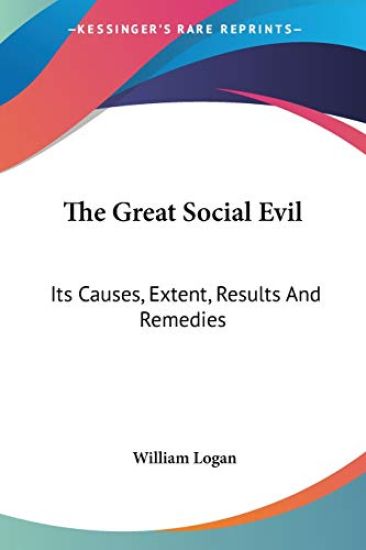
The Great Social Evil

The Great Social Evil

William Logan

Trieste Publishing
2018
nidottu
Trieste Publishing has a massive catalogue of classic book titles. Our aim is to provide readers with the highest quality reproductions of fiction and non-fiction literature that has stood the test of time. The many thousands of books in our collection have been sourced from libraries and private collections around the world.The titles that Trieste Publishing has chosen to be part of the collection have been scanned to simulate the original. Our readers see the books the same way that their first readers did decades or a hundred or more years ago. Books from that period are often spoiled by imperfections that did not exist in the original. Imperfections could be in the form of blurred text, photographs, or missing pages. It is highly unlikely that this would occur with one of our books. Our extensive quality control ensures that the readers of Trieste Publishing's books will be delighted with their purchase. Our staff has thoroughly reviewed every page of all the books in the collection, repairing, or if necessary, rejecting titles that are not of the highest quality. This process ensures that the reader of one of Trieste Publishing's titles receives a volume that faithfully reproduces the original, and to the maximum degree possible, gives them the experience of owning the original work.We pride ourselves on not only creating a pathway to an extensive reservoir of books of the finest quality, but also providing value to every one of our readers. Generally, Trieste books are purchased singly - on demand, however they may also be purchased in bulk. Readers interested in bulk purchases are invited to contact us directly to enquire about our tailored bulk rates.
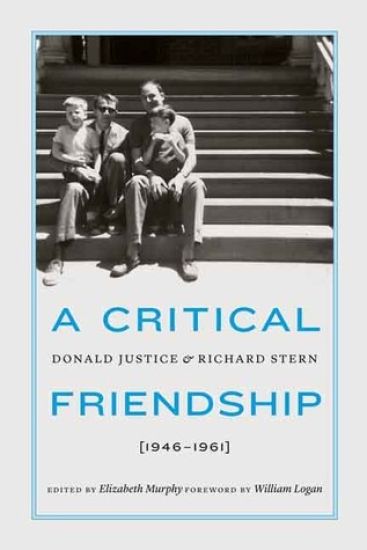
A Critical Friendship

A Critical Friendship

William Logan

University of Nebraska Press
2013
sidottu
A chance meeting in the University of North Carolina campus library in 1944 began a decades-long friendship and sixty-year correspondence. Donald Justice (1925–2004) and Richard Stern (1928–2013) would go on to become, respectively, the Pulitzer Prize–winning poet and the acclaimed novelist. A Critical Friendship showcases a selection of their letters and postcards from the first fifteen years of their correspondence, representing the formative period in both writers’ careers. It includes some of Justice’s unpublished poetry and early drafts of later published poems as well as some early, never-before-published poetry by Stern.A Critical Friendship is the story of two writers inventing themselves, beginning with the earliest extant letters and ending with those just following their first major publications, Justice’s poetry collection The Summer Anniversaries and Stern’s novel Golk. These letters highlight their willingness to give and take criticism and document the birth of two distinct and important American literary lives. The letters similarly document the influence of teachers, friends, and contemporaries, including Saul Bellow, John Berryman, Edgar Bowers, Robert Lowell, Norman Mailer, Allen Tate, Peter Hillsman Taylor, Robert Penn Warren, Eudora Welty, and Yvor Winters, all of whom feature in the pair's conversations. In a broader context, their correspondence sheds light on the development of the mid-twentieth-century American literary scene.
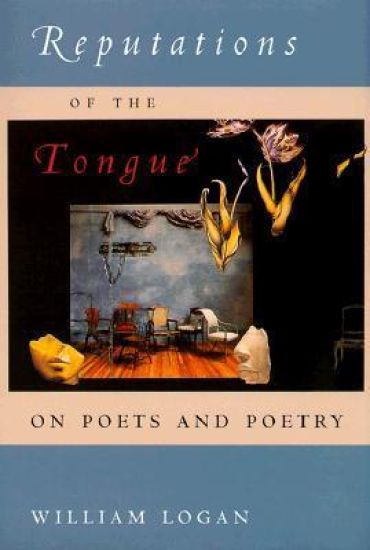
Reputations of the Tongue

Reputations of the Tongue

William Logan

University Press of Florida
1999
sidottu
A survey of American, British and Irish poetry in the 1980s and '90s. It opens with an essay arguing with Eliot over tradition and individual talent. At the heart of the book are essays on W.H. Auden, W.D. Snodgrass, Donald Justice and Geoffrey Hill, with reviews of other contemporary poets.
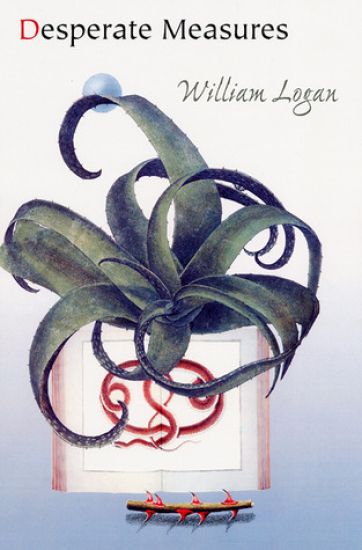
Desperate Measures

Desperate Measures

William Logan

University Press of Florida
2002
sidottu
William Logan has been called ""the most hated man in American poetry"" and the most dangerous poetry critic since Randall Jarrell. Desperate Measures continues the critical fevers of Reputations of the Tongue (see below), a finalist for the National Book Critics Circle award in criticism. Beginning with an exploration of some of Robert Frost's least-known poems, these essays consider Ezra Pound's letters, T. S. Eliot's metaphysical lectures, the lightness of Elizabeth Bishop, and the civil tongue of Richard Wilbur, finding in poetry a language that lasts beyond the petty conventions of the age. Added to these thoughtful essays are provocative reviews of contemporary poetry, full of Logan's caustic wit and sharp-eyed scrutiny. He praises the moral rigor of Anthony Hecht and Geoffrey Hill, the raucous antics of Paul Muldoon, the natural warmth of Seamus Heaney, the violence of Christopher Logue, the cheerful abandon of Amy Clampitt. Intolerant of mediocre verse, Logan ranges widely through the poetry of America, Britain, and Ireland, finding much to criticize, though some of his judgments are surprising and he is rarely predictable. Logan's own poetry has been called dazzling, original, brilliant, and difficult. Like the distinguished poet-critics of the past, his criticism is an extension of a personal wrestling with language. While criticism of contemporary poetry is often pallid, diplomatic, and full of evasive judgments, Logan is willing to raise hackles, to be cheerfully controversial. The often eloquent criticism in Desperat, Measures, which views poetry from one end of the last century to the other, is a passionate defense of poetry in an unpo etic time.