Kirjahaku
Etsi kirjoja tekijän nimen, kirjan nimen tai ISBN:n perusteella.
1000 tulosta hakusanalla William Lyon
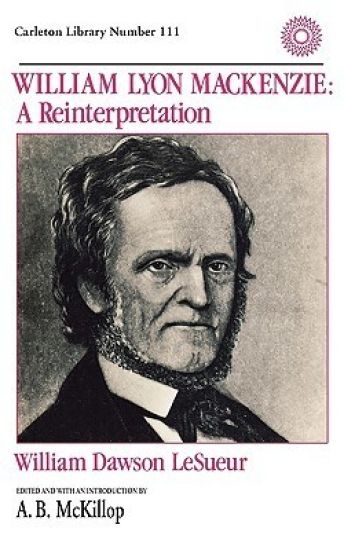
This edition marks the first appearance of this controversial biography in its original form, seventy years after its completion.
William Lyon MacKenzie
Kessinger Publishing
2010
pokkari


A Collection of Classic Essays by William Lyon Phelps - Including 'Happiness', 'Superstition', 'The Great American Game', and Many More
William Lyon Phelps
Read Books
2016
pokkari

William Lyon Mackenzie King, Volume 1, 1874-1923
Robert Dawson
University of Toronto Press
1958
pokkari
When William Lyon Mackenzie King retired in 1948, he had held office as Prime Minister of Canada for a total of 7829 days, a longer term of service than that of any other Prime Minister in the history of the British Commonwealth. Like Roosevelt, his contemporary of many momentous years, he was greatly admired and greatly hated, but none dispute the tremendous influence he exerted on the history of his country, or, indeed, his place in world history. In this official biography, great days of Canadian history are given life and meaning, and at the centre of all the events is a phenomenal personality gifted with intelligence, intrepidity, and luck, with amazing insight into his times and the nature of his political occupation. The biography, based largely on sources hitherto unavailable, permits the reader to witness the unfolding of important events as a chief participant himself saw them and to view far-reaching decisions through the eyes of the man who made them, for Mackenzie King speaks in his own words through much of these volumes. They allow us to observe an extraordinarily complex and powerful personality at work. In this first volume, Mackenzie King's life and political career are traced up to the firm establishment of his first administration as Prime Minister. The forces in is background, education, and early interests which eventually led him into politics are brought out vividly. It is both fascinating and touching, for instance, to observe in letters and personal papers the intimate family relationships which so largely determined what Mackenzie Kind became. Once public service had been chosen, he displayed such talents that a leading role seems almost inevitable to all who knew him.

William Lyon Mackenzie King, Volume II, 1924-1932
H. Neatby
University of Toronto Press
1963
pokkari
This second volume of the official biography of Mackenzie King (the first, written by R. MacG. Dawson, was published in 1958) covers the years 1924 to 1932. At the opening of this period, King was still an inexperienced and untried leader but the next few years were to test his qualities as he dealt with the concessions and compromises necessary in governing with an unstable majority and finally emerged the winner from the complicated chess games of parliamentary sessions. The Liberal success in the election of 1926 returned to office a Prime Minister with confidence in his own judgment and more inclined to hold firm to his own opinions against opposition from his colleagues or his party. After this election and the outcome of that in 1930, which handed over to the Conservatives the problems of the depression, the myth of King's political infallibility continued to grow. But a less able man would have been less lucky. As this book shows, King was a consummate party leader, with an unusual sensitivity to political danger and an unusual capacity to learn from his mistakes. In the years 1924 to 1932 a number of familiar Canadian issues had to be dealt with: freight rates on land and sea, the debate between a tariff for protection, the problems of the Maritime Provinces, the natural resources of the Prairie Provinces, old age pensions, the St. Lawrence Waterway, immigration. There were also other more striking incidents, which the author chronicles with verve and style: the customs scandal of 1926, the heady pleasures of the years of prosperity and the dismal frustrations of the years of depression, the election of 1930, the Beauharnois sensation. Throughout skilful use is made of the public records of these years, of the King papers, and the copious pages of King's own daily diary of his political problems, his conversations with colleagues and diplomats, his worries and frustrations over difficult decisions, his own aims and ideals. Over these years King developed and strengthened his convictions about the over-riding concern of all Canadian political leaders, national unity. Only a proper estimate of what was desirable, what was necessary, and what was impossible could guide in the working out of policies that would be tolerable by the whole of Canada, and it was, of course, King's firm belief and the guiding principle of his political life that the cause of national unity was best served by the cause of Liberalism, since that party above all represented the major sections or groups in Canada and alone could effect a satisfactory compromise among them. This book, brilliant and effective in conception and execution, is a study of political leadership in a divided nation, a nation which even in calmer times is proverbially difficult to govern. It is also a revealing and convincing study of a complex man whose drab public image concealed unsuspected eccentricities.

William Lyon Mackenzie King, Volume III, 1932-1939
H. Neatby
University of Toronto Press
1976
pokkari
Aided by meticulous knowledge of the former Prime Minister's diary, and with characteristic conciseness and clarity, H. Blair Neatby has written the impressive and long-awaited third volume of the official biography of Mackenzie King. He carefully and judiciously untangles a complexity of issues in Canadian political history to produce definitive accounts of controversies that have engaged the attention of Canadian historians for years. Beginning the story in 1932, this volume treats the depression years when King was first in Opposition and then the years after 1935 when he was once again Prime Minister; it is a masterly analysis of how one of the most enigmatic figures in Canadian history made shrewd and critical political decisions. Attention is paid in turn to his clearly successful tactics as Leader of the Opposition; the election campaign of 1935; a wide range of his domestic policies, including those on unemployment, inflation, relief, and trade; and to a series of international crises – the Ethiopian crisis, the Spanish Civil War, Anschluss, and Munich – that culminated in the Second World War. At all times, King's overriding concern was to preserve national unity at home and to avoid commitments abroad, either through the British Commonwealth or the League of Nations. We see King in his relations with other Canadian leaders – Aberhart, Pattullo, Hepburn, Duplessis, and Bennett – and with world leaders – Roosevelt, Baldwin, Chamberlain, and Hitler. We also see the personal side of the man, and the link between the private and the public figure. William Lyon Mackenzie King, Volume III is an accomplished piece of historical writing; progressing in a controlled way through a profusion of incident and accident, it brings to completion the outstanding biography of a consummate politician.

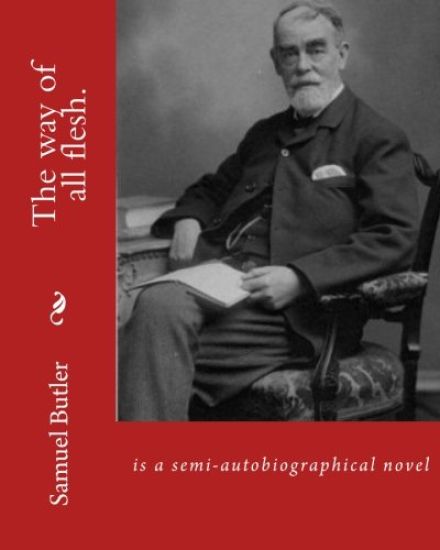
The way of all flesh. By: Samuel Butler, introduction By: William Lyon Phelps(January 2, 1865 New Haven, Connecticut - August 21, 1943 New Haven
William Lyon Phelps; R. a. Streatfeild; Samuel Butler
Createspace Independent Publishing Platform
2016
nidottu
The Way of All Flesh (1903) is a semi-autobiographical novel by Samuel Butler that attacks Victorian-era hypocrisy. 1] Written between 1873 and 1884, it traces four generations of the Pontifex family. Butler dared not publish it during his lifetime, but when it was published it was accepted as part of the general reaction against Victorianism.In 1998, the Modern Library ranked The Way of All Flesh twelfth on its list of the 100 best English-language novels of the 20th century........ Samuel Butler (4 December 1835 - 18 June 1902) was an iconoclastic Victorian-era English author who published a variety of works. Two of his most famous pieces are the Utopian satire Erewhon and a semi-autobiographical novel published posthumously, The Way of All Flesh. He is also known for examining Christian orthodoxy, substantive studies of evolutionary thought, studies of Italian art, and works of literary history and criticism. Butler made prose translations of the Iliad and Odyssey, which remain in use to this day.Butler was born on 4 December 1835 at the rectory in the village of Langar, near Bingham, Nottinghamshire, England, to the Rev. Thomas Butler, son of Dr. Samuel Butler, then headmaster of Shrewsbury School and later Bishop of Lichfield. Dr Butler was the son of a tradesman and descended from a line of yeomen, but his scholarly aptitude being recognised at young age, was sent to Rugby and Cambridge, where he distinguished himself and launched his successful career. His only son Thomas wished to go into the Navy, but succumbed to paternal pressure and entered the Church, in which he led a wholly undistinguished career, all the more so in contrast with his father's. It has been suggested that this family dynamic had some impact on Samuel, insofar as it created the oppressive home environment (chronicled in The Way of All Flesh) which formed his approach to the world. Thomas Butler, states one critic, "to make up for having been a servile son, became a bullying father.".......... Richard Alexander Streatfeild (22 June 1866 - 6 February 1919) was an English musicologist and critic. His career was spent at the British Museum, although not in its music department. His publications included books on opera, Handel and modern music. He had literary interests, and arranged for posthumous publication of his friend Samuel Butler's The Way of All Flesh......... William Lyon Phelps (January 2, 1865 New Haven, Connecticut - August 21, 1943 New Haven, Connecticut) was an American author, critic and scholar. He taught the first American university course on the modern novel. He was a well-known speaker who drew large crowds. He had a radio show, wrote a daily syndicated newspaper column, lectured frequently, and published numerous popular books and articles...........
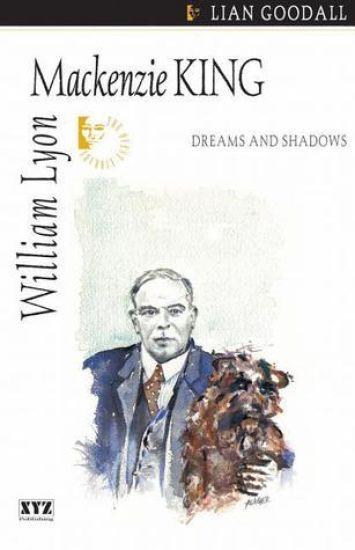
Mackenzie King (1874-1950) was Canada's tenth and longest serving prime minister and an important figure on the international scene, especially during the Second World War. This book provides a fascinating glimpse into the world of Mackenzie King. lian goodall is an accomplished author, researcher, editor, and book reviewer. She lives in Ottawa, Ontario, with one of her two daughters.

The Firebrand: William Lyon Mackenzie and the Rebellion in Upper Canada.
William 1926- Kilbourn
Hassell Street Press
2021
sidottu
This work has been selected by scholars as being culturally important and is part of the knowledge base of civilization as we know it.This work is in the public domain in the United States of America, and possibly other nations. Within the United States, you may freely copy and distribute this work, as no entity (individual or corporate) has a copyright on the body of the work.Scholars believe, and we concur, that this work is important enough to be preserved, reproduced, and made generally available to the public. To ensure a quality reading experience, this work has been proofread and republished using a format that seamlessly blends the original graphical elements with text in an easy-to-read typeface.We appreciate your support of the preservation process, and thank you for being an important part of keeping this knowledge alive and relevant.

The Firebrand: William Lyon Mackenzie and the Rebellion in Upper Canada.
William 1926- Kilbourn
Hassell Street Press
2021
nidottu

Sir William Lyons On Jaguar
Evro Publishing
2025
sidottu
This is a Jaguar book with a difference. In 1969 Sir William Lyons gave an address to the Institute of the Motor Industry under the title ‘The History of the Jaguar and the future of the Specialised car in the British Motor Industry’. Delivered just after the launch of the seminal XJ6 saloon, it is a captivating personal account that explains how he built up Jaguar and what, in his view, made Jaguars special and distinctive. His extensive text forms the heart of this book, supported by a vivid array of archive photographs and rounded off with a preface by Michael Quinn (Sir William’s grandson) and an epilogue by Giles Chapman (the book’s originator and compiler) examining Sir William’s lasting legacy and the future of the great British brand he created. Here, uniquely, is the essence of Jaguar by the man who started it all, and who so rarely aired his thoughts in public.