Kirjojen hintavertailu. Mukana 11 627 463 kirjaa ja 12 kauppaa.

Kirjahaku

Etsi kirjoja tekijän nimen, kirjan nimen tai ISBN:n perusteella.

1000 tulosta hakusanalla William N. West

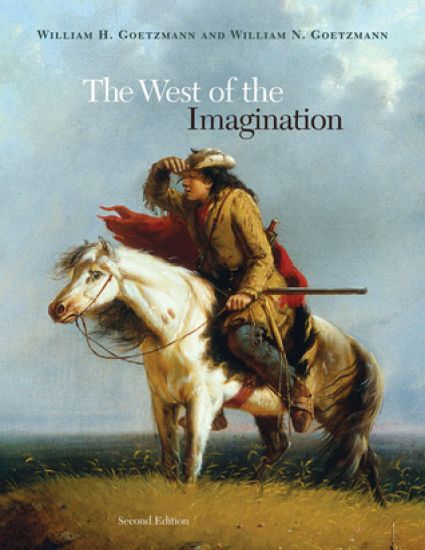
The West of the Imagination

The West of the Imagination

William H. Goetzmann; William N. Goetzmann

University of Oklahoma Press
2009
sidottu
For many people, ""western art"" immediately conjures images by Frederic Remington or Georgia O'Keeffe - but there's so much more. From early explorers' first sketches of the Rockies to the modern earth sculptures of Michael Heizer, images of the American West are as multifaceted as its cultures. This remarkable book embraces them all.A landmark overview of western American art, the original edition of The West of the Imagination brought the region to wide public attention as a companion to a popular PBS series of the same name. This book, significantly expanded and updated, shows that the West is a vibrant mirror of American cultural diversity. Through 450 illustrations - more than 300 in color - the authors trace the visual evolution of the myth of the American West, from unknown frontier to repository of American values, covering popular and high arts alike.An unrivaled survey, The West of the Imagination is an immensely informative and pleasurable volume for anyone with an interest in the region's creative legacy.
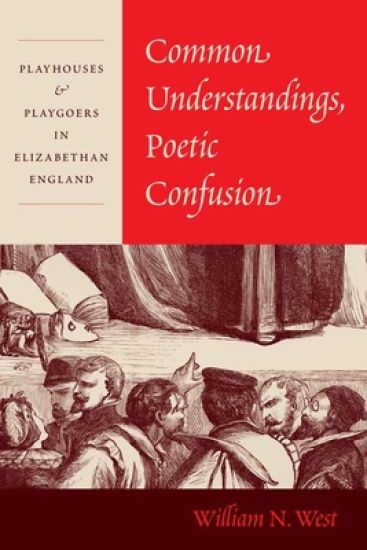
Common Understandings, Poetic Confusion

Common Understandings, Poetic Confusion

William N. West

University of Chicago Press
2021
sidottu
A new account of playgoing in Elizabethan England, in which audiences participated as much as performers. What if going to a play in Elizabethan England was more like attending a football match than a Broadway show—or playing in one? In Common Understandings, Poetic Confusion, William N. West proposes a new account of the kind of participatory entertainment expected by the actors and the audience during the careers of Shakespeare and his contemporaries. West finds surprising descriptions of these theatrical experiences in the figurative language of early modern players and playgoers—including understanding, confusion, occupation, eating, and fighting. Such words and ways of speaking are still in use today, but their earlier meanings, like that of theater itself, are subtly, importantly different from our own. Playing was not confined to the actors on the stage but filled the playhouse, embracing audiences and performers in collaborative experiences that did not belong to any one alone but to the assembled, various crowd. What emerged in playing was a kind of thinking and feeling distributed across persons and times that were otherwise distinct. Thrown apples, smashed bottles of beer, and lumbering bears—these and more gave verbal shape to the physical interactions between players and playgoers, creating circuits of exchange, production, and consumption.
Common Understandings, Poetic Confusion

Common Understandings, Poetic Confusion

William N. West

University of Chicago Press
2021
nidottu
A new account of playgoing in Elizabethan England, in which audiences participated as much as performers. What if going to a play in Elizabethan England was more like attending a football match than a Broadway show—or playing in one? In Common Understandings, Poetic Confusion, William N. West proposes a new account of the kind of participatory entertainment expected by the actors and the audience during the careers of Shakespeare and his contemporaries. West finds surprising descriptions of these theatrical experiences in the figurative language of early modern players and playgoers—including understanding, confusion, occupation, eating, and fighting. Such words and ways of speaking are still in use today, but their earlier meanings, like that of theater itself, are subtly, importantly different from our own. Playing was not confined to the actors on the stage but filled the playhouse, embracing audiences and performers in collaborative experiences that did not belong to any one alone but to the assembled, various crowd. What emerged in playing was a kind of thinking and feeling distributed across persons and times that were otherwise distinct. Thrown apples, smashed bottles of beer, and lumbering bears—these and more gave verbal shape to the physical interactions between players and playgoers, creating circuits of exchange, production, and consumption.
Exploring Therapy, Spirituality and Healing

Exploring Therapy, Spirituality and Healing

William N. West

Red Globe Press
2010
nidottu
What place does spiritual need and healing have in the counselling room? Denying the spiritual dimension of personal distress can be potentially hurtful to clients, but the issue of spirituality is also fraught with professional and ethical issues for therapists. This book draws on original research to move the debate about spiritual need forwards in relation to therapeutic practice, supervision, and training.An international team of contributors offer a diverse range of perspectives to critically explore a wide spectrum of spiritual issues, including prayer, pastoral care and traditional healing. Edited by a leading figure in the field, this book:• Illuminates experiences of both clients and practitioners through detailed case vignettes• Draws on cutting-edge research in this growing field• Invites readers to address their own therapeutic practice with hands-on discussion pointsThis measured and thoughtful approach provides a fascinating insight to an often complex and controversial topic. As such, the book is essential reading for trainees and practitioners of counselling and psychotherapy.
Spiritual Issues in Therapy

Spiritual Issues in Therapy

William N. West

Palgrave Macmillan
2004
nidottu
Issues of spirituality are gaining increasing prominence within the therapeutic professions. Written by a figure in this emerging domain, this book provides a creative focus for therapists wishing to consider how spirituality may inform or shape their own practice.
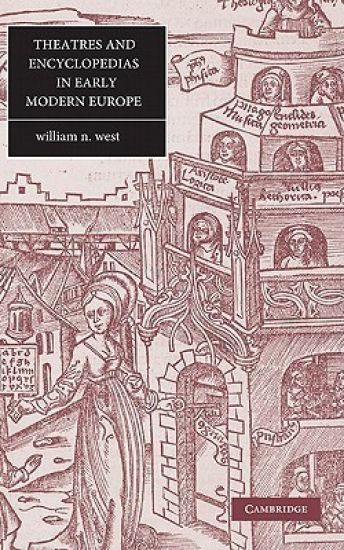
Theatres and Encyclopedias in Early Modern Europe

Theatres and Encyclopedias in Early Modern Europe

William N. West

Cambridge University Press
2006
pokkari
In this 2003 book West explores what 'theatre' meant to medieval and Renaissance writers and places Renaissance drama within the influential context of the encyclopedic writings produced at the time. It was an encyclopedic culture, obsessed with sorting knowledge, and early encyclopedias presented themselves as textual theatres, in which everything knowable could be represented in concrete, visible form. Medieval and Renaissance plays, similarly, took encyclopedic themes as their topics: the mysteries of nature, universal history, the world of learning. But instead of transmitting authorized knowledge unambiguously, as it was supposed to be, the theatre created a situation in which ordinary experience could become a source of authority. West covers a wide range of works, from the encyclopedic texts of the Middle Ages and Renaissance to Marlowe's Dr Faustus, Jonson's The Alchemist, and Bacon's Novum Organum, to provide a fascinating picture of the cultural life of the period.
Theatres and Encyclopedias in Early Modern Europe

Theatres and Encyclopedias in Early Modern Europe

William N. West

Cambridge University Press
2003
sidottu
In this 2003 book West explores what 'theatre' meant to medieval and Renaissance writers and places Renaissance drama within the influential context of the encyclopedic writings produced at the time. It was an encyclopedic culture, obsessed with sorting knowledge, and early encyclopedias presented themselves as textual theatres, in which everything knowable could be represented in concrete, visible form. Medieval and Renaissance plays, similarly, took encyclopedic themes as their topics: the mysteries of nature, universal history, the world of learning. But instead of transmitting authorized knowledge unambiguously, as it was supposed to be, the theatre created a situation in which ordinary experience could become a source of authority. West covers a wide range of works, from the encyclopedic texts of the Middle Ages and Renaissance to Marlowe's Dr Faustus, Jonson's The Alchemist, and Bacon's Novum Organum, to provide a fascinating picture of the cultural life of the period.
Renaissance Drama v. 38

Renaissance Drama v. 38

William N. West

Northwestern University Press
2010
sidottu
Renaissance Drama, an annual interdisciplinary publication, is devoted to drama and performance as a central feature of Renaissance culture. The essays in each volume explore the traditional canon of drama, the significance of performance, broadly construed, to early modern culture, and the impact of new forms of interpretation on the study of Renaissance plays, theater, and performance. Volume 38 includes essays that explore topics in early modern drama ranging from Shakespeare’s Jewish questions in The Merchant of Venice and the gender of rhetoric in Shakespeare’s sonnets and Jonson’s plays to improvisation in the commedia dell’arte and the rebirth of tragedy in 1940 Germany.
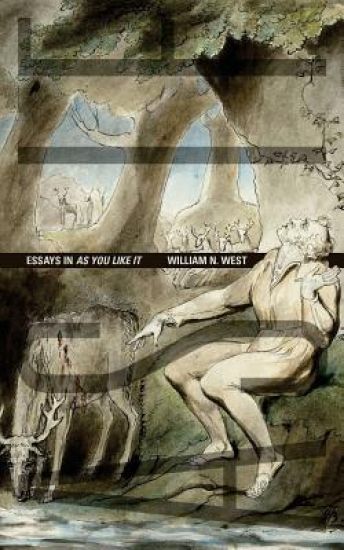
As If

As If

William N West

Punctum Books
2016
pokkari
Shakespeare's As You Like It is a play without a theme. Instead, it repeatedly poses one question in a variety of forms: What if the world were other than it is? As You Like It is a set of experiments in which its characters conditionally change an aspect of their world and see what comes of it: what if I were not a girl but a man? What if I were not a duke, but someone like Robin Hood? What if I were a deer? "What would you say to me now an that is, "if"] I were your very, very Rosalind?" (4.1.64-65). "Much virtue in 'if'," as one of its characters declares near the play's end; 'if' is virtual. It releases force even if the force is not that of what is the case. Change one thing in the world, the play asks, and how else does everything change?In As You Like It, unlike Shakespeare's other plays, the characters themselves are both experiment and experimenters. They assert something about the world that they know is not the case, and their fictions let them explore what would happen if it were-and not only if it were, but something, not otherwise apparent, about how it is now. What is as you like it? What is it that you, or anyone, really likes or wants? The characters of As You Like It stand in 'if' as at a hinge of thought and action, conscious that they desire something, not wholly capable of getting it, not even able to say what it is. Their awareness that the world could be different than it is, is a step towards making it something that they wish it to be, and towards learning what that would be.Their audiences are not exempt. As You Like It doesn't tell us that it knows what we like and will give it to us. It pushes us to find out. Over the course of the play, characters and audiences experiment with other ways the world could be and come closer to learning what they do like, and how their world can be more as they like it. By exploring ways the world can be different than it is, the characters of As You Like It strive to make the world a place in which they can be at home, not as a utopia-Arden may promise that, but certainly doesn't fulfill it-but as an ongoing work of living. We get a sense at the play's end not that things have been settled once and for all, but that the characters have taken time to breathe-to live in their new situations until they discover better ones, or until they discover newer desires.As You Like It, in other words, is a kind of essay: a set of tests or attempts to be differently in the world, and to see what happens. These essays in As If: As You Like It, originally commissioned as an introductory guide for students, actors, and admirers of the play, trace the force and virtue of someof the claims of the play that run counter to what is the case-its 'ifs.'William N. West is Associate Professor of English, Classics, and Comparative Literary Studies at Northwestern University, where he is also chair of the Department of Classics and co-editor of the journal Renaissance Drama. He is co-editor (with Helen Higbee) of Robert Weimann's Author's Pen and Actor's Voice: Writing and Playing in Shakespeare's Theatre (Cambridge, 2000) and (with Bryan Reynolds) of Rematerializing Shakespeare: Authority and Representation on the Early Modern Stage (Palgrave, 2005). In addition to his book Theatres and Encyclopedias in Early Modern Europe (2002), he has recently published articles on Romeo and Juliet's understudies, irony and encyclopedic writing before and after the Enlightenment, Ophelia's intertheatricality (with Gina Bloom and Anston Bosman), humanism and the resistance to theology, Shakespeare's matter, and conversation as a theory of knowledge in Browne's Pseudodoxia. His work has been supported by grants from the NEH and the Beinecke, Folger, Huntington, and Newberry libraries.
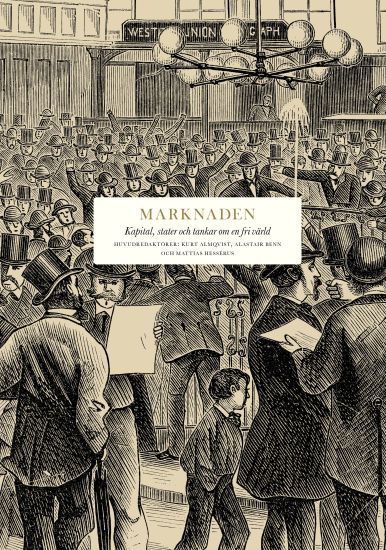
Marknaden : Kapital, stater och tankar om en fri värld

Marknaden : Kapital, stater och tankar om en fri värld

David Abulafia; Ali Ansari; Richard Bratby; Mary Bridges; Caroline Burt; David Butterfield; Edward Chancellor; Marie Kawthar Daouda; Eloise Davies; Ulrike Franke; Francis J. Gavin; Magnus Henrekson; William Inboden; Shashank Joshi; Knut N. Kjaer; Kwasi Kwarteng; Charlie Laderman; Ian Leslie; Nicklas Berild Lundblad; Iain Martin; Jade McGlynn; Mario Pisani; Alina Polyakova; Sergey Radchenko; Mick Ryan; Paul Tucker; Rikard Westerberg; Adrian Wooldridge; David Wootton; Linda Yueh

Bokförlaget Stolpe
2026
sidottu
Från det romerska torget till digitala valutor – hur har marknaden utvecklats under historiens gång och hur kan den komma att se ut i framtiden? Denna antologi gör en djupdykning i marknadsutvecklingen och tittar närmare på marknaders avgörande roll i att utforma samtiden men tar också upp den brännande frågan om hur vi ska navigera mot en hållbar framtid. I tankeväckande essäer skrivna av internationella forskare, politiker och andra sakkunniga utforskas marknadens dynamik. Med utgångspunkt i de antika torgen och i det medeltida Europas marknader undersöker författarna hur tekniska framsteg, konsumentbeteende och geopolitisk strategi – till exempel den politik som utövades under Reagan-eran – har format nutida marknader. Slutligen tar boken upp de utmaningar för stabiliteten på marknaden som utgörs av auktoritära stater och AI. Boken finns även i engelsk utgåva, The Market.
William N. Copley: Women

William N. Copley: Women

William Copley

KASMIN
2018
nidottu
William N. Copley: Women includes beautiful plate photography of works from every phase of the artist's career, revealing Copley's (1919-96) persistent and complex fascination with the female form, masculinity, voyeurism, politics, art history and more. A new text by Claire Copley, one of the artist's two daughters, addresses head-on the frank sexuality and complicated gender politics present in much of her father's work, in a unique hybrid of personal memoir, cultural criticism and art history. A reprint of the artist's seminal text, "CPLY's Reply to the Breakup at the Wasteland of Good Taste," plus photos of the artist from the family archives and installation photography of key historical exhibitions at the Alexander Iolas and Iris Clert galleries in Paris, and at the New Museum in New York City, provide further historic and conceptual background.
William N. Potter and John Wisker

William N. Potter and John Wisker

Fabrizio Zavatarelli; Hans Renette

MCFARLAND CO INC
2024
pokkari
William Norwood Potter never played chess outside London, yet he must be considered a key figure in the development of 19th century chess. His play was surprisingly modern, while his writings are still a model of style, sense and competence. John Wisker was an amateur chess player who achieved excellent results among the few professionals of his time. He was recognized as the first British chess champion and had a prolific journalistic career. He spent the last seven years of his life in Australia, where he played an important role in a blossoming chess culture. This volume, besides retrieving lost particulars of their lives, contains all their known games and many passages of their prose. Among the book's appendices is coverage of the eventful life and brilliant games of William John Wilson.