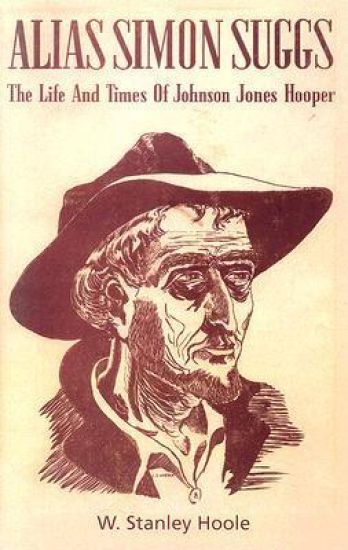
When these words were written everybody had read or heard of Simon Suggs, the shifty man whose antics had been recorded in many a gusty tale of Alabama frontier life which had drawn laughter and applause from newspaper readers throughout the United States. And everybody, at least in Alabama in the 1850s, knew something about his creator, Johnson Jones Hooper...The immortal Suggs, his alter ego, has kept his name alive and renewed its luster, in a biography that deserves almost unqualified praise.
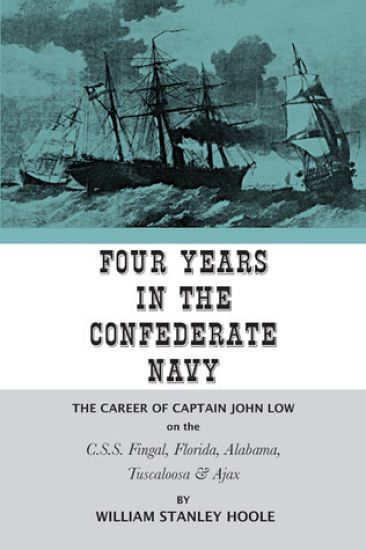
John Low came to America from England in 1856 at the suggestion of his uncle, Andrew Low, a prosperous Savannah- Liverpool businessman. Just as he established himself in nautical businesses in Savannah the Civil War broke out. Low was ordered to England to help in the undercover task of buying, building, and convoying warships to the South. William Stanley Hoole traces Low’s adventures in the service of the Confederacy. Low aided in the acquisition and delivery of the ironclad Fingal and the Florida. He served with Admiral Semmes aboard the famed raider Alabama and was involved in the capture, commissioning, voyage, and detention of the Tuscaloosa. His final task was to deliver the Ajax in the last days of the war.
""Sam Slick in Texas"" is a novel written by William Stanley Hoole, which tells the story of a Yankee salesman named Sam Slick who travels to Texas in the mid-19th century. The book is set during the time of the Mexican-American War and explores the cultural and political tensions between the Texans, Mexicans, and Americans.Sam Slick is a charming and witty salesman who uses his quick wit and cunning to navigate the complex social and political landscape of Texas. Along the way, he meets a cast of colorful characters, including a Mexican general, a Texan rancher, and a group of Native Americans.The book is written in a humorous and satirical style, with Sam Slick's witty observations and commentary providing a unique perspective on the events and people of the time. The novel also explores themes of identity, nationalism, and cultural conflict, making it a thought-provoking and engaging read.Overall, ""Sam Slick in Texas"" is a well-written and entertaining novel that provides a fascinating glimpse into the history and culture of Texas during a pivotal moment in American history.This scarce antiquarian book is a facsimile reprint of the old original and may contain some imperfections such as library marks and notations. Because we believe this work is culturally important, we have made it available as part of our commitment for protecting, preserving, and promoting the world's literature in affordable, high quality, modern editions, that are true to their original work.
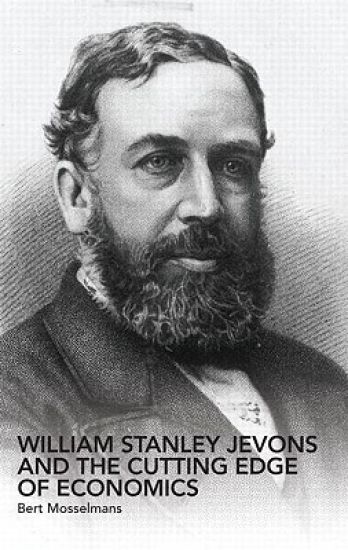
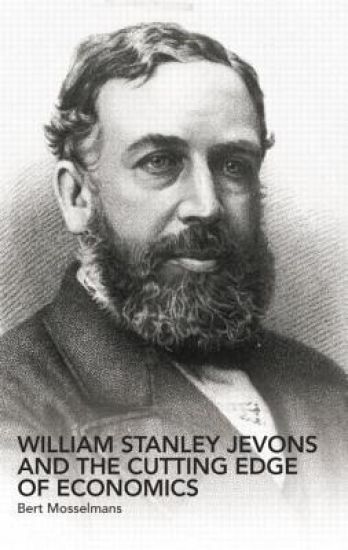
The impressive young scholar Bert Mosselmans, analyzing the theory and policy of Jevons, a major figure in the field of the history of economics, has put together a volume with broad international appeal, particularly in Europe, North America and Japan, that offers a synthetic approach to Jevons’ economic theory, applied economics and economic policy.Adopting a relativist approach to his subject, Mosselmans focuses on all aspects of Jevons’ theory, tying the different strands together where appropriate and discriminating where necessary. Examining the relation between theory and practise he situates Jevons within the history of economic thought and in relation to his logic, ethics, religion and aesthetics.Ideal for scholars working in the fields of philosophy and history as well as economics, this ambitious and insightful work offers a comprehensive analysis of one of the founding fathers of modern economic thought, whose work marked a new chapter in its history, bridging the gap between classical and neo-classical economics.
The impressive young scholar Bert Mosselmans, analyzing the theory and policy of Jevons, a major figure in the field of the history of economics, has put together a volume with broad international appeal, particularly in Europe, North America and Japan, that offers a synthetic approach to Jevons’ economic theory, applied economics and economic policy.Adopting a relativist approach to his subject, Mosselmans focuses on all aspects of Jevons’ theory, tying the different strands together where appropriate and discriminating where necessary. Examining the relation between theory and practise he situates Jevons within the history of economic thought and in relation to his logic, ethics, religion and aesthetics.Ideal for scholars working in the fields of philosophy and history as well as economics, this ambitious and insightful work offers a comprehensive analysis of one of the founding fathers of modern economic thought, whose work marked a new chapter in its history, bridging the gap between classical and neo-classical economics.
The Victorian polymath William Stanley Jevons (1835–82) is generally and rightly venerated as one of the great innovators of economic theory and method in what came to be known as the 'marginalist revolution'. This book is an investigation into the cultural and intellectual resources that Jevons drew upon to revolutionize research methods in economics. Jevons's uniform approach to the sciences was based on a firm belief in the mechanical constitution of the universe and a firm conviction that all scientific knowledge was limited and therefore hypothetical in character. Jevons's mechanical beliefs found their way into his early meteorological studies, his formal logic, and his economic pursuits. By using mechanical analogies as instruments of discovery, Jevons was able to bridge the divide between theory and statistics that had become more or less institutionalized in mid nineteenth-century Britain.
The Victorian polymath William Stanley Jevons (1835–82) is generally and rightly venerated as one of the great innovators of economic theory and method in what came to be known as the 'marginalist revolution'. This book is an investigation into the cultural and intellectual resources that Jevons drew upon to revolutionize research methods in economics. Jevons's uniform approach to the sciences was based on a firm belief in the mechanical constitution of the universe and a firm conviction that all scientific knowledge was limited and therefore hypothetical in character. Jevons's mechanical beliefs found their way into his early meteorological studies, his formal logic, and his economic pursuits. By using mechanical analogies as instruments of discovery, Jevons was able to bridge the divide between theory and statistics that had become more or less institutionalized in mid nineteenth-century Britain.
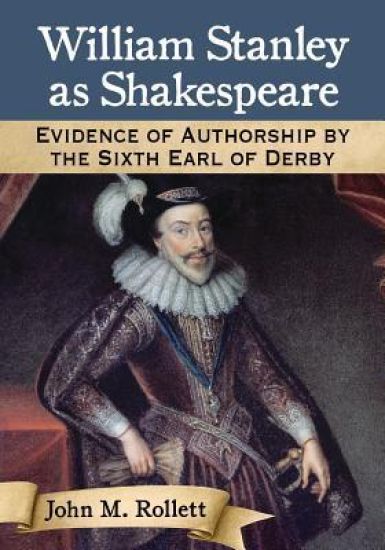
Presenting striking new evidence, this book shows that "William Shakespeare" was the pen name of William Stanley, son of the Earl of Derby. Born in 1561, he was educated at Oxford, travelled for three years abroad, and studied law in London, mixing with poets and playwrights. In 1592 Spenser recorded that Stanley had written several plays. In 1594 he unexpectedly inherited the earldom--hence the pen name. He became a Knight of the Garter in 1601, eligible to help bear the canopy over King James at his coronation, likely prompting Sonnet 125's "Wer't ought to me I bore the canopy?"--he is the only authorship candidate ever in a position to "bear the canopy" (which was only ever borne over royalty). Love's Labour's Lost parodies an obscure poem by Stanley's tutor, which few others would have read. Hamlet's situation closely mirrors Stanley's in 1602. His name is concealed in the list of actors' names in the First Folio. His writing habits match Shakespeare's as deduced from the early printed plays. He was a patron of players who performed several times at court, and financed the troupe known as Paul's Boys. No other member of the upper class was so thoroughly immersed in the theatrical world.
""William Stanley, 1858-1916: His Life And Work"" is a biographical account of the life and achievements of William Stanley, a prominent American inventor and electrical engineer. Written by Laurence Ashley Hawkins, the book provides a comprehensive look at Stanley's personal and professional life, from his early years and education to his groundbreaking work in the field of electricity.The book covers Stanley's many inventions and contributions to the field of electrical engineering, including his development of the transformer, which revolutionized the transmission of electricity. It also explores his work in the areas of alternating current (AC) and direct current (DC) electricity, as well as his involvement in the development of the electric power industry in the United States.In addition to his scientific achievements, the book also delves into Stanley's personal life, including his family, relationships, and philanthropic endeavors. It paints a vivid portrait of a man who was not only a brilliant inventor and engineer, but also a dedicated family man and community leader.Overall, ""William Stanley, 1858-1916: His Life And Work"" is an engaging and informative biography that offers a fascinating glimpse into the life and legacy of one of America's greatest inventors.This scarce antiquarian book is a facsimile reprint of the old original and may contain some imperfections such as library marks and notations. Because we believe this work is culturally important, we have made it available as part of our commitment for protecting, preserving, and promoting the world's literature in affordable, high quality, modern editions, that are true to their original work.
List of Plates and Maps - Preface - List of Abbreviations - Biographduction; Rosamond K nekamp - The Journal of William Stanley Jevons - Diary of a Journey to the Gold Digging at Sofala, 9-23 March 1856 - The Jevons Family - Family Tree of the Roscoe Family - Index