The 18th century was a wealth of knowledge, exploration and rapidly growing technology and expanding record-keeping made possible by advances in the printing press. In its determination to preserve the century of revolution, Gale initiated a revolution of its own: digitization of epic proportions to preserve these invaluable works in the largest archive of its kind. Now for the first time these high-quality digital copies of original 18th century manuscripts are available in print, making them highly accessible to libraries, undergraduate students, and independent scholars.The Age of Enlightenment profoundly enriched religious and philosophical understanding and continues to influence present-day thinking. Works collected here include masterpieces by David Hume, Immanuel Kant, and Jean-Jacques Rousseau, as well as religious sermons and moral debates on the issues of the day, such as the slave trade. The Age of Reason saw conflict between Protestantism and Catholicism transformed into one between faith and logic -- a debate that continues in the twenty-first century.++++The below data was compiled from various identification fields in the bibliographic record of this title. This data is provided as an additional tool in helping to insure edition identification: ++++British LibraryN051338In this edition there is a double rule directly below the date.Salisbury: printed for (and by) J. Easton: Messrs. Wilkie; W. Butten; and T. Thomas, London; Mr. Fenley and Mr. Cottle, Bristol; Mr. Horsey, Portsea; and W. Sollers, Blandford, 1795. 2],69, 1]p.; 12
The 18th century was a wealth of knowledge, exploration and rapidly growing technology and expanding record-keeping made possible by advances in the printing press. In its determination to preserve the century of revolution, Gale initiated a revolution of its own: digitization of epic proportions to preserve these invaluable works in the largest archive of its kind. Now for the first time these high-quality digital copies of original 18th century manuscripts are available in print, making them highly accessible to libraries, undergraduate students, and independent scholars.The Age of Enlightenment profoundly enriched religious and philosophical understanding and continues to influence present-day thinking. Works collected here include masterpieces by David Hume, Immanuel Kant, and Jean-Jacques Rousseau, as well as religious sermons and moral debates on the issues of the day, such as the slave trade. The Age of Reason saw conflict between Protestantism and Catholicism transformed into one between faith and logic -- a debate that continues in the twenty-first century.++++The below data was compiled from various identification fields in the bibliographic record of this title. This data is provided as an additional tool in helping to insure edition identification: ++++British LibraryT093857Bristol: printed by John Rose; sold by Button, London; James, Bristol; Horsey, Portsea; Rusher, Reading, 1797]. 52p.; 12
The 18th century was a wealth of knowledge, exploration and rapidly growing technology and expanding record-keeping made possible by advances in the printing press. In its determination to preserve the century of revolution, Gale initiated a revolution of its own: digitization of epic proportions to preserve these invaluable works in the largest archive of its kind. Now for the first time these high-quality digital copies of original 18th century manuscripts are available in print, making them highly accessible to libraries, undergraduate students, and independent scholars.The Age of Enlightenment profoundly enriched religious and philosophical understanding and continues to influence present-day thinking. Works collected here include masterpieces by David Hume, Immanuel Kant, and Jean-Jacques Rousseau, as well as religious sermons and moral debates on the issues of the day, such as the slave trade. The Age of Reason saw conflict between Protestantism and Catholicism transformed into one between faith and logic -- a debate that continues in the twenty-first century.++++The below data was compiled from various identification fields in the bibliographic record of this title. This data is provided as an additional tool in helping to insure edition identification: ++++British LibraryT100961The second leaf consists of advertisements.Portsea: printed and sold by J. Horsey; sold also by Button, London, 1798]. 2],46p.; 12
A Text Book of Algebra is an unchanged, high-quality reprint of the original edition of 1887. Hansebooks is editor of the literature on different topic areas such as research and science, travel and expeditions, cooking and nutrition, medicine, and other genres. As a publisher we focus on the preservation of historical literature. Many works of historical writers and scientists are available today as antiques only. Hansebooks newly publishes these books and contributes to the preservation of literature which has become rare and historical knowledge for the future.
H. P. Lovecraft’s aliens are extra-terrestrial, terrestrial & trans-dimensional entities, totally unlike any other aliens in science fiction literature. In contrast, Isaac Asimov's and William Gibson’s aliens are human created positronic robots and virtual reality constructs, or 'idols'. Lovecraft’s great theme is alien indifferentism, tinged with a malevolence that escalates into an existential, apocalyptic threat against humankind, while for Asimov and Gibson, alien inclusionism is the norm. The robots and the VR idols integrate into society and their influence appears to be beneficial. But this is only on the surface. In this book, John L. Steadman demonstrates that there is ultimately little difference between alien indifferentism and alien inclusionism in the fictional works of these three great writers. For in fact, the robots and the VR idols evolve into monsters whose actions bring about outcomes which are every bit as terrifying as anything in Lovecraft’s work. Humans tend to be isolates ('alien'-ated). The reader is invited to question this, and to consider the possibility that an alien perspective, or platform, might, perhaps, be crucial if we intend on seeing ourselves clearly and understanding exactly what it means to be human.
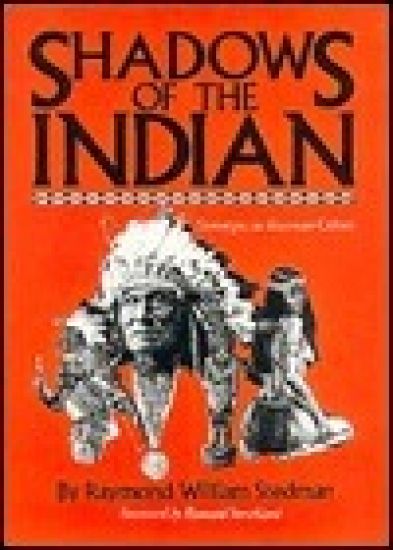
The Indian of popular culture has never existed anywhere--except in imagination. Yet these illusory Indians are so authentic to most Americans that no alternate images are acceptable. Even in recent decades, when increased awareness of the sensitivities of minority groups has become more prevalent, American Indians are seen as almost mythic figures. Raymond William Stedman examines images of American Indians from the first contact with whites, who viewed them as a "curiosity," through incarnations including the Noble Savage and, to the Puritans, an almost Satanic presence lurking in the woods. Since the time of Pocahontas, the "Indian maiden" has been idealized as lovely, compassionate--and ready to sacrifice her feelings. The stereotype of the "savage Indian" with a raised hatchet or flaming arrow was never forgotten. But the commercially minded soon realized that Indian images could sell merchandise. American medicine shows featured feathered "chiefs," there in person to do the selling. And Indian images are still used to hawk products and sports teams today. Drawing on literature, art, and popular culture, Stedman isolates counterfeit images of American Indians. He contends that American culture rarely portrays Indians as they really are, presenting them instead as distorted, false shadows.
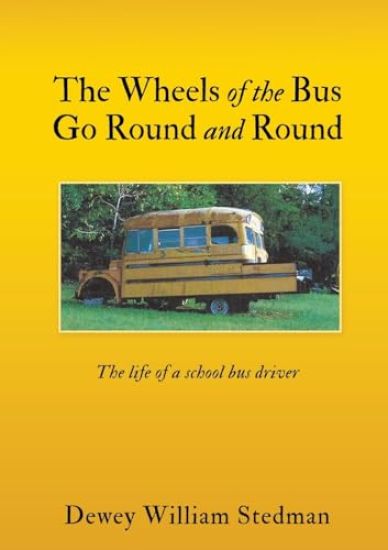
As a young boy growing up a couple miles from a small town and having a father who had cancer of the throat and heart problems we didn't have much money. All through life I worked on improving my life and proud of what I have done without any college. Working for RCA on three different programs, I was given a chance to learn a lot and given lots of responsibilities during my life as you will see in the book. Growing up outside a small town of 2,500 was a challenge. We lived about 2 miles from town with 7 1/2 acres of land with most of it in trees except about one acre around the house. We had at times a cow for milk and a pig for meat. We always had lots of chickens laying eggs. We always had big gardens which I got to weed but my mother would pick the vegetables. A neighbor boy would come over sometimes and we would sneak into the garden and eat some fresh peas out of the pod or sneak some strawberries. In school I took a lot of classes that helped me get my first job in Alaska as a Secretary. I had a lot of fun in school and was very popular as I have a great sense of humor which I still like making people laugh. For the last 25 years I have put the Red Suit on at Christmas. I was the official Santa in Leavenworth, Wa. for five years. I rode in a horse drawn carriage into the downtown area. I would get my picture taken hundreds of times per day. I am still very active. I am on the activities committee where we live. I do hope you enjoy the book as I have had a fun life.