
Kirjahaku
Etsi kirjoja tekijän nimen, kirjan nimen tai ISBN:n perusteella.
1000 tulosta hakusanalla William T James


Trial of John Jasper, Lay Precentor of Cloisterham Cathedral in the County of Kent, for the Murder of Edwin Drood, Engineer
England) Dickens Fellowship (London; G K Chesterton; J W T (James William Thomas) Ley
Anson Street Press
2025
pokkari

The Life of General William T. Sherman is an unchanged, high-quality reprint of the original edition of 1891. Hansebooks is editor of the literature on different topic areas such as research and science, travel and expeditions, cooking and nutrition, medicine, and other genres. As a publisher we focus on the preservation of historical literature. Many works of historical writers and scientists are available today as antiques only. Hansebooks newly publishes these books and contributes to the preservation of literature which has become rare and historical knowledge for the future.

The Life and Times of the Right Honourable Sir James R. G. Graham
William T McCullagh Torrens
Hansebooks
2017
pokkari
The Life and Times of the Right Honourable Sir James R. G. Graham - Vol. 2 is an unchanged, high-quality reprint of the original edition of 1863. Hansebooks is editor of the literature on different topic areas such as research and science, travel and expeditions, cooking and nutrition, medicine, and other genres. As a publisher we focus on the preservation of historical literature. Many works of historical writers and scientists are available today as antiques only. Hansebooks newly publishes these books and contributes to the preservation of literature which has become rare and historical knowledge for the future.
The Life and Times of the Right Honourable Sir James R. G. Graham
William T McCullagh Torrens
Hansebooks
2017
pokkari

The Ballantyne Press and Its Founders, 1796-1908
James Ballantyne and Co; William T Dobson; William Lowe Carrie
Anson Street Press
2025
pokkari
The Ballantyne Press and Its Founders, 1796-1908
James Ballantyne and Co; William T Dobson; William Lowe Carrie
Anson Street Press
2025
sidottu

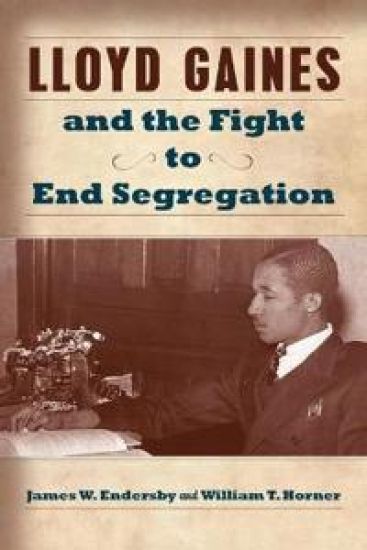
Lloyd Gaines and the Fight to End Segregation
James W. Endersby; William T. Horner
University of Missouri Press
2016
sidottu
80 years ago, Lloyd Gaines’s application to the University of Missouri law school was denied based on his race. Gaines and the NAACP challenged the university’s deci- sion. Missouri ex rel. Gaines v. Canada (1938) was the rst in a long line of decisions by the U.S. Supreme Court regarding race, higher education, and equal opportunity. The court case drew national headlines, and the NAACP moved Gaines to Chicago after he received death threats. Before he could attend law school, he vanished.This is the rst book to focus entirely on the Gaines case and the vital role played by the NAACP and its lawyers including Charles Houston, known as “the man who killed Jim Crow”— who advanced a concerted strategy to produce political change. Horner and Endersby also discuss the African American newspaper journal- ists and editors who mobilized popular support for the NAACP’s strategy. This book reveals an important step toward the broad acceptance of the principle that racial segregation is inherently unequal.
Lloyd Gaines and the Fight to End Segregation
James W. Endersby; William T. Horner
University of Missouri Press
2021
nidottu
Winner, 2017 Missouri Conference on History Book Award In 1936, Lloyd Gaines's application to the University of Missouri law school was denied based on his race. Gaines and the NAACP challenged the university's decision. Missouri ex rel. Gaines v. Canada (1938) was the first in a long line of decisions by the U.S. Supreme Court regarding race, higher education, and equal opportunity. The court case drew national headlines, and the NAACP moved Gaines to Chicago after he received death threats. Before he could attend law school, he vanished.This is the first book to focus entirely on the Gaines case and the vital role played by the NAACP and its lawyers-including Charles Houston, known as 'the man who killed Jim Crow'-who advanced a concerted strategy to produce political change. Horner and Endersby also discuss the African American newspaper journalists and editors who mobilized popular support for the NAACP's strategy. This book uncovers an important step toward the broad acceptance of racial segregation as inherently unequal.
The Fundamentals of Religion
James V. Linden; William T. Costello
Literary Licensing, LLC
2011
nidottu

Psychology Applied to the Art of Teaching
Joseph Baldwin; William T Harris; James Gibson Hume
Hansebooks
2018
nidottu
A Historical Sketch of Union Lodge, Dorchester
James H. Upham; William Sayward; William T. Adams
Kessinger Pub
2009
pokkari
Determination of Steroid Hormones and Related Compounds in Filtered and Unfiltered Water by Solid-Phase Extraction, Derivatization, and Gas Chromatogr
James L. Gray; Larry B. Barber; William T. Foreman
Createspace Independent Publishing Platform
2014
nidottu
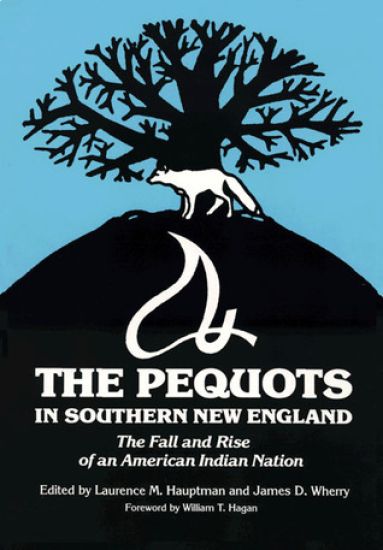
The Pequots in Southern New England
Laurence M. Hauptman; James D. Wherry; William T. Hagan
University of Oklahoma Press
1993
nidottu
Before their massacre by Massachusetts Puritans in 1637, the Pequots were preeminent in southern New England. Their location on the eastern Connecticut shore made them important producers of the wampum required to trade for furs from the Iroquois. They were also the only Connecticut Indians to oppose the land-hungry English. For those reasons, they became the first victims of white genocide in colonial America.Despite the Pequot War of 1637, and the greed and neglect of their white neighbors and ""overseers,"" the Pequots endured in their ancestral homeland. In 1983 they achieved federal recognition. In 1987 they commemorated the 350th anniversary of the Pequot War by organizing the Mashantucket Pequot Historical Conference, at which distinguished scholars presented the articles assembled here.