Kirjojen hintavertailu. Mukana 11 244 527 kirjaa ja 12 kauppaa.

Kirjahaku

Etsi kirjoja tekijän nimen, kirjan nimen tai ISBN:n perusteella.

1000 tulosta hakusanalla William V. Harris

War and Imperialism in Republican Rome 327-70 B.C

War and Imperialism in Republican Rome 327-70 B.C

William V. Harris

Oxford University Press
1985
nidottu
Between 327 and 70 B.C. the Romans expanded their empire throughout the Mediterranean world. This highly original study looks at Roman attitudes and behavior that lay behind their quest for power. How did Romans respond to warfare, year after year? How important were the material gains of military success--land, slaves, and other riches--commonly supposed to have been merely an incidental result? What value is there in the claim of the contemporary historian Polybius that the Romans were driven by a greater and greater ambition to expand their empire? The author answers these questions within an analytic framework, and comes to an interpretation of Roman imperialism that differs sharply from the conventional ones.
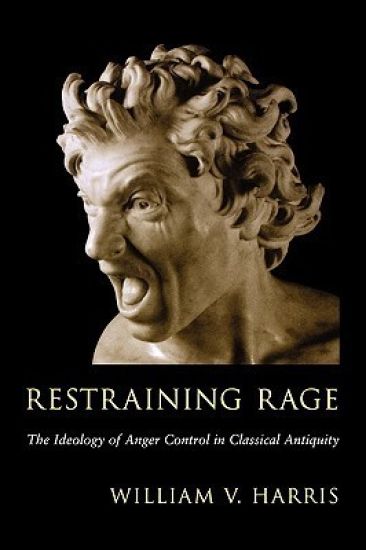
Restraining Rage

Restraining Rage

William V. Harris

Harvard University Press
2004
nidottu
The angry emotions, and the problems they presented, were an ancient Greek preoccupation from Homer to late antiquity. From the first lines of the Iliad to the church fathers of the fourth century A.D., the control or elimination of rage was an obsessive concern. From the Greek world it passed to the Romans.Drawing on a wide range of ancient texts, and on recent work in anthropology and psychology, Restraining Rage explains the rise and persistence of this concern. W. V. Harris shows that the discourse of anger-control was of crucial importance in several different spheres, in politics--both republican and monarchical--in the family, and in the slave economy. He suggests that it played a special role in maintaining male domination over women. He explores the working out of these themes in Attic tragedy, in the great Greek historians, in Aristotle and the Hellenistic philosophers, and in many other kinds of texts.From the time of Plato onward, educated Greeks developed a strong conscious interest in their own psychic health. Emotional control was part of this. Harris offers a new theory to explain this interest, and a history of the anger-therapy that derived from it. He ends by suggesting some contemporary lessons that can be drawn from the Greek and Roman experience.
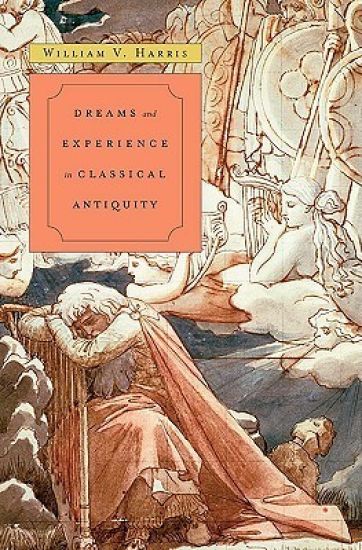
Dreams and Experience in Classical Antiquity

Dreams and Experience in Classical Antiquity

William V. Harris

Harvard University Press
2009
sidottu
From the Iliad to Aristophanes, from the gospel of Matthew to Augustine, Greek and Latin texts are constellated with descriptive images of dreams. Some are formulaic, others intensely vivid. The best ancient minds—Plato, Aristotle, the physician Galen, and others—struggled to understand the meaning of dreams.With Dreams and Experience in Classical Antiquity the renowned ancient historian William Harris turns his attention to oneiric matters. This cultural history of dreams in antiquity draws on both contemporary post-Freudian science and careful critiques of the ancient texts. Harris traces the history of characteristic forms of dream-­description and relates them both to the ancient experience of dreaming and to literary and religious imperatives. He analyzes the nuances of Greek and Roman belief in the truth-telling potential of dreams, and in a final chapter offers an assessment of ancient attempts to understand dreams naturalistically.How did dreaming culture evolve from Homer’s time to late antiquity? What did these dreams signify? And how do we read and understand ancient dreams through modern eyes? Harris takes an elusive subject and writes about it with rigor and precision, reminding us of specificities, contexts, and changing attitudes through history.
Ancient Literacy

Ancient Literacy

William V. Harris

Harvard University Press
1991
nidottu
How many people could read and write in the ancient world of the Greeks and Romans? No one has previously tried to give a systematic answer to this question. Most historians who have considered the problem at all have given optimistic assessments, since they have been impressed by large bodies of ancient written material such as the graffiti at Pompeii. They have also been influenced by a tendency to idealize the Greek and Roman world and its educational system. In Ancient Literacy W. V. Harris provides the first thorough exploration of the levels, types, and functions of literacy in the classical world, from the invention of the Greek alphabet about 800 B.C. down to the fifth century A.D. Investigations of other societies show that literacy ceases to be the accomplishment of a small elite only in specific circumstances. Harris argues that the social and technological conditions of the ancient world were such as to make mass literacy unthinkable. Noting that a society on the verge of mass literacy always possesses an elaborate school system, Harris stresses the limitations of Greek and Roman schooling, pointing out the meagerness of funding for elementary education.Neither the Greeks nor the Romans came anywhere near to completing the transition to a modern kind of written culture. They relied more heavily on oral communication than has generally been imagined. Harris examines the partial transition to written culture, taking into consideration the economic sphere and everyday life, as well as law, politics, administration, and religion. He has much to say also about the circulation of literary texts throughout classical antiquity.The limited spread of literacy in the classical world had diverse effects. It gave some stimulus to critical thought and assisted the accumulation of knowledge, and the minority that did learn to read and write was to some extent able to assert itself politically. The written word was also an instrument of power, and its use was indispensable for the construction and maintenance of empires. Most intriguing is the role of writing in the new religious culture of the late Roman Empire, in which it was more and more revered but less and less practiced.Harris explores these and related themes in this highly original work of social and cultural history. Ancient Literacy is important reading for anyone interested in the classical world, the problem of literacy, or the history of the written word.
Dire Remedies: A Social History of Healthcare in Classical Antiquity
Dire Remedies: a Social History of Healthcare in Classical Antiquity is the first wide-ranging social history of ancient healthcare. Greek medicine is at the origin of modern medicine, but it was very often ineffective. What did people actually do when faced with pain and illness? Starting with a review of ancient health conditions and a survey of what doctors had to offer, W.V. Harris describes the multifarious practices and diverse kinds of people to whom Greeks and Romans turned for help. Topics include the possible development of analgesics, ancient ideas about contagion, the history of the god Asclepius and more generally the role of religion and magic, opinions about abortion, ancient responses to mental illness, and the invention of the hospital. Taking into account the fill range of textual sources and archaeological material, this book attempts to provide an unprecedentedly realistic – and readable – depiction of the Greek and Roman responses to ill health.
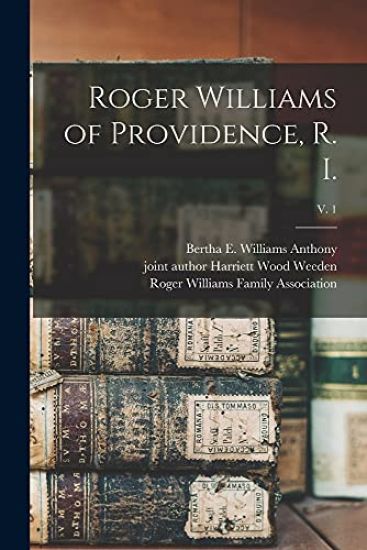
Roger Williams of Providence, R. I.; v. 1

Roger Williams of Providence, R. I.; v. 1

Bertha E. Williams B. 1892 Anthony; Harriett Wood Joint Author Weeden; Roger Williams Family Association

Hassell Street Press
2021
sidottu
This work has been selected by scholars as being culturally important and is part of the knowledge base of civilization as we know it.This work is in the public domain in the United States of America, and possibly other nations. Within the United States, you may freely copy and distribute this work, as no entity (individual or corporate) has a copyright on the body of the work.Scholars believe, and we concur, that this work is important enough to be preserved, reproduced, and made generally available to the public. To ensure a quality reading experience, this work has been proofread and republished using a format that seamlessly blends the original graphical elements with text in an easy-to-read typeface.We appreciate your support of the preservation process, and thank you for being an important part of keeping this knowledge alive and relevant.
Roger Williams of Providence, R. I.; v. 1

Roger Williams of Providence, R. I.; v. 1

Bertha E. Williams B. 1892 Anthony; Harriett Wood Joint Author Weeden; Roger Williams Family Association

Hassell Street Press
2021
nidottu
This work has been selected by scholars as being culturally important and is part of the knowledge base of civilization as we know it.This work is in the public domain in the United States of America, and possibly other nations. Within the United States, you may freely copy and distribute this work, as no entity (individual or corporate) has a copyright on the body of the work.Scholars believe, and we concur, that this work is important enough to be preserved, reproduced, and made generally available to the public. To ensure a quality reading experience, this work has been proofread and republished using a format that seamlessly blends the original graphical elements with text in an easy-to-read typeface.We appreciate your support of the preservation process, and thank you for being an important part of keeping this knowledge alive and relevant.
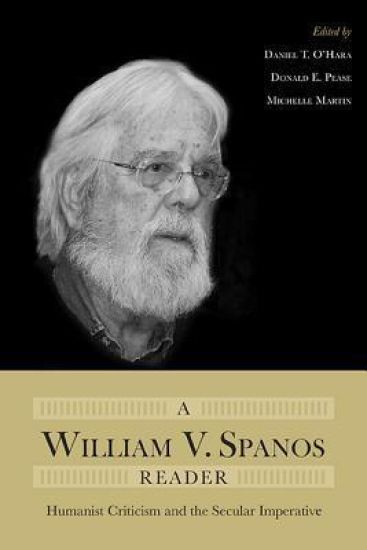
A William V. Spanos Reader

A William V. Spanos Reader

Northwestern University Press
2015
sidottu
The American critic William V. Spanos, a pioneer of postmodern theory and co-founder of one of its principal organs, the journal boundary 2, is, in the words of A William V. Spanos Reader coeditor Daniel T. O’Hara, everything that current post-modern theory is accused of not being: polemical, engaged, prophetic, passionate. Informed by his experience as a prisoner of war in Dresden, Spanos saw dire con-sequences for life in modernist aesthetic experiments, and he thereafter imbued his work with a constructive aspect ever in the name of more life. A William V. Spanos Reader collects Spanos’s most important critical essays, providing both an introduction to his prophetic, visionary work and a provocation to the practice of humanistic criticism.
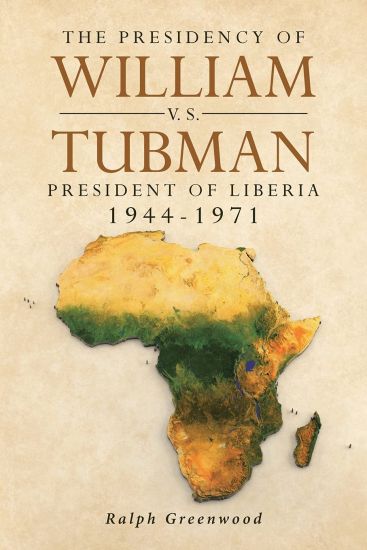
The Presidency of William V.S. Tubman

The Presidency of William V.S. Tubman

Ralph Greenwood

Page Publishing, Inc.
2021
pokkari
This is a path breaking analysis of the Presidency of William V.S. Tubman of Liberia 1944-1971, and his attempt to end the subjugation of the African majority in Liberia by the American Liberian minority. During his presidency he put forth a great deal of effort to get Liberia involved in becoming a participant in the world community of nations.
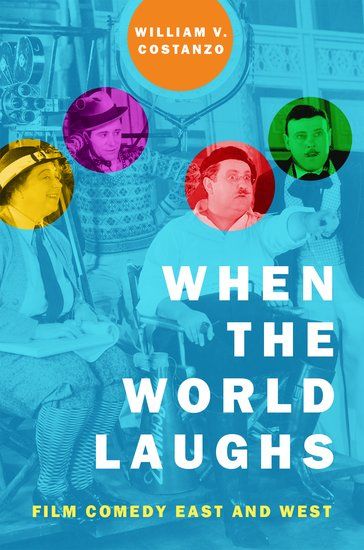
When the World Laughs

When the World Laughs

William V. Costanzo

Oxford University Press Inc
2020
sidottu
When the World Laughs is a book about the intersection of humor, history, and culture. It explores how film comedy, one of the world's most popular movie genres, reflects the values and beliefs of those who enjoy its many forms, its most enduring characters and stories, its most entertaining routines and funniest jokes. What people laugh at in Europe, Africa, or the Far East reveals important truths about their differences and common bonds. By investigating their traditions of humor, by paying close attention to what kinds of comedy cross national boundaries or what gets lost in translation, this study leads us to a deeper understanding of each other and ourselves. Section One begins with a survey of the theories and research that best explain how humor works. It clarifies the varieties of comic forms and styles, identifies the world's most archetypal figures of fun, and traces the history of the world's traditions of humor from earliest times to today. It also examines the techniques and aesthetics of film comedy: how movies use the world's rich repertoire of amusing stories, gags, and wit to make us laugh and think. Section Two offers a close look at national and regional trends. It applies the concepts set forth earlier to specific films-across a broad spectrum of sub-genres, historical eras, and cultural contexts-providing an insightful comparative study of the world's great traditions of film comedy.
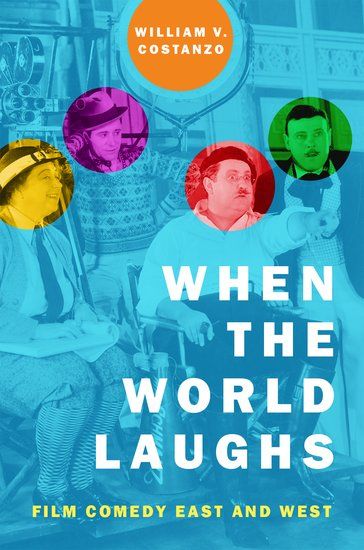
When the World Laughs

When the World Laughs

William V. Costanzo

Oxford University Press Inc
2020
nidottu
When the World Laughs is a book about the intersection of humor, history, and culture. It explores how film comedy, one of the world's most popular movie genres, reflects the values and beliefs of those who enjoy its many forms, its most enduring characters and stories, its most entertaining routines and funniest jokes. What people laugh at in Europe, Africa, or the Far East reveals important truths about their differences and common bonds. By investigating their traditions of humor, by paying close attention to what kinds of comedy cross national boundaries or what gets lost in translation, this study leads us to a deeper understanding of each other and ourselves. Section One begins with a survey of the theories and research that best explain how humor works. It clarifies the varieties of comic forms and styles, identifies the world's most archetypal figures of fun, and traces the history of the world's traditions of humor from earliest times to today. It also examines the techniques and aesthetics of film comedy: how movies use the world's rich repertoire of amusing stories, gags, and wit to make us laugh and think. Section Two offers a close look at national and regional trends. It applies the concepts set forth earlier to specific films-across a broad spectrum of sub-genres, historical eras, and cultural contexts-providing an insightful comparative study of the world's great traditions of film comedy.