Kirjojen hintavertailu. Mukana 11 244 527 kirjaa ja 12 kauppaa.

Kirjahaku

Etsi kirjoja tekijän nimen, kirjan nimen tai ISBN:n perusteella.

1000 tulosta hakusanalla William V. Madison

Madeline Kahn

Madeline Kahn

William V. Madison

University Press of Mississippi
2016
nidottu
Best known for her Oscar-nominated roles in the smash hits Paper Moon and Blazing Saddles, Madeline Kahn (1942-1999) was one of the most popular comedians of her time - and one of the least understood. In private, she was as reserved and refined as her characters were bold and bawdy. Almost a Method actor in her approach, she took her work seriously. When crew members and audiences laughed, she asked why - as if they were laughing at her - and all her life she remained unsure of her gifts.William V. Madison examines Kahn's film career, including not only her triumphs with Mel Brooks and Peter Bogdanovich, but also her overlooked performances in The Adventure of Sherlock Holmes' Smarter Brother and Judy Berlin, her final film. Her work in television - notably her sitcoms - also comes into focus. New York theater showered her with accolades, but also with remarkably bad luck, culminating in a disastrous outing in On the Twentieth Century that wrecked her reputation on Broadway. Only with her Tony-winning performance in The Sisters Rosensweig, fifteen years later, did Kahn regain her standing.Drawing on new interviews with family, friends, and such colleagues as Lily Tomlin, Carol Burnett, Gene Wilder, Harold Prince, and Eileen Brennan, as well as archival press and private writings, Madison uncovers Kahn's lonely childhood and her struggles as a single woman working to provide for her erratic mother. Above all, Madison reveals the paramount importance of music in Kahn's life. A talented singer, she entertained offers for operatic engagements long after she was an established Hollywood star, and she treated each script as a score. As Kahn told one friend, her ambition was ""to be the music.
Madeline Kahn

Madeline Kahn

William V. Madison

University Press of Mississippi
2015
sidottu
Best known for her Oscar-nominated roles in the smash hits Paper Moon and Blazing Saddles, Madeline Kahn (1942-1999) was one of the most popular comedians of her time--and one of the least understood. In private, she was as reserved and refined as her characters were bold and bawdy. Almost a Method actor in her approach, she took her work seriously. When crew members and audiences laughed, she asked why--as if they were laughing at her--and all her life she remained unsure of her gifts.William V. Madison examines Kahn's film career, including not only her triumphs with Mel Brooks and Peter Bogdanovich, but also her overlooked performances in The Adventure of Sherlock Holmes' Smarter Brother and Judy Berlin, her final film. Her work in television--notably her sitcoms--also comes into focus. New York theater showered her with accolades, but also with remarkably bad luck, culminating in a disastrous outing in On the Twentieth Century that wrecked her reputation on Broadway. Only with her Tony-winning performance in The Sisters Rosensweig, fifteen years later, did Kahn regain her standing.Drawing on new interviews with family, friends, and such colleagues as Lily Tomlin, Carol Burnett, Gene Wilder, Harold Prince, and Eileen Brennan, as well as archival press and private writings, Madison uncovers Kahn's lonely childhood and her struggles as a single woman working to provide for her erratic mother. Above all, Madison reveals the paramount importance of music in Kahn's life. A talented singer, she entertained offers for operatic engagements long after she was an established Hollywood star, and she treated each script as a score. As Kahn told one friend, her ambition was ""to be the music.""
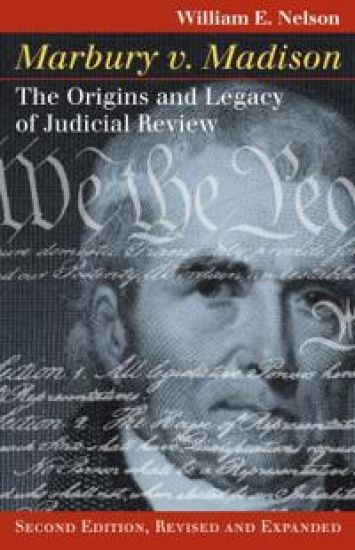
Marbury v. Madison

Marbury v. Madison

William E. Nelson

University Press of Kansas
2018
nidottu
On the surface, the case itself seems a minor one at best. William Marbury, a last-minute judicial appointee of outgoing Federalist president John Adams, demanded redress from the Supreme Court when his commission was not delivered. But Chief Justice John Marshall could clearly see the danger his demand posed for a weak court filled with Federalist judges. Wary of the Court’s standing with the new Republican administration of Thomas Jefferson, Marshall hit upon a solution that was both principled and pragmatic. He determined that while Marbury was justified in his suit, the law on which his claim was based was in conflict with the Constitution. It was the first time that the Court struck down an act of Congress as unconstitutional, thus establishing the doctrine of judicial review that designates the Court as chief interpreter of the Constitution.Nelson relates the story behind Marbury and explains why it is a foundational case for understanding the Supreme Court. He reveals how Marshall deftly avoided a dangerous political confrontation between the executive and judicial branches by upholding the rule of law. Nelson also shows how Marshall managed to shore up the Court’s prestige and power rather than have it serve partisan political agendas.
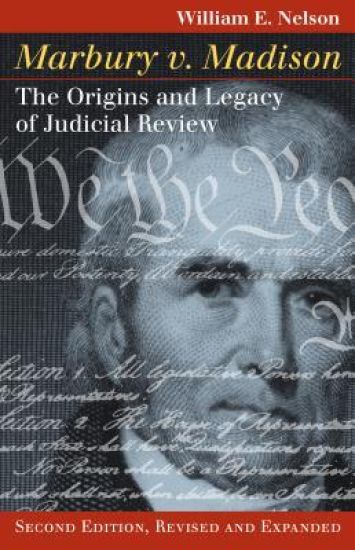
Marbury v. Madison

Marbury v. Madison

William E. Nelson

University Press of Kansas
2018
sidottu
On the surface, the case itself seems a minor one at best. William Marbury, a last-minute judicial appointee of outgoing Federalist president John Adams, demanded redress from the Supreme Court when his commission was not delivered. But Chief Justice John Marshall could clearly see the danger his demand posed for a weak court filled with Federalist judges. Wary of the Court’s standing with the new Republican administration of Thomas Jefferson, Marshall hit upon a solution that was both principled and pragmatic. He determined that while Marbury was justified in his suit, the law on which his claim was based was in conflict with the Constitution. It was the first time that the Court struck down an act of Congress as unconstitutional, thus establishing the doctrine of judicial review that designates the Court as chief interpreter of the Constitution.Nelson relates the story behind Marbury and explains why it is a foundational case for understanding the Supreme Court. He reveals how Marshall deftly avoided a dangerous political confrontation between the executive and judicial branches by upholding the rule of law. Nelson also shows how Marshall managed to shore up the Court’s prestige and power rather than have it serve partisan political agendas.
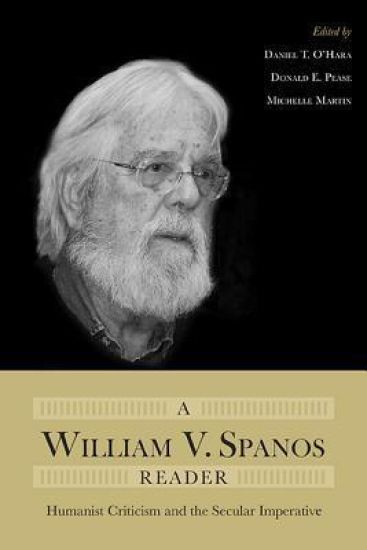
A William V. Spanos Reader

A William V. Spanos Reader

Northwestern University Press
2015
sidottu
The American critic William V. Spanos, a pioneer of postmodern theory and co-founder of one of its principal organs, the journal boundary 2, is, in the words of A William V. Spanos Reader coeditor Daniel T. O’Hara, everything that current post-modern theory is accused of not being: polemical, engaged, prophetic, passionate. Informed by his experience as a prisoner of war in Dresden, Spanos saw dire con-sequences for life in modernist aesthetic experiments, and he thereafter imbued his work with a constructive aspect ever in the name of more life. A William V. Spanos Reader collects Spanos’s most important critical essays, providing both an introduction to his prophetic, visionary work and a provocation to the practice of humanistic criticism.
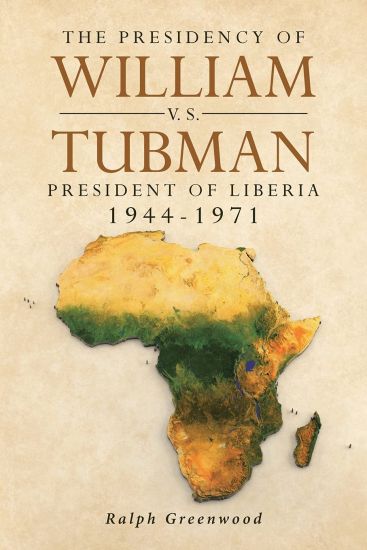
The Presidency of William V.S. Tubman

The Presidency of William V.S. Tubman

Ralph Greenwood

Page Publishing, Inc.
2021
pokkari
This is a path breaking analysis of the Presidency of William V.S. Tubman of Liberia 1944-1971, and his attempt to end the subjugation of the African majority in Liberia by the American Liberian minority. During his presidency he put forth a great deal of effort to get Liberia involved in becoming a participant in the world community of nations.
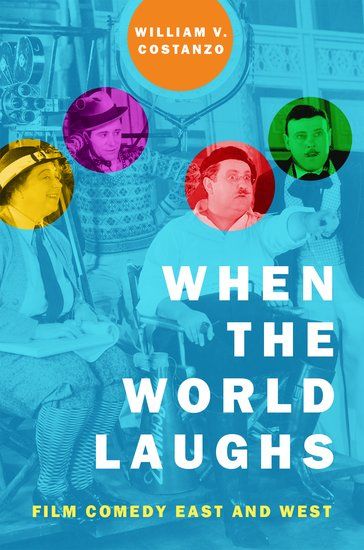
When the World Laughs

When the World Laughs

William V. Costanzo

Oxford University Press Inc
2020
sidottu
When the World Laughs is a book about the intersection of humor, history, and culture. It explores how film comedy, one of the world's most popular movie genres, reflects the values and beliefs of those who enjoy its many forms, its most enduring characters and stories, its most entertaining routines and funniest jokes. What people laugh at in Europe, Africa, or the Far East reveals important truths about their differences and common bonds. By investigating their traditions of humor, by paying close attention to what kinds of comedy cross national boundaries or what gets lost in translation, this study leads us to a deeper understanding of each other and ourselves. Section One begins with a survey of the theories and research that best explain how humor works. It clarifies the varieties of comic forms and styles, identifies the world's most archetypal figures of fun, and traces the history of the world's traditions of humor from earliest times to today. It also examines the techniques and aesthetics of film comedy: how movies use the world's rich repertoire of amusing stories, gags, and wit to make us laugh and think. Section Two offers a close look at national and regional trends. It applies the concepts set forth earlier to specific films-across a broad spectrum of sub-genres, historical eras, and cultural contexts-providing an insightful comparative study of the world's great traditions of film comedy.
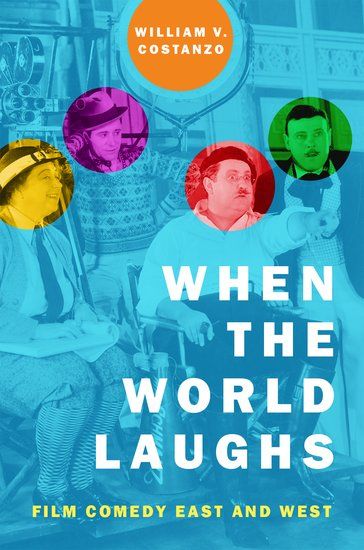
When the World Laughs

When the World Laughs

William V. Costanzo

Oxford University Press Inc
2020
nidottu
When the World Laughs is a book about the intersection of humor, history, and culture. It explores how film comedy, one of the world's most popular movie genres, reflects the values and beliefs of those who enjoy its many forms, its most enduring characters and stories, its most entertaining routines and funniest jokes. What people laugh at in Europe, Africa, or the Far East reveals important truths about their differences and common bonds. By investigating their traditions of humor, by paying close attention to what kinds of comedy cross national boundaries or what gets lost in translation, this study leads us to a deeper understanding of each other and ourselves. Section One begins with a survey of the theories and research that best explain how humor works. It clarifies the varieties of comic forms and styles, identifies the world's most archetypal figures of fun, and traces the history of the world's traditions of humor from earliest times to today. It also examines the techniques and aesthetics of film comedy: how movies use the world's rich repertoire of amusing stories, gags, and wit to make us laugh and think. Section Two offers a close look at national and regional trends. It applies the concepts set forth earlier to specific films-across a broad spectrum of sub-genres, historical eras, and cultural contexts-providing an insightful comparative study of the world's great traditions of film comedy.
Information Technology

Information Technology

William V. Rapp

Oxford University Press Inc
2002
sidottu
The focus of this book is to educate the reader on the strategic principles fundamental to using information technology to gain market control. It provides case examples of how to use IT to enhance existing core competencies and strategies. The book is designed to help managers struggling with how to advantageously harness the new information revolution. It can also support executive and business education programs on managing technology when few such studies exist. While Internet and information technologies are currently hot topics many firms and executives are without the tools and know-how of how to actually use them to improve results. This book describes how major non-information technology companies are doing this and the strategic principles employed.
War and Imperialism in Republican Rome 327-70 B.C

War and Imperialism in Republican Rome 327-70 B.C

William V. Harris

Oxford University Press
1985
nidottu
Between 327 and 70 B.C. the Romans expanded their empire throughout the Mediterranean world. This highly original study looks at Roman attitudes and behavior that lay behind their quest for power. How did Romans respond to warfare, year after year? How important were the material gains of military success--land, slaves, and other riches--commonly supposed to have been merely an incidental result? What value is there in the claim of the contemporary historian Polybius that the Romans were driven by a greater and greater ambition to expand their empire? The author answers these questions within an analytic framework, and comes to an interpretation of Roman imperialism that differs sharply from the conventional ones.
The Legacy of Edward W. Said

The Legacy of Edward W. Said

William V. Spanos

University of Illinois Press
2008
sidottu
With the untimely death of Edward W. Said in 2003, various academic and public intellectuals worldwide have begun to reassess the writings of this powerful oppositional intellectual. Figures on the neoconservative right have already begun to discredit Said’s work as that of a subversive intent on slandering America’s benign global image and undermining its global authority. On the left, a significant number of oppositional intellectuals are eager to counter this neoconservative vilification, proffering a Said who, in marked opposition to the “anti-humanism” of the great poststructuralist thinkers who were his contemporaries--Jacques Derrida, Jean-Francois Lyotard, Jacques Lacan, Louis Althusser, and Michel Foucault--reaffirms humanism and thus rejects poststructuralist theory.In this provocative assessment of Edward Said’s lifework, William V. Spanos argues that Said’s lifelong anti-imperialist project is actually a fulfillment of the revolutionary possibilities of poststructuralist theory. Spanos examines Said, his legacy, and the various texts he wrote--including Orientalism,Culture and Imperialism, and Humanism and Democratic Criticism--that are now being considered for their lasting political impact.
The Legacy of Edward W. Said

The Legacy of Edward W. Said

William V. Spanos

University of Illinois Press
2008
nidottu
With the untimely death of Edward W. Said in 2003, various academic and public intellectuals worldwide have begun to reassess the writings of this powerful oppositional intellectual. Figures on the neoconservative right have already begun to discredit Said’s work as that of a subversive intent on slandering America’s benign global image and undermining its global authority. On the left, a significant number of oppositional intellectuals are eager to counter this neoconservative vilification, proffering a Said who, in marked opposition to the “anti-humanism” of the great poststructuralist thinkers who were his contemporaries--Jacques Derrida, Jean-Francois Lyotard, Jacques Lacan, Louis Althusser, and Michel Foucault--reaffirms humanism and thus rejects poststructuralist theory.In this provocative assessment of Edward Said’s lifework, William V. Spanos argues that Said’s lifelong anti-imperialist project is actually a fulfillment of the revolutionary possibilities of poststructuralist theory. Spanos examines Said, his legacy, and the various texts he wrote--including Orientalism,Culture and Imperialism, and Humanism and Democratic Criticism--that are now being considered for their lasting political impact.
The Military and the Media

The Military and the Media

William V. Kennedy

Praeger Publishers Inc
1993
sidottu
This book is the first about military-media relations to argue for a fundamental restructuring of national journalism and the first to document the failure of American journalism in the national security field for the past thirty years. Press complaints of excessive control by the military during the Persian Gulf War of 1990-91 were the inevitable result of the failure of American journalism to train competent specialists in military reporting and to provide an organizational structure that would assure continuing, comprehensive coverage of national defense in peace and war. This, in turn, is the result of retaining the city-room concept as the basic organizational feature of the press, with continuing reliance on the generalist in an age that demands increasingly well-trained specialists.So long as the press fails to modernize its basic methods of training to assure well-trained defense specialists, the military will be required to closely control reporters, as in the Persian Gulf War, as a basic requirement of security for armed forces members and the national interests. Permitting the military to control how the military itself is reported is a grave danger to the democratic process. Yet, so long as the press refuses to accept responsibility for large-scale reform, the public will continue to support close military control as an essential element of safety for its sons and daughters in the armed forces, and out of concern for the success of U.S. military operations. This book will be of interest to students of the press, of the military, and of the media at large.