Kirjojen hintavertailu. Mukana 11 244 527 kirjaa ja 12 kauppaa.

Kirjahaku

Etsi kirjoja tekijän nimen, kirjan nimen tai ISBN:n perusteella.

1000 tulosta hakusanalla William Wolf

William Wolf and the Ferocious Spider

William Wolf and the Ferocious Spider

Hope Rodway

New Generation Publishing
2021
pokkari
All of the wolves explore Farling Forest, all but William he hides too scared to take a step outside. Alone and isolated he sits, until one day he sees a fox sneaking around his den.Will an unlikely friendship form to rescue him from his fear? Will this fox finally set him free?
In Search of William Wolfskill: Journey to Find the Legacy

In Search of William Wolfskill: Journey to Find the Legacy

Conchita Thornton Marusich

Createspace Independent Publishing Platform
2017
nidottu
Conchita Thornton Marusich has been interested in storytelling from a young age when her mother recounted tales about their ancestor, William Wolfskill-mountain man, adventurer and important figure in early California history. In her book In Search of William Wolfskill: Journey to Find the Legacy, Conchita writes about the adventures of her trailblazing great-great-grandfather, William Wolfskill. His historic journeys over the Santa Fe Trail in 1822-1828 and the Old Spanish Trail in 1830-1831 are packed with exciting stories as he made his way westward towards California. He settled in the small town of Los Angeles in 1831 and became a leading citizen. Famous for his Wolfskill citrus orchards and vineyards, William is recognized as the founder of California's commercial citrus industry and is also seen as an important figure in the growth of California's early wine business. His marriage to Magdalena Lugo united him with the prominent Lugo family of Santa Barbara and Southern California. Already a Mexican citizen from his trapper days in Taos and Santa Fe, New Mexico, William lived through tumultuous times as Los Angeles changed from a small Mexican settlement into an American town after the Mexican-American War. During those transition years, he served as a bridge between the old California under Mexico and the emerging California under the United States. The book combines two stories. The first part of every chapter is Williams's story, which recounts his amazing life. The second part of every chapter tells about Conchita's journey of discovery as she and her husband, Rich, retraced William Wolfskill's footsteps through Kentucky, Missouri, Kansas, Oklahoma, New Mexico, Utah, Nevada and California. They wanted to meet William in his environment which meant going to where he had lived, trapped and traveled. Throughout the book, Conchita includes information that helped her dig deeply into her family's roots and find pieces of her genealogical puzzle. She also includes tips for the readers who are investigating their ancestors. Her journey of discovery further transformed her and her family into lovers of genealogy and history. In Search of William Wolfskill: Journey to Find the Legacy contains 40 illustrations and photographs, including rarely seen photos of Wolfskill family members as well as pictures from Conchita's and Rich's research and travels. The book is a fascinating, in-depth look at William Wolfskill-western pioneer and legend of early California.
Lycanthrope, the Mystery of Sir William Wolf

Lycanthrope, the Mystery of Sir William Wolf

Eden 1862-1960 Phillpotts

Hassell Street Press
2021
sidottu
This work has been selected by scholars as being culturally important and is part of the knowledge base of civilization as we know it.This work is in the public domain in the United States of America, and possibly other nations. Within the United States, you may freely copy and distribute this work, as no entity (individual or corporate) has a copyright on the body of the work.Scholars believe, and we concur, that this work is important enough to be preserved, reproduced, and made generally available to the public. To ensure a quality reading experience, this work has been proofread and republished using a format that seamlessly blends the original graphical elements with text in an easy-to-read typeface.We appreciate your support of the preservation process, and thank you for being an important part of keeping this knowledge alive and relevant.
Lycanthrope, the Mystery of Sir William Wolf

Lycanthrope, the Mystery of Sir William Wolf

Eden 1862-1960 Phillpotts

Hassell Street Press
2021
nidottu
This work has been selected by scholars as being culturally important and is part of the knowledge base of civilization as we know it.This work is in the public domain in the United States of America, and possibly other nations. Within the United States, you may freely copy and distribute this work, as no entity (individual or corporate) has a copyright on the body of the work.Scholars believe, and we concur, that this work is important enough to be preserved, reproduced, and made generally available to the public. To ensure a quality reading experience, this work has been proofread and republished using a format that seamlessly blends the original graphical elements with text in an easy-to-read typeface.We appreciate your support of the preservation process, and thank you for being an important part of keeping this knowledge alive and relevant.
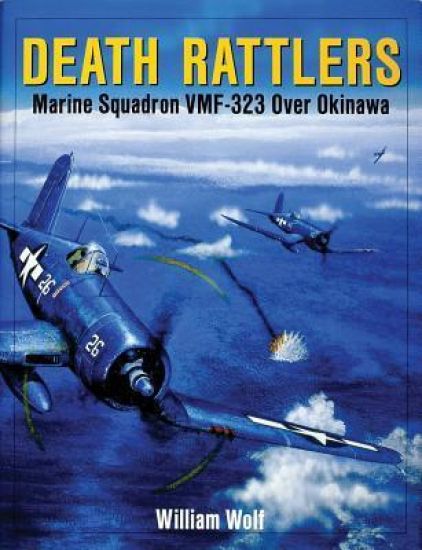
Death Rattlers

Death Rattlers

William Wolf

Schiffer Publishing Ltd
1999
sidottu
Nearly every World War II fighter squadron that flew in Europe has had its history chronicled. Other than "Pappy" Boyington's famous VMF-214 "Black Sheep", little has been written about Marine Corps squadrons in World War II. The contribution of VMF-223, the "Death Rattlers", over Okinawa in the Spring of 1945 is virtually unknown. In two months there, the squadron became the top-scoring unit of any service with 124 1/2 victories and produced 12 aces, the most for one tour of any Marine squadron. The squadron downed 24 3/4 Japanese aircraft twice in its tour, the most for a single Marine squadron in any single action. The squadron's story is not only one of its pilots, combat, and valor, but also of the enlisted men, "the ground-crunchers," who made it function against the Japanese kamikaze menace. Along with the traditional historical perspective, it is an inside look at the personal side of training and war. It is the story of a group of untried young men who trained long and hard and became "family."
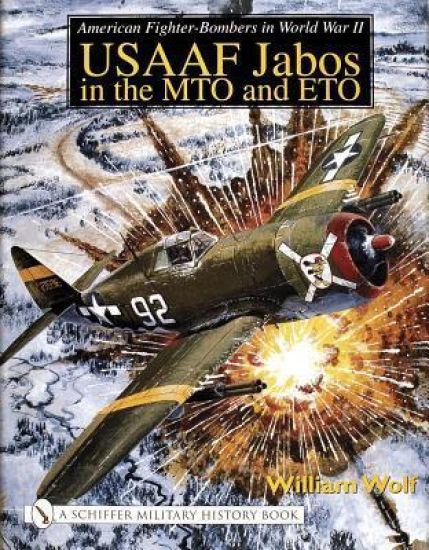
American Fighter-Bombers in World War II

American Fighter-Bombers in World War II

William Wolf

Schiffer Publishing Ltd
2003
sidottu
Lost in the air combat and air ace fanfare of World War II was the dangerous, unheralded and vital role played by USAAF fighter-bomber pilots over the Mediterranean and northwest Europe. Four times as many pilots were lost during strafing and ground attack sorties than were lost against the Luftwaffe in aerial combat. This extensive book is the first in-depth examination of American air-to-ground attack and explores numerous aspects of the subject. The three priorities of the fighter-bomber – air superiority, interdiction and close air support along with combat reports and pilot narratives – are put into the context of the various ground operations. The fighter-bomber pilot risked his life every day against the thickest flak in the war to deprive the enemy of vital reinforcements and supplies, altering his strategy and movement.
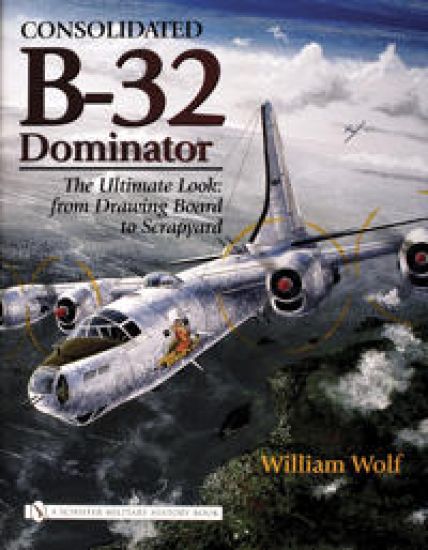
Consolidated B-32 Dominator

Consolidated B-32 Dominator

William Wolf

Schiffer Publishing Ltd
2006
sidottu
Over the years the B-32 has been described only in a small number of magazine articles and in a booklet that have generally given a superficial and incomplete account, maligning the bomber, fairly or not, as a mediocre design besieged with developmental problems and a lackluster combat record. Consolidated B-32 Dominator - The Ultimate Look: from Drawing Board to Scrapyard is the definitive description and appraisal of this neglected bomber’s development, testing, manufacture, and combat experience. The author used company design and production information, flight and test evaluations, along with previously unexplored Flight Manuals and Consolidated-Vultee Erection and Maintenance Manuals. From rare microfilm of original material and insights and personal narratives of the personnel involved, Wolf has gathered information on the pre-combat testing and all the combat missions of the bomber in the Pacific.
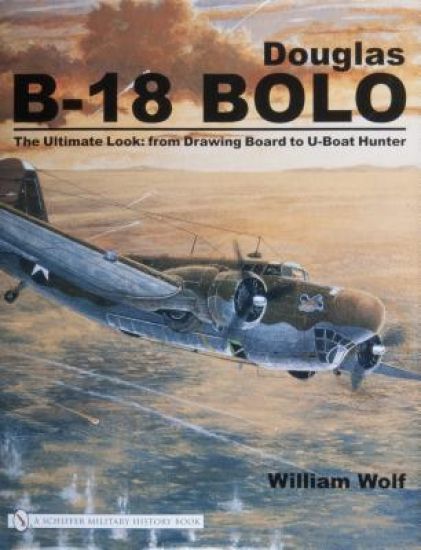
Douglas B-18 Bolo

Douglas B-18 Bolo

William Wolf

Schiffer Publishing Ltd
2007
sidottu
William Wolf brings his meticulous research to describe the little known Douglas B-18 Bolo which was America's most numerous front line bomber at the time of Pearl Harbor. Over the years the story of the airliner turned bomber has languished in obscurity and the few articles on the subject in popular aviation magazines have emphasized its faults and maligned it as a budget bomber that had few virtues. Wolf's comprehensive book is the first ever on the subject and gives the reader the definitive description and appraisal of this neglected bomber's development, testing, manufacture, the aircraft per se, and combat experience.
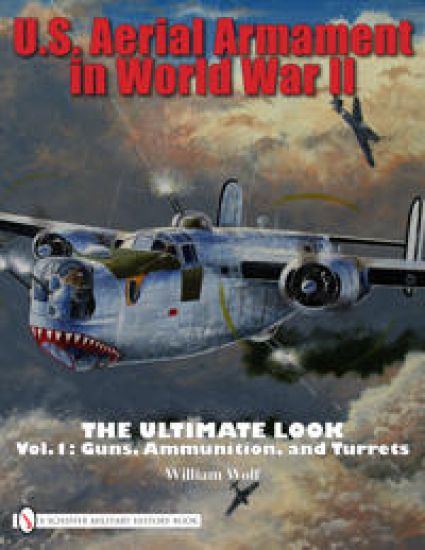
U.S. Aerial Armament in World War II The Ultimate Look
Following his previous “Ultimate Look” volumes on the B-29, B-32, B-18, and B-25, Wolf has written the definitive book on U.S. aerial armament in World War II. Drawing from his extensive library, microfilm archives, and technical manuals Wolf covers aerial machine guns and cannon; a discussion of the machine gun vs. cannon controversy, ammunition; gunsights; gun cameras; search radar and radar gunsights; Central Fire Control systems and remote sighting; an extensive section on the development, installation, and description of the numerous bomber turret and non-turret gun positions; fighter aircraft armament; gunnery training; bomber and fighter air-to-air and strafing gunnery tactics; fighter and bomber gunnery “aces;” and a survey of the armament installations on all World War II U.S. fighters and bombers. Each topic is introduced by a history of its development and manufacture, followed by a detailed description and pictorial of the weapon, its installation, and use.
U.S. Aerial Armament in World War II - The Ultimate Look
Following his previous “Ultimate Look” volumes on the B-29, B-32, B-18, and B-25, and volumes one and two in this series, Wolf continues his definitive history of U.S. aerial armament in World War II. Drawing from his extensive library, microfilm archives, and technical manuals Wolf covers: Dive Bombers, Fighter Bombers, Rockets, Napalm, Torpedoes, Depth Charges, Aerial Mines, GT-1 Glide Pattern Torpedo, Speedee Bomb, Hydrobomb, Disney Rocket-Assisted Bomb, Very Heavy Conventional Bombs, Atomic Bomb, Poison Gas and Biological Bombs, Leaflets, Animal Aerial Weapons. There is an extensive chapter on guided missiles including GB (Glide Bomb) Series, VB (Vertical Bomb) Series, Drones (Aphrodite, Anvil, Castor, Willie Orphan, XBQ-1/2/3 and PQ Series, and USN TDR drones), SWOD (Special Weapons Ordnance Device) Series (Robin, Pelican, Moth, and Bat/SWOD Mk9), Glomb, Gargoyle, Gorgon, JB: Jet Bomb Series (JB-1 through 10).
U.S. Aerial Armament in World War II - The Ultimate Look
Following his previous “Ultimate Look” volumes on the B-29, B-32, B-18, and B-25, and volumes one and two in this series, Wolf continues his definitive history of U.S. aerial armament in World War II. Drawing from his extensive library, microfilm archives, and technical manuals Wolf covers: Dive Bombers, Fighter Bombers, Rockets, Napalm, Torpedoes, Depth Charges, Aerial Mines, GT-1 Glide Pattern Torpedo, Speedee Bomb, Hydrobomb, Disney Rocket-Assisted Bomb, Very Heavy Conventional Bombs, Atomic Bomb, Poison Gas and Biological Bombs, Leaflets, Animal Aerial Weapons. There is an extensive chapter on guided missiles including GB (Glide Bomb) Series, VB (Vertical Bomb) Series, Drones (Aphrodite, Anvil, Castor, Willie Orphan, XBQ-1/2/3 and PQ Series, and USN TDR drones), SWOD (Special Weapons Ordnance Device) Series (Robin, Pelican, Moth, and Bat/SWOD Mk9), Glomb, Gargoyle, Gorgon, JB: Jet Bomb Series (JB-1 through 10).

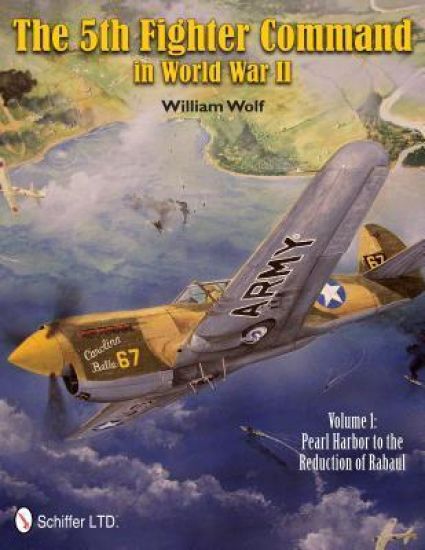
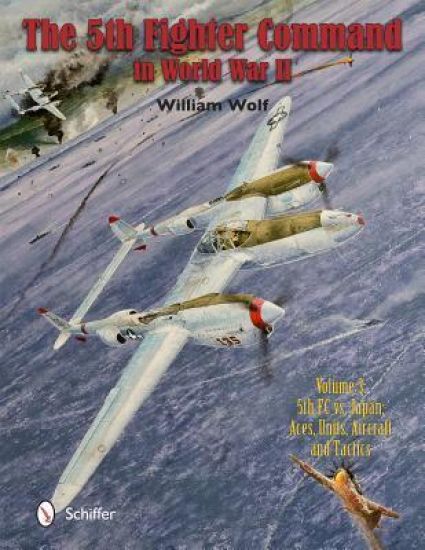
The 5th Fighter Command in World War II

The 5th Fighter Command in World War II

William Wolf

Schiffer Publishing Ltd
2011
sidottu
Since end of WWII the major role played by the 5th Fighter Command in winning the war in the Pacific has been almost totally neglected. Wolf puts the air campaigns into strategic and tactical context, then breaks down every daily air battle into Fighter Groups and Squadrons using unit Narrative Combat Reports. Daily battles are then described by flights, elements, and individual pilots using over 9,000 newly released documents. Vol.1 describes the 5FC precursors in the Philippines, Java, and Australia and continues through Papua and New Guinea, and ends with the reduction of Rabaul in Nov.1943.
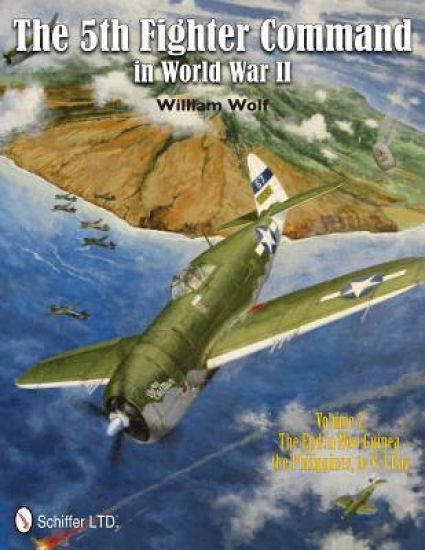
The 5th Fighter Command in World War II Vol. 2

The 5th Fighter Command in World War II Vol. 2

William Wolf

Schiffer Publishing Ltd
2012
sidottu
In Volume 2, of a planned three-volume set, the author continues his definitive history of the 5th Fighter Command combining grand world strategy and Pacific strategy with subsequent land and air campaigns. This book describes the 5FC as it continues on the offensive after the reduction of Rabaul in November 1943 and then decimates Japanese air power over western New Guinea, and on its approach to the Philippines. The final destruction of Japanese air and ground forces during the Philippines’ Campaigns until V-J Day concludes this ultimate chronicle of the Fifth Fighter Command making this history a must for every World War II aviation enthusiast. Volume three will cover: 5FC vs. Japan: Aces, Units, Aircraft, and Tactics.
The Fifth Fighter Command in World War II

The Fifth Fighter Command in World War II

William Wolf

Schiffer Publishing Ltd
2014
sidottu
Following his first two massive volumes describing the day-by-day history of the 5th Fighter Command and associated tactical, strategic, and grand strategy, William Wolf completes the trilogy with this volume. The aces of the 5FC are now personalized, and their fighters described, and Japanese aces are portrayed for the first time. American and Japanese pilot training and their importance to the outcome of the war is discussed and compared. Details of the 5FC Groups and Squadrons are revealed, as are those of the Japanese Naval and Army Air Forces. The details of the aircraft of the two combatants are compared, and the vulnerability of Japanese aircraft is discussed. The flying of the six aircraft types of the 5th Fighter Command is first described from Pilot Flight Manuals, then by the aces who flew them. Japanese and American combat maneuvers and tactics are described. The crucial importance of logistics and the construction of airfields are also discussed, along with maintenance and repair. Finally, the air war is presented from the Japanese viewpoint, including the causes for the defeat of its air forces.
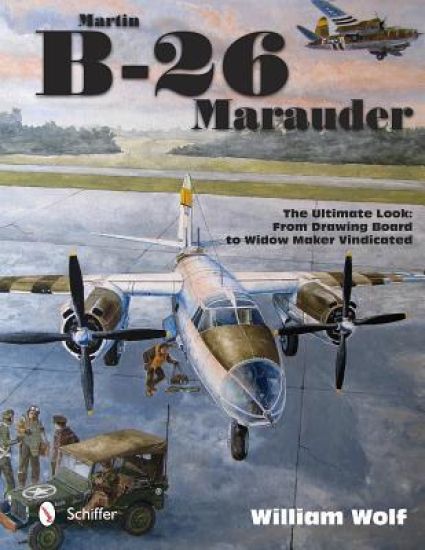
Martin B-26 Marauder

Martin B-26 Marauder

William Wolf

Schiffer Publishing Ltd
2014
sidottu
In his fifth book in The Ultimate Look series, Dr. Wolf again brings the same degree of meticulous research to describe this unappreciated and misunderstood B-26 medium bomber. This massive, comprehensive volume is the first to give the reader a definitive description of this neglected bomber, its development, testing, and manufacture. The role of the enigmatic aviation icon Glenn L. Martin is described in the development of the American aviation industry and the Marauder. The author made extensive use of the massive document and photo collections of the Marauder Archives at Akron and Tucson, and the Air Force collection at the NMUSAF. Martin Company design and production information and flight and test evaluations, along with original Company Flight, Parts, and Maintenance Manuals, and rare archival microfilm of original material were also used. The author was given unprecedented access to the family records of B-26 designer Peyton Magruder. The text is complemented by archival photos and drawings, and new color photos of the Marauders at the NMUSAF, Fantasy of Flight, and MAPS Museum.
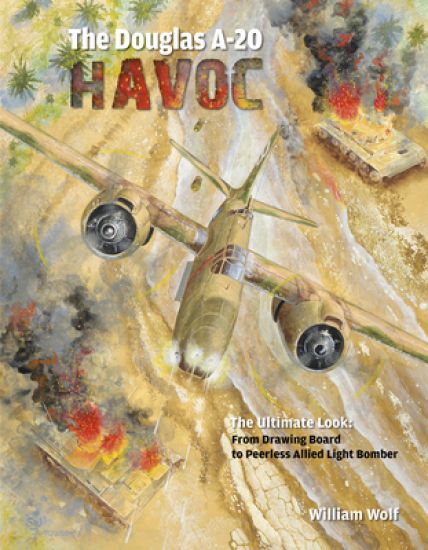
The Douglas A-20 Havoc

The Douglas A-20 Havoc

William Wolf

Schiffer Publishing Ltd
2015
sidottu
Of all the Allied bombers of WWII, the Douglas A-20 Havoc is probably the least well known, but was a major contributor to the air war effort, flying yeoman and unheralded missions not only for the USAAF, but also for the Royal Air Forces of Britain, South Africa, and Australia; the Vichy and Free French Air Forces; and most importantly, for the Soviet Army and Navy Air Forces, where more A-20s flew than with the USAAF. This is the sixth in the “Ultimate Look” series and presents the same meticulous depth of research as the other books, using a multitude of original sources, technical manuals, and photographs. It includes an in-depth look into the history of the Douglas Company, its founder, Donald Douglas, and its legendary designer, Ed Heinemann. This book is truly the definitive look at the Havoc.
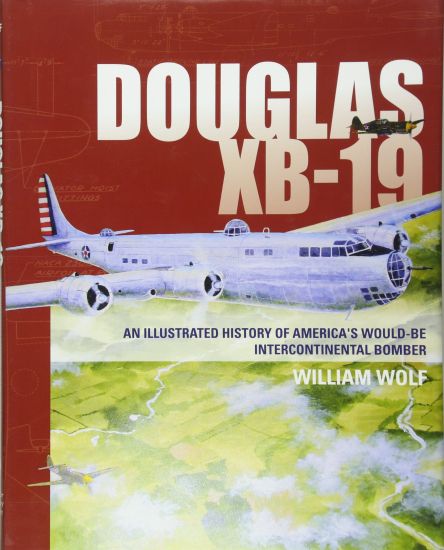
Douglas XB-19

Douglas XB-19

William Wolf

Schiffer Publishing Ltd
2017
sidottu
In 1935, the intent of the Army Air Corps was to build a potential intercontinental bomber, a “Guardian of the Hemisphere”; they granted Donald Douglas a contract to build the world’s largest bomber. Over the past 75 years, there have only been a few magazine articles on the gigantic Douglas XB-19 bomber, usually showing it in photos dwarfing the aircraft around it. Since the XB-19 project was top secret and there was only one example, there is little information remaining for researchers. William Wolf presents this enigmatic bomber, a “Flying Laboratory” that was the precursor to America’s first intercontinental bomber, the Continental B-36 Peacemaker. Wolf has used original Douglas and Army Air Force documents and very rare (as few were needed for one bomber) Erection & Maintenance Manuals in this history, which also includes never-seen-before photos and color profiles. This volume is a must for the aviation historian, enthusiast, and modeler.
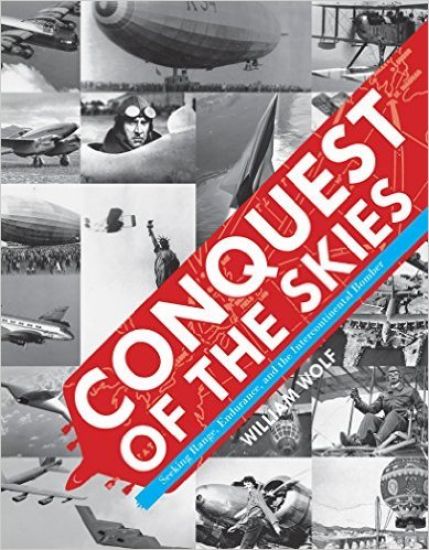
Conquest of the Skies

Conquest of the Skies

William Wolf

Schiffer Publishing Ltd
2017
sidottu
This meticulously researched volume is a must in the library of any aviation buff: the most comprehensive descriptive and illustrated history of military and civilian aircraft and their pilots (men and women) to increase the range and endurance of their aircraft. Beginning with the proof of concept efforts to establish the airplane as a true flying machine from 1900 to WWI, it then delves into civilian and military efforts by country, with the civilian effort mainly for personal achievement and the military for ultimately developing the intercontinental bomber and beyond. Hundreds of daring civilian flights of the 1920s and '30s are described by nation until the start of WWII. The inflight refueling mania of the 1930s and pre- and post-WWII military refueling efforts are covered. Post-WWII civilian aircraft and military fighter distance record attempts are included, as are the efforts of the Cold War and beyond. Also described are airline, seaplane, balloon, glider, hang glider, solar, and human-powered aircraft accounts.