Kirjojen hintavertailu. Mukana 11 244 527 kirjaa ja 12 kauppaa.

Kirjahaku

Etsi kirjoja tekijän nimen, kirjan nimen tai ISBN:n perusteella.

1000 tulosta hakusanalla William de Morgan

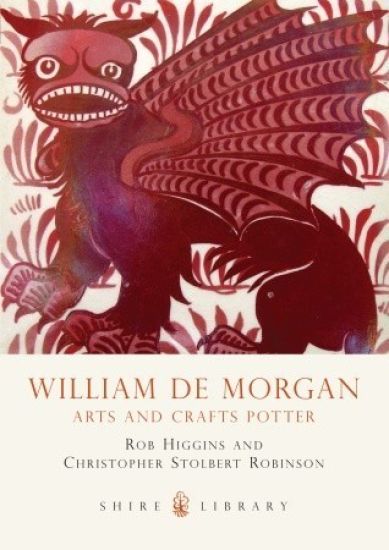
William De Morgan

William De Morgan

Rob Higgins; Christopher Stolbert Robinson

Shire Publications
2010
nidottu
William De Morgan designed and manufactured ceramics from 1870 to 1907, and lifelong friendships with William Morris and Edward Burne-Jones placed him at the heart of the Arts and Crafts revolution. After designing stained glass for William Morris, De Morgan set up his own pottery works. His personal vision was for intense underglaze colours and shimmering lustres to show off his designs of fabulous animals, rich florals, and flowing Persian curves. De Morgan was unquestionably the Arts and Crafts Movement's most important potter. Today his work is part of some of the world's major art collections. This is the only book available that looks at the man and his works.
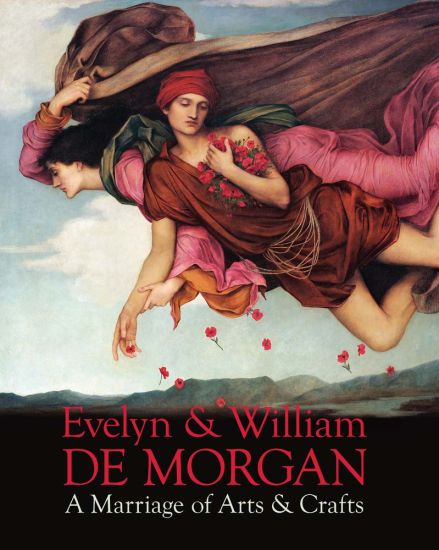
Evelyn & William De Morgan

Evelyn & William De Morgan

YALE UNIVERSITY PRESS
2022
sidottu
A lively and multi-faceted account of Evelyn and William De Morgan, exploring a unique artistic partnership that spanned several cultural circles including the Pre-Raphaelites and Arts and Crafts movement With a partnership spanning two centuries, the Pre-Raphaelite painter Evelyn (1855–1919) and Arts and Crafts potter and author William De Morgan (1839–1917) influenced several significant art movements in nineteenth-century Britain. Despite this, their impact has been relatively overlooked in comparison with their better-known contemporaries. Evelyn & William De Morgan is the first major publication devoted to the work of either artist and their unique relationship. It draws out each artist’s individuality while providing a comprehensive view of the expanded cultural milieu in which they functioned, not least with regard to new attitudes towards Victorian marriage as a working partnership. The fully illustrated publication features numerous contributions which explore the reach of the De Morgans’ partnership, their political and spiritual interests, and their immersion within several influential cultural circles of the day, including Pre-Raphaelite, Arts and Crafts, and Aesthetic Movement groups. The book presents a lively and multifaceted account of the De Morgans and their creative partnership. Published in association with Delaware Art MuseumExhibition Schedule:Delaware Art Museum, Wilmington October 22, 2022–January 29, 2023Crocker Art Museum, Sacramento, CA September 17, 2023– January 7, 2024Museum of Fine Arts, St. Petersburg, FL January 27, 2024–May 2024
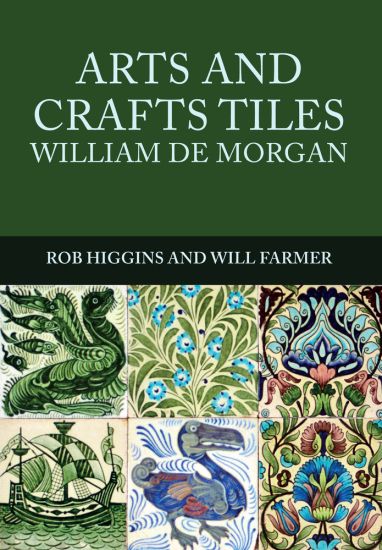
Arts and Crafts Tiles: William de Morgan

Arts and Crafts Tiles: William de Morgan

Rob Higgins; Will Farmer

Amberley Publishing
2017
nidottu
William De Morgan was the principal ceramic designer and maker in the Arts and Crafts Movement. Heavily influenced by the art of the Middle East, he was active for nearly thirty years from the 1870s onwards and was never content with an existing technical process if he thought it could be improved. He is famous for his vases and decorative chargers, but it is arguably his tiles – still to be found in homes and museums around Britain and the world – that have made the greatest impact. His tiles portray iconic images of animals, ships and floral designs, blending style influences to produce designs that featured new, stylized interpretations and a whimsical character. He combined a strong design style with rich glaze colours, making blue and green, and a deep orangey red into visual trademarks. There were important commissions from royalty and industry, and his ceramics were marketed to the growing middle classes by William Morris, the founder and leading light of the Arts and Crafts Movement. The tiles of the Arts and Crafts Movement are now highly collectible, and none more so than those made at William De Morgan’s Chelsea, Merton Abbey and Fulham potteries. This highly illustrated book, by acknowledged experts on De Morgan, presents the first study of the tiles to be published in over thirty-five years and features an examination of De Morgan’s lustre glazes using high sensitivity X-ray analysis.