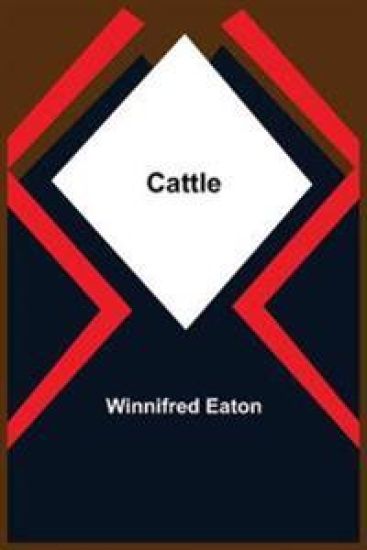
A novel from the dark heart of early twentieth-century Alberta, featuring a new introduction by Dr. Lily Cho.A bully cattle rancher upends the lives of everyone he encounters and a pandemic makes those lives even more precarious. A full century after its first publication, Cattle remains a story of brutality. A curious Canadian mixture of Hardy and Steinbeck,Cattle is built on the deep contradictions of a settler ideology, asking readers to not look away from the many modes of violence bound up in Canadian history.Our Throwback books also give back: a percentage of each book’s sales will be donated to a designated Canadian cultural organization. Royalties from sales of Cattle benefit Central Alberta Women’s Emergency Shelter.
Daughters of a British father and a Chinese mother, Edith and Winnifred Eaton pursued wildly different paths. While Edith wrote stories of downtrodden Chinese immigrants under the pen name Sui Sin Far, Winnifred presented herself as Japanese American and published Japanese romance novels in English under the name Onoto Watanna. In this invigorating reappraisal of the vision and accomplishments of the Eaton sisters, Dominika Ferens departs boldly from the dichotomy that has informed most commentary on them: Edith's "authentic" representations of Chinese North Americans versus Winnifred's "phony" portrayals of Japanese characters and settings. Arguing that Edith as much as Winnifred constructed her persona along with her pen name, Ferens considers the fiction of both Eaton sisters as ethnography. Edith and Winnifred Eaton suggests that both authors wrote through the filter of contemporary ethnographic discourse on the Far East and also wrote for readers hungry for "authentic" insight into the morals, manners, and mentality of an exotic other. Ferens traces two distinct discursive traditions–-missionary and travel writing–-that shaped the meanings of "China" and "Japan" in the nineteenth century. She shows how these traditions intersected with the unconventional literary careers of the Eaton sisters, informing the sober, moralistic tone of Edith's stories as well as Winnifred's exotic narrative style, plots, settings, and characterizations. Bringing to the Eatons' writings a contemporary understanding of the racial and textual politics of ethnographic writing, this important account shows how these two very different writers claimed ethnographic authority, how they used that authority to explore ideas of difference, race, class and gender, and how their depictions of nonwhites worked to disrupt the process of whites' self-definition.
This book has been considered important throughout the human history, and so that this work is never forgotten Alpha Editions has made efforts in its preservation by republishing this book in a modern format for the present and future generations. This whole book has been re-formatted, re-typed and re-designed. These books are not made of scanned copies of their original work, and hence the text is clear and readable.
The daughter of an English merchant father and Chinese mother, Winnifred Eaton (1875-1954) was a wildly popular fiction writer in her time. Born in Montreal, Eaton lived in Jamaica and several places in the United States before settling in Alberta. Her books, many of them published under the Japanese pseudonym Onoto Watanna, encompass the experiences of marginalized women in Canada, Jamaica, the United States, and a romantic, imagined Japan. Marion: The Story of an Artist's Model is Eaton's only book that explicitly deals with being "foreign" in Canada. The novel follows the life of "half-foreign" Marion Ascough - a character based on Eaton's own sister - while never identifying her "foreignness." Escaping the unrelenting racial discrimination her family endures in Quebec, Marion follows her dream of being an artist by moving to New York, where she becomes "Canadian" instead of ethnic - a more palatable foreignness. Having successfully stripped herself of her ethnicity, Marion continues to experience discrimination and objectification as a woman, failing as an artist and becoming an artist's model. Karen Skinazi's introduction to Eaton's fascinating narrative draws attention to the fact that although the novel uses many of the conventions of the "race secret" story, this time the secret is never revealed. This new edition of Marion: The Story of An Artist's Model brings back into print a compelling and sophisticated treasure of Asian Canadian/American fiction that offers a rare perspective on ethnicity, gender, and identity.
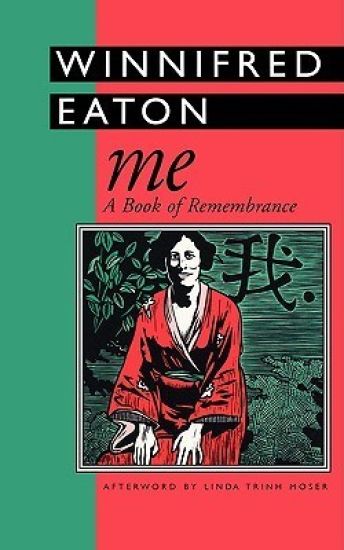
Ironically, Winnifred Eaton published most of her works under a Japanese-sounding name, Onoto Watanna, but she was of Chinese ancestry. In Me: Book of Rembrance her narrator is called Nora Ascouth, but in the plot, as Nora journeys from her birthplace in Canada to the West Indies and to the United States, Eaton recounts her own early life and writing career. One of sixteen children, Nora leaves her destitute family in Quebec to earn a living. Only seventeen and with ten dollars in her pocket she sets sail for Jamaica and the chance to do newspaper work. Nora ends up in Chicago, moving from job to job, trying all along to sell stories she writes in her spare time. When she discovers that the man with whom she is in love is married, she moves to New York and gains achievement as a novelist. Against this nineteenth-century sensibility of Nora's search for success and love, Eaton conveys the powerlessness of the typical young woman of the working class. Her autobiographical plotline discloses a remarkable secret, Eaton's reticence about her own half-Chinese ancestry. Despite the silence of the text, Me: A Book of Rembrance reveals turn-of-the-century views on race, gender, and class. In Jamaica Nora describes the racial inequities and disparities. Moreover, when she says, ""I myself was dark and foreign-looking, but the blond type I adored,"" she reveals the extent of her own internalized oppression. Although the author believes her own mixed ancestry precludes prejudice on her part, the text proves otherwise. Like other ethnic immigrants, Nora is indoctrinated into America's Anglo preference.
NEW PRINT WITH PROFESSIONAL TYPE-SET IN CONTRAST TO SCANNED PRINTS OFFERED BY OTHERS Cattle This book is a result of an effort made by us towards making a contribution to the preservation and repair of original classic literature. In an attempt to preserve, improve and recreate the original content, we have worked towards: 1. Type-setting & Reformatting: The complete work has been re-designed via professional layout, formatting and type-setting tools to re-create the same edition with rich typography, graphics, high quality images, and table elements, giving our readers the feel of holding a fresh and newly reprinted and/or revised edition, as opposed to other scanned & printed (Optical Character Recognition - OCR) reproductions. 2. Correction of imperfections: As the work was re-created from the scratch, therefore, it was vetted to rectify certain conventional norms with regard to typographical mistakes, hyphenations, punctuations, blurred images, missing content/pages, and/or other related subject matters, upon our consideration. Every attempt was made to rectify the imperfections related to omitted constructs in the original edition via other references. However, a few of such imperfections which could not be rectified due to intentional\unintentional omission of content in the original edition, were inherited and preserved from the original work to maintain the authenticity and construct, relevant to the work.
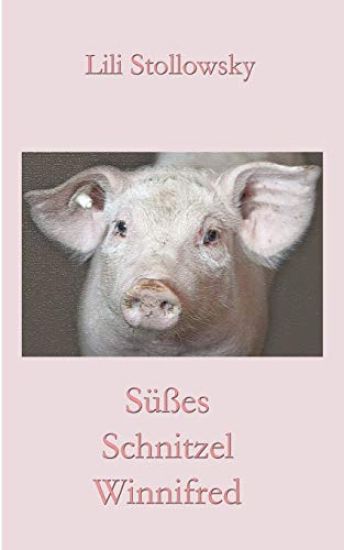
Winnifred, die Hauptperson der Erz hlung, schildert aus seiner Sicht und Erlebniswelt ein Schweineleben in der Massentierhaltung von der Geburt bis zur Schlachtung. Winnifred ist ein lustiges, freches und ziemlich cleveres kleines Ferkel, das mit seinen Geschwistern und Freunden uns Menschen zum Lachen und Nachdenken bringt.
"Must reading for all women advised to have a hysterectomy and all women who have had one... and] all physicians performing them."--R. Don Gambrell, Jr., M.D., Department of Physiology and Endocrinology, Medical College of Georgia
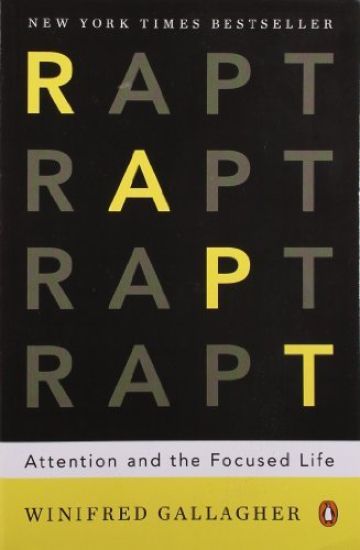
A revolutionary look at how what we pay attention to determines how we experience life Acclaimed behavioral science writer Winifred Gallagher's "Rapt" makes the radical argument that much of the quality of your life depends not on fame or fortune, beauty or brains, fate or coincidence, but on what you choose to pay attention to. "Rapt" introduces a diverse cast of characters, from researchers to artists to ranchers, to illustrate the art of living the interested life. As their stories show, by focusing on the most positive and productive elements of any situation, you can shape your inner experience and expand your world. By learning to focus, you can improve your concentration, broaden your inner horizons, and most important, feel what it means to be fully alive.
Church and state: a simple phrase that reflects one of the most famous and fraught relationships in the history of the United States. But what exactly is “the church,” and how is it understood in US law today? In Church State Corporation, religion and law scholar Winnifred Fallers Sullivan uncovers the deeply ambiguous and often unacknowledged ways in which Christian theology remains alive and at work in the American legal imagination. Through readings of the opinions of the US Supreme Court and other legal texts, Sullivan shows how “the church” as a religious collective is granted special privilege in US law. In-depth analyses of Hosanna-Tabor v. EEOC and Burwell v. Hobby Lobby reveal that the law tends to honor the religious rights of the group—whether in the form of a church, as in Hosanna-Tabor, or in corporate form, as in Hobby Lobby—over the rights of the individual, offering corporate religious entities an autonomy denied to their respective members. In discussing the various communities that construct the “church-shaped space” in American law, Sullivan also delves into disputes over church property, the legal exploitation of the black church in the criminal justice system, and the recent case of Masterpiece Cakeshop v. Colorado Civil Rights Commission. Brimming with insight, Church State Corporation provocatively challenges our most basic beliefs about the ties between religion and law in ostensibly secular democracies.
Church and state: a simple phrase that reflects one of the most famous and fraught relationships in the history of the United States. But what exactly is “the church,” and how is it understood in US law today? In Church State Corporation, religion and law scholar Winnifred Fallers Sullivan uncovers the deeply ambiguous and often unacknowledged ways in which Christian theology remains alive and at work in the American legal imagination. Through readings of the opinions of the US Supreme Court and other legal texts, Sullivan shows how “the church” as a religious collective is granted special privilege in US law. In-depth analyses of Hosanna-Tabor v. EEOC and Burwell v. Hobby Lobby reveal that the law tends to honor the religious rights of the group—whether in the form of a church, as in Hosanna-Tabor, or in corporate form, as in Hobby Lobby—over the rights of the individual, offering corporate religious entities an autonomy denied to their respective members. In discussing the various communities that construct the “church-shaped space” in American law, Sullivan also delves into disputes over church property, the legal exploitation of the black church in the criminal justice system, and the recent case of Masterpiece Cakeshop v. Colorado Civil Rights Commission. Brimming with insight, Church State Corporation provocatively challenges our most basic beliefs about the ties between religion and law in ostensibly secular democracies.
Most people in the United States today no longer live their lives under the guidance of local institutionalized religious leadership, such as rabbis, ministers, and priests; rather, liberals and conservatives alike have taken charge of their own religious or spiritual practices. This shift, along with other social and cultural changes, has opened up a perhaps surprising space for chaplains--spiritual professionals who usually work with the endorsement of a religious community but do that work away from its immediate hierarchy, ministering in a secular institution, such as a prison, the military, or an airport, to an ever-changing group of clients of widely varying faiths and beliefs. In A Ministry of Presence, Winnifred Fallers Sullivan explores how chaplaincy works in the United States--and in particular how it sits uneasily at the intersection of law and religion, spiritual care, and government regulation. Responsible for ministering to the wandering souls of the globalized economy, the chaplain works with a clientele often unmarked by a specific religious identity, and does so on behalf of a secular institution, like a hospital. Sullivan's examination of the sometimes heroic but often deeply ambiguous work yields fascinating insights into contemporary spiritual life, the politics of religious freedom, and the never-ending negotiation of religion's place in American institutional life.
Most people in the United States today no longer live their lives under the guidance of local institutionalized religious leadership, such as rabbis, ministers, and priests; rather, liberals and conservatives alike have taken charge of their own religious or spiritual practices. This shift, along with other social and cultural changes, has opened up a perhaps surprising space for chaplains-spiritual professionals who usually work with the endorsement of a religious community but do that work away from its immediate hierarchy, ministering in a secular institution, such as a prison, the military, or an airport, to an ever-changing group of clients of widely varying faiths and beliefs. In A Ministry of Presence, Winnifred Fallers Sullivan explores how chaplaincy works in the United States - and in particular how it sits uneasily at the intersection of law and religion, spiritual care and government regulation. Responsible for ministering to the wandering souls of the globalized economy, the chaplain works with a clientele often unmarked by a specific religious identity, and does so on behalf of a secular institution, like a hospital. Chaplains' examination of the sometimes heroic but often deeply ambiguous work yields fascinating insights into contemporary spiritual life, the politics of religious freedom, and the never ending negotiation of religion's place in American institutional life.
There is an enduring fascination with Joan of Arc, yet she is almost always seen alone, as a victim or martyr. A strikingly different person is heard in her letters and the testimony of her companions. To the king of England, she wrote, “I am a commander of war, and in whatever place I come upon your men in France, I will make them leave . . . And if they do not wish to obey, I will have them all killed.” She wrote to the people of the towns she defended, giving them news and seeking their support. Her companions spoke of her intelligence, bravery, and military competence. Hers was a collective mission to rescue the people from the depredations of war. Focusing on her life rather than her death, Winnifred Fallers Sullivan offers an interpretation of Joan of Arc as a political thinker and actor who sought, during her meteoric presence in fifteenth-century France, to legitimate a king, channel God’s word, convene a coronation, and speak for the people in an alternative legal order. She assembled sacred kingship, mystical experience, and the press of political and economic chaos into a vernacular political theology that still speaks to our moment. Making a King illuminates Joan’s extraordinary life and vision—her conception of sovereignty from below, her form of female masculinity, and her power as kingmaker—and shows why she can help us find a deeper understanding of religion and politics today.
There is an enduring fascination with Joan of Arc, yet she is almost always seen alone, as a victim or martyr. A strikingly different person is heard in her letters and the testimony of her companions. To the king of England, she wrote, “I am a commander of war, and in whatever place I come upon your men in France, I will make them leave . . . And if they do not wish to obey, I will have them all killed.” She wrote to the people of the towns she defended, giving them news and seeking their support. Her companions spoke of her intelligence, bravery, and military competence. Hers was a collective mission to rescue the people from the depredations of war. Focusing on her life rather than her death, Winnifred Fallers Sullivan offers an interpretation of Joan of Arc as a political thinker and actor who sought, during her meteoric presence in fifteenth-century France, to legitimate a king, channel God’s word, convene a coronation, and speak for the people in an alternative legal order. She assembled sacred kingship, mystical experience, and the press of political and economic chaos into a vernacular political theology that still speaks to our moment. Making a King illuminates Joan’s extraordinary life and vision—her conception of sovereignty from below, her form of female masculinity, and her power as kingmaker—and shows why she can help us find a deeper understanding of religion and politics today.