Kirjojen hintavertailu. Mukana 11 244 527 kirjaa ja 12 kauppaa.

Kirjahaku

Etsi kirjoja tekijän nimen, kirjan nimen tai ISBN:n perusteella.

963 tulosta hakusanalla Winnifred Fallers Sullivan

A Ministry of Presence

A Ministry of Presence

Winnifred Fallers Sullivan

University of Chicago Press
2019
pokkari
Most people in the United States today no longer live their lives under the guidance of local institutionalized religious leadership, such as rabbis, ministers, and priests; rather, liberals and conservatives alike have taken charge of their own religious or spiritual practices. This shift, along with other social and cultural changes, has opened up a perhaps surprising space for chaplains--spiritual professionals who usually work with the endorsement of a religious community but do that work away from its immediate hierarchy, ministering in a secular institution, such as a prison, the military, or an airport, to an ever-changing group of clients of widely varying faiths and beliefs. In A Ministry of Presence, Winnifred Fallers Sullivan explores how chaplaincy works in the United States--and in particular how it sits uneasily at the intersection of law and religion, spiritual care, and government regulation. Responsible for ministering to the wandering souls of the globalized economy, the chaplain works with a clientele often unmarked by a specific religious identity, and does so on behalf of a secular institution, like a hospital. Sullivan's examination of the sometimes heroic but often deeply ambiguous work yields fascinating insights into contemporary spiritual life, the politics of religious freedom, and the never-ending negotiation of religion's place in American institutional life.
A Ministry of Presence

A Ministry of Presence

Winnifred Fallers Sullivan

University of Chicago Press
2014
sidottu
Most people in the United States today no longer live their lives under the guidance of local institutionalized religious leadership, such as rabbis, ministers, and priests; rather, liberals and conservatives alike have taken charge of their own religious or spiritual practices. This shift, along with other social and cultural changes, has opened up a perhaps surprising space for chaplains-spiritual professionals who usually work with the endorsement of a religious community but do that work away from its immediate hierarchy, ministering in a secular institution, such as a prison, the military, or an airport, to an ever-changing group of clients of widely varying faiths and beliefs. In A Ministry of Presence, Winnifred Fallers Sullivan explores how chaplaincy works in the United States - and in particular how it sits uneasily at the intersection of law and religion, spiritual care and government regulation. Responsible for ministering to the wandering souls of the globalized economy, the chaplain works with a clientele often unmarked by a specific religious identity, and does so on behalf of a secular institution, like a hospital. Chaplains' examination of the sometimes heroic but often deeply ambiguous work yields fascinating insights into contemporary spiritual life, the politics of religious freedom, and the never ending negotiation of religion's place in American institutional life.
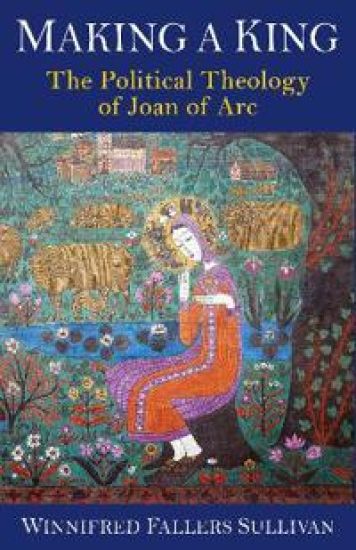
Making a King

Making a King

Winnifred Fallers Sullivan

Columbia University Press
2026
sidottu
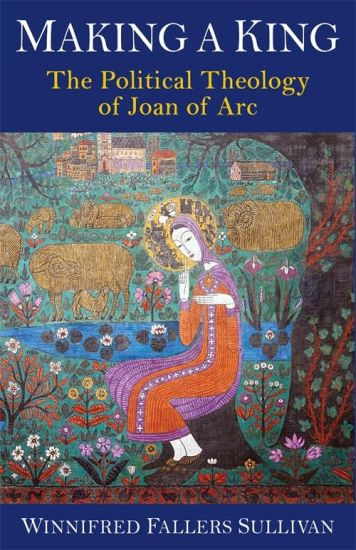
There is an enduring fascination with Joan of Arc, yet she is almost always seen alone, as a victim or martyr. A strikingly different person is heard in her letters and the testimony of her companions. To the king of England, she wrote, “I am a commander of war, and in whatever place I come upon your men in France, I will make them leave . . . And if they do not wish to obey, I will have them all killed.” She wrote to the people of the towns she defended, giving them news and seeking their support. Her companions spoke of her intelligence, bravery, and military competence. Hers was a collective mission to rescue the people from the depredations of war. Focusing on her life rather than her death, Winnifred Fallers Sullivan offers an interpretation of Joan of Arc as a political thinker and actor who sought, during her meteoric presence in fifteenth-century France, to legitimate a king, channel God’s word, convene a coronation, and speak for the people in an alternative legal order. She assembled sacred kingship, mystical experience, and the press of political and economic chaos into a vernacular political theology that still speaks to our moment. Making a King illuminates Joan’s extraordinary life and vision—her conception of sovereignty from below, her form of female masculinity, and her power as kingmaker—and shows why she can help us find a deeper understanding of religion and politics today.
Making a King

Making a King

Winnifred Fallers Sullivan

Columbia University Press
2026
pokkari
There is an enduring fascination with Joan of Arc, yet she is almost always seen alone, as a victim or martyr. A strikingly different person is heard in her letters and the testimony of her companions. To the king of England, she wrote, “I am a commander of war, and in whatever place I come upon your men in France, I will make them leave . . . And if they do not wish to obey, I will have them all killed.” She wrote to the people of the towns she defended, giving them news and seeking their support. Her companions spoke of her intelligence, bravery, and military competence. Hers was a collective mission to rescue the people from the depredations of war. Focusing on her life rather than her death, Winnifred Fallers Sullivan offers an interpretation of Joan of Arc as a political thinker and actor who sought, during her meteoric presence in fifteenth-century France, to legitimate a king, channel God’s word, convene a coronation, and speak for the people in an alternative legal order. She assembled sacred kingship, mystical experience, and the press of political and economic chaos into a vernacular political theology that still speaks to our moment. Making a King illuminates Joan’s extraordinary life and vision—her conception of sovereignty from below, her form of female masculinity, and her power as kingmaker—and shows why she can help us find a deeper understanding of religion and politics today.
Prison Religion

Prison Religion

Winnifred Fallers Sullivan

Princeton University Press
2011
pokkari
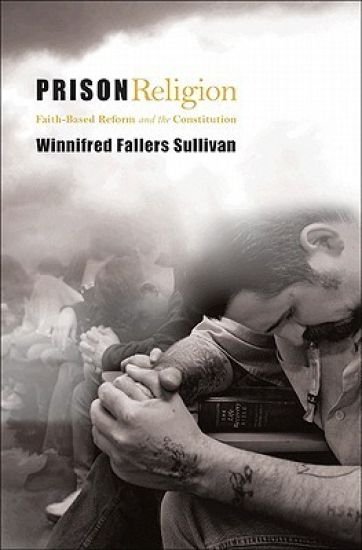
More than the citizens of most countries, Americans are either religious or in jail--or both. But what does it mean when imprisonment and evangelization actually go hand in hand, or at least appear to? What do "faith-based" prison programs mean for the constitutional separation of church and state, particularly when prisoners who participate get special privileges? In Prison Religion, law and religion scholar Winnifred Fallers Sullivan takes up these and other important questions through a close examination of a 2005 lawsuit challenging the constitutionality of a faith-based residential rehabilitation program in an Iowa state prison. Americans United for the Separation of Church and State v. Prison Fellowship Ministries, a trial in which Sullivan served as an expert witness, centered on the constitutionality of allowing religious organizations to operate programs in state-run facilities. Using the trial as a case study, Sullivan argues that separation of church and state is no longer possible. Religious authority has shifted from institutions to individuals, making it difficult to define religion, let alone disentangle it from the state. Prison Religion casts new light on church-state law, the debate over government-funded faith-based programs, and the predicament of prisoners who have precious little choice about what kind of rehabilitation they receive, if they are offered any at all.
The Impossibility of Religious Freedom

The Impossibility of Religious Freedom

Winnifred Fallers Sullivan

Princeton University Press
2018
pokkari
The Constitution may guarantee it. But religious freedom in America is, in fact, impossible. So argues this timely and iconoclastic work by law and religion scholar Winnifred Sullivan. Sullivan uses as the backdrop for the book the trial of Warner vs. Boca Raton, a recent case concerning the laws that protect the free exercise of religion in America. The trial, for which the author served as an expert witness, concerned regulations banning certain memorials from a multiconfessional nondenominational cemetery in Boca Raton, Florida. The book portrays the unsuccessful struggle of Catholic, Protestant, and Jewish families in Boca Raton to preserve the practice of placing such religious artifacts as crosses and stars of David on the graves of the city-owned burial ground.Sullivan demonstrates how, during the course of the proceeding, citizens from all walks of life and religious backgrounds were harassed to define just what their religion is. She argues that their plight points up a shocking truth: religion cannot be coherently defined for the purposes of American law, because everyone has different definitions of what religion is. Indeed, while religious freedom as a political idea was arguably once a force for tolerance, it has now become a force for intolerance, she maintains.A clear-eyed look at the laws created to protect religious freedom, this vigorously argued book offers a new take on a right deemed by many to be necessary for a free democratic society. It will have broad appeal not only for religion scholars, but also for anyone interested in law and the Constitution.Featuring a new preface by the author, The Impossibility of Religious Freedom offers a new take on a right deemed by many to be necessary for a free democratic society.
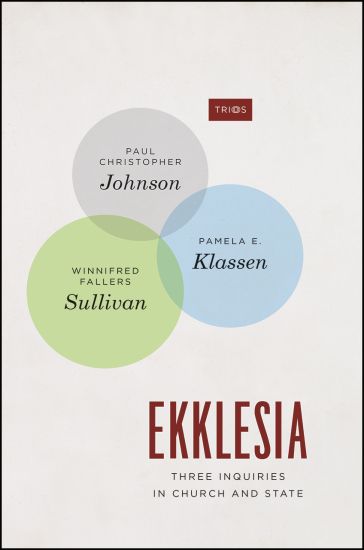
Ekklesia

Ekklesia

Paul Christopher Johnson; Pamela E. Klassen; Winnifred Fallers Sullivan

University of Chicago Press
2018
sidottu
Ekklesia: Three Inquiries in Church and State offers a New World rejoinder to the largely Europe-centered academic discourse on church and state. In contrast to what is often assumed, in the Americas the relationship between church and state has not been one of freedom or separation but one of unstable and adaptable collusion. Ekklesia sees in the settler states of North and South America alternative patterns of conjoined religious and political power, patterns resulting from the undertow of other gods, other peoples, and other claims to sovereignty. These local challenges have led to a continuously contested attempt to realize a church-minded state, a state-minded church, and the systems that develop in their concert. The shifting borders of their separation and the episodic conjoining of church and state took new forms in both theory and practice. The first of a closely linked trio of essays is by Paul Johnson, and offers a new interpretation of the Brazilian community gathered at Canudos and its massacre in 1896-97, carried out as a joint church-state mission and spectacle. In the second essay, Pamela Klassen argues that the colonial church-state relationship of Canada came into being through local and national practices that emerged as Indigenous nations responded to and resisted becoming "possessions" of colonial British America. Finally, Winnifred Sullivan's essay begins with reflection on the increased effort within the United States to ban Bibles and scriptural references from death penalty courtrooms and jury rooms; she follows with a consideration of the political theological pressure thereby placed on the jury that decides between life and death. Through these three inquiries, Ekklesia takes up the familiar topos of "church and state" in order to render it strange.
Ekklesia

Ekklesia

Paul Christopher Johnson; Pamela E. Klassen; Winnifred Fallers Sullivan

University of Chicago Press
2018
pokkari
Ekklesia: Three Inquiries in Church and State offers a New World rejoinder to the largely Europe-centered academic discourse on church and state. In contrast to what is often assumed, in the Americas the relationship between church and state has not been one of freedom or separation but one of unstable and adaptable collusion. Ekklesia sees in the settler states of North and South America alternative patterns of conjoined religious and political power, patterns resulting from the undertow of other gods, other peoples, and other claims to sovereignty. These local challenges have led to a continuously contested attempt to realize a church-minded state, a state-minded church, and the systems that develop in their concert. The shifting borders of their separation and the episodic conjoining of church and state took new forms in both theory and practice. The first of a closely linked trio of essays is by Paul Johnson, and offers a new interpretation of the Brazilian community gathered at Canudos and its massacre in 1896-97, carried out as a joint church-state mission and spectacle. In the second essay, Pamela Klassen argues that the colonial church-state relationship of Canada came into being through local and national practices that emerged as Indigenous nations responded to and resisted becoming "possessions" of colonial British America. Finally, Winnifred Sullivan's essay begins with reflection on the increased effort within the United States to ban Bibles and scriptural references from death penalty courtrooms and jury rooms; she follows with a consideration of the political theological pressure thereby placed on the jury that decides between life and death. Through these three inquiries, Ekklesia takes up the familiar topos of "church and state" in order to render it strange.
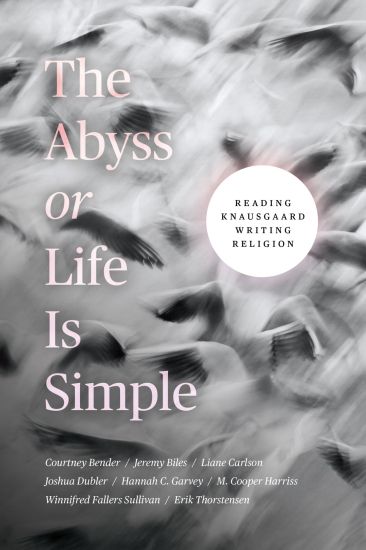
The Abyss or Life Is Simple

The Abyss or Life Is Simple

Courtney Bender; Jeremy Biles; Liane Carlson; Joshua Dubler; Hannah C. Garvey; M. Cooper Harriss; Winnifred Fallers Sullivan; Erik Thorstensen

THE UNIVERSITY OF CHICAGO PRESS
2022
sidottu
An absorbing collection of essays on religious textures in Knausgaard’s writings and our time.Min kamp, or My Struggle, is a six-volume novel by Karl Ove Knausgaard and one of the most significant literary works of the young twenty-first century. Published in Norwegian between 2009 and 2011, the novel presents an absorbing first-person narrative of the life of a writer with the same name as the author, in a world at once fully disillusioned and thoroughly enchanted. In 2015, a group of scholars began meeting to discuss the peculiarly religious qualities of My Struggle. Some were interested in Knausgaard’s attention to explicitly religious subjects and artworks, others to what they saw as more diffuse attention to the religiousness of contemporary life. The group wondered what reading these textures of religion in these volumes might say about our times, about writing, and about themselves. The Abyss or Life Is Simple is the culmination of this collective endeavor—a collection of interlocking essays on ritual, beauty, and the end of the world.
The Abyss or Life Is Simple

The Abyss or Life Is Simple

Courtney Bender; Jeremy Biles; Liane Carlson; Joshua Dubler; Hannah C. Garvey; M. Cooper Harriss; Winnifred Fallers Sullivan; Erik Thorstensen

THE UNIVERSITY OF CHICAGO PRESS
2022
nidottu
An absorbing collection of essays on religious textures in Knausgaard’s writings and our time.Min kamp, or My Struggle, is a six-volume novel by Karl Ove Knausgaard and one of the most significant literary works of the young twenty-first century. Published in Norwegian between 2009 and 2011, the novel presents an absorbing first-person narrative of the life of a writer with the same name as the author, in a world at once fully disillusioned and thoroughly enchanted. In 2015, a group of scholars began meeting to discuss the peculiarly religious qualities of My Struggle. Some were interested in Knausgaard’s attention to explicitly religious subjects and artworks, others to what they saw as more diffuse attention to the religiousness of contemporary life. The group wondered what reading these textures of religion in these volumes might say about our times, about writing, and about themselves. The Abyss or Life Is Simple is the culmination of this collective endeavor—a collection of interlocking essays on ritual, beauty, and the end of the world.
Edith and Winnifred Eaton

Edith and Winnifred Eaton

Dominika Ferens

University of Illinois Press
2002
sidottu
Daughters of a British father and a Chinese mother, Edith and Winnifred Eaton pursued wildly different paths. While Edith wrote stories of downtrodden Chinese immigrants under the pen name Sui Sin Far, Winnifred presented herself as Japanese American and published Japanese romance novels in English under the name Onoto Watanna. In this invigorating reappraisal of the vision and accomplishments of the Eaton sisters, Dominika Ferens departs boldly from the dichotomy that has informed most commentary on them: Edith's "authentic" representations of Chinese North Americans versus Winnifred's "phony" portrayals of Japanese characters and settings. Arguing that Edith as much as Winnifred constructed her persona along with her pen name, Ferens considers the fiction of both Eaton sisters as ethnography. Edith and Winnifred Eaton suggests that both authors wrote through the filter of contemporary ethnographic discourse on the Far East and also wrote for readers hungry for "authentic" insight into the morals, manners, and mentality of an exotic other. Ferens traces two distinct discursive traditions–-missionary and travel writing–-that shaped the meanings of "China" and "Japan" in the nineteenth century. She shows how these traditions intersected with the unconventional literary careers of the Eaton sisters, informing the sober, moralistic tone of Edith's stories as well as Winnifred's exotic narrative style, plots, settings, and characterizations. Bringing to the Eatons' writings a contemporary understanding of the racial and textual politics of ethnographic writing, this important account shows how these two very different writers claimed ethnographic authority, how they used that authority to explore ideas of difference, race, class and gender, and how their depictions of nonwhites worked to disrupt the process of whites' self-definition.
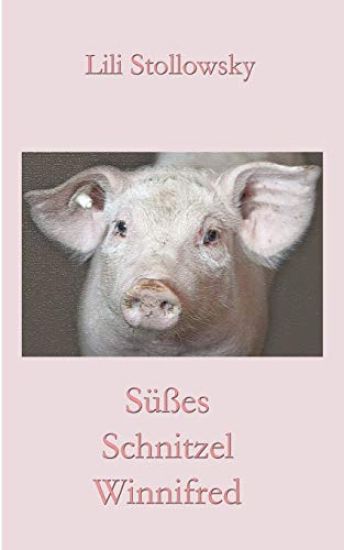
Süßes Schnitzel Winnifred

Süßes Schnitzel Winnifred

Lili Stollowsky

Books on Demand
2017
pokkari
Winnifred, die Hauptperson der Erz hlung, schildert aus seiner Sicht und Erlebniswelt ein Schweineleben in der Massentierhaltung von der Geburt bis zur Schlachtung. Winnifred ist ein lustiges, freches und ziemlich cleveres kleines Ferkel, das mit seinen Geschwistern und Freunden uns Menschen zum Lachen und Nachdenken bringt.
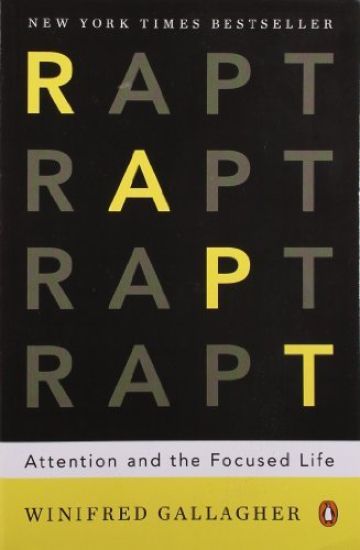
Rapt

Rapt

Winnifred Gallagher

J.P.Tarcher,U.S./Perigee Bks.,U.S.
2010
nidottu
A revolutionary look at how what we pay attention to determines how we experience life Acclaimed behavioral science writer Winifred Gallagher's "Rapt" makes the radical argument that much of the quality of your life depends not on fame or fortune, beauty or brains, fate or coincidence, but on what you choose to pay attention to. "Rapt" introduces a diverse cast of characters, from researchers to artists to ranchers, to illustrate the art of living the interested life. As their stories show, by focusing on the most positive and productive elements of any situation, you can shape your inner experience and expand your world. By learning to focus, you can improve your concentration, broaden your inner horizons, and most important, feel what it means to be fully alive.
Church State Corporation – Construing Religion in US Law

Church State Corporation – Construing Religion in US Law

Winnifred F Sullivan

University of Chicago Press
2020
sidottu
Church and state: a simple phrase that reflects one of the most famous and fraught relationships in the history of the United States. But what exactly is “the church,” and how is it understood in US law today? In Church State Corporation, religion and law scholar Winnifred Fallers Sullivan uncovers the deeply ambiguous and often unacknowledged ways in which Christian theology remains alive and at work in the American legal imagination. Through readings of the opinions of the US Supreme Court and other legal texts, Sullivan shows how “the church” as a religious collective is granted special privilege in US law. In-depth analyses of Hosanna-Tabor v. EEOC and Burwell v. Hobby Lobby reveal that the law tends to honor the religious rights of the group—whether in the form of a church, as in Hosanna-Tabor, or in corporate form, as in Hobby Lobby—over the rights of the individual, offering corporate religious entities an autonomy denied to their respective members. In discussing the various communities that construct the “church-shaped space” in American law, Sullivan also delves into disputes over church property, the legal exploitation of the black church in the criminal justice system, and the recent case of Masterpiece Cakeshop v. Colorado Civil Rights Commission. Brimming with insight, Church State Corporation provocatively challenges our most basic beliefs about the ties between religion and law in ostensibly secular democracies.
Church State Corporation – Construing Religion in US Law

Church State Corporation – Construing Religion in US Law

Winnifred F Sullivan

University of Chicago Press
2020
nidottu
Church and state: a simple phrase that reflects one of the most famous and fraught relationships in the history of the United States. But what exactly is “the church,” and how is it understood in US law today? In Church State Corporation, religion and law scholar Winnifred Fallers Sullivan uncovers the deeply ambiguous and often unacknowledged ways in which Christian theology remains alive and at work in the American legal imagination. Through readings of the opinions of the US Supreme Court and other legal texts, Sullivan shows how “the church” as a religious collective is granted special privilege in US law. In-depth analyses of Hosanna-Tabor v. EEOC and Burwell v. Hobby Lobby reveal that the law tends to honor the religious rights of the group—whether in the form of a church, as in Hosanna-Tabor, or in corporate form, as in Hobby Lobby—over the rights of the individual, offering corporate religious entities an autonomy denied to their respective members. In discussing the various communities that construct the “church-shaped space” in American law, Sullivan also delves into disputes over church property, the legal exploitation of the black church in the criminal justice system, and the recent case of Masterpiece Cakeshop v. Colorado Civil Rights Commission. Brimming with insight, Church State Corporation provocatively challenges our most basic beliefs about the ties between religion and law in ostensibly secular democracies.