Kirjojen hintavertailu. Mukana 11 244 527 kirjaa ja 12 kauppaa.

Kirjahaku

Etsi kirjoja tekijän nimen, kirjan nimen tai ISBN:n perusteella.

963 tulosta hakusanalla Winnifred Gallagher

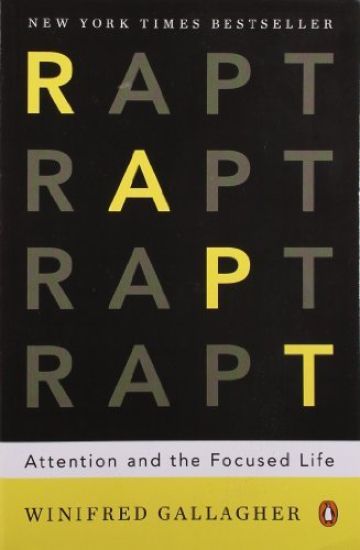
Rapt

Rapt

Winnifred Gallagher

J.P.Tarcher,U.S./Perigee Bks.,U.S.
2010
nidottu
A revolutionary look at how what we pay attention to determines how we experience life Acclaimed behavioral science writer Winifred Gallagher's "Rapt" makes the radical argument that much of the quality of your life depends not on fame or fortune, beauty or brains, fate or coincidence, but on what you choose to pay attention to. "Rapt" introduces a diverse cast of characters, from researchers to artists to ranchers, to illustrate the art of living the interested life. As their stories show, by focusing on the most positive and productive elements of any situation, you can shape your inner experience and expand your world. By learning to focus, you can improve your concentration, broaden your inner horizons, and most important, feel what it means to be fully alive.
House Thinking: A Room-By-Room Look at How We Live

House Thinking: A Room-By-Room Look at How We Live

Winifred Gallagher

HARPER PERENNIAL
2007
nidottu
Bringing together elements of behavioral science, cultural history, and interviews with designers and architects, a journalist and cultural critic provides a psychological tour of the American home--past, present, and future--that explores how our homes express how we feel about our families, jobs, bodies, status, and selves. Reprint. 35,000 first printing.
The Power of Place: How Our Surroundings Shape Our Thoughts, Emotions, and Actions
Are New Yorkers and Californians so different because they live in such different settings? Why do some of us prefer the city to the country? How do urban settings increase crime? Why do we feel better after an experience in nature? In this fascinating and enormously entertaining book, Winifred Gallagher explores the complex relationships between people and the places in which they live, love, and work. Drawing on the latest research on behavioral and environmental science, THE POWER OF PLACE examines our reactions to light, temperatiure, the seasons, and other natural phenomena, and explores the interactions between our external and internal worlds. Gallagher's broad and dynamic definition of place includes mountaintops and the womb, Alaska's hinterlands and Manhattan's subways, and she relates these settings to everything from creativity to PMS, jet lag to tales of UFOs. Full of complex information made totally accessible, THE POWER OF PLACE offers the latest insights into the many ways we can change our lives by changing the places we live.
How The Post Office Created America

How The Post Office Created America

Winifred Gallagher

Penguin USA
2017
nidottu
A masterful history of a long underappreciated institution, How the Post Office Created America examines the surprising role of the postal service in our nation's political, social, economic, and physical development. The founders established the post office before they had even signed the Declaration of Independence, and for a very long time, it was the U.S. government's largest and most important endeavor--indeed, it was the government for most citizens. This was no conventional mail network but the central nervous system of the new body politic, designed to bind thirteen quarrelsome colonies into the United States by delivering news about public affairs to every citizen--a radical idea that appalled Europe's great powers. America's uniquely democratic post powerfully shaped its lively, argumentative culture of uncensored ideas and opinions and made it the world's information and communications superpower with astonishing speed. Winifred Gallagher presents the history of the post office as America's own story, told from a fresh perspective over more than two centuries. The mandate to deliver the mail--then "the media"--imposed the federal footprint on vast, often contested parts of the continent and transformed a wilderness into a social landscape of post roads and villages centered on post offices. The post was the catalyst of the nation's transportation grid, from the stagecoach lines to the airlines, and the lifeline of the great migration from the Atlantic to the Pacific. It enabled America to shift from an agrarian to an industrial economy and to develop the publishing industry, the consumer culture, and the political party system. Still one of the country's two major civilian employers, the post was the first to hire women, African Americans, and other minorities for positions in public life. Starved by two world wars and the Great Depression, confronted with the country's increasingly anti-institutional mind-set, and struggling with its doubled mail volume, the post stumbled badly in the turbulent 1960s. Distracted by the ensuing modernization of its traditional services, however, it failed to transition from paper mail to email, which prescient observers saw as its logical next step. Now the post office is at a crossroads. Before deciding its future, Americans should understand what this grand yet overlooked institution has accomplished since 1775 and consider what it should and could contribute in the twenty-first century. Gallagher argues that now, more than ever before, the imperiled post office deserves this effort, because just as the founders anticipated, it created forward-looking, communication-oriented, idea-driven America. From the Hardcover edition.
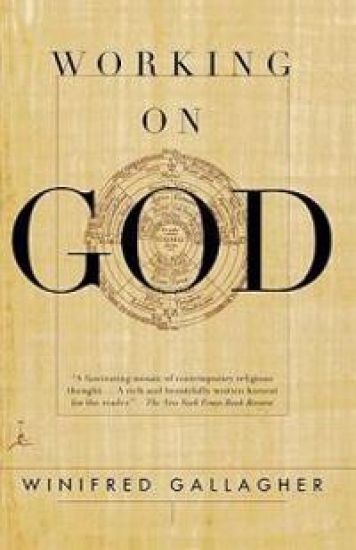
Working on God

Working on God

Winifred Gallagher

Modern Library Inc
2000
pokkari
Millions of Americans are finding it more and more difficult to apply the traditional demands of organized religion to their lives, and yet a complete absence of spirituality leaves them uneasy. Working on God is a book for and about such intelligent, independent people, who are seeking to reconcile their spiritual yearnings with their skeptical intellects. Winifred Gallagher, a behavioral-science reporter, began her investigation of religion in our postmodern age with research and interviews and soon discovered a vast, quiet revolution under way among ordinary men and women grappling with the sacred. Both Gallagher's brilliant journalistic inquiry and her very personal journey unfold over time spent in a Zen monastery and a cloistered convent, in small-group discussions and healing rituals, in a Conservative synagogue that shares spaces with a Christian church, and in the birthplace of the New Age. Written with humor, empathy, and a rigorous curiosity, Working on God breaks new ground in depicting the broad-based spiritual movement that is transforming many lives. "A fascinating mosaic of contemporary religious thought.... A rich and beautifully written harvest for the reader."--The New York Times Book Review"An intimate and revealing pilgrimage into America's restless soul. The result is an honest and sometimes poignant appraisal of a religiousrevolution afoot in this country--.An outstanding piece of writing that shows the strength and beauty of America's beating religious heart."--The Boston Globe"Working on God is one of the greatest spiritual works of this decade, as delightful as it is wise."--Anne Lamott
Spiritual Genius

Spiritual Genius

Winifred Gallagher

Random House USA Inc
2002
pokkari
An inspirational, ecumenical volume presents thought-provoking profiles of eleven modern-day men and women celebrated for their remarkable spiritual gifts, ranging from a devout Muslim professor who crusades for women's rights, to a woman recognized as a Hindu goddess, to an Italian-American Evangelical minister who publicly bucks the religious right. Reprint. 35,000 first printing.
Edith and Winnifred Eaton

Edith and Winnifred Eaton

Dominika Ferens

University of Illinois Press
2002
sidottu
Daughters of a British father and a Chinese mother, Edith and Winnifred Eaton pursued wildly different paths. While Edith wrote stories of downtrodden Chinese immigrants under the pen name Sui Sin Far, Winnifred presented herself as Japanese American and published Japanese romance novels in English under the name Onoto Watanna. In this invigorating reappraisal of the vision and accomplishments of the Eaton sisters, Dominika Ferens departs boldly from the dichotomy that has informed most commentary on them: Edith's "authentic" representations of Chinese North Americans versus Winnifred's "phony" portrayals of Japanese characters and settings. Arguing that Edith as much as Winnifred constructed her persona along with her pen name, Ferens considers the fiction of both Eaton sisters as ethnography. Edith and Winnifred Eaton suggests that both authors wrote through the filter of contemporary ethnographic discourse on the Far East and also wrote for readers hungry for "authentic" insight into the morals, manners, and mentality of an exotic other. Ferens traces two distinct discursive traditions–-missionary and travel writing–-that shaped the meanings of "China" and "Japan" in the nineteenth century. She shows how these traditions intersected with the unconventional literary careers of the Eaton sisters, informing the sober, moralistic tone of Edith's stories as well as Winnifred's exotic narrative style, plots, settings, and characterizations. Bringing to the Eatons' writings a contemporary understanding of the racial and textual politics of ethnographic writing, this important account shows how these two very different writers claimed ethnographic authority, how they used that authority to explore ideas of difference, race, class and gender, and how their depictions of nonwhites worked to disrupt the process of whites' self-definition.
Süßes Schnitzel Winnifred

Süßes Schnitzel Winnifred

Lili Stollowsky

Books on Demand
2017
pokkari
Winnifred, die Hauptperson der Erz hlung, schildert aus seiner Sicht und Erlebniswelt ein Schweineleben in der Massentierhaltung von der Geburt bis zur Schlachtung. Winnifred ist ein lustiges, freches und ziemlich cleveres kleines Ferkel, das mit seinen Geschwistern und Freunden uns Menschen zum Lachen und Nachdenken bringt.
Church State Corporation – Construing Religion in US Law

Church State Corporation – Construing Religion in US Law

Winnifred F Sullivan

University of Chicago Press
2020
sidottu
Church and state: a simple phrase that reflects one of the most famous and fraught relationships in the history of the United States. But what exactly is “the church,” and how is it understood in US law today? In Church State Corporation, religion and law scholar Winnifred Fallers Sullivan uncovers the deeply ambiguous and often unacknowledged ways in which Christian theology remains alive and at work in the American legal imagination. Through readings of the opinions of the US Supreme Court and other legal texts, Sullivan shows how “the church” as a religious collective is granted special privilege in US law. In-depth analyses of Hosanna-Tabor v. EEOC and Burwell v. Hobby Lobby reveal that the law tends to honor the religious rights of the group—whether in the form of a church, as in Hosanna-Tabor, or in corporate form, as in Hobby Lobby—over the rights of the individual, offering corporate religious entities an autonomy denied to their respective members. In discussing the various communities that construct the “church-shaped space” in American law, Sullivan also delves into disputes over church property, the legal exploitation of the black church in the criminal justice system, and the recent case of Masterpiece Cakeshop v. Colorado Civil Rights Commission. Brimming with insight, Church State Corporation provocatively challenges our most basic beliefs about the ties between religion and law in ostensibly secular democracies.
Church State Corporation – Construing Religion in US Law

Church State Corporation – Construing Religion in US Law

Winnifred F Sullivan

University of Chicago Press
2020
nidottu
Church and state: a simple phrase that reflects one of the most famous and fraught relationships in the history of the United States. But what exactly is “the church,” and how is it understood in US law today? In Church State Corporation, religion and law scholar Winnifred Fallers Sullivan uncovers the deeply ambiguous and often unacknowledged ways in which Christian theology remains alive and at work in the American legal imagination. Through readings of the opinions of the US Supreme Court and other legal texts, Sullivan shows how “the church” as a religious collective is granted special privilege in US law. In-depth analyses of Hosanna-Tabor v. EEOC and Burwell v. Hobby Lobby reveal that the law tends to honor the religious rights of the group—whether in the form of a church, as in Hosanna-Tabor, or in corporate form, as in Hobby Lobby—over the rights of the individual, offering corporate religious entities an autonomy denied to their respective members. In discussing the various communities that construct the “church-shaped space” in American law, Sullivan also delves into disputes over church property, the legal exploitation of the black church in the criminal justice system, and the recent case of Masterpiece Cakeshop v. Colorado Civil Rights Commission. Brimming with insight, Church State Corporation provocatively challenges our most basic beliefs about the ties between religion and law in ostensibly secular democracies.
A Ministry of Presence

A Ministry of Presence

Winnifred Fallers Sullivan

University of Chicago Press
2019
pokkari
Most people in the United States today no longer live their lives under the guidance of local institutionalized religious leadership, such as rabbis, ministers, and priests; rather, liberals and conservatives alike have taken charge of their own religious or spiritual practices. This shift, along with other social and cultural changes, has opened up a perhaps surprising space for chaplains--spiritual professionals who usually work with the endorsement of a religious community but do that work away from its immediate hierarchy, ministering in a secular institution, such as a prison, the military, or an airport, to an ever-changing group of clients of widely varying faiths and beliefs. In A Ministry of Presence, Winnifred Fallers Sullivan explores how chaplaincy works in the United States--and in particular how it sits uneasily at the intersection of law and religion, spiritual care, and government regulation. Responsible for ministering to the wandering souls of the globalized economy, the chaplain works with a clientele often unmarked by a specific religious identity, and does so on behalf of a secular institution, like a hospital. Sullivan's examination of the sometimes heroic but often deeply ambiguous work yields fascinating insights into contemporary spiritual life, the politics of religious freedom, and the never-ending negotiation of religion's place in American institutional life.
A Ministry of Presence

A Ministry of Presence

Winnifred Fallers Sullivan

University of Chicago Press
2014
sidottu
Most people in the United States today no longer live their lives under the guidance of local institutionalized religious leadership, such as rabbis, ministers, and priests; rather, liberals and conservatives alike have taken charge of their own religious or spiritual practices. This shift, along with other social and cultural changes, has opened up a perhaps surprising space for chaplains-spiritual professionals who usually work with the endorsement of a religious community but do that work away from its immediate hierarchy, ministering in a secular institution, such as a prison, the military, or an airport, to an ever-changing group of clients of widely varying faiths and beliefs. In A Ministry of Presence, Winnifred Fallers Sullivan explores how chaplaincy works in the United States - and in particular how it sits uneasily at the intersection of law and religion, spiritual care and government regulation. Responsible for ministering to the wandering souls of the globalized economy, the chaplain works with a clientele often unmarked by a specific religious identity, and does so on behalf of a secular institution, like a hospital. Chaplains' examination of the sometimes heroic but often deeply ambiguous work yields fascinating insights into contemporary spiritual life, the politics of religious freedom, and the never ending negotiation of religion's place in American institutional life.
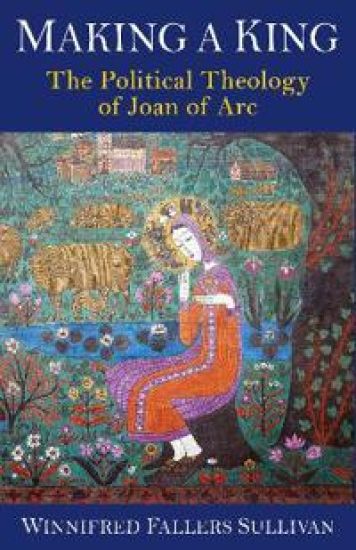
Making a King

Making a King

Winnifred Fallers Sullivan

Columbia University Press
2026
sidottu
There is an enduring fascination with Joan of Arc, yet she is almost always seen alone, as a victim or martyr. A strikingly different person is heard in her letters and the testimony of her companions. To the king of England, she wrote, “I am a commander of war, and in whatever place I come upon your men in France, I will make them leave . . . And if they do not wish to obey, I will have them all killed.” She wrote to the people of the towns she defended, giving them news and seeking their support. Her companions spoke of her intelligence, bravery, and military competence. Hers was a collective mission to rescue the people from the depredations of war. Focusing on her life rather than her death, Winnifred Fallers Sullivan offers an interpretation of Joan of Arc as a political thinker and actor who sought, during her meteoric presence in fifteenth-century France, to legitimate a king, channel God’s word, convene a coronation, and speak for the people in an alternative legal order. She assembled sacred kingship, mystical experience, and the press of political and economic chaos into a vernacular political theology that still speaks to our moment. Making a King illuminates Joan’s extraordinary life and vision—her conception of sovereignty from below, her form of female masculinity, and her power as kingmaker—and shows why she can help us find a deeper understanding of religion and politics today.
Making a King

Making a King

Winnifred Fallers Sullivan

Columbia University Press
2026
pokkari
There is an enduring fascination with Joan of Arc, yet she is almost always seen alone, as a victim or martyr. A strikingly different person is heard in her letters and the testimony of her companions. To the king of England, she wrote, “I am a commander of war, and in whatever place I come upon your men in France, I will make them leave . . . And if they do not wish to obey, I will have them all killed.” She wrote to the people of the towns she defended, giving them news and seeking their support. Her companions spoke of her intelligence, bravery, and military competence. Hers was a collective mission to rescue the people from the depredations of war. Focusing on her life rather than her death, Winnifred Fallers Sullivan offers an interpretation of Joan of Arc as a political thinker and actor who sought, during her meteoric presence in fifteenth-century France, to legitimate a king, channel God’s word, convene a coronation, and speak for the people in an alternative legal order. She assembled sacred kingship, mystical experience, and the press of political and economic chaos into a vernacular political theology that still speaks to our moment. Making a King illuminates Joan’s extraordinary life and vision—her conception of sovereignty from below, her form of female masculinity, and her power as kingmaker—and shows why she can help us find a deeper understanding of religion and politics today.