Kirjojen hintavertailu. Mukana 12 390 323 kirjaa ja 12 kauppaa.

Kirjahaku

Etsi kirjoja tekijän nimen, kirjan nimen tai ISBN:n perusteella.

173 tulosta hakusanalla Wole Soyinka

Wole Soyinka

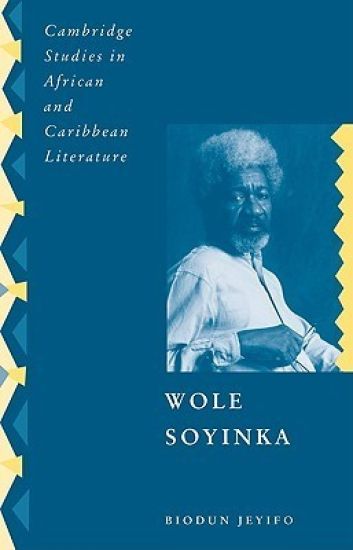
Wole Soyinka

Biodun Jeyifo

Cambridge University Press
2009
pokkari
Biodun Jeyifo examines the connections between the innovative and influential writings of Wole Soyinka and his radical political activism. Jeyifo carries out detailed analyses of Soyinka's most ambitious works, relating them to the controversies generated by Soyinka's use of literature and theatre for radical political purposes. He gives a fascinating account of the profound but paradoxical affinities and misgivings Soyinka has felt about the significance of the avant-garde movements of the twentieth century. Jeyifo also explores Soyinka's works with regard to the impact on his artistic sensibilities of the pervasiveness of representational ambiguity and linguistic exuberance in Yoruba culture. The analyses and evaluations of this study are presented in the context of Soyinka's sustained engagement with the violence of collective experience in post-independence, postcolonial Africa and the developing world. No existing study of Soyinka's works and career has attempted such a systematic investigation of their complex relationship to politics.
Wole Soyinka

Wole Soyinka

Jeyifo Biodun

Cambridge University Press
2003
sidottu
Biodun Jeyifo examines the connections between the innovative and influential writings of Wole Soyinka and his radical political activism. Jeyifo carries out detailed analyses of Soyinka’s most ambitious works, relating them to the controversies generated by Soyinka’s use of literature and theatre for radical political purposes. He gives a fascinating account of the profound but paradoxical affinities and misgivings Soyinka has felt about the significance of the avant-garde movements of the twentieth century. Jeyifo also explores Soyinka’s works with regard to the impact on his artistic sensibilities of the pervasiveness of representational ambiguity and linguistic exuberance in Yoruba culture. The analyses and evaluations of this study are presented in the context of Soyinka’s sustained engagement with the violence of collective experience in post-independence, postcolonial Africa and the developing world. No existing study of Soyinka’s works and career has attempted such a systematic investigation of their complex relationship to politics.
Wole Soyinka

Wole Soyinka

Adam Lecznar

BLOOMSBURY PUBLISHING PLC
2024
sidottu
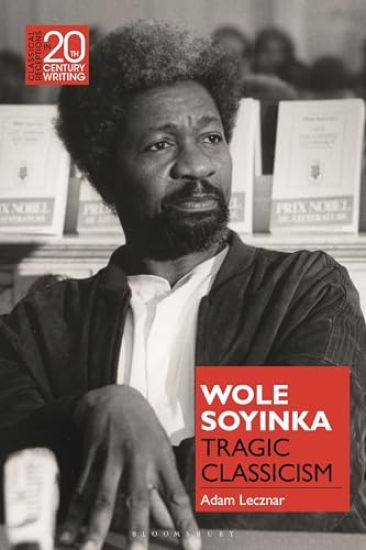
This book presents a new way of looking at Wole Soyinka’s engagement with the classical past. Nigerian author and activist Wole Soyinka was the first Black African author to win the Nobel Prize for Literature (1986), and his oeuvre has become seminal to postcolonial literature. The frequent references to Greece and Rome that appear across Soyinka’s writings, most explicitly in his 1973 play The Bacchae of Euripides: A Communion Rite, have often received short shrift in scholarship on the author. At best, these references have been understood as elements of Soyinka’s prodigiously inclusive humanism. At worst, Soyinka’s critics argue that the invocations of a Graeco-Roman past testify to the neocolonial cultural affinities that make Soyinka a problematic figure in postcolonial literary history.Adam Lecznar challenges these readings, arguing that Soyinka’s authorial outlook is informed by a hybrid form of classicism in which he aligns the legacy of Greece and Rome with the African cultural heritage to form a narrative of literary and cultural value that looks beyond the ancient Mediterranean. This book turns a spotlight on how Soyinka's appeals to Greece and Rome inform his reflections on Africa’s ancient past, Yoruba belief, and the modern significance of tragedy. Lecznar contends that Soyinka’s notion of classicism is not solely dependent on the memory of the Graeco-Roman past. Rather, it draws innovatively on a global cultural heritage to advance revolutionary and futural narratives of history and identity.
Wole Soyinka

Wole Soyinka

Adam Lecznar

BLOOMSBURY PUBLISHING PLC
2026
pokkari
This book presents a new way of looking at Wole Soyinka's engagement with the classical past. Nigerian author and activist Wole Soyinka was the first Black African author to win the Nobel Prize for Literature (1986), and his oeuvre has become seminal to postcolonial literature. The frequent references to Greece and Rome that appear across Soyinka's writings, most explicitly in his 1973 play The Bacchae of Euripides: A Communion Rite, have often received short shrift in scholarship on the author. At best, these references have been understood as elements of Soyinka's prodigiously inclusive humanism. At worst, Soyinka's critics argue that the invocations of a Graeco-Roman past testify to the neocolonial cultural affinities that make Soyinka a problematic figure in postcolonial literary history. Adam Lecznar challenges these readings, arguing that Soyinka's authorial outlook is informed by a hybrid form of classicism in which he aligns the legacy of Greece and Rome with the African cultural heritage to form a narrative of literary and cultural value that looks beyond the ancient Mediterranean. This book turns a spotlight on how Soyinka's appeals to Greece and Rome inform his reflections on Africa's ancient past, Yoruba belief, and the modern significance of tragedy. Lecznar contends that Soyinka's notion of classicism is not solely dependent on the memory of the Graeco-Roman past. Rather, it draws innovatively on a global cultural heritage to advance revolutionary and futural narratives of history and identity.
Wole Soyinka and Modern Tragedy

Wole Soyinka and Modern Tragedy

Ketu Katrak

Praeger Publishers Inc
1986
sidottu
The tragic drama of Nigeria's leading playwright, Wole Soyinka, is the focus of this in-depth study. Ketu H. Katrak explores Soyinka's concept of the tragic experience as it relates to Yoruba culture and analyzes the unique features of his theory of tragedy which blends Yoruba traditional drama with Western tragic forms. Opening with a biographical overview of Soyinka's life and career, Katrak addresses the major issues presented by Soyinka in his essay on tragedy, The Fourth Stage. These include the origin of tragic feeling, the components of the tragic experience, and the concretization of these abstract notions in the Yoruba god Ogun. The author demonstrates that it is through these themes and the elements of ritual and myth that Soyinka imparts communal values to his work, ultimately achieving a metaphysical level of expression. Katrak also discusses the element of the death of the protagonist in a number of Soyinka's plays and how it is beneficial for the community. The history of a community, a nation, and mankind, as it appears in other Soyinka plays, is also discussed. Throughout the work, the study of Soyinka's drama is balanced with an analysis of dramatic structure and stagecraft. Included are interviews and discussions with many of Nigeria's academicians, as well as with Soyinka himself.
Wole Soyinka: Literature, Activism, and African Transformation

Wole Soyinka: Literature, Activism, and African Transformation

Bola Dauda; Toyin Falola

Bloomsbury Academic USA
2021
nidottu
This timely and expansive biography of Wole Soyinka, the Nigerian writer, Nobel laureate, and social activist, shows how the author’s early years influence his life’s work and how his writing, in turn, informs his political engagement. Three sections spanning his life, major texts, and place in history, connect Soyinka’s legacy with global issues beyond the borders of his own country, and indeed beyond the African continent. Covering his encounters with the widespread rise of kleptocratic rule and international corporate corruption, his reflection on the human condition of the North-South divide, and the consequences of postcolonialism, this comprehensive biography locates Wole Soyinka as a global figure whose life and works have made him a subject of conversation in the public sphere, as well as one of Africa’s most successful and popular authors. Looking at the different forms of Soyinka’s work--plays, novels, and memoirs, among others--this volume argues that Soyinka used writing to inform, mobilize, and sometimes incite civil action, in a decades-long attempt at literary social engineering.
Wole Soyinka: Literature, Activism, and African Transformation

Wole Soyinka: Literature, Activism, and African Transformation

Bola Dauda; Toyin Falola

Bloomsbury Academic USA
2021
sidottu
This timely and expansive biography of Wole Soyinka, the Nigerian writer, Nobel laureate, and social activist, shows how the author’s early years influence his life’s work and how his writing, in turn, informs his political engagement. Three sections spanning his life, major texts, and place in history, connect Soyinka’s legacy with global issues beyond the borders of his own country, and indeed beyond the African continent. Covering his encounters with the widespread rise of kleptocratic rule and international corporate corruption, his reflection on the human condition of the North-South divide, and the consequences of postcolonialism, this comprehensive biography locates Wole Soyinka as a global figure whose life and works have made him a subject of conversation in the public sphere, as well as one of Africa’s most successful and popular authors. Looking at the different forms of Soyinka’s work--plays, novels, and memoirs, among others--this volume argues that Soyinka used writing to inform, mobilize, and sometimes incite civil action, in a decades-long attempt at literary social engineering.
Perspectives on Wole Soyinka

Perspectives on Wole Soyinka

University Press of Mississippi
2001
sidottu
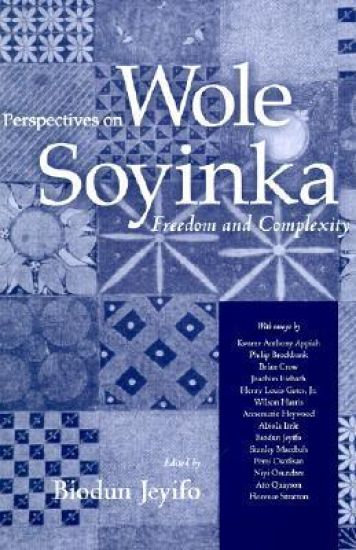
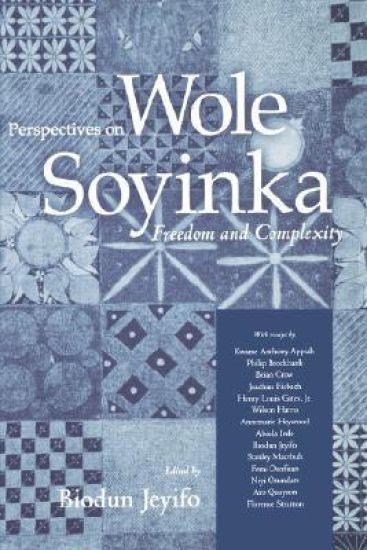
This collection of the most significant and illuminating critical essays about the works of Wole Soyinka over the past three decades is evidence of the international esteem he has achieved. This Nobel Prize winner from Nigeria is arguably Africa's greatest living writer. His novels and plays are appreciated throughout the world. His works have attracted the attention of such acclaimed authors and critics as Wilson Harris, Henry Louis Gates, Jr., Kwame Anthony Appiah, as well as such leading academicians as Philip Brockbank, Joachim Fiebach, Abiola Irele, Femi Osofisan, and Niyi Osundare. An essay by each of these is included in this volume. Nearly every major contemporary school of critical theory is represented here-from analytic philosophy to reconstructed Marxism, from poststructuralism to postcoloniality, and from feminism to recuperated phenomenology. This diversity of theoretical interests and interpretive approaches unites Soyinka's art with his political activism. Gathered here in this remarkable collection, the essays simultaneously showcase Soyinka's postcolonial politics and his literary aestheticism. They reveal the irony that the downtrodden peoples whom Soyinka champions are those who cannot read his stirring books or see his compelling dramas. Biodun Jeyifo was Soyinka's student, junior colleague, and even, Jeyifo says, his ""adversary in the ferocious intramural ideological debates within the community of African leftist writers, critics, and academics in the seventies and eighties."" ""This book,"" Jeyifo writes in his introduction, ""is the product of [an] extensive review of the scholarly aspects of the reception of Soyinka in the last three decades of his career as one of the most influential of writers of Africa."" This volume will afford Soyinka's readers a heightened sense of the wit, humor, and eloquence of this leading writer-activist of Africa and the English-speaking world. Biodun Jeyifo is a professor of English at Cornell University. He is the author of The Popular Traveling Theatre of Nigeria and The Truthful Lie.
Conversations with Wole Soyinka

Conversations with Wole Soyinka

University Press of Mississippi
2001
nidottu
Nobel laureate Wole Soyinka is the most prominent writer from the African continent and one of the greatest living playwrights in the English language. His plays have been produced by the leading professional and repertory companies and stages in the English-speaking world including the National Theatre in Britain and the Lincoln Center in New York. At the same time, Soyinka has been the most consistent campaigner against civil and human rights violations and abuses, on occasion using his drama, poetry, and essays to speak out powerfully and eloquently in defense of the freedom of ordinary citizens and of the conscience and autonomy of the African continent's writers and intellectuals. Featuring interviews with Henry Louis Gates, Jr., Anthony Appiah, and the editor, among others, Conversations with Wole Soyinka is the first collection of Soyinka's interviews. The volume helps to clarify the place of Soyinka in the canon of modern African literature and the international currents of world literature in English of the last half century. Within the interviews, Soyinka is forthright, clear, and eloquent. He specifically addresses many facets of his writing and plumbs pressing issues of culture, society, and community in the present period of increasing globalization. With interviewers in Africa, America, and the United Kingdom he discusses the rise of extreme nationalist and fundamentalist movements and ideologies in his homeland. In particular, the volume throws welcome light on many of the difficulties and obscurities of form and ""message"" that both academic and non-academic readers find in the most ambitious works of Soyinka. Soyinka says, ""I never set out to be obscure. But complex subjects sometimes elicit from the writer complex treatments."" Biodun Jeyifo is a professor of English at Cornell University, in Ithaca, NY. His previous books include The Popular Traveling Theatre of Nigeria (1984) and The Truthful Lie (1985). He has been published in such periodicals as Stanford Literature Review, Research in African Literatures, and Callaloo.
Perspectives on Wole Soyinka

Perspectives on Wole Soyinka

University Press of Mississippi
2006
nidottu
This collection of the most significant and illuminating critical essays about the works of Wole Soyinka over the past three decades is evidence of the international esteem he has achieved. This Nobel Prize winner from Nigeria is arguably Africa's greatest living writer. His novels and plays are appreciated throughout the world. His works have attracted the attention of such acclaimed authors and critics as Wilson Harris, Henry Louis Gates, Jr., Kwame Anthony Appiah, as well as such leading academicians as Philip Brockbank, Joachim Fiebach, Abiola Irele, Femi Osofisan, and Niyi Osundare. An essay by each of these is included in this volume. Nearly every major contemporary school of critical theory is represented here-from analytic philosophy to reconstructed Marxism, from poststructuralism to postcoloniality, and from feminism to recuperated phenomenology. This diversity of theoretical interests and interpretive approaches unites Soyinka's art with his political activism. Gathered here in this remarkable collection, the essays simultaneously showcase Soyinka's postcolonial politics and his literary aestheticism. They reveal the irony that the downtrodden peoples whom Soyinka champions are those who cannot read his stirring books or see his compelling dramas. Biodun Jeyifo was Soyinka's student, junior colleague, and even, Jeyifo says, his ""adversary in the ferocious intramural ideological debates within the community of African leftist writers, critics, and academics in the seventies and eighties."" ""This book,"" Jeyifo writes in his introduction, ""is the product of [an] extensive review of the scholarly aspects of the reception of Soyinka in the last three decades of his career as one of the most influential of writers of Africa."" This volume will afford Soyinka's readers a heightened sense of the wit, humor, and eloquence of this leading writer-activist of Africa and the English-speaking world. Biodun Jeyifo is a professor of English at Cornell University. He is the author of The Popular Traveling Theatre of Nigeria and The Truthful Lie.