Kirjojen hintavertailu. Mukana 11 627 363 kirjaa ja 12 kauppaa.

Kirjahaku

Etsi kirjoja tekijän nimen, kirjan nimen tai ISBN:n perusteella.

1000 tulosta hakusanalla Wolfgang Iser

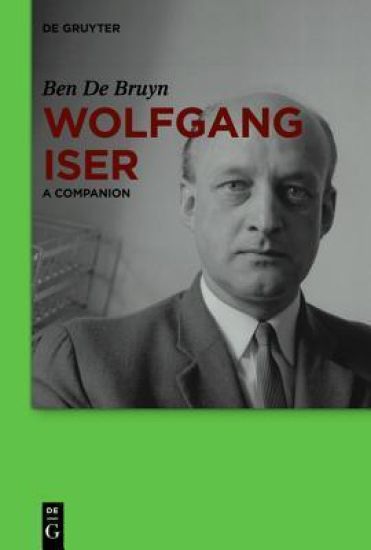
Wolfgang Iser

Wolfgang Iser

Ben De Bruyn

De Gruyter
2012
isokokoinen pokkari
Although Wolfgang Iser is one of the most influential literary theorists of the twentieth century, there is no authoritative study about his oeuvre. The present work remedies that problem by analysing Iser’s German and English writings in detail. Apart from being the first comprehensive account of his work, this study also modifies the established view of Iser’s theory. In contrast to the idea that his only contribution to literary studies is the reception theory of the 1970s, this account demonstrates the importance of Iser’s work on history and anthropology from the 1950s and 1990s. Instead of exclusively focusing on familiar terms such as ‘indeterminacy’, this analysis also discusses Iser’s view of modernity, fiction and culture. As this discussion shows, his writings develop a consistent theory of the novel and the way in which it allows its readers to articulate new views of reality. To situate this theory, Iser’s institutional and intellectual background is described as well, paying special attention to the Poetik und Hermeneutik-circle and thinkers like Blumenberg and Kermode. The continued relevance of his theory is demonstrated via comparisons with recent research on the novel and memory as well as examples from contemporary novelists like Juli Zeh and Hilary Mantel.

Beleuchtung von Wolfgang Isers Leerstellen bei Oliver Reeses "Bartsch, Kindermörder"
Studienarbeit aus dem Jahr 2010 im Fachbereich Theaterwissenschaft, Tanz, Note: 1,5, Ludwig-Maximilians-Universit t M nchen (Theaterwissenschaft), Veranstaltung: Proseminar, Sprache: Deutsch, Abstract: 2. Einleitung F r die Interpretation eines Textes setzt Schlegel das Missverstehen voraus. Das hei t, dass literarische Texte vielfach gedeutet werden k nnen und die Unverst ndlichkeit des Textes zur Interpretationsmaxime wird. Die Interpretation ist demnach ein fortlaufender Prozess, der nicht final ist. Durch diese Theorie in der romantischen Hermeneutik, wird der Rezipient literarischer Texte enorm aufgewertet. In der rezeptions sthetischen Schule stellt die Text- Leser- Auseinandersetzung den wichtigsten Bezugspunkt f r die Konstitution von Sinn im Konsumieren der textlichen Grundlage dar. Von Konsumenten, als Leser, wird ein Vorwissen erwartet, auf das er zur ckgreifen kann. Nur durch Konsultieren seines Weltwissens oder literarischer Vorkenntnis kann sich die Strategie eines Textes f r den Rezipienten erfassen und l sst ihn den Text selbst f r sich interpretieren und somit hermeneutisch aktiv werden. Im Gegenzug zu den Aussagen eines Sachtextes, ben tigt der literarische Text ebenjenes Vorwissen des Lesers, dass er mit den geschilderten Ereignissen und Geschehnissen verbinden muss, um seine eigenen Schlussfolgerungen daraus zu ziehen. Das Konsumieren eines literarischen Textes ist also eine aktive Besch ftigung bei der die offenen Bez gen mit seiner eigenen Erfahrung und Vorwissen gef llt werden. Wolfgang Iser nennt diese offenen Bez ge "Leerstellen." Nehmen wir hingegen die Wirkungs sthetische Seite, so m ssen wir uns fragen ob bei dramatischen Texten nicht eher die Produktionsmechanismen untersucht werden sollten, um einen Text zu interpretieren. Gegenw rtig r umt man ein, dass sowohl die Produktion als auch die Rezeption eines literarischen oder theatralen Werkes erfasst werden sollen und dass man die Produktion von Wirkungen und die Art, wie sie vom Le
Staging Politics

Staging Politics

Wolfgang Iser

Columbia University Press
1994
sidottu
In a series of readings, the author examines Shakespeare's five major history plays and accounts for their continued popularity, both in film and on stage. He examines the historical context out of which the plays emerged, and describes how the period gave birth to a modern form of politics.
The Range of Interpretation

The Range of Interpretation

Wolfgang Iser

Columbia University Press
2000
sidottu
There is a tacit assumption that interpretation comes naturally, that human beings live by constantly interpreting. In this sense, we might even rephrase Descartes by saying: We interpret, therefore we are. While such a basic human disposition makes interpretation appear to come naturally, the forms it takes, however, do not. In this work, Iser offers a fresh approach by formulating an "anatomy of interpretation" through which we can understand the act of interpretation in its many different manifestations. For Iser, there are several different genres of interpretation, all of which are acts of translation designed to transpose something into something else. Perhaps the most obvious example of interpretation involves canonical texts, such as the Rabbinical exegesis of the Torah or Samuel Johnson's reading of Shakespeare. But what happens when the matter that one seeks to interpret consists not of a text but of a welter of fragments, as in the study of history, or when something is hidden, as in the practice of psychoanalysis, or is as complex as a culture or system? Iser details how, in each of these cases, the space that is opened up by interpretation is negotiated in a different way, thus concluding that interpretation always depends on what it seeks to translate. For students of philosophy, literary and critical theory, anthropology, and cultural history, Iser's elucidation of the mechanics by which we translate and understand, as well as his assessment of the anthropological roots of our drive to make meaning, will undoubtedly serve as a revelation.
The Range of Interpretation

The Range of Interpretation

Wolfgang Iser

Columbia University Press
2001
pokkari
There is a tacit assumption that interpretation comes naturally, that human beings live by constantly interpreting. In this sense, we might even rephrase Descartes by saying: We interpret, therefore we are. While such a basic human disposition makes interpretation appear to come naturally, the forms it takes, however, do not. In this work, Iser offers a fresh approach by formulating an "anatomy of interpretation" through which we can understand the act of interpretation in its many different manifestations. For Iser, there are several different genres of interpretation, all of which are acts of translation designed to transpose something into something else. Perhaps the most obvious example of interpretation involves canonical texts, such as the Rabbinical exegesis of the Torah or Samuel Johnson's reading of Shakespeare. But what happens when the matter that one seeks to interpret consists not of a text but of a welter of fragments, as in the study of history, or when something is hidden, as in the practice of psychoanalysis, or is as complex as a culture or system? Iser details how, in each of these cases, the space that is opened up by interpretation is negotiated in a different way, thus concluding that interpretation always depends on what it seeks to translate. For students of philosophy, literary and critical theory, anthropology, and cultural history, Iser's elucidation of the mechanics by which we translate and understand, as well as his assessment of the anthropological roots of our drive to make meaning, will undoubtedly serve as a revelation.
Walter Pater

Walter Pater

Wolfgang Iser

Cambridge University Press
2011
nidottu
Wolfgang Iser's study of Walter Pater (1839-94) was first published in German in 1960. It places the English critic, essayist and novelist in a philosophical tradition whose major exponents were Hegel and Coleridge, at the same time showing how Pater differed crucially from these thinkers to become representative of a late Victorian culture critically poised in transition between Romanticism and Modernism. Pater's new definitions of 'beauty' and 'style' in art, his doctrine of 'art for art's sake', his preoccupation with aesthetic existence, his fascination with periods of balance and historical transition are seen in the light of his scepticism towards all systematisation and his view of art as countering human finiteness by capturing the intensity of the moment. This important book, which remains as illuminating now as when it first appeared, will interest those interested in philosophy and aesthetics and Pater specialists alike.
The Implied Reader

The Implied Reader

Wolfgang Iser

Johns Hopkins University Press
1974
pokkari
Like no other art form, the novel confronts its readers with circumstances arising from their own environment of social and historical norms and stimulates them to assess and criticize their surroundings. By analyzing major works of English fiction ranging from Bunyan, Fielding, Scott, and Thackeray to Joyce and Beckett, renowned critic Wolfgang Iser here provides a framework for a theory of such literary effects and aesthetic responses. Iser's focus is on the theme of discovery, whereby the reader is given the chance to recognize the deficiencies of his own existence and the suggested solutions to counterbalance them. The content and form of this discovery is the calculated response of the reader -- the implied reader. In discovering the expectations and presuppositions that underlie all his perceptions, the reader learns to "read" himself as he does the text.
The Act of Reading

The Act of Reading

Wolfgang Iser

Johns Hopkins University Press
1980
pokkari
Iser examines what happens during the reading process, and how it is basic to the development of a theory of aesthetic response, setting in motion a chain of events that depends both on the text and the exercise of certain human faculties.
The Fictive and the Imaginary

The Fictive and the Imaginary

Wolfgang Iser

Johns Hopkins University Press
1993
pokkari
"Iser is an influential figure, and aficionados will welcome the comprehensive exposition he provides here."--Terence Cave, TLS The pioneer of "literary anthropology," Wolfgang Iser presents a wide-ranging and comprehensive exploration of this new field in an attempt to explain the human need for the "particular form of make-believe" known as literature. Ranging from the Renaissance pastoral to Coleridge to Sartre and Beckett, The Fictive and the Imaginary is a distinguished work of scholarship from one of Europe's most respected and influential critics. "A new book by Wolfgang Iser is an important event in the critical world. This one, with its wide-ranging and ambitious argument, will require the attention of everyone who thinks seriously and at all philosophically about literary culture and what it has to tell us about being human."--Ross Chambers, University of Michigan.
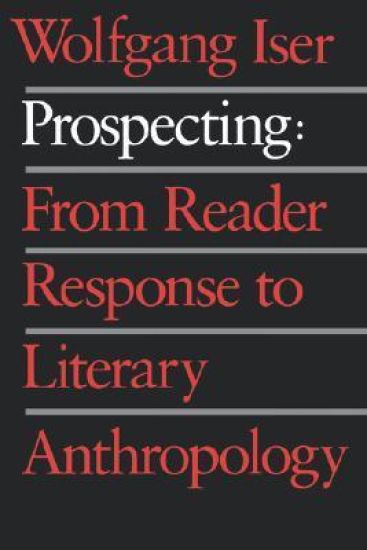
Prospecting

Prospecting

Wolfgang Iser

Johns Hopkins University Press
1993
pokkari
"An important transitional book, usefully summarizing the past and thoughtfully mapping out the future of a significant critic's theoretical project."--'Modern Philology.' "There is a much greater emphasis on the reader's function as `performer' of the text in 'Prospecting' than in Iser's other books. The two brilliant chapters on Beckett's fiction and drama are crucial here...Literature becomes `play' and `game,' and the reader becomes a performer of himself. This idea of performance becomes central to Iser's new theory. Art does not present life; it performs it."--'Yearbook of English Studies.'
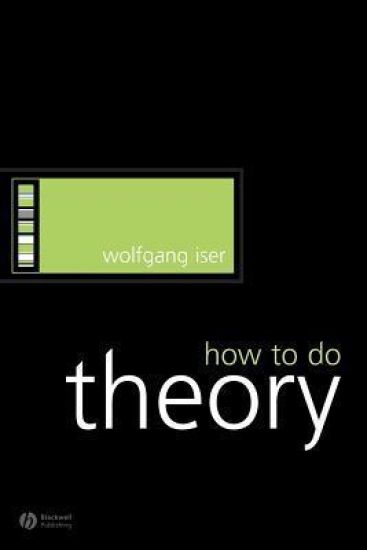
How to Do Theory

How to Do Theory

Wolfgang Iser

Wiley-Blackwell (an imprint of John Wiley Sons Ltd)
2005
nidottu
This succinct introduction to modern theories of literature and the arts demonstrates how each theory is built and what it can accomplish. Represents a wide variety of theories, including phenomenological theory, hermeneutical theory, gestalt theory, reception theory, semiotic theory, Marxist theory, deconstruction, anthropological theory, and feminist theory. Uses classic literary texts, such as Keats’s Ode on a Grecian Urn, Spenser’s The Shephearde’s Calender and T. S. Eliot’s The Waste Land to illustrate his explanations. Includes key statements by the major proponents of each theory. Presents the different theories objectively, allowing students to decide which if any, they subscribe to. Gives students a sense of the potential of theory. Includes a glossary of technical terms.
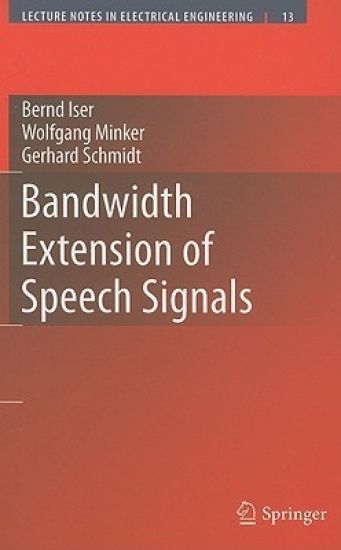
Bandwidth Extension of Speech Signals

Bandwidth Extension of Speech Signals

Bernd Iser; Gerhard Schmidt; Wolfgang Minker

Springer-Verlag New York Inc.
2008
sidottu
Bandwidth Extension of Speech Signals describes the theory and methods for quality enhancement of clean speech signals and distorted speech signals such as those that have undergone a band limitation, for instance, in a telephone network. Problems and the respective solutions are discussed for the different approaches. The different approaches are evaluated and a real-time implementation of the most promising approach is presented. The book includes topics related to speech coding, pattern- / speech recognition, speech enhancement, statistics and digital signal processing in general.