Kirjojen hintavertailu. Mukana 11 244 527 kirjaa ja 12 kauppaa.

Kirjahaku

Etsi kirjoja tekijän nimen, kirjan nimen tai ISBN:n perusteella.

607 tulosta hakusanalla Woodman Betsy

Jana Bibi's Excellent Fortunes

Jana Bibi's Excellent Fortunes

Woodman Betsy

Henry Holt Company Inc
2012
nidottu
In the first of a charming series, we meet Jana Bibi, who has inherited her grandfather's house in India. Eschewing the norms of her upper-crust upbringing, she moves with her chatty parrot, Mr. Ganguly, and her loyal housekeeper, Mary, to a town where the local merchants are philosophers, the chief of police is a tyrant, and a bagpipe-playing Gurkha keeps the wild monkeys at bay. Settling in, Jana meets all the colourful local characters who gather at the Why Not? tea shop - her neighbour, Feroze Ali Khan of Royal Tailors, who struggles with his business and family; V.K. Ramachandran, whose Treasure Emporium is bursting at the seams with objects of unknown provenance; and Rambir, the editor of the local newspaper, who burns the midnight oil at his printing press. When word gets out that Hamara Nagar is in danger of being drowned by a government dam, Jana is enlisted to help put the town on the map. Hoping to attract tourists with promises of good things to come, she stacks her deck of cards, readies her fine feathered assistant, and Jana Bibi's Excellent Fortunes is born.
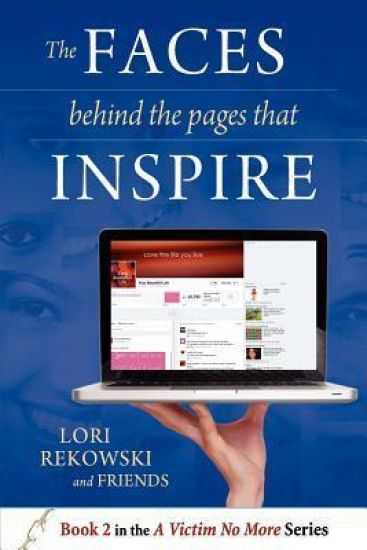
The Faces behind the Pages that Inspire

The Faces behind the Pages that Inspire

Charles F. Glassman MD Fac; Lori S. Rubenstein; Betty J. Woodman Ph. D.

Createspace Independent Publishing Platform
2012
nidottu
With The Faces Behind the Pages That Inspire, Lori Rekowski continues the journey that she began in her powerful first book, A Victim No More. This time, however, she brings along some friends. Following her personal journey to wholeness and self-love, Rekowski discovered Facebook and became curious about the people who selflessly post inspiration and support for total strangers, day after day. She was so impressed by this generosity that she embarked upon a mission to find the people behind the Fan Pages. The Faces Behind the Pages That Inspire is your backstage pass as she pulls back the curtain to reveal to you the incredible journey each author has taken. Rekowski says, "For years, I've done my best to listen, pray, meditate and ask for guidance that would allow me to do work that would help me to heal others in a way that is in the highest good for the concern of all others. In the process of practicing this, I am always blessed. This project has been no exception." If you've ever wondered about the people behind the images and messages that touch and inspire us every day, this book is for you. You will laugh. You will cry. Your hearts will break when you read about what they have endured and your spirits will soar as you walk with them on their journey of healing. Contributing authors: Tim Miejan, Bebee Watson, Dennis Merritt Jones, Lissa Coffey, Patti Conklin, Ph.D, Scott Hacker, Betty Woodman, Cindy Halley, Kathleen O'Keefe-Kanavos, Peter Canova, Lori S. Rubenstein, Michele Penn, Alexa Heilbron Ortiz, Debra Puglisi Sharp, Gail Alexander, Marin Peterson, Mercedes Ortiz Baeza, Anthony J. Diaz, Britny Lopez, Karen Mayfield, Suzie Nichols, Tammy Plunkett, Charlene Winchester, Marie Suk, Necole Stephens, Henriette Eiby Christensen, Charles F. Glassman, MD, FACP, Allison Sara, Khuram Shahnawaz, and Kathy Johnson.
Francesca Woodman's Dark Gaze

Francesca Woodman's Dark Gaze

Claire Raymond

TAYLOR FRANCIS LTD
2021
nidottu
Focusing on the later work of the American photographer Francesca Woodman (1958-1981), Claire Raymond takes up the question of the disintegrative condition of the art she produced in the last year of her life. Departing from the techniques of her earlier compositions, Woodman worked in the diazotype process for many of these late pieces, most importantly the monumental Blueprint for a Temple. Raymond shows that through her use of diazotype, a medium that breaks down when exposed to light, Woodman created art that is both supremely evocative aesthetically and inherently unstable physically. Woodman, Raymond contends, was imaginatively responding to the end of the durable image, a historical reality acknowledged in the way her work plays the ephemeral and evanescent against the monumental and enduring. Raymond focuses on the theoretical and the curatorial issues surrounding Woodman's diazotypes, a thematic and practical distress that haunts much of her later art, especially the artist's book and photo series Some Disordered Interior Geometries and Portrait of a Reputation. Rather than conceiving of Woodman herself as fragile, an artist chronicling and seeming to yearn for her own disappearance, Raymond juxtaposes Woodman's career-spanning documentation of her own image against other post-war witnesses of trauma - an artist standing in the museum ruins where she emerges most distinctly as a figure of postmodernity.
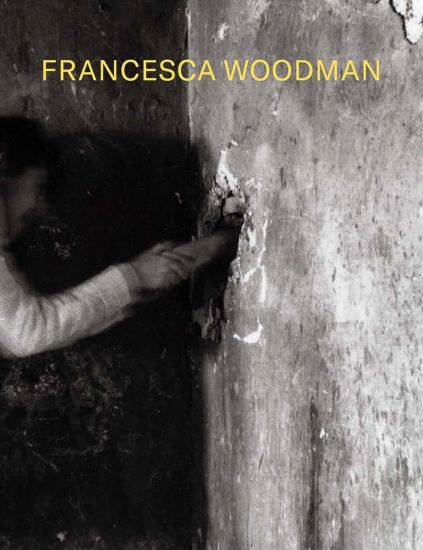
Francesca Woodman

Francesca Woodman

Townsend Chris

Phaidon Press Ltd
2016
nidottu
The most comprehensive monograph on one of the most enigmatic photographers of the 20th century - now in paperback "Woodman's pioneering style and technique have made her one of America's most notable and well-respected photographers of the late 20th century." —Aesthetica The precocious and brilliant American artist Francesca Woodman, is one of post-war photography's most original figures. This important book includes a major review of her life's work based on research by art historian Chris Townsend, together with extracts and facsimile pages from Francesca's personal journals edited and curated by her father, George Woodman. This unique and much-admired book is now available for the first time in paperback.
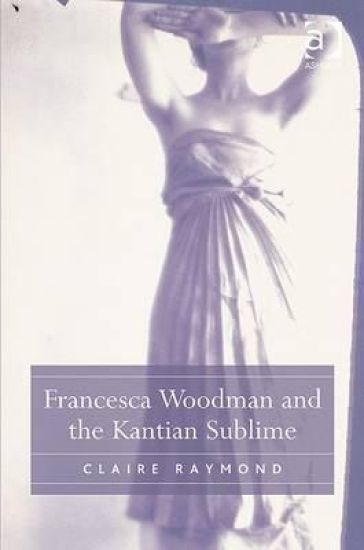
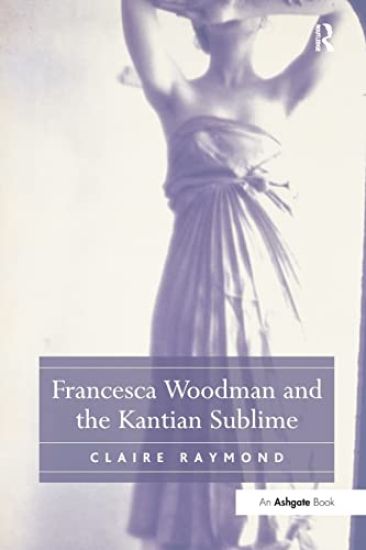
Francesca Woodman and the Kantian Sublime

Francesca Woodman and the Kantian Sublime

Claire Raymond

Ashgate Publishing Limited
2010
sidottu
In her feminist inquiry into aesthetics and the sublime, Claire Raymond reinterprets the work of the American photographer Francesca Woodman (1958-1981). Placing Woodman in a lineage of women artists beginning with nineteenth-century photographers Julia Margaret Cameron and Clementina, Viscountess Hawarden, Raymond compels a reconsideration of Woodman's achievement in light of the gender dynamics of the sublime. Raymond argues that Woodman's photographs of decrepit architecture allegorically depict the dissolution of the frame, a dissolution Derrida links to theories of the sublime in Kant's Critique of Judgement. Woodman's self-portraits, Raymond contends, test the parameters of the gaze, a reading that departs from the many analyses of Woodman's work that emphasize her dramatic biography. Woodman is here revealed as a conceptually sophisticated artist whose deployment of allegory and allusion engages a broader debate about Enlightenment aesthetics, and the sublime.
Francesca Woodman

Francesca Woodman

Nora Burnett Abrams; Drew Sawyer

Mondadori Electa
2019
sidottu
Francesca Woodman took her first photograph at the age of the thirteen. From the time she was a teenager until her death at twenty-two, she produced a fascinating body of work exploring gender, representation, and sexuality by photographing her own body and those of her friends. Featuring approximately forty unique vintage prints, as well as notes, letters, postcards, and other ephemera related to the artist s burgeoning career, the volume, which accompanies an exhibition of the same name at MCA Denver, details both Woodman s creative and personal coming-of-age during the years 1975-1979. Francesca Woodman: Portrait of a Reputation considers how the artist came into her creative voice and her singular approach to photography at a notably young age. Ranging from portraits in her studio/apartment in college to self-portraits in the bucolic Colorado landscape in which she was raised, these works capture Woodman s hallmark approach to art making: enigmatic, rigorous, and poignant. The volume also includes select photographs of Woodman taken by friend and RISD classmate George Lange during this period. Taken together, they present a nuanced and in-depth study of this formative period in the development of this groundbreaking artist.
Francesca Woodman: Alternate Stories

Francesca Woodman: Alternate Stories

Goodman (Marian) Gallery,U.S.
2022
sidottu
Classic and previously unseen photographs and archival materials by a genius of staged photography, with a new essay by Chris Kraus This elegant volume presents more than 40 vintage photographs by the pioneering American photographer Francesca Woodman (1958–81), many of which have never before been seen. These photographs span the creative arc of the artist’s life, focusing on the varied thought processes, interests and influences that inspired her work. Clustered thematically, Francesca Woodman: Alternate Stories highlights previously unexplored relational contexts, drawing deeply on Woodman's formative years in Providence, Rhode Island, and Italy, and featuring previously unpublished photographs and archival materials. In the newly commissioned essay “Impure Alchemy,” critic and novelist Chris Kraus explores Francesca Woodman’s life via her work, drawing upon her journals and letters as primary source materials, and exploring the technical means and literary strategies that animate Woodman's works. Francesca Woodman: Alternate Stories portrays the artist’s lasting impact on generations of artists, and offers a compendium of images, which, as Kraus writes, still “inspire new mysteries and questions.”
Fostina Woodman, the Wonderful Adventurer

Fostina Woodman, the Wonderful Adventurer

Avis A Burnham Stanwood

Anson Street Press
2025
pokkari
Experience the thrill of the California Gold Rush in "Fostina Woodman, the Wonderful Adventurer," a captivating novel by Avis A. Burnham Stanwood. Immerse yourself in this action-packed adventure set against the backdrop of 19th-century California, where fortunes were found and lost in the blink of an eye. This meticulously prepared print edition brings to life a classic tale of gold discovery and the pioneering spirit of the American West. "Fostina Woodman, the Wonderful Adventurer" offers a glimpse into a pivotal era of American history, capturing the excitement and challenges faced by those drawn to the promise of gold. Journey alongside the characters as they navigate the rugged terrain and social complexities of the gold fields. Perfect for lovers of Westerns, historical fiction, and classic adventure stories, this novel provides a timeless escape to a bygone era. Rediscover the enduring allure of the Gold Rush with this compelling work of fiction.This work has been selected by scholars as being culturally important, and is part of the knowledge base of civilization as we know it.This work is in the public domain in the United States of America, and possibly other nations. Within the United States, you may freely copy and distribute this work, as no entity (individual or corporate) has a copyright on the body of the work.Scholars believe, and we concur, that this work is important enough to be preserved, reproduced, and made generally available to the public. We appreciate your support of the preservation process, and thank you for being an important part of keeping this knowledge alive and relevant.
Francesca Woodman and the Kantian Sublime
In her feminist inquiry into aesthetics and the sublime, Claire Raymond reinterprets the work of the American photographer Francesca Woodman (1958-1981). Placing Woodman in a lineage of women artists beginning with nineteenth-century photographers Julia Margaret Cameron and Clementina, Viscountess Hawarden, Raymond compels a reconsideration of Woodman's achievement in light of the gender dynamics of the sublime. Raymond argues that Woodman's photographs of decrepit architecture allegorically depict the dissolution of the frame, a dissolution Derrida links to theories of the sublime in Kant's Critique of Judgement. Woodman's self-portraits, Raymond contends, test the parameters of the gaze, a reading that departs from the many analyses of Woodman's work that emphasize her dramatic biography. Woodman is here revealed as a conceptually sophisticated artist whose deployment of allegory and allusion engages a broader debate about Enlightenment aesthetics, and the sublime.