

Kirjahaku
Etsi kirjoja tekijän nimen, kirjan nimen tai ISBN:n perusteella.
892 tulosta hakusanalla Woodrow Wilson
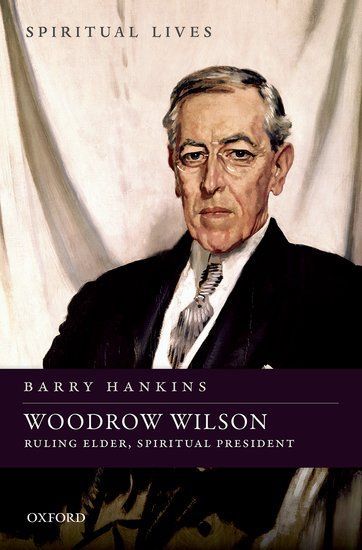
When Woodrow Wilson was elected as a ruling elder in the Presbyterian Church in 1897, his preacher father allegedly remarked, "I would rather that he held that position than be president of the United States." Fifteen years later he was both. Easily one of the most religious presidents in American history, almost all of Wilson's policies and important speeches were infused with religious concepts. The son, grandson, and nephew of southern Presbyterian divines, with six consecutive generations of preachers on his mother's side, Wilson viewed his political career as a sacred calling. As he remarked to a Democratic Party leader just before his inauguration in 1913, "God ordained that I should be the next president of the United States." As a scholar, Princeton University president, governor of New Jersey, then president, Wilson spent his entire career trying to further the cause of public righteousness. In 1905, he uttered his life's credo: "There is a mighty task before us and it welds us together. It is to make the United States a mighty Christian nation and to Christianize the World." Nonetheless, the 28th president was not principally a religious figure, and he didn't fit comfortably in any religious camp, either in his own time or today. In Woodrow Wilson: Ruling Elder, Spiritual President, Barry Hankins tells the story of Wilson's religion as he moved from the Calvinist orthodoxy of his youth to a progressive, spiritualized religion short on doctrine and long on morality.

When Woodrow Wilson was elected as a ruling elder in the Presbyterian Church in 1897, his preacher father allegedly remarked, "I would rather that he held that position than be president of the United States." Fifteen years later he was both. Easily one of the most religious presidents in American history, almost all of Wilson's policies and important speeches were infused with religious concepts. The son, grandson, and nephew of southern Presbyterian divines, with six consecutive generations of preachers on his mother's side, Wilson viewed his political career as a sacred calling. As he remarked to a Democratic Party leader just before his inauguration in 1913, "God ordained that I should be the next president of the United States." As a scholar, Princeton University president, governor of New Jersey, then president, Wilson spent his entire career trying to further the cause of public righteousness. In 1905, he uttered his life's credo: "There is a mighty task before us and it welds us together. It is to make the United States a mighty Christian nation and to Christianize the World." Nonetheless, the 28th president was not principally a religious figure, and he didn't fit comfortably in any religious camp, either in his own time or today. In Woodrow Wilson: Ruling Elder, Spiritual President, Barry Hankins tells the story of Wilson's religion as he moved from the Calvinist orthodoxy of his youth to a progressive, spiritualized religion short on doctrine and long on morality.

Before Woodrow Wilson became president of the United States, he spent 25 years at Princeton University, first as an undergraduate, then professor, and finally as president. His experiences at the helm of Princeton—where he enjoyed four productive years followed by four years of wrangling and intense acrimony—reveal much about the kind of man he was and how he earned a reputation as a fearless crusader. This engrossing book focuses on how Wilson’s Princeton years influenced the ideas and worldview he later applied in politics. His career in the White House, W. Barksdale Maynard shows, repeated with uncanny precision his Princeton experiences. The book recounts how Wilson’s inspired period of building, expansion, and intellectual fervor at Princeton deteriorated into one of the most famous academic disputes in American history. His battle to abolish elitist eating clubs and establish a more egalitarian system culminated in his defeat and dismissal, and the ruthlessness of his tactics alienated even longtime friends. So extreme was his behavior, some historians have wondered whether he suffered a stroke. Maynard sheds new light on this question, on Wilson’s temper, and on other aspects of his strengths and shortcomings. The book provides an unprecedented inside view of a hard-fighting president—a man who tried first to remake a university and then to remake the world.

The first major biography of America's twenty-eighth president in nearly two decades, from one of America's foremost Woodrow Wilson scholars. A Democrat who reclaimed the White House after sixteen years of Republican administrations, Wilson was a transformative president--he helped create the regulatory bodies and legislation that prefigured FDR's New Deal and would prove central to governance through the early twenty-first century, including the Federal Reserve system and the Clayton Antitrust Act; he guided the nation through World War I; and, although his advocacy in favor of joining the League of Nations proved unsuccessful, he nonetheless established a new way of thinking about international relations that would carry America into the United Nations era. Yet Wilson also steadfastly resisted progress for civil rights, while his attorney general launched an aggressive attack on civil liberties. Even as he reminds us of the foundational scope of Wilson's domestic policy achievements, John Milton Cooper, Jr., reshapes our understanding of the man himself: his Wilson is warm and gracious--not at all the dour puritan of popular imagination. As the president of Princeton, his encounters with the often rancorous battles of academe prepared him for state and national politics. Just two years after he was elected governor of New Jersey, Wilson, now a leader in the progressive movement, won the Democratic presidential nomination and went on to defeat Theodore Roosevelt and William Howard Taft in one of the twentieth century's most memorable presidential elections. Ever the professor, Wilson relied on the strength of his intellectual convictions and the power of reason to win over the American people. John Milton Cooper, Jr., gives us a vigorous, lasting record of Wilson's life and achievements. This is a long overdue, revelatory portrait of one of our most important presidents--particularly resonant now, as another president seeks to change the way government relates to the people and regulates the economy.

Woodrow Wilson
Greenwood Press
1997
sidottu
Woodrow Wilson's presidency marked a seminal period in American history. Wilson's progressive reforms laid the foundation for FDR's New Deal and ushered the nation into its modern era. In foreign policy, his philosophy and the programs he implemented have influenced the United States' relationship with the rest of the world throughout the 20th-century. An extremely controversial president in his time, Wilson has grown in stature in the intervening years, though some remain critical of the direction in which he steered the United States. Complementing the 69-volume ^IPapers of Woodrow Wilson^R, this book provides a comprehensive guide to the secondary literature on Wilson.The complexity of Wilson's personality and the intricacies of his thought have become evident with the publication of each volume of his papers, compelling scholars to reassess the often polemical portrayals of his presidency. This bibliography provides access to the literature on one of the most fascinating individuals to occupy the White House.

This is a narrative study of British diplomatic perceptions of Woodrow Wilson during his presidential campaign and presidency. Using archival material not previously explored for this purpose, George Conyne is able to challenge the conventional view of British reactions to Wilson and American policy at the Paris Peace Conference. He casts fresh light on the sources and the consequences of their image of the president of the United States.

This volume contributes to the Routledge Seminar Studies history series by providing a concise narrative overview of the ideas and foreign policy of Woodrow Wilson. It focuses on Wilson’s response to the First World War and his efforts to formulate a new international system, while also outlining Wilson’s policies toward different parts of the world. The book shows how Wilson shaped the direction of the 20th century in areas such as global governance, nationalism, decolonization, and international relations theory. In doing so, the book introduces the reader to the many debates over Wilsonian foreign policy. With a target audience of college undergraduates and non-experts, readers will gain a better understanding of Wilson’s vision for the world, his administration’s approaches to foreign policy, particularly during the First World War, and the global impact of his program.

This volume contributes to the Routledge Seminar Studies history series by providing a concise narrative overview of the ideas and foreign policy of Woodrow Wilson. It focuses on Wilson’s response to the First World War and his efforts to formulate a new international system, while also outlining Wilson’s policies toward different parts of the world. The book shows how Wilson shaped the direction of the 20th century in areas such as global governance, nationalism, decolonization, and international relations theory. In doing so, the book introduces the reader to the many debates over Wilsonian foreign policy. With a target audience of college undergraduates and non-experts, readers will gain a better understanding of Wilson’s vision for the world, his administration’s approaches to foreign policy, particularly during the First World War, and the global impact of his program.

Progressive, visionary. Politician who aspired to be a poet. Believer in the triumph of good. American idealist abroad. "The Woodrow Wilson" of this major new biography embodies the French proverb that great qualities and defects are inseparably joined. Internationally known Dutch historian J. W. Schulte Nordholt writes with deep understanding and empathy about America's twenty-eighth president (1913-1921), his administration, and his role in world affairs. This biography, as beautifully translated as it is written, restores the figure of Wilson as an incurable dreamer, a poetic idealist whose romantic world view enshrined organic, evolutionary progress. Wilson's presidency occurred during some of the most brutal, divisive years of our century. In a period of revolutionary social change and conflict, he steadfastly believed that ideas were stronger than facts. This was nowhere more evident than in his eleventh-hour attempts to find a diplomatic solution on the eve of the Great War. His unswerving belief in people's right to self-determination was, sadly, unrealistic in the postwar political framework of the League of Nations. Schulte Nordholt's novel interpretation of Wilson's behavior challenges those who have blamed the president's childhood for his failures. The author reassesses those early years and focuses on Wilson's spirituality and devotion to the romantic poets, particularly Wordsworth. Wilson regretted that he could not be a poet himself and found an outlet for his literary impulses in oratory. But the gift of words, though it brought him fame and popularity, could not produce the better world he imagined. If the story of Woodrow Wilson is a chapter in the history of idealism, the Wilson mode of statesmanship is a textbook of the difficulties America faced, and still faces, in the world of international politics. Should the United States be responsible for the order and peace of the whole world? And can this nation even understand the problems enough to attempt solutions? Wilson's life speaks eloquently of the unresolved American quest to be the world's guiding moral force.

Selected Addresses And Public Papers Of Woodrow Wilson
Woodrow Wilson
KESSINGER PUBLISHING, LLC
2007
nidottu


Most famous in Europe for his efforts to establish the League of Nations under US leadership at the end of the First World War, Woodrow Wilson stands as one of America’s most influential and visionary presidents. A Democrat who pursued progressive domestic policies during his first term in office, he despised European colonialism and believed that the recipe for world peace was the self-determination of all peoples, particularly those under the yoke of the vast Ottoman and Austro-Hungarian Empires. His efforts to resist heavy reparations on Germany fell on deaf ears, while the refusal of France, Russia and Britain to accept a League of Nations led by America, together with the US Senate’s refusal to ratify the League, led to its ultimate failure. Woodrow Wilson has traditionally been seen by both admirers and critics as an idealist and a heroic martyr to the cause of internationalism. But John Thompson takes a different view, arguing that Wilson was a pragmatist, whose foreign policy was flexible and responsive to pressures and events. His conclusion, that Wilson was in fact an exceptionally skilful politician, who succeeded in maintaining national unity whilst leading America onto the world stage for the first time in its history, offers a challenging interpretation for anyone interested in the man and his era.


This massive collection includes all important letters, speeches, interviews, press conferences, and public papers on Woodrow Wilson. The volumes make available as never before the materials essential to understanding Wilson's personality, his intellectual, religious, and political development, and his careers as educator, writer, orator, and statesman. The Papers not only reveal the private and public man, but also the era in which he lived, making the series additionally valuable to scholars in various fields of history between the 1870's and the 1920's.

This massive collection includes all important letters, speeches, interviews, press conferences, and public papers on Woodrow Wilson. The volumes make available as never before the materials essential to understanding Wilson's personality, his intellectual, religious, and political development, and his careers as educator, writer, orator, and statesman. The Papers not only reveal the private and public man, but also the era in which he lived, making the series additionally valuable to scholars in various fields of history between the 1870's and the 1920's.

This massive collection includes all important letters, speeches, interviews, press conferences, and public papers on Woodrow Wilson. The volumes make available as never before the materials essential to understanding Wilson's personality, his intellectual, religious, and political development, and his careers as educator, writer, orator, and statesman. The Papers not only reveal the private and public man, but also the era in which he lived, making the series additionally valuable to scholars in various fields of history between the 1870's and the 1920's.

This massive collection includes all important letters, speeches, interviews, press conferences, and public papers on Woodrow Wilson. The volumes make available as never before the materials essential to understanding Wilson's personality, his intellectual, religious, and political development, and his careers as educator, writer, orator, and statesman. The Papers not only reveal the private and public man, but also the era in which he lived, making the series additionally valuable to scholars in various fields of history between the 1870's and the 1920's.

This massive collection includes all important letters, speeches, interviews, press conferences, and public papers on Woodrow Wilson. The volumes make available as never before the materials essential to understanding Wilson's personality, his intellectual, religious, and political development, and his careers as educator, writer, orator, and statesman. The Papers not only reveal the private and public man, but also the era in which he lived, making the series additionally valuable to scholars in various fields of history between the 1870's and the 1920's.