Kirjahaku
Etsi kirjoja tekijän nimen, kirjan nimen tai ISBN:n perusteella.
1000 tulosta hakusanalla Wyn
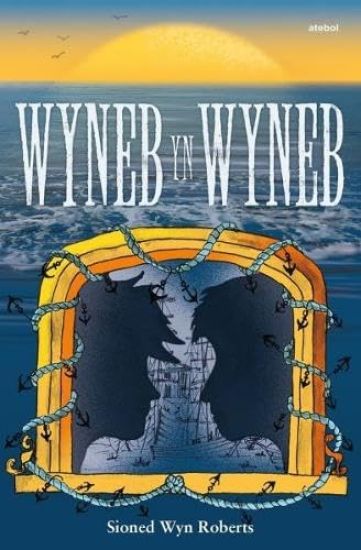
Dwi'n casau Robat Wyllt. Bron iawn gymaint ag ydw i'n casau fy hun.Mwrddrwg ydy Twm. Dwyn. Twyllo. Bwlio. Mae o?n giamstar ar y cyfan. Ond mae rhywbeth ar goll, mae gwacter yn ei fywyd a does ganddo ddim syniad pam. Un noson dywyll, pan mae Twm y Lleidr wrth ei waith, daw wyneb yn wyneb â?i ffawd, a darganfod gwirionedd sydd mor ysgytwol, mae?n newid cwrs ei fywyd am byth.

Wynken, Blynken, and Nod
Oxford University Press
2009
muu
for S or SSA and piano This classic bedtime lullaby is set with a catchy new tune and exciting piano part. The result is a playful, fun, and accessible song perfect for school concert programmes.
Wynnere and Wastoure
Oxford University Press
1996
sidottu
An edition of the fourteenth-century Middle English alliterative poem, which contains an introduction discussing the manuscript, date and provenance of the poem, metre, and critical studies; a bibliography; commentary; glossary; and index of names.
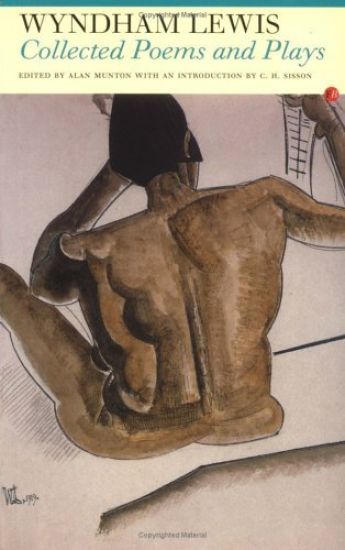
At the beginning of his career Wyndham Lewis (1882-1957) wrote vigorous poetry, and plays which in their form and vehement characterisation resemble the later work of Samuel Beckett. This volume includes major works: One-Way Song, and Enemy of the Stars in its two very different versions, as well as other writings that can now be seen as central to the formation of Lewis's work. The plays and poems crackle with ferocious energy, concentrated and brilliant, as Lewis creates a literary equivalent to the visual revolutions of Cubism and Vorticism. He explores how an artist should think and write in an oppressive world, the relationship between imagination and action. This edition, with Alan Munton's annotations, is a definitive text based on Lewis's own final corrections. An introduction by C.H. Sisson places these radical works in the context of Lewis's other writings.
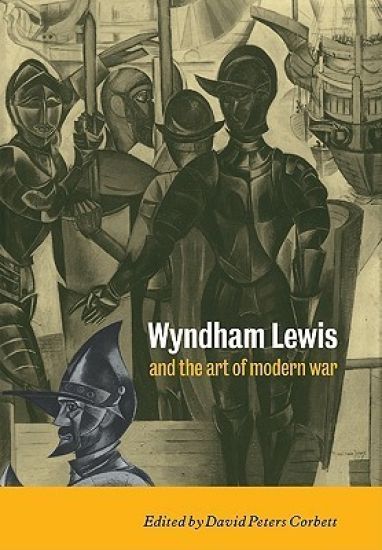
Wyndham Lewis and the Art of Modern War
Cambridge University Press
2009
pokkari
This 1998 collection is a specialised study to deal with the important question of Lewis's aggression. The eight contributors consider Lewis's career, from its inception to his final novels, within a major focus on the First World War and the interwar period. Their chapters examine Lewis's First World War art, his postwar politics and aesthetics, the new turn his painting and thought took in the 1930s and the connections between modernism, war and aggression. Overall, the volume offers a reassessment of the conventional view of Lewis as the uncontrolled aggressor of British modernism.

Wyndham Lewis and the Art of Modern War
Cambridge University Press
1998
sidottu
This 1998 collection is a specialised study to deal with the important question of Lewis's aggression. The eight contributors consider Lewis's career, from its inception to his final novels, within a major focus on the First World War and the interwar period. Their chapters examine Lewis's First World War art, his postwar politics and aesthetics, the new turn his painting and thought took in the 1930s and the connections between modernism, war and aggression. Overall, the volume offers a reassessment of the conventional view of Lewis as the uncontrolled aggressor of British modernism.

Wynnie's heart needs a little more speed to keep up with her busy days A pacemaker is just the thing to do the job. Join Wynnie on her journey to get her pacemaker and learn how amazing it is to be a heart warrior This book, filled with beautful illustrations and a child friendly story about heart surgery is perfect to help explain having a pacemaker to others. Heart surgery can be scary for children and their famiiles, this book makes the subject approachable for all ages. Wynnie's Heart Powers Up is based on a real life story. Wynnie has Complete Heart Block and this book was written by her mom to help explain her upcoming pacemaker surgery. Since published, the book is already supporting and educating families through the process.
This book explores the development and significance of the writer and painter Wyndham Lewis, the history of Anglo-American modernism in addition to modernism's internal critique.

This book explores the development and significance of the writer and painter Wyndham Lewis, the history of Anglo-American modernism in addition to modernism's internal critique.

Wyndham Lewis
Edinburgh University Press
2015
sidottu
The first guide to the work of Wyndham Lewis as writer, novelist, and criticWyndham Lewis (1882-1957) was one of the most innovative writers and painters of his time. An indefatigable critic of ideology, politics, and culture, Lewis was also one of modernism's key creative artists and a unique twentieth-century thinker. This book offers a scholarly companion to his written work. It features dedicated chapters on such novels as Tarr (1918), The Apes of God (1930), The Revenge for Love (1937), The Human Age sequence (1928-55), and Self Condemned (1954). Also included are chapters on Lewis's pre-war writing, cultural criticism, politics, satire, and reputation and legacy. Other chapters consider such varied topics as Vorticism and avant-gardism, war, race and gender, technology and mass media, and modernism. Wyndham Lewis: A Critical Guide is essential reading for scholars working on Lewis, modernism, and twentieth-century socio-cultural history.Key Features* Provides a clear overview of Lewis's literary, critical and non-fictional achievements* Explores Lewis's most important novels in individual chapters* Expert contributors include: Faith Binckes (Bath Spa University), David Bradshaw (University of Oxford), Paul Edwards (University of East Anglia), Ann-Marie Einhaus (Northumbria University), Miranda Hickman (McGill University), Scott W. Klein (Wake Forest University), Ian Patterson (University of Cambridge), and Alan Munton (University of Exeter)Andrzej Gsiorek is a Professor of English Literature at the University of Birmingham.Nathan Waddell is an Assistant Professor of Literary Modernism at the University of Nottingham

Wyndham Lewis
Edinburgh University Press
2015
nidottu
The first guide to the work of Wyndham Lewis as writer, novelist, and critic. This critical guide introduces the reader to the work of Wyndham Lewis (1882-1957), a major modernist and thought provoking satirist who was at the centre of the avant garde in early 20th century London and a key figure in the development of Vorticism. These 15 newly commissioned essays explain the complex role Lewis's work played in the formation, development, and criticism of modernism. There are chapters on Lewis and Vorticism and Avant Gardism, War, Cultural Criticism, Satire, Race and Gender, Politics, Technology and Mass Media, and Modernism as well as individual chapters on key texts, including Tarr, The Apes of God, The Revenge for Love, The Human Age, and Self Condemned. With an Introduction, an opening chapter on Lewis's pre war writing and a closing chapter on his reputation and legacy, this is the most thorough survey of Lewis's work to date. Provides a clear and reader friendly overview of Lewis's literary, critical, and non fictional achievements for readers with no prior knowledge of his work; includes a biographical overview of Lewis's life and writing career, a detailed bibliography and a chronology of key publication dates of academic criticism on Lewis; explores Lewis's most important novels in individual chapters and expert contributors include David Bradshaw (University of Oxford), Ian Patterson (University of Cambridge), Scott W. Klein (Wake Forest University), Miranda Hickman (McGill University), Paul Edwards (Bath Spa University), and Alan Muntun (University of Exeter).
Toby Foshay's penetrating study of Lewis presents a two-pronged argument that will help to lift Lewis from this obscurity. First, he reveals that Lewis is less interested in stylistic and formal innovation than he is committed to artistic, philosophical, and political transformations. As such, Lewis is not a modernist but, in the sense of the term as employed by theoretician Peter Burger, an avant-gardiste. Second, Foshay demonstrates that Lewis's development as an artist is inextricably linked to his avant-garde commitments -- commitments that find their roots in Lewis's reading of Nietzsche. Lewis's fiction and criticism must thus be read, Foshay maintains, as developing interdependently throughout his career and in relation to his evolving interpretation of Nietzsche. Foshay's insightful critique of Lewis's relation to the Modernist movement on the one hand, and of his development as an artist and critic on the other, offers a revised reading not only of Modernism itself but of what Lewis can teach us about the relation of thought to the practice of art in modernity.
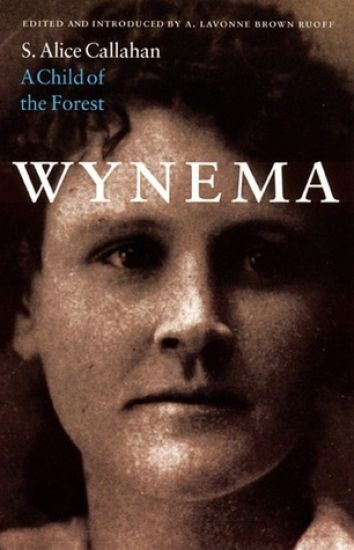
Originally published in 1891, "Wynema" is the first novel known to have been written by a woman of American Indian descent. Set against the sweeping and often tragic cultural changes that affected southeastern native peoples during the late nineteenth century, it tells the story of a lifelong friendship between two women from vastly different backgrounds-Wynema Harjo, a Muscogee Indian, and Genevieve Weir, a Methodist teacher from a genteel Southern family. Both are firm believers in women's rights and Indian reform; both struggle to overcome prejudice and correct injustices between sexes and races. Callahan uses the conventional traditions of a sentimental domestic romance to deliver an elegant plea for tolerance, equality, and reform. "Callahan takes on the role of a 'woman word warrior,' creating 'strong-hearted,' intelligent heroines and sensitive heroes who educate her audience about Muscogee culture, Indians' and women's rights, and the mutual respect between the sexes essential to happy marriages." - A. LaVonne Brown Ruoff, from the introduction. S. Alice Callahan (1868-94) was a mixed-blood of Muscogee descent. She attended the Wesleyan Female Institute in Staunton, Virginia, and became a Methodist teacher for the Muscogee (Creek) Nation in Oklahoma. Wynema was her first and only novel. A. LaVonne Brown Ruoff is professor emerita of English at the University of Illinois, Chicago, and the author of "American Indian Literatures: An Introduction, Bibliographic Review and Selected Bibliography".
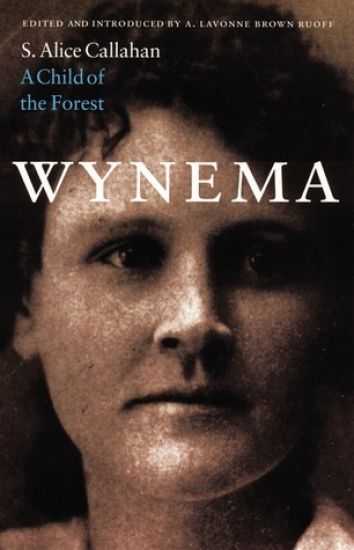
Originally published in 1891, Wynema is the first novel known to have been written by a woman of American Indian descent.Set against the sweeping and often tragic cultural changes that affected southeastern native peoples during the late nineteenth century, it tells the story of a lifelong friendship between two women from vastly different backgrounds-Wynema Harjo, a Muscogee Indian, and Genevieve Weir, a Methodist teacher from a genteel Southern family. Both are firm believers in women’s rights and Indian reform; both struggle to overcome prejudice and correct injustices between sexes and races. Callahan uses the conventional traditions of a sentimental domestic romance to deliver an elegant plea for tolerance, equality, and reform.